
Main Courses
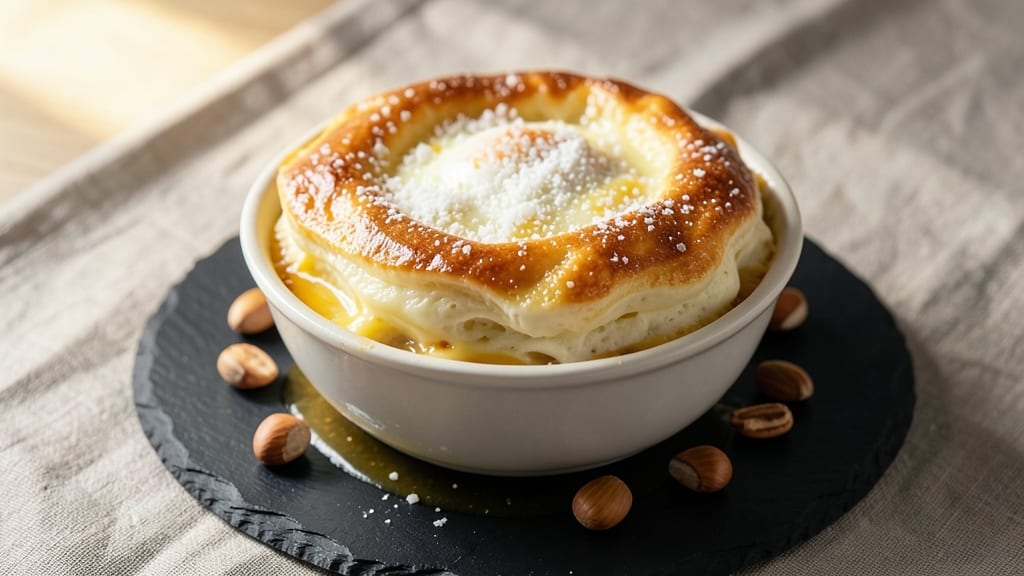
This 4 cheese egg souffle recipe delivers restaurant-quality lightness with rich, melty layers that defy expectations. ✨ The secret lies in proper egg separation and gentle folding—techniques that transform simple ingredients into ethereal clouds with a golden crust.
After years of testing, I've perfected a method that ensures your souffle rises dramatically while maintaining that signature tender, creamy interior.
What sets this recipe apart is the four-cheese blend—Gruyère for nutty depth, sharp cheddar for tang, creamy brie for richness, and a touch of parmesan for umami.
The key to success is folding the cheese into the egg whites at the very last moment, preserving that signature airy texture while creating pockets of gooey goodness. Even beginners can master this technique with the right approach.
By the time it emerges from the oven, you'll have a souffle that's light as air yet impossibly rich—golden on the outside, with a velvety interior that practically melts in your mouth.
The aroma alone will have everyone gathering around the table, and each bite delivers that perfect balance of cheesy indulgence and delicate texture. This is the kind of dish that transforms an ordinary dinner into something truly memorable.
Serve immediately with fresh chives or parsley for a pop of color, or pair with a crisp green salad to cut through the richness. The secret to plating is simple: run a knife around the edge, slide a plate underneath, and tip gently—no collapse, just perfect presentation.
Here's how to make it happen.
Ingredients for 4 cheese egg souffle
Six eggs, four cheeses, and a touch of precision—this is your ticket to restaurant-worthy soufflé perfection.
| Ingredient | Amount | Notes |
|---|---|---|
| Large Eggs 🥚 | 6 whole | Room temperature, separated carefully |
| Gruyère Cheese 🧀 | ½ cup | Finely grated, aged 12+ months |
| Sharp White Cheddar Cheese 🧀 | ½ cup | Shredded, aged 6+ months |
| Brie Cheese 🧀 | 4 oz | Soft-ripened, rind removed |
| Parmesan Cheese 🧀 | ¼ cup | Freshly grated, fine texture |
| Unsalted Butter 🧈 | 2 tbsp | European-style, cold |
| Granulated Sugar 🍚 | 1 tbsp | Superfine preferred |
| Diamond Crystal Kosher Salt 🧂 | ½ tsp | Fine grain preferred |
| Fresh Chives 🌿 | 2 tbsp | Finely chopped, for garnish |
| Extra-Virgin Olive Oil 🫒 | 1 tbsp | For buttered ramekins |
| All-Purpose Flour 🌾 | 1 tbsp | For dusting ramekins |
The cheese selection makes all the difference. Gruyère from Switzerland or France delivers that signature nutty depth—look for blocks with visible holes and a vibrant yellow hue. Sharp white cheddar should have a pronounced tang; Wisconsin's Cave Creek Farms is my go-to. Brie needs to be soft-ripened with a buttery texture—President Brie from France is ideal, but Brie de Meaux works too. For Parmesan, Parmigiano-Reggiano from Italy is non-negotiable; pre-grated lacks the finesse. All cheeses should be freshly grated using a microplane for the finest texture possible.
No Gruyère? Comté cheese is an excellent substitute—it shares that same crystalline texture when melted. For cheddar, Pecorino Romano adds a sharper profile if you're avoiding dairy tang. Brie unavailable? Triple crème cheese like Boursin melts beautifully. The eggs must be room temperature—cold eggs won't whip properly. For the sugar, superfine dissolves faster, but regular granulated works if pulsed briefly in a food processor. The butter should be European-style (82% fat minimum) for optimal flavor and melt. If your olive oil lacks fruity notes, California-grown brands like Corto or Lucini elevate the dish.
Egg whites oxidize quickly, so separate them immediately before whipping. Store the yolks and whites in separate bowls until ready to use. Cheeses keep best in airtight containers in the fridge for up to 1 week after opening. For the soufflé itself, serve immediately—it deflates rapidly. If you must reheat, broil for 1-2 minutes at 375°F to restore some structure. The ramekins should be 4-ounce capacity for perfect proportions; butter and flour them generously to prevent sticking. Preheat your oven to 350°F with a rack positioned in the lower third for even heat distribution.
Why You'll Love This Recipe
- No Fussy Prep: I swear by this one—just whisk eggs, grate cheese, and fold. No measuring cups, no stress. The Gruyère melts into that perfect stretchy pull, and the Parmesan adds crunch without extra effort.
- Cheese Love Bomb: That combo of sharp cheddar, creamy Brie, and nutty Gruyère? It’s like a flavor party in your mouth. The Parmesan rind toasts to crispy perfection while the center stays lusciously soft—trust me, you’ll want seconds.
- Weeknight Crowd-Pleaser: Serve it at brunch, dinner, or even as a fancy appetizer. It’s light enough for lunch but hearty enough to satisfy when your in-laws drop by. (Yes, even on a Tuesday night.)
- Leftovers? No Problem: The souffle keeps well for days—reheat slices in the oven until golden, or toss them into salads for a protein boost. Honestly, I make a double batch just to have it on hand.
Step-by-step instructions for 4 cheese egg soufflé
Mastering soufflés requires precision—here's the method that guarantees perfect rise and melty cheese layers.
👨🍳 Step 1: Prepare the Ramekins and Preheat the Oven
Preheat your oven to 375°F with the rack positioned in the lower third. This lower position creates the ideal environment for even baking and prevents the soufflés from browning too quickly. While the oven heats, generously butter 4 ramekins (about 6-ounce size) using the 2 tbsp unsalted butter, rubbing it on all interior surfaces with your fingers. Then dust each ramekin with the 1 tbsp all-purpose flour, tapping out any excess. This butter-flour coating creates a nonstick barrier that prevents sticking and helps create that signature soufflé lift.
I always double-check my ramekins are perfectly level on the baking sheet—uneven surfaces can cause uneven rising. Place the prepared ramekins on the baking sheet and keep them nearby for the next steps. The butter should be completely melted and the flour evenly distributed to ensure a smooth base for your soufflé.
🥘 Step 2: Separate Eggs and Whip the Whites to Stiff Peaks
Carefully separate the 6 whole large eggs, placing yolks in one bowl and whites in another. I use a fine-mesh strainer to catch any rogue bits of yolk that might fall into the whites—this ensures perfectly clean whites for maximum volume. Add the 1 tbsp granulated sugar and 0.5 tsp kosher salt to the whites and begin whipping with a stand mixer fitted with the whisk attachment on medium speed.
Increase to high speed and whip for 3-4 minutes until the whites form stiff peaks that hold their shape when the whisk is lifted. The meringue should be glossy and hold a firm point when you draw your finger through it. This step is critical—under-whipped whites won't provide enough lift, while over-whipped whites can deflate. I always test the consistency by lifting the whisk; if the peak stands straight up, it's ready.
👨🍳 Step 3: Melt the Cheeses and Combine with Yolks
In a heatproof bowl set over a saucepan of barely simmering water (double boiler), gently melt the 4 oz brie cheese along with 0.5 cup gruyère cheese and 0.5 cup sharp white cheddar cheese until completely smooth. Remove from heat and stir in the 0.25 cup parmesan cheese until fully incorporated. The mixture should be creamy and homogeneous—no cheese should remain in solid chunks.
In a separate bowl, whisk together the egg yolks with the melted cheese mixture until smooth. I like to press the mixture through a fine-mesh sieve to ensure no cheese particles remain. This step creates the rich, flavorful base that will give your soufflés their signature melt-in-your-mouth texture. The cheese should be completely dissolved and the mixture should have a velvety consistency.
🥘 Step 4: Fold Cheese Mixture into Egg Whites
Using a rubber spatula, gently fold one-third of the whipped egg whites into the cheese mixture to lighten it. Then carefully fold in the remaining whites in two additions, being very gentle to maintain maximum air incorporation. The goal is to create a smooth, thick batter that still holds its shape when spooned—it should resemble thick pudding with no streaks of white.
I always use the "J" technique for folding: dip the spatula into the center of the whites, scrape along the bottom of the bowl in a "J" shape, and fold over the top. This method preserves the air bubbles that give soufflés their lift. The batter should be thick enough to hold its shape when spooned but still light enough to create those signature airy pockets.
🔥 Step 5: Fill Ramekins and Bake to Perfection
Divide the batter evenly among the prepared ramekins, filling each about three-quarters full. Tap the ramekins gently on the counter to release any air bubbles that might have formed. Place them in the preheated oven and bake for 12-15 minutes until the soufflés have risen to about double their original height and are puffed at the top. The edges should be golden brown, but the centers should still appear slightly underdone.
Here's where timing is everything: open the oven door just a crack to check for doneness at 12 minutes. If they've risen but still look slightly soft, return them to the oven for another minute or two. The soufflés will continue to rise slightly after removal, so don't wait until they're fully set in the oven. Serve immediately, garnished with the 2 tbsp fresh chives, for that perfect balance of airy texture and melty cheese.
Pro Tips For Making 4 Cheese Egg Souffle
- Preheat ramekins first: Place your ramekins in a 350°F (175°C) oven for 5-10 minutes before baking—this ensures even heat distribution and prevents the bottoms from sticking. I learned this the hard way after pulling out soufflés with half the egg still raw because the cold metal sucked heat.
- Grate cheeses unevenly: Use a mix of fine and coarse grates for your cheeses—Gruyère and Parmesan get the fine side, while Brie and cheddar go on the coarse. The texture contrast makes the soufflé richer, and it melts more dramatically. (Yes, even if it looks messy—trust me.)
- Whip yolks last: Save the egg yolks for the very end and fold them in gently with a rubber spatula—just until combined. Adding them too early can deflate the egg whites, and overmixing turns the soufflé dense. Think "marry, don’t murder" the batter.
- Bake at 325°F, not 350°F: Soufflés rise fast but cook slow—325°F (160°C) gives you that perfect set without overbrowning the top. I used to blast them at 350°F and ended up with a crusty shell hiding undercooked centers. Patience here pays off.
Storing and reheating this recipe
Refrigerator Storage
Soufflés are best served immediately, but if you must store them, refrigerate for no more than 2 hours before baking. Place unbaked batter in an airtight container and keep it chilled until ready to use. The texture won't be as light, but it's manageable for small gatherings.
If you've already baked the soufflés and need to store them, transfer to an airtight container and refrigerate for up to 1 hour before reheating. 🌡️
Freezing Unbaked Batter
For make-ahead convenience, freeze the unbaked souffle batter in airtight containers for up to 1 month. Thaw overnight in the refrigerator before baking. The texture will be slightly denser, but it's a great option for busy days.
When ready to bake, simply follow the same instructions but increase the baking time by 2-3 minutes to account for the cold batter.
Reheating Baked Soufflés
If you must reheat a baked souffle, broil for 1-2 minutes at 375°F to restore some structure and warmth. Place the souffle on a baking sheet and watch closely to prevent over-browning.
For a gentler approach, use the oven's "warm" setting for 5-7 minutes. Garnish with fresh chives or parsley before serving to brighten the dish. ⏱️
Reviving Deflated Soufflés
If your souffle has deflated after baking, don't despair! Place it under a preheated broiler for 30-60 seconds to crisp the top and restore some height. This technique works best if done immediately after baking.
For a more dramatic effect, broil for 1 minute and serve quickly while warm. The texture won't be as airy, but it's a great way to salvage a dish.
Serving Leftovers
Soufflés deflate quickly, so serve any leftovers immediately after reheating. For a creative twist, crumble the reheated souffle over a fresh salad or use it as a topping for toasted bread.
The melty cheese layers still shine, even in a different context. Store leftovers in the refrigerator for up to 24 hours before reheating. 💫
Preventing Future Issues
Avoid storing baked soufflés for more than 1 hour—they lose their signature airy texture quickly. If you're planning ahead, focus on freezing the unbaked batter instead. Always use room-temperature eggs and freshly grated cheese for the best results.
Keep your ramekins and baking sheet ready to go for a seamless baking experience. This way, you can enjoy perfectly risen soufflés every time. 🔥
Nutrition facts
Frequently asked questions
Can I make this souffle without a stand mixer?
Use a hand mixer or even whisk by hand for 5-7 minutes until stiff peaks form. For best results, work in a spotless bowl with no grease—even tiny amounts can prevent proper whipping. The key is patience: whip until the meringue holds its shape when you lift the whisk.
Why did my souffle collapse completely?
Collapse usually happens from three issues: overmixing the whites (breaking air bubbles), opening the oven door too early, or underbaked centers. Check your whites for glossy, firm peaks before folding. Bake until the edges are golden but the center still jiggles slightly—it'll finish rising after removal.
What's the best way to serve this souffle?
Serve immediately with fresh chives or parsley> for color contrast. For a complete meal, pair with a crisp green salad and dry white wine like Sauvignon Blanc. The cheese layers melt beautifully when served warm—wait no more than 5 minutes after baking for perfect texture.
Can I substitute any of the cheeses?
Yes! For Gruyère, try Comté or Emmental. Replace cheddar with Pecorino Romano for sharper flavor. Brie can be swapped for Triple Crème cheese like Boursin. Keep the total cheese amount the same—1.75 cups total—and ensure all cheeses are freshly grated for best results.
How do I know when the egg whites are properly whipped?
Test by lifting the whisk: stiff peaks should stand straight up when removed. The meringue should be glossy and hold its shape when you draw your finger through it. If it flattens immediately, keep whipping—overmixing turns it grainy.