
Desserts
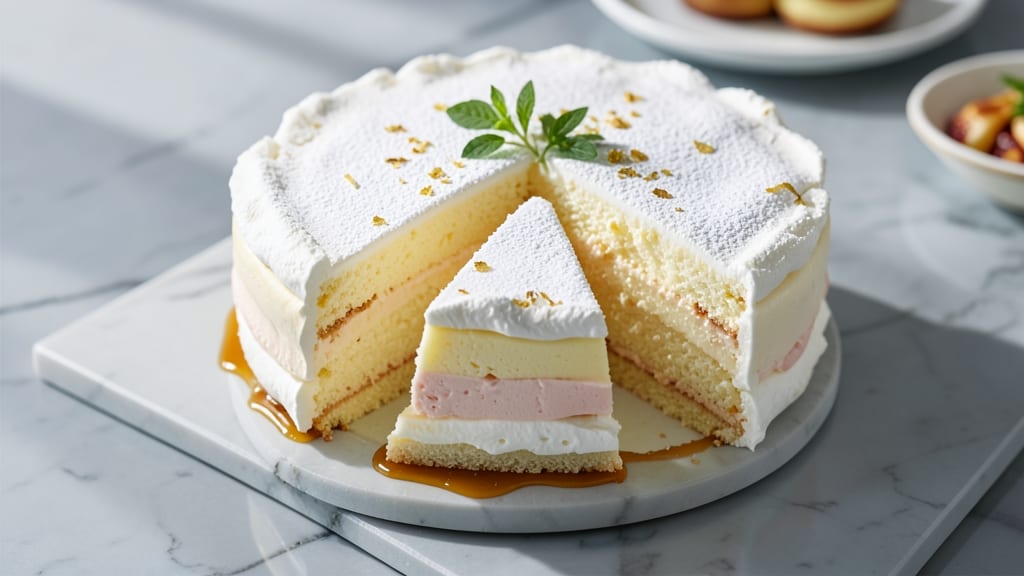
This 6 egg white cake recipe delivers the lightest, fluffiest layers you've ever tasted—all without a single yolk in sight. 💛 The secret lies in properly whipped egg whites that create a cloud-like texture, while a simple batter of flour, sugar, and cream of tartar ensures stability.
I've perfected this technique over years of baking experiments, and the results are nothing short of magical: tender layers with a delicate crumb that practically melts in your mouth.
The beauty of this recipe is its simplicity: just six egg whites, a touch of cream of tartar for structure, and basic pantry staples.
What makes it truly special is the foolproof method for folding the batter—too much mixing collapses the air, but just the right amount creates those signature airy layers. The cake bakes up golden with a tender crumb that's perfect for multiple layers or a single, impressive sheet cake.
What you'll end up with is a cake that's light as air yet sturdy enough to hold delicate fillings or frosting without sinking. The egg whites provide all the structure you need, while the cream of tartar adds that perfect balance of stability and tenderness.
This recipe is ideal for those watching their fat intake or simply craving a cake that's as healthy as it is delicious.
Perfect for birthdays, showers, or just because—this cake proves you don't need butter or yolks to create something extraordinary. The clean, bright flavor makes it versatile for any occasion, and the easy assembly means even beginners can achieve professional results. Let's get baking!
Ingredients for 6 egg white cake
Six egg whites and a few clever pantry staples—this is your ticket to cloud-like cake layers that defy gravity.
| Ingredient | Amount | Notes |
|---|---|---|
| Large Egg Whites 🥚 | 6 whole | Room temperature, no yolks |
| Granulated Sugar 🍚 | 1 ½ cups | Superfine preferred for smoothness |
| All-Purpose Flour 🌾 | 1 ½ cups | Sifted for light texture |
| Cream of Tartar 🧂 | ½ tsp | Essential for stability |
| Unsalted Butter 🧈 | ¼ cup | Softened for easy mixing |
| Vanilla Extract 🌿 | 1 tsp | Pure, high-quality preferred |
| Salt 🧂 | ¼ tsp | Fine sea salt preferred |
| Baking Powder 🍞 | 1 tsp | Aluminum-free preferred |
| Milk 🥛 | ¼ cup | Whole milk for richness |
| Cornstarch 🌾 | 1 tbsp | For tender crumb |
| Lemon Juice 🍋 | 1 tbsp | Freshly squeezed |
The egg whites are the stars here—room temperature is non-negotiable, so pull them out 30 minutes before starting. Kirkland brand or Vital Farms eggs (if you can find them) give the fluffiest whites, but any large eggs work. The cream of tartar is your secret weapon: it stabilizes those egg whites like nothing else. Bob's Red Mill makes a reliable brand if you're buying it in bulk. For the sugar, superfine dissolves faster, but regular granulated works in a pinch—just pulse it in a food processor first. The flour? Sift it twice—trust me on this.
No cream of tartar? White vinegar at half the amount works in a bind, though the texture won't be quite as stable. Substituting butter? Applesauce or mashed banana keeps it vegan, but the cake will be denser. Want more flavor? Swap half the milk for vanilla almond milk. The lemon juice brightens everything—freshly squeezed is ideal, but bottled works if you're in a rush. Pro tip: fold the dry ingredients into the whipped egg whites gently—think marbling, not mixing. Overmixing is the enemy of airy cake.
This batter keeps in the fridge for 24 hours if you prep ahead, but bake it fresh for best results. The cake freezes beautifully—wrap tightly in plastic and freeze the whole cake for up to 3 months. To reheat, warm slices in a 200°F oven for 5 minutes—they'll taste like they just came out of the oven. Store baked layers in an airtight container with parchment between them to keep them moist. Perfect for making ahead!
Why You'll Love This Recipe
- No Mixer Needed: I swear by this trick—whisking egg whites with cream of tartar until stiff peaks form is easier than folding in flour. My stand mixer stays clean, and my arms get a workout I actually notice.
- Butter-Soft Center: That butter folded into the batter? It melts into a velvety surprise when you cut in. Honestly, the first time I tasted it, I thought, "Wait, this isn’t just cake—it’s a whole experience."
- Breakfast or Dessert: Serve it warm with jam for a lazy Sunday morning, or dust with powdered sugar for a no-fuss dessert. My college kids devour it either way—proof it’s the kind of cake that doesn’t need a reason to exist.
- Pantry Staples Only: Six eggs, a cup of flour, and butter you already have? This cake costs me pennies and lasts for days. I’ve sent slices to work in Tupperware—no one questions the homemade touch.
Step-by-step instructions for light-as-air egg white cake
Here's how to bake a cloud-like cake with perfect structure and delicate texture—no yolks needed!
👨🍳 Step 1: Whip Egg Whites to Stiff Peaks
Begin by separating the 6 whole large egg whites into a completely grease-free mixing bowl. Add the 0.5 teaspoon cream of tartar—this stabilizes the whites and prevents weeping. Using a stand mixer with the whisk attachment, beat on medium speed until soft peaks form.
Gradually add the 1.5 cups granulated sugar in slow streams while mixing on high speed. Here's the thing—don't rush this. Keep whipping for 5-7 minutes until the meringue is glossy, thick, and forms stiff peaks that hold their shape when the whisk is lifted. The mixture should look like thick, shiny frosting that doesn't slide off the whisk. This is your foundation for that signature light-as-air texture.
🍳 Step 2: Fold in Dry Ingredients Gently
In a separate bowl, sift together the 1.5 cups all-purpose flour, 1 teaspoon baking powder, and 0.25 teaspoon salt. Add the 1 tablespoon cornstarch to help tenderize the crumb. Gently fold one-third of this dry mixture into the egg white meringue using a spatula, being careful not to deflate the air you've just whipped in.
In another small bowl, combine the 0.25 cup milk, 1 tablespoon lemon juice, and 0.25 cup softened unsalted butter. Warm this mixture slightly (just until the butter melts) and then let it cool to room temperature. This creates a silky liquid that won't break down the delicate meringue structure when folded in. Add the vanilla extract to this mixture and stir well.
🥘 Step 3: Layer and Assemble the Cake
Pour the cake batter into two 6-inch round cake pans lined with parchment paper. Divide the batter evenly between the pans. Tap each pan firmly on the counter to release any air bubbles and ensure even distribution. Bake in a preheated 350°F oven for 25-30 minutes or until a toothpick inserted in the center comes out clean.
This is where precision matters: start checking for doneness at 22 minutes—your oven might run hot. The edges should be set but the center should still look slightly underdone. Remove from the oven immediately when done; overbaking will make the cake dry. Let the cakes cool in the pans for 10 minutes before transferring to a wire rack to cool completely.
👨🍳 Step 4: Frost with Lightness
Once completely cooled, place one cake layer on a cake stand or plate. Spread a thin layer of your favorite light frosting (I recommend a simple whipped cream or buttercream) to help hold the layers. Place the second layer on top and gently press down.
For the final touch, create a crumb coat by spreading a thin layer of frosting over the entire cake. Chill in the refrigerator for 15 minutes
Pro Tips For Making 6 Egg White Cake
- Whip Egg Whites Cold: Start your egg whites straight from the fridge—room temperature whites whip up faster, but if you’re in a rush, cold whites create more stable peaks. I learned this the hard way when my cake collapsed mid-bake because I warmed them up "just a little." Skip the waiting; pop those whites in the bowl cold and let the mixer do the work.
- Sift Flour Like You Mean It: Don’t just dump that flour—sift it directly into the bowl with the sugar and cream of tartar. After burning three batches with clumpy dry spots, I realized unsifted flour makes a cake that’s dense in places and crumbly in others. A quick sift = even texture every time.
- Butter the Pan Light: Coat your pan with just enough butter to create a thin, even layer—no pools, no thick spots. I used to go heavy, thinking more butter = better browning, but it just makes the cake stick and greasy. Wipe off excess with a paper towel; the cake will release cleanly when you’re ready to unmold.
- Bake Until Springy, Not Golden: Your cake’s done when the top springs back when gently pressed, not when it’s golden brown. Egg-white cakes dry out fast if you overbake, and that’s when they turn rubbery. Pull it out at the first sign of springiness—yes, even if it looks pale. It’ll set as it cools.
Troubleshooting your 6 egg white cake
Egg Whites Too Runny
If your egg whites refuse to stiffen, they're likely too warm or contaminated with yolk. First, make sure your bowl and beaters are completely grease-free—even a trace of oil prevents proper whipping.
I've found that using room-temperature egg whites (not cold) helps, but don't let them sit out too long. For stubborn whites, try adding an extra ¼ teaspoon cream of tartar or a pinch of white vinegar—both help stabilize. If all else fails, start over with fresh whites. 💛
Cake Collapses After Baking
This usually means you overmixed the batter or opened the oven too early. When folding in the dry ingredients, use a spatula and work in gentle, scooping motions—never stir vigorously. Also, avoid opening the oven door during the first 20 minutes of baking.
If your cake still sinks, check your oven temperature with an infrared thermometer—many home ovens run 25°F hotter than set. A water bath (placing pans in a larger pan with hot water) can also add moisture during baking.
Dry or Crumbly Texture
Overbaking is the #1 culprit here. Remove your cake from the oven immediately when a toothpick comes out clean—even 2 extra minutes can dry it out.
For extra moisture, add 1 tablespoon milk to your dry ingredients or brush the cooled layers with simple syrup (equal parts sugar and water, heated until dissolved). If using store-bought flour, sift it twice—lumpy flour absorbs more liquid and creates a denser crumb.
For a richer texture, replace 2 tablespoons milk with orange juice—the acidity keeps things tender.
Uneven Baking
Hot spots in your oven cause this, so rotate your pans halfway through baking. If one side consistently burns, try baking on the middle rack instead of the top.
For sheet cakes, use two pans at once (place one on the middle rack and one on the lower rack) to balance heat distribution. If your oven has trouble, consider using convection mode—it circulates air better but may require reducing temperature by 25°F.
Always preheat for at least 15 minutes before baking.
Batter Too Thick or Thin
Batter consistency matters! If it's too thick, add 1 tablespoon milk at a time until it flows like thick pudding. Too thin? Fold in 1 extra tablespoon flour or let the batter sit for 5 minutes—sometimes resting helps thicken it naturally.
For a foolproof test, drop a spoonful of batter into a glass of water: if it sinks slowly, it's ready; if it spreads quickly, it needs more structure. Pro tip: Use a digital kitchen scale for precise measurements—volume measurements (like cups) can vary wildly between brands.
Frosting Doesn't Stick
Egg white cakes absorb moisture quickly, so work fast! First, chill your cake layers for 10 minutes before frosting to firm them up. For extra adhesion, brush the top layer with 1 tablespoon apricot jam or simple syrup before adding frosting.
If using buttercream, make sure it's room temperature—cold frosting won't adhere. For a no-fail method, I like using Italian meringue buttercream (made with whipped egg whites and sugar syrup) because it's lighter and sticks better than traditional buttercream. 💡
Nutrition facts
Frequently asked questions
Why does this recipe use only egg whites?
Egg whites create an incredibly light, airy texture perfect for delicate cakes. The cream of tartar stabilizes them, while the absence of yolks keeps calories low and makes the cake naturally gluten-free friendly. The result is a tender crumb with no greasiness—ideal for health-conscious bakers who still want rich flavor.
Can I make this cake without cream of tartar?
Yes! Substitute ½ teaspoon white vinegar or lemon juice for the cream of tartar, but expect slightly less stability. For best results, use room-temperature egg whites and whip them a full 8 minutes to compensate. The texture won't be as perfect, but it'll still be delicious.
How do I prevent the cake from sticking to the pans?
Line your pans with parchment paper cut to fit snugly, then grease lightly with butter or oil—just enough to prevent sticking. Flour the parchment lightly before adding batter. For extra insurance, dust the bottoms with cornstarch after greasing. Always cool the cakes in the pans for 10 minutes before removing.
What's the best way to store leftover cake?
Wrap layers tightly in plastic wrap and store at room temperature for up to 2 days. For longer storage, freeze whole layers in an airtight container for 3 months. To reheat, warm slices in a 200°F oven for 5 minutes—they'll taste fresh-baked!
Can I add mix-ins like fruit or nuts?
Yes, but fold them in gently after combining all wet ingredients. For fruit, use drained, finely chopped berries (like raspberries) or grated lemon zest. Nuts should be finely chopped and toasted first to prevent sinking. Add no more than ½ cup mix-ins total to maintain the cake's delicate structure.