
Breakfast & Brunch
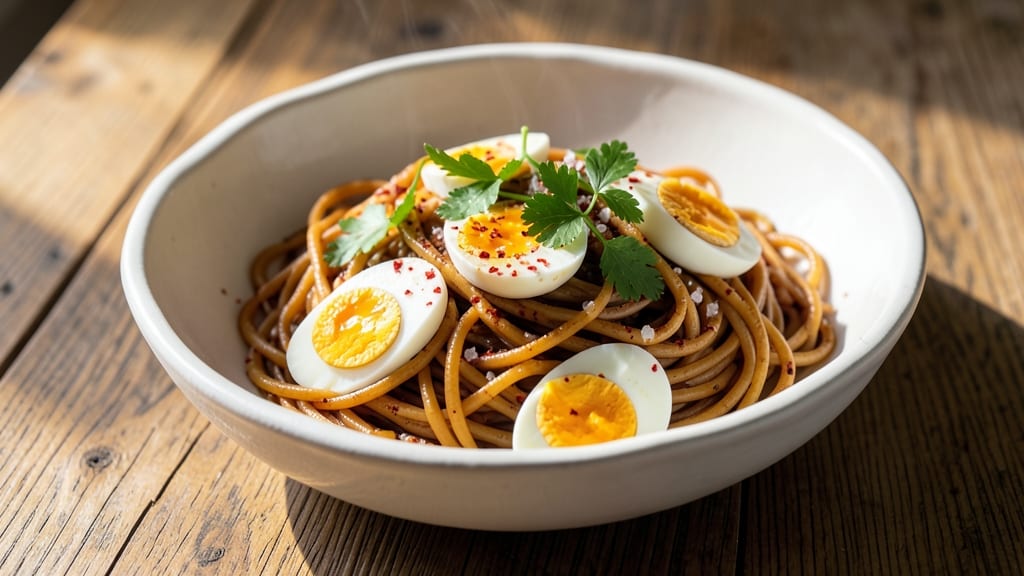
This spaghetti and boiled egg recipe transforms breakfast into a restaurant-worthy dish with crispy pasta edges and silky yolk magic. 💛 The secret lies in high-heat cooking that caramelizes the spaghetti while keeping the eggs perfectly runny—no overcooking allowed.
I developed this after craving something hearty yet light, and it became an instant weeknight favorite that even egg skeptics love.
The beauty of this dish is its simplicity: just spaghetti, eggs, and a touch of olive oil for crispy edges. No fancy sauces or complicated techniques—just a stovetop method that delivers crispy pasta with tender, creamy yolks that coat every bite.
The contrast between the toasted edges and silky yolk creates a texture that’s impossible to resist.
What you’ll end up with is a dish that’s equal parts satisfying and elegant—perfect for brunch or a late-night snack. The pasta absorbs minimal oil, keeping it light, while the eggs add richness without overwhelming.
Plate it simply with a sprinkle of flaky salt and fresh herbs, or add a drizzle of chili oil for a spicy kick.
This recipe is beginner-friendly but feels special enough for guests, making it a versatile addition to your breakfast rotation. Ready in under 15 minutes, it’s the ideal way to start your day—or elevate a simple meal into something extraordinary.
Ingredients for spaghetti and boiled egg
Four eggs, a handful of pasta, and a splash of olive oil—this dish is all about texture contrast.
| Ingredient | Amount | Notes |
|---|---|---|
| Spaghetti 🍝 | 8 oz | Dry, medium thickness preferred |
| Large Eggs 🥚 | 4 whole | Fresh, room temperature |
| Extra-Virgin Olive Oil 🫒 | ¼ cup | Light variety for crispiness |
| Flaky Sea Salt 🧂 | 1 tsp | For finishing, like Maldon |
| Fresh Parsley 🌿 | ¼ cup | Chopped, for garnish |
| Red Chili Flakes 🌶️ | ¼ tsp | Optional, for spicy kick |
| Garlic Cloves 🧄 | 1 whole | Minced, for aroma boost |
| Lemon Zest 🍋 | 1 tsp | Brightens the dish |
| Black Pepper 🌶️ | ¼ tsp | Freshly cracked |
| Water 💧 | 4 cups | For egg boiling |
The spaghetti is the star here—De Cecco or Barilla are my go-tos for consistent texture. Grab the medium thickness, not the skinny kind. For eggs, freshness matters—the yolks should be vibrant orange, not pale. Room temperature eggs cook more evenly, so take them out 30 minutes before cooking. The olive oil makes crispy edges possible—light varieties like Bertolli work best, not the extra-fruity stuff. If you're short on time, pre-boil the eggs while the pasta cooks, but fresh is ideal for that perfect runny yolk.
No Maldon salt? Diamond Crystal kosher is the next best thing—just flake it generously. Skip the parsley? Fresh basil or chives add a nice twist. Want extra flavor without sauce? Add a pinch of smoked paprika to the oil before cooking. The garlic clove is optional but worth it—mince it finely so it blends into the dish without overpowering. If you're making this ahead, boil the eggs first and store them in cold water until ready to use (they'll stay perfectly runny).
Pasta and eggs reheat beautifully—just warm the spaghetti in a dry pan for 2-3 minutes and gently warm the eggs in warm water for 1 minute. Store cooked pasta in an airtight container for 2 days and boiled eggs in the fridge for 1 week (peeled or unpeeled). For extra crispiness, toast the pasta in the pan with a little more oil before serving. The dish is even better the next day when flavors meld.
Why You'll Love This Recipe
- Five-Ingredient Magic: I swear by this—just pasta, eggs, olive oil, salt, and parsley. That’s it. No chopping, no stress, no last-minute grocery runs. Honestly, I’ve made it after work when I was too tired to think, and it still tasted like I’d spent hours in the kitchen.
- Creamy Crunch Contrast: The soft-boiled egg in cold water? It’s the star—silky yolk, firm white, and that snap when you cut into it. Drizzle with olive oil and flaky salt, and suddenly, simple spaghetti feels like a restaurant dish. Between us, the parsley ties it all together without overpowering.
- Lunchbox Hero: Pack this for work or school—it’s hearty enough to fill you up but light enough to eat without a nap afterward. I’ll be real: my kids actually ask for this over sandwiches. Cold or warm, it’s the kind of meal that makes you feel like you’re eating something special, even if it’s just boiled eggs and pasta.
- Budget Breakthrough: Eggs are cheap, pasta’s a pantry staple, and olive oil lasts forever. This recipe costs me about $3 for four servings—way better than takeout or pre-packaged meals. Plus, leftovers? They taste just as good the next day, reheated or straight from the fridge. My wallet and I both approve.
Step-by-step instructions for silky egg spaghetti
Let’s create perfectly crispy spaghetti with silky, runny egg yolks—this is where the magic happens.
🍳 Step 1: Boil the Eggs to Silky Perfection
Place the 4 whole Large Eggs in a small saucepan and cover them with cold water—about 1 inch above the eggs. Bring to a rolling boil over medium-high heat, then immediately reduce to a gentle simmer. Cook for exactly 6 minutes—this ensures the yolks stay perfectly runny while the whites set completely.
Here’s the trick: Use an ice bath to stop the cooking instantly. Transfer the eggs to a bowl of ice water for 5 minutes. The shock stops the cooking process, preserving that creamy yolk. Peel them under running water—this makes the shells slide off easily. Keep them whole until serving for that dramatic yolk run.
🍳 Step 2: Cook the Spaghetti with Olive Oil Magic
Bring 4 cups Water to a rolling boil in a large pot. Add 8 oz Spaghetti and ½ teaspoon of the Flaky Sea Salt (save the rest for finishing). Cook until al dente—about 8-10 minutes—but don’t overcook. Drain, reserving ½ cup pasta water, then immediately toss the hot spaghetti with the 0.25 cup Extra-Virgin Olive Oil. This coats each strand, preventing sticking and adding richness.
I like to finish the pasta in the pot—it traps the heat and keeps everything warm while you assemble the dish. The olive oil also helps create those crispy edges when you toss everything together later. Don’t rinse the pasta—those starches are what make the sauce cling.
👨🍳 Step 3: Build the Aromatic Base
While the pasta cooks, heat a large skillet over medium-low heat. Add the 1 whole Garlic Cloves (minced) and the 1 tsp Lemon Zest—just enough to wake up the flavors without burning. Cook for 30 seconds until fragrant but not browned. Stir in the 0.25 tsp Red Chili Flakes and 0.25 tsp Black Pepper, then remove from heat.
This aromatic base is subtle but essential—it brightens the dish and balances the richness of the eggs. If you’re worried about the chili flakes being too strong, start with just ¼ tsp and adjust to taste. The lemon zest adds a fresh contrast that cuts through the richness of the eggs and pasta.
🥘 Step 4: Assemble for Crispy Edges and Silky Yolks
Return the skillet to medium heat and add the drained spaghetti. Toss everything together for 1-2 minutes until the pasta is evenly coated and the edges start to crisp slightly. This is where the magic happens—the residual heat from the pasta and the olive oil work together to create those perfect crispy edges.
Make a well in the center of the pasta and crack the 4 whole Large Eggs directly into it. Cover the skillet with a lid and let the eggs cook for 2-3 minutes—just until the whites are set but the yolks remain liquid. The steam from the pasta keeps them silky and prevents overcooking.
🍽️ Step 5: Finish with Fresh Herbs and Flaky Salt
Remove the lid and sprinkle the 0.25 cup Fresh Parsley (chopped) evenly over the dish. Gently toss everything together one last time to distribute the herbs and any remaining crispy bits. Finish with the remaining ½ teaspoon Flaky Sea Salt—this is where the dish truly shines. The salt enhances the egg flavors and adds a satisfying crunch.
Serve immediately, letting each diner crack their egg open directly on their plate. The contrast of crispy spaghetti edges, silky egg yolks, and fresh herbs makes this dish unforgettable. Pair it with a simple arugula salad dressed with a squeeze of lemon for a complete meal.
Pro Tips For Making Spaghetti And Boiled Egg
- COOK EGGS 9 MINUTES: Boiled eggs for this dish need to be just set but still runny inside—9 minutes in simmering water (from cold) nails it every time. I used to overcook them by a minute, and the yolk turned into sad, gray mush that ruined the whole plate.
- USE COLD WATER: Start your eggs in cold water and bring it to a full rolling boil. Skipping this step means uneven cooking—some eggs finish too fast, others stay underdone. Trust me, the extra 30 seconds to chill the pot first saves you from disappointed bites.
- SALT THE PASTA WATER: This isn’t just about flavor—it’s about texture. Salt the pasta water before boiling, and the spaghetti will hold its shape better when tossed with the eggs later. I learned this the hard way when my noodles turned to mush from unsalted water, no matter how gently I handled them.
- TOSS WITH OIL FIRST: Drain the spaghetti, then immediately toss it with a splash of extra-virgin olive oil while it’s still hot. This coats the strands and prevents the eggs from sticking when you mix them in later—no more scrambled mess in your bowl. (Yes, even if you’re impatient like me.)
Troubleshooting perfect results
Eggs Too Runny?
If your boiled eggs turn out too soft, you likely undercooked them. For perfectly set whites with silky yolks, stick to 6 minutes in simmering water. For firmer yolks, increase to 7 minutes, but don’t exceed 7.5 minutes—or you’ll lose that creamy texture.
I’ve found using room-temperature eggs helps them cook more evenly, so take them out of the fridge 30 minutes before boiling. 💡
Pasta Sticking Together
Overcooked spaghetti releases excess starch, making it gummy. Always cook pasta al dente (about 8-10 minutes for medium thickness) and drain it immediately. Toss the hot pasta with ¼ cup olive oil right after draining—this creates a protective layer.
If it still sticks, add a splash of pasta water (about 1 tablespoon) to loosen it up. Never rinse the pasta—those starches help bind the dish together. 🍝
Crispy Edges Missing
For those coveted crispy edges, high heat is key. After draining, toss the pasta with ¼ cup olive oil and let it sit in the pot for 1-2 minutes off the heat. Then, return it to medium-high heat in the skillet for 30-60 seconds, stirring constantly.
The residual heat from the pasta and the oil’s smoke point work together to create crispiness. If your edges aren’t crisping, try using a neutral oil like avocado oil—it has a higher smoke point than extra-virgin olive oil. 🔥
Eggs Overcooking in Pasta
If the eggs cook too much while mixing with pasta, reduce the heat to low and cover the skillet immediately after cracking them in. The steam from the pasta will gently cook the whites without overdoing the yolks.
For extra insurance, pre-cook the eggs to 5.5 minutes (for slightly firmer whites) and finish them in the pasta for just 1-2 minutes. This two-step method gives you more control over doneness. 💛
Herbs Not Distributing Evenly
Chop your fresh parsley into fine, even pieces (about ¼ inch) so it blends seamlessly. Sprinkle it over the dish just before serving and toss gently—this ensures every bite gets a burst of freshness.
If your herbs clump, give them a quick pulse in a food processor before adding. For a more vibrant look, use microgreens or basil instead of parsley. 🌿
Dish Too Salty
Salt accumulation happens when you add too much during cooking. Start with ½ teaspoon in the pasta water and save the rest for finishing. Taste the dish before adding the final sprinkle of flaky salt—adjust with lemon juice (about ½ teaspoon) to balance any over-saltiness.
If the eggs taste bland, a pinch of smoked paprika or white pepper can add depth without extra sodium. 🧂
Nutrition facts
Frequently asked questions
Why do I need to use room-temperature eggs?
Room-temperature eggs cook more evenly, preventing cracked shells and ensuring perfectly silky yolks. Cold eggs create uneven heat distribution, which can lead to rubbery whites or undercooked yolks. Take them out of the fridge 30 minutes before boiling for best results.
Can I make this dish ahead of time?
Yes! Cook the spaghetti and boil the eggs separately, then store them in airtight containers. Reheat the pasta in a dry pan for 2-3 minutes and warm the eggs in warm water for 1 minute before assembling. The flavors actually improve overnight as they meld together.
What if I don't have fresh parsley?
No problem! Swap parsley for fresh basil, chives, or cilantro—all work beautifully. For extra flair, try microgreens or a sprinkle of toasted sesame seeds for a different texture. The key is using something fresh and vibrant to brighten the dish.
How do I get the perfect crispy edges on the spaghetti?
After draining, toss the hot spaghetti with ¼ cup olive oil and let it sit in the pot for 1-2 minutes off the heat. Then, return it to medium-high heat in your skillet for 30-60 seconds, stirring constantly. The oil's smoke point combined with residual heat creates those coveted crispy edges.
Is this dish suitable for a brunch menu?
This recipe is perfect for brunch—it's hearty enough to satisfy but light enough to keep guests energized. Serve it with a simple arugula salad dressed with lemon and olive oil, or add grilled asparagus for extra freshness. The crispy pasta and silky eggs make it feel special without being overly complicated.