
Breakfast & Brunch
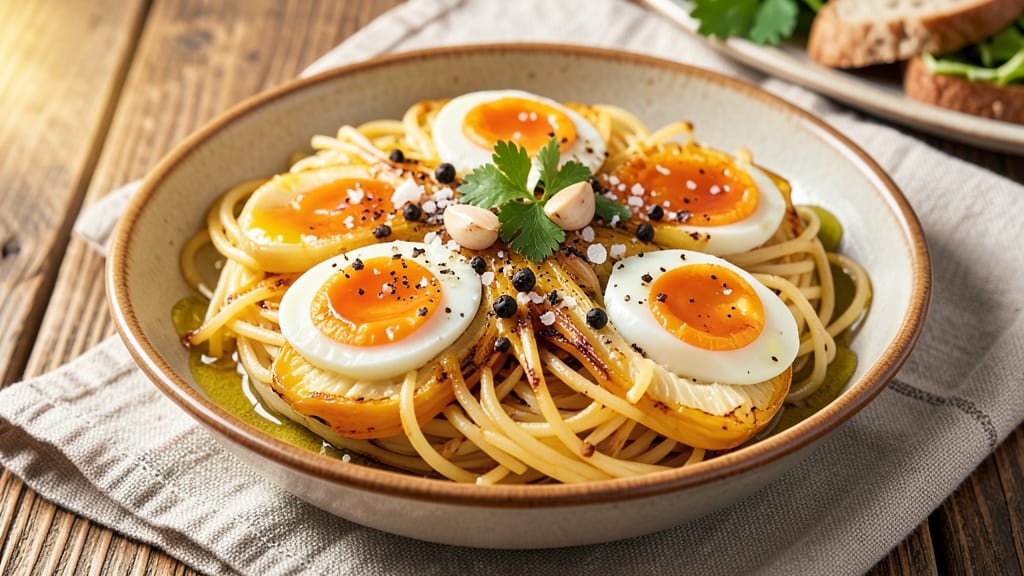
This spaghetti squash egg recipe transforms breakfast into a restaurant-worthy dish with tender squash strands and rich, fluffy yolks. The secret lies in roasting the squash until caramelized, then topping it with perfectly cooked eggs that soak up the natural sweetness.
I developed this recipe after realizing how versatile spaghetti squash could be beyond traditional side dishes—it's the ideal canvas for breakfast proteins. The magic happens when you roast the squash until golden and stringy, then pile it high on a plate and crown it with eggs cooked to your preference.
The squash absorbs the egg yolks beautifully, creating a dish that's both satisfying and elegant. A sprinkle of fresh herbs, chili flakes, or a drizzle of creamy sauce elevates it further without overpowering the natural flavors.
What you'll end up with is a balanced, protein-rich meal that's visually stunning and packed with flavor. The squash strands provide a satisfying texture, while the eggs add richness and depth. It's the kind of dish that feels indulgent yet remains light enough for a morning meal.
Serve with avocado slices, sautéed greens, or a side of toast for a complete breakfast experience. Here's how to make it!
Ingredients for spaghetti squash egg
Roasted squash strands and fluffy eggs—this vegetarian breakfast is all about rich flavors and satisfying textures.
| Ingredient | Amount | Notes |
|---|---|---|
| Spaghetti Squash 🍠 | 1 medium | Medium-sized, about 2 lbs |
| Large Eggs 🥚 | 4 whole | Freshly laid preferred |
| Extra-Virgin Olive Oil 🫒 | 2 tbsp | For roasting squash |
| Salt 🧂 | 1 tsp | Kosher or sea salt |
| Black Pepper 🌶️ | ½ tsp | Freshly ground preferred |
| Garlic Cloves 🧄 | 2 cloves | Minced for seasoning |
| Fresh Parsley 🌿 | ¼ cup | Chopped for garnish |
| Red Chili Flakes 🌶️ | ½ tsp | Adjust to taste |
| Avocado 🥑 | 1 whole | Sliced for serving |
| Butter 🧈 | 2 tbsp | Unsalted for cooking eggs |
| Fresh Thyme Leaves 🌿 | 0.1 cup | Optional garnish |
| Bread 🍞 | 4 slices | Toasted for serving |
| Lemon Juice 🍋 | 1 tbsp | Freshly squeezed |
The spaghetti squash is the star here. Medium-sized (about 2 lbs) works best—smaller ones may not yield enough strands. I always grab mine from the produce section at Whole Foods or the local farmers market (they're sweeter and less waxy). Look for squash that feels heavy for its size and has a dull, matte skin—bright orange color means it's ripe and ready. If you're using a pre-cut squash, check the label for added preservatives. The squash will keep for 1 month in a cool, dark place, but once roasted, it's best eaten within 3 days.
No fresh parsley? Dried parsley at half the amount works in a pinch, but fresh has that bright pop of flavor. Running low on butter? Olive oil works too—just use the same amount. Want to keep it vegan? Swap the butter for more olive oil when cooking the eggs. The avocado is optional but adds that creamy contrast—Hass avocados are the most common and hold up well. For extra heat, add a dash of cayenne or a pinch of smoked paprika. The lemon juice brightens everything up, so don't skip it—freshly squeezed is best, but bottled works if you're in a hurry.
Roasted squash keeps for 3-4 days in the fridge if stored in an airtight container. The eggs should be used within 1 week for best quality. I like to prep the squash ahead of time—roast it the night before and store it at room temperature. The strands reheat beautifully in the microwave for 30 seconds if you're short on time. For a make-ahead breakfast, cook the eggs just before serving so they stay fluffy. The bread can be toasted fresh or kept warm in a 200°F oven for up to 10 minutes.
Why You'll Love This Recipe
- No Chopping Needed: I swear, the squash does all the work—just roast it whole, then scrape out those silky strands. No knife skills required, and the eggs? They’re the easiest part.
- Creamy Without Heavy: That golden yolk pooling over the squash strands? Pure comfort, but light as a breeze. No cream, no cheese—just rich, satisfying flavor from the eggs and a drizzle of olive oil.
- Lunchbox Hero: Between us, this is my go-to for packed lunches. Cold or warm, the eggs stay tender, and the squash holds up like a champ. (Yes, even on a Tuesday night.)
- Budget Breakfast Boost: Spaghetti squash is cheaper than pasta, and eggs? Always affordable. This turns a simple meal into something special without emptying your wallet—or your fridge.
Step-by-step instructions for roasted spaghetti squash with poached eggs
Here's how to transform humble spaghetti squash into a luxurious breakfast plate with golden eggs and creamy avocado.
Roast the Spaghetti Squash Until Tender
Preheat your oven to 400°F. Cut the spaghetti squash in half lengthwise and scoop out the seeds with a spoon. Brush both halves generously with 2 tablespoons extra-virgin olive oil, then sprinkle with ½ teaspoon salt, ¼ teaspoon black pepper, and ½ teaspoon red chili flakes. Place the halves cut-side down on a parchment-lined baking sheet.
Roast for 35-40 minutes until the flesh is fork-tender and the edges are golden. You'll know it's done when you can easily pull the strands apart with a fork. Let it cool for 10 minutes before scraping the flesh into strands with a fork—this makes it much easier to handle.
Prepare the Poached Eggs with Garlic Butter
While the squash roasts, fill a deep skillet with 4 inches of water and bring to a gentle simmer. Add 2 tablespoons butter and 2 minced garlic cloves, letting it melt and infuse the water with flavor. Crack each of the 4 large eggs into a small bowl first—this prevents broken yolks when transferring.
Using a slotted spoon, gently lower each egg into the simmering water. Poach for 3-4 minutes until the whites are set but the yolks remain runny and vibrant. Remove with a slotted spoon and drain on a paper towel. Keep them warm while you finish the rest of the dish.
Assemble the Plates with Fresh Garnishes
Divide the roasted spaghetti squash strands evenly among 4 plates. Top each portion with a perfectly poached egg, then drizzle with 1 tablespoon lemon juice to brighten the flavors. Add ¼ cup chopped fresh parsley and 1 tablespoon fresh thyme leaves for freshness.
Slice the whole avocado into 4 wedges and arrange one on each plate. Toast the 4 slices bread until golden and serve alongside. The contrast of creamy avocado, tender squash, and runny yolks makes this dish irresistibly satisfying.
Serve Immediately for Maximum Freshness
Bring everything to the table at once so guests can assemble their own plates. The warm squash and eggs pair beautifully with the cool avocado and toasted bread. For extra flair, sprinkle each plate with an additional pinch of red chili flakes and black pepper right before serving.
This dish comes together beautifully for brunch or a light dinner. The roasted squash holds its shape while absorbing the rich egg yolks, creating a dish that's both elegant and comforting. Enjoy while everything is warm!
Pro Tips For Making Spaghetti Squash Egg
- Microwave the squash first: I learned this the hard way—roasting whole spaghetti squash takes forever. Microwave it cut-side down for 8-10 minutes (pierce it first) to soften the flesh before roasting, then finish in the oven. The strands will separate cleaner and faster.
- Use room-temperature eggs: Cold eggs from the fridge won’t cook evenly—they’ll turn rubbery or stay runny in spots. Take them out 30 minutes before cooking, or at least let them sit in warm water for 10 minutes. Your eggs will poach or scramble perfectly every time.
- Salt the squash strands: Skip this, and your dish tastes bland. Toss the raw spaghetti squash strands with a pinch of salt and a drizzle of olive oil before cooking the eggs. The salt caramelizes slightly and balances the richness of the eggs—trust me, it makes a real difference.
- Poach eggs in simmering water: Boiling water = tough, gray eggs. Use a gentle simmer (tiny bubbles, not rolling) and add a splash of vinegar to help the whites set. For extra fluffiness, slide the eggs in with a spoon—no jostling—and cook for exactly 3 minutes. Your future self will thank you.
Storing and reheating this spaghetti squash egg
Fridge Storage Tips
Store leftover roasted spaghetti squash in an airtight container for up to 4 days in the fridge. I like using glass Pyrex containers because they keep the strands from drying out. The squash absorbs flavors, so avoid storing it with strong-smelling foods like onions or garlic.
For best texture, reheat in the microwave for 30 seconds—just enough to warm through without making it mushy. 🌱
Freezer-Friendly Prep
If you want to prep ahead, roast the squash as directed, then spread the strands on a baking sheet to cool completely. Transfer to freezer-safe bags with 1 inch headspace to prevent freezer burn.
Label with the date—it keeps for 3 months. When ready to use, microwave frozen strands for 1 minute, then finish under a broiler for 2-3 minutes to crisp up the edges. 🧊
Egg Reheating Secrets
Poached eggs don't reheat well, so I recommend cooking them fresh when serving. However, if you have leftover scrambled eggs (a great alternative!), reheat gently in a skillet over low heat with a splash of water to keep them moist.
For hard-boiled eggs, store peeled ones in cold water in the fridge for up to 1 week—this keeps them fresh longer. 🥚
Avocado Storage Hacks
To keep avocados fresh alongside your dish, store them whole at room temperature until ripe, then refrigerate in a paper towel-lined bag to slow browning. Sliced avocado turns brown quickly, so toss it with 1 tablespoon lemon juice and store in an airtight container for up to 2 days.
Add a sprinkle of salt to preserve color if prepping ahead. 🥑
Bread Refresh Tips
Toasted bread loses its crunch over time, but you can revive it by warming slices in a toaster oven at 350°F for 2-3 minutes or under the broiler for 1 minute.
For extra crispiness, brush with melted butter before toasting. Store bread in a paper bag at room temperature for up to 3 days—plastic traps moisture and makes it soggy. 🍞
Complete Meal Assembly
When reheating, assemble the dish just before serving to maintain texture contrasts. Warm the squash, toast the bread fresh, and cook eggs to order. The lemon juice and herbs should be added last to preserve their freshness.
Serve with a side of sautéed spinach (cooked with garlic and olive oil) for a complete, balanced meal. ✨
Nutrition facts
Frequently asked questions
Can I use scrambled eggs instead of poached eggs in this recipe?
Scrambled eggs work beautifully and are easier to prep ahead. Cook them gently with a splash of milk or cream for extra fluffiness, then spoon them over the warm squash strands. For a richer texture, add a pinch of nutmeg or cheddar cheese while cooking.
What's the best way to make this recipe vegan?
Swap the eggs for tofu scramble (crumbled firm tofu cooked with turmeric, garlic powder, and nutritional yeast) or chickpea flour omelets. Use olive oil instead of butter for cooking, and boost flavor with extra herbs or a drizzle of smoky tahini sauce. The roasted squash stays the same—it's already vegan-friendly!
How do I fix undercooked spaghetti squash strands?
If the squash feels firm after roasting, return it to the oven at 375°F for 10-15 minutes with a splash of water in the pan to steam it. For extra tenderness, microwave the strands for 1 minute with a damp paper towel on top. The strands should pull apart easily with a fork—if not, they need more time.
Can I make this dish ahead of time?
Yes! Roast the squash and store it in the fridge for 3 days or freeze it for 3 months. Cook the eggs fresh when serving—they're best enjoyed warm. Reheat the squash in the microwave for 30 seconds, then top with freshly cooked eggs and garnishes. The flavor actually improves overnight as the squash absorbs the seasonings!
What are some great side dishes to serve with this?
Pair it with sautéed kale (tossed with garlic and olive oil), a simple tomato salad, or crispy roasted potatoes. For extra protein, add a side of white beans or grilled halloumi cheese. The dish balances well with both fresh greens and hearty carbs for a complete meal.