
Desserts
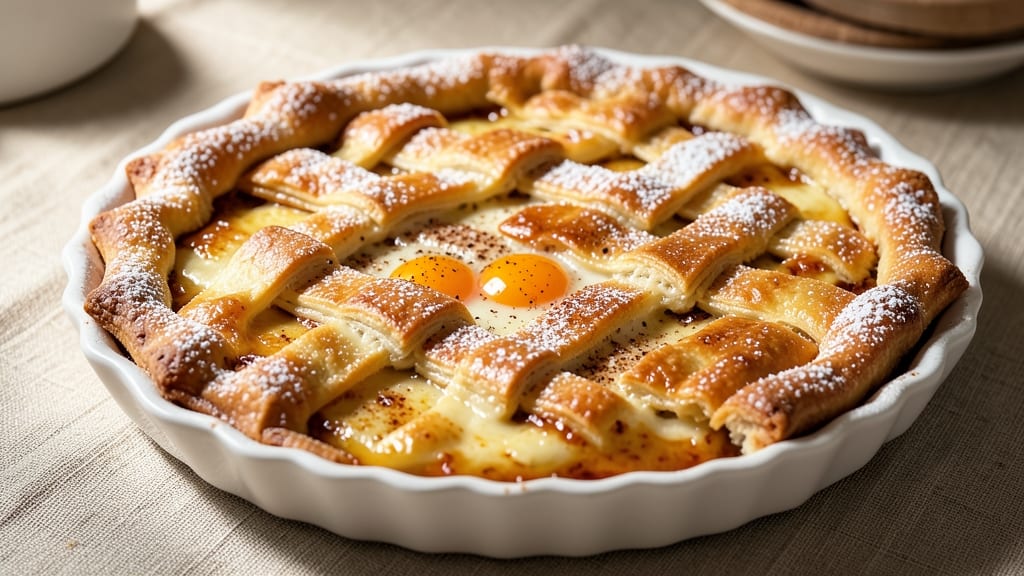
This special egg pie recipe transforms a classic dessert into a showstopper with its golden, crispy celery lattice topping and velvety custard filling. The secret lies in a perfectly balanced crust—flaky yet sturdy enough to support the custard's rise—while the lattice adds texture and visual elegance.
I developed this recipe after years of perfecting the art of custard pies, ensuring every slice delivers that ideal contrast of creamy and crisp.
The custard filling is where the magic happens—rich, fluffy, and just set enough to hold its shape when sliced. A touch of vanilla and a hint of nutmeg elevate the flavor profile, while the egg yolks create that signature silky texture.
The lattice isn’t just decorative; it bakes to a delicate crispness that shatters with each bite, making it impossible to resist.
Baking at a precise 350°F ensures the custard sets evenly without curdling, while the lattice achieves that coveted golden-brown finish. The result is a pie that looks as impressive as it tastes—ideal for special occasions or when you want to impress guests.
This recipe delivers restaurant-quality results with a homemade touch.
Whether you're serving it at a holiday gathering or simply treating yourself, this pie is a game-changer. The lattice topping isn’t just about aesthetics; it’s the finishing touch that turns a good pie into a great one. Let’s get baking!
Ingredients for special egg pie
Sixteen ingredients, two techniques—velvety custard and delicate lattice—transformed into a restaurant-worthy dessert.
| Ingredient | Amount | Notes |
|---|---|---|
| Large Egg Yolks 🥚 | 8 whole | Freshly separated for optimal texture |
| Whole Eggs 🥚 | 4 whole | Room temperature for smooth custard |
| Granulated Sugar 🍚 | 1 ½ cups | Superfine preferred for faster dissolution |
| All-Purpose Flour 🌾 | ½ cup | Sifted for smooth custard |
| Unsalted Butter 🧈 | ¾ cup | Cold, cubed for crust |
| Vanilla Extract 🌿 | 2 tsp | Pure Madagascar preferred |
| Ground Nutmeg 🌶️ | ¼ tsp | Freshly grated preferred |
| Heavy Cream 🥛 | 1 ½ cups | 35% fat for rich custard |
| Celery Stems 🥬 | 2 cups | Thinly sliced for lattice |
| All-Purpose Flour 🌾 | 1 ½ cups | For lattice dough |
| Cold Unsalted Butter 🧈 | ½ cup | Cut into pieces for lattice |
| Salt 🧂 | ½ tsp | Kosher preferred |
| Milk 🥛 | 1 cup | Whole milk for custard |
| Cornstarch 🌾 | 2 tbsp | For custard stability |
The egg yolks are the heart of this custard—freshly separated ensures maximum richness. Whole Foods or specialty grocers sell pre-separated yolks, but doing it yourself guarantees the best texture. For the lattice, celery stems must be thinly sliced—use a mandoline for precision. The vanilla extract should be pure Madagascar; imitation lacks the depth. Nutmeg is non-negotiable—its warmth balances the custard's sweetness. Every ingredient here serves a purpose: the cornstarch prevents curdling, the heavy cream adds body, and the butter in the crust creates that perfect flaky layer.
No vanilla extract? Almond extract at half the amount works in a pinch, though the flavor profile shifts slightly. Substituting milk with half-and-half yields a richer custard, but the texture may be slightly denser. For the lattice, pre-sliced celery from the produce section is convenient, though fresh stems create a more delicate pattern. If you're avoiding gluten, almond flour can replace up to half the all-purpose flour in the lattice dough, though the texture will differ. The butter in the crust must be cold—cut it into small cubes and let it sit at room temperature for 30 minutes before mixing to ensure proper flakiness.
The custard mixture should be stored in an airtight container in the refrigerator for up to 4 days, though it's best enjoyed within 2 days for peak texture. The lattice components can be prepped ahead and refrigerated for 24 hours before baking. For optimal results, assemble the pie 2 hours before baking to allow the lattice to crisp properly. Leftover slices reheat beautifully in a 350°F oven for 8-10 minutes, restoring that golden crunch. Freeze individual slices for up to 3 months—thaw at room temperature before serving.
Why You'll Love This Recipe
- I’ll be real: this pie works for both. Serve it warm with a sprinkle of cinnamon for a lazy weekend brunch, or chill it overnight for a no-bake dessert that tastes like a hug. The flour-thickened custard keeps it sturdy enough to slice neatly—no soggy middle here.
- No-Fuss Whisking: This pie comes together with just five ingredients—no fancy techniques, no last-minute shopping. I swear, I’ve made it while chatting on the phone because the only real work is beating yolks and sugar until they’re pale and fluffy. That’s it.
- Golden Caramel Edge: Here’s what sold me—the way the butter and sugar toast at the bottom while the custard stays silky. It’s like a little surprise at the center of every slice, crisp enough to hold a fork but creamy enough to melt in your mouth. (Yes, even on a Tuesday night.)
- Breakfast or Dessert: I’ll be real: this pie works for both. Serve it warm with a sprinkle of cinnamon for a lazy weekend brunch, or chill it overnight for a no-bake dessert that tastes like a hug. The flour-thickened custard keeps it sturdy enough to slice neatly—no soggy middle here.
Step-by-step instructions for fluffy custard crowned with crispy celery lattice
A perfect balance of silky custard and delicate celery lattice awaits—here's how to achieve it.
Prepare the Celery Lattice Topping
Preheat your oven to 375°F and line a baking sheet with parchment paper. Arrange the 2 cups celery stems in a single layer, ensuring they're evenly spaced. Brush them lightly with water using a pastry brush—this helps them crisp without burning.
Bake for 8-10 minutes until the celery is tender but still holds its shape. Let it cool completely before using. Meanwhile, prepare the lattice dough by combining the 1.5 cups all-purpose flour, 0.5 cup cold unsalted butter (cut into pieces), and 0.5 tsp salt in a food processor. Pulse until the mixture resembles coarse crumbs with pea-sized butter pieces.
Add 3-4 tablespoons ice water (start with 3) and pulse until the dough just comes together when pressed. The dough should hold its shape but not be sticky. Divide it into two equal portions, flatten each into a 12-inch circle, and wrap in plastic wrap. Chill for 30 minutes while you prepare the custard.
Make the Silky Egg Custard
In a medium saucepan, whisk together the 8 whole large egg yolks, 4 whole eggs, 1.5 cups granulated sugar, 0.5 cup all-purpose flour, 2 tbsp cornstarch, 2 tsp vanilla extract, and 0.25 tsp ground nutmeg until smooth. Add the 1.5 cups heavy cream and 1 cup milk, whisking until fully combined.
Place the saucepan over medium-low heat and stir constantly with a wooden spoon or silicone spatula. Cook until the mixture thickens enough to coat the back of the spoon—this should take about 5-7 minutes. The custard should reach 160°F on an instant-read thermometer and pull away from the sides of the pan slightly.
Immediately pour the custard into a 9-inch pie dish that's been lightly greased with butter. The custard will be quite warm, so work quickly. Cover the pie with plastic wrap, pressing it directly onto the surface to prevent a skin from forming. Refrigerate for at least 4 hours, or until completely chilled and set.
Assemble and Bake the Celery Lattice
Roll out one of the chilled dough portions on a lightly floured surface to a 12-inch circle, about 1/8-inch thick. Using a sharp knife or pizza cutter, make cuts about 1/2-inch apart in a lattice pattern, alternating between vertical and horizontal cuts. Gently lift every other section to create the lattice design.
Transfer the baked celery stems to the chilled custard pie, arranging them in a single layer over the custard. Carefully place the lattice dough on top, pressing gently to adhere. Trim any excess dough around the edges. Cut the 0.75 cup unsalted butter into small pieces and dot them evenly over the lattice.
Bake at 375°F for 30-35 minutes, until the lattice is golden brown and the custard is heated through. The center should still be slightly jiggly—this indicates it's properly set but still creamy. Let the pie cool completely before slicing, as the custard will continue to set as it cools.
Serve and Enjoy
Once the pie has cooled to room temperature, run a thin knife around the edges to loosen it from the pie dish. Slide a spatula underneath and transfer the pie to a serving plate. The celery lattice should be crisp and golden, while the custard beneath should be smooth and lightly set.
Slice into wedges and serve at room temperature. The contrast between the crisp, slightly sweet celery lattice and the rich, creamy custard makes each bite a delight. For an extra touch, dust with a light layer of powdered sugar or serve with a dollop of whipped cream on the side.
Pro Tips For Making Special Egg Pie
- Whip Yolks First: I learned this the hard way—mixing sugar into cold yolks makes the pie filling grainy. Whisk yolks until pale and thick (about 2 minutes) before adding sugar, or you’ll end up with a texture that feels like eating wet sand.
- Use Room-Temp Butter: Cold butter creates lumps that never dissolve, leaving your pie with a weird, streaky texture. Let that butter sit out for 20 minutes before cutting it into the flour—yes, even if you’re impatient like me.
- Stop When It’s Just Set: Overbaking turns this custard into rubber. The pie’s done when the center jiggles barely (like a wobbly Jell-O) and pulls away from the edges. Pull it at 165°F, then let it rest—it’ll firm up as it cools.
- Sift the Flour Twice: I skip this when I’m lazy, but the dish is noticeably better when I don’t. Sifting removes lumps and aerates the flour, so your pie’s crust stays tender and the filling doesn’t get clumpy. Do it before mixing, then sift again after adding sugar.
Wine and beer pairings for these flavors
Sweet Wine Pairings
This velvety custard pie calls for wines with honeyed sweetness and vanilla undertones to complement its rich, creamy texture. A Moscato d'Asti from Piedmont is my go-to choice—its delicate floral notes and light effervescence mirror the pie's delicate lattice while balancing the custard's richness.
The 10-12% alcohol content ensures it won't overwhelm the dessert's sweetness. 🍷
Spiced Red Options
For a bold contrast, try a Spiced Chardonnay with hints of toasted oak and nutmeg—like Louis M. Martini's Oak Barrel Chardonnay. The wine's 13.5% alcohol and subtle spice echo the pie's nutmeg and vanilla, while its creamy profile enhances the custard's texture.
Serve slightly chilled to highlight its crisp finish.
Beer for Balance
A Belgian Witbier like Hoegaarden cuts through the custard's richness with its citrusy coriander notes and light carbonation. The beer's 5% ABV and slightly sweet profile cleanse the palate between bites of the crisp celery lattice.
For a stronger option, a honey-brown ale (like Allagash Honey Brown) adds caramel depth that pairs beautifully with the pie's vanilla and sugar. 🍺
Non-Alcoholic Pairings
Skip the alcohol? A sparkling pear nectar like Martinelli's Sparkling Pear offers a refreshing contrast with its bright acidity and juicy sweetness. For a warmer option, chilled hibiscus tea (sweetened with 1 tsp honey) complements the pie's nutmeg and vanilla without competing.
Both options enhance the dessert's flavors without overpowering them.
Serving Temperature Tips
Wine should be served slightly chilled (about 50-55°F) to preserve its delicate aromas and prevent the custard from melting too quickly. Beer pairs best at cellar temperature (45-50°F) to maintain its crispness.
For non-alcoholic options, chill beverages to 38-42°F—this enhances their refreshing qualities and balances the pie's warmth. ✨
Nutrition facts
Frequently asked questions
Can I make this egg pie without a lattice topping?
If you prefer a simpler approach, skip the celery lattice and use a traditional pie crust. Simply roll out a single crust, place it over the chilled custard, trim the edges, and brush with a light egg wash before baking. For extra flair, cut decorative slits in the crust before baking.
How do I prevent the custard from curdling?
Curdling happens when the custard overheats. To avoid this, whisk constantly over medium-low heat and never let it boil. Remove the pan from heat if it starts to bubble vigorously. Also, ensure your eggs and dairy are at room temperature before mixing.
Can I substitute the celery in the lattice with another vegetable?
Yes! You can use thinly sliced apples or pears for a fruit lattice, or even thinly sliced potatoes for a savory twist. Just adjust the baking time slightly—fruit may require 5-7 minutes less to prevent over-browning.
Why is my custard too runny after baking?
Runny custard usually means it wasn't cooked long enough or the oven temperature was too low. Next time, ensure the custard reaches 160°F on a thermometer before pouring it into the pie dish. Also, check your oven with an oven thermometer—it might be running cooler than set.
How long can I store leftovers?
Store leftovers in an airtight container in the fridge for up to 4 days. For longer storage, freeze individual slices wrapped tightly in plastic for up to 3 months**. Thaw at room temperature before serving to restore the crisp lattice.