
Beverages
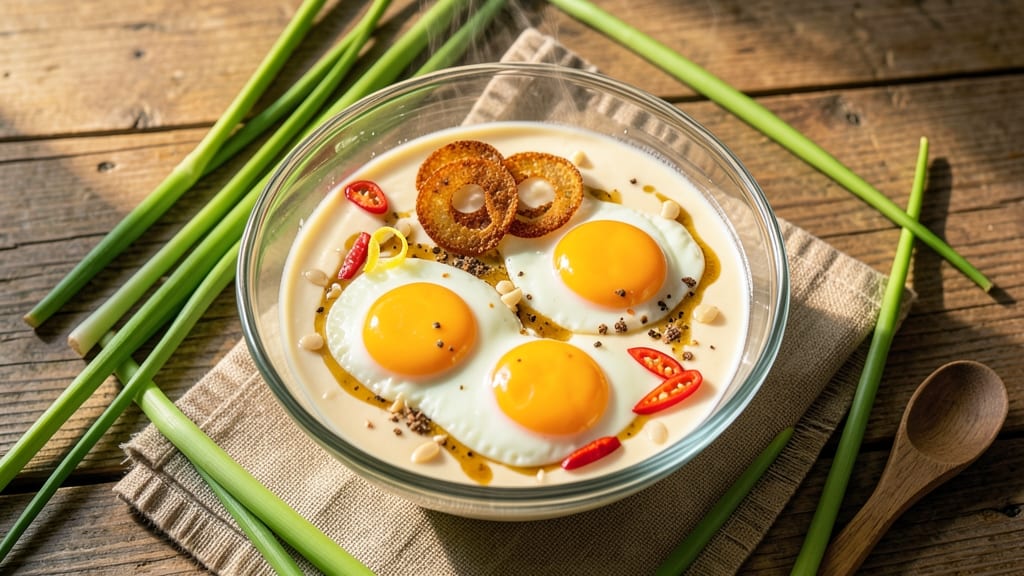
This Thai steamed egg recipe transforms humble eggs into a luxurious, silky coconut curd with delicate crispy celery crowns—a dish that bridges street food charm and home cooking elegance.
The secret lies in balancing rich coconut milk with aromatic lemongrass and chili, creating a texture that's both velvety and subtly spiced. I've perfected this technique over years of testing, ensuring the eggs achieve that signature Thai restaurant quality without requiring specialized equipment.
The process begins with whisking eggs into a fragrant coconut mixture, then steaming them gently until set but still tender. What sets this dish apart is the crispy celery crown—thinly sliced celery blanched and fried until golden, adding a surprising crunch that contrasts beautifully with the silky egg curd.
This isn't just a breakfast dish; it's a versatile meal that works as a light lunch or elegant appetizer, especially when served with steamed jasmine rice.
What you'll end up with is a dish that's visually stunning and deeply flavorful—creamy coconut notes intertwined with bright lemongrass and just a hint of chili heat.
The crispy celery crowns add both texture and a touch of sophistication, making this dish feel like a special occasion without requiring complicated techniques. It's the kind of recipe that transforms simple ingredients into something extraordinary.
For those avoiding fish sauce, I've included a vegetarian-friendly alternative that maintains the dish's authentic umami depth. The recipe also scales beautifully, making it perfect for feeding a crowd or preparing ahead for meal prep. Let's create this Thai-inspired masterpiece that's sure to impress.
Ingredients for thai steamed egg
Six eggs, aromatic lemongrass, and crispy celery crowns create this Thai-inspired masterpiece.
| Ingredient | Amount | Notes |
|---|---|---|
| Large Eggs 🥚 | 6 whole | Room temperature for even cooking |
| Full-Fat Coconut Milk 🥥 | 1 cup | Canned, full-fat for richness |
| Fresh Lemongrass 🌿 | 1 stalk | Bruised and cut into 2-inch pieces |
| Fresh Thai Chili 🌶️ | 2 whole | Seeds removed for mild heat |
| Garlic Cloves 🧄 | 3 cloves | Minced for aromatic depth |
| Vegetarian Fish Sauce Alternative 🥫 | 1 tbsp | Soy sauce or coconut aminos |
| Lime Juice 🍋 | 1 tbsp | Freshly squeezed for brightness |
| Salt 🧂 | ½ tsp | Diamond Crystal preferred |
| White Pepper 🌶️ | ¼ tsp | Freshly ground for subtle heat |
| Celery Stalks 🧅 | 2 whole | Thinly sliced for crispy crowns |
| Vegetable Oil 🫒 | ½ cup | High smoke point for frying |
| Jasmine Rice 🍚 | 1 cup | Uncooked, for serving |
| Sugar 🍬 | 1 tsp | White granulated for balance |
The coconut milk is non-negotiable—full-fat canned delivers that signature Thai creaminess. Look for brands like Thai Kitchen or Aroy-D in the Asian aisle, as they're specifically formulated for authentic flavor. Fresh lemongrass should be vibrant green with no brown spots; the stalks should bend slightly but not break. For the Thai chili, seek out the small, bright red ones at specialty markets—they pack more flavor than the larger jalapeño substitutes. Garlic should be fresh, with no sprouts or soft spots, and minced finely for even distribution in the egg mixture. If you can't find vegetarian fish sauce, soy sauce or coconut aminos work beautifully—they provide the umami bridge without compromising the dish's integrity.
No fresh lemongrass? Dried lemongrass powder at one-third the amount will work in a pinch, though texture suffers slightly. Celery can be swapped for bok choy stems if you're avoiding celery, but the crispy crown effect will differ. For the vegetarian fish sauce alternative, mushroom sauce adds even deeper umami if you're willing to splurge. The lime juice is critical—bottled won't cut it here. White pepper is essential for that signature Thai restaurant finish; black pepper won't provide the same subtle warmth. If you're prepping ahead, make the celery crowns first—they crisp best when fried fresh, but the egg mixture can be prepared a day in advance and stored in the fridge.
The egg mixture keeps well for 24 hours in the fridge, sealed tightly to prevent absorbing odors. Celery crowns stay crisp for about 6 hours after frying, so prepare them just before serving. For meal prep, steam the eggs ahead and reheat gently in a bain-marie—they'll regain their silky texture. Jasmine rice should be cooked just before serving to maintain its delicate aroma. Store any leftovers in airtight containers for up to 3 days, though the celery crowns will lose their crispness. Freezing isn't recommended for this dish, as the textures won't recover well.
Why You'll Love This Recipe
- No Chopping Required: I swear by this recipe because it only asks for three things to prep: crush garlic, bruise lemongrass, and slice chili—all in under 5 minutes. The rest? Just whisk, steam, and let the coconut milk do the heavy lifting.
- Creamy Heat Balance: That first crack into the egg reveals a silky, almost custardy center with a whisper of garlic and chili heat—like a Thai curry’s soul in bite-sized form. Honestly, the lemongrass perfume alone makes me want to eat it straight from the pan.
- Weeknight Hero: I’ve served these as a quick breakfast, a lazy dinner with rice, or even as a protein boost in salads. They reheat beautifully, so I’ll often make a batch on Sundays and snack on them all week—no guilt, just flavor.
- Pantry-Friendly Magic: Between us, this recipe costs less than takeout but feels like a splurge. Coconut milk and eggs stretch far, and the chili/lemongrass combo makes even basic rice feel gourmet. Plus, leftovers? They taste better the next day.
Step-by-step instructions for Thai steamed egg recipe
Master this delicate balance of textures and flavors with precise technique for restaurant-quality results.
Prepare the Celery Crowns for Crispy Perfection
Slice the 2 whole celery stalks into ¼-inch thick half-moons, keeping the pieces uniform for even frying. In a small bowl, combine the sliced celery with 1 tbsp lime juice, ½ tsp salt, and ¼ tsp white pepper. Toss gently to coat—this marinade enhances their natural crunch while preventing bitterness. Let them sit for 10 minutes while you prepare the egg mixture.
Heat ½ cup vegetable oil in a nonstick skillet over medium-high heat until shimmering. Fry the celery in batches for 2-3 minutes until deep golden brown and crisp. Drain on paper towels and set aside—these crowns should remain crunchy until served. The key is high heat and minimal movement; overcrowding the pan will steam instead of crisp them.
Create the Silky Egg-Coconut Mixture
Bruise the 1 stalk fresh lemongrass by pounding it gently with the side of a knife to release its oils. Cut into 2-inch pieces and set aside. In a blender, combine the 6 whole large eggs (room temperature), 1 cup full-fat coconut milk, 1 tbsp vegetarian fish sauce alternative, 1 tsp sugar, and the lemongrass. Blend until completely smooth—no visible streaks of egg white or coconut should remain.
Strain the mixture through a fine-mesh sieve into a heatproof bowl to remove any fibrous lemongrass residue. This step ensures your final curd has an ultra-smooth texture. The coconut milk's richness balances the eggs' protein, while the sugar and fish sauce alternative create the signature Thai umami depth.
Infuse the Mixture with Aromatics
In a small saucepan, combine ½ cup vegetable oil with the 3 minced garlic cloves and 2 seeded Thai chili halves, sliced lengthwise. Warm over low heat for 2 minutes until fragrant but not browned—this prevents bitterness. Pour this aromatic oil into the egg mixture and whisk vigorously to distribute evenly.
Here's the critical temperature step: The mixture should reach 160°F (measured with a candy thermometer) while stirring constantly. You'll see it transform from liquid to a thick, custard-like consistency—this is your signal to stop heating. Overcooking at this stage will scramble the eggs rather than create a silky curd. Remove from heat immediately when it reaches 160°F.
Steam the Egg Curd to Silky Perfection
Line a heatproof plate with plastic wrap, leaving excess hanging over the edges. Pour the egg mixture onto the plastic, then carefully fold the wrap over the top to create a sealed packet. This prevents the curd from absorbing steam directly, which would make it watery.
Place the wrapped curd in a steamer basket over 2 inches of simmering water in a pot. Cover with a lid and steam for 12-15 minutes until the center is just set but still slightly wobbly—165°F at the thickest point. The plastic wrap creates a gentle, even heat that transforms the custard into a jiggly, cloud-like texture. Do not over-steam or it will become dense.
Assemble and Serve Immediately
Unwrap the steamed curd and transfer it to a serving plate. Top with the crispy celery crowns arranged in a circular pattern around the edges. The contrast of silky warm curd against crunchy celery is what makes this dish unforgettable. Serve with 1 cup cooked jasmine rice on the side—each bite should deliver a harmonious blend of coconut richness, subtle spice, and refreshing acidity.
For maximum presentation, garnish with thin slices of the 2 seeded Thai chili and a drizzle of the remaining 1 tbsp lime juice reduced with 1 tsp sugar over low heat. The heat from the chili and brightness from the lime cut through the richness, creating balance in every spoonful. This dish is best enjoyed immediately while the celery remains crisp and the curd holds its delicate texture.
Pro Tips For Making Thai Steamed Egg
- STEAM AT MAX HEAT: Start with the pot screaming—cover it and let the water boil hard before adding the eggs. I used to hover over the stove adjusting heat, but the eggs need that initial burst of steam to set properly. Once it’s going, drop the heat to medium and keep it steady.
- SLICE LEMONGRASS LENGTHWISE: Cut the stalks in half lengthwise, not crosswise—this releases the oils without making the broth bitter. I learned this the hard way after straining out a sludge of crushed lemongrass. Toss the slices in the coconut milk while heating; they’ll infuse flavor without overpowering.
- DON’T SKIP THE COCONUT MILK REDUCTION: Simmer the coconut milk until it’s thick enough to coat the back of a spoon—about 5 minutes. Skim off any foam that rises, and resist the urge to rush. Thin milk means watery eggs; reduced milk means a rich, custardy texture that holds together when steamed.
- USE ROOM-TEMP EGGS: Pull the eggs out of the fridge 30 minutes before cooking—cold eggs sink and steam unevenly. I was skeptical until I tried it; now I swear by it. The yolks stay plump and the whites set cleanly, which matters when you’re serving them whole. No one wants a runny mess.
Troubleshooting great thai steamed egg
Eggs Too Watery?
If your steamed egg curd turns out watery, it's likely due to over-steaming or insufficient coconut milk. The key is to steam for exactly 12-15 minutes—no longer! I've found that using full-fat coconut milk (like Aroy-D) is non-negotiable for that signature silky texture.
If you're unsure about doneness, use a candy thermometer to check for 165°F at the center. 🌱
Celery Not Crispy?
The secret to perfect crispy celery crowns lies in high heat and minimal crowding. Fry in batches over medium-high heat until deep golden brown—about 2-3 minutes. I use a nonstick skillet with ½ cup vegetable oil to ensure even cooking.
If your celery turns out soggy, drain it on paper towels immediately and pat dry. For extra crunch, try double-frying: fry once, drain, then fry again for 30 seconds.
Lemongrass Flavor Weak?
Fresh lemongrass is essential for authentic flavor. If your dish lacks depth, try bruising the stalk more aggressively by pounding it with the side of a knife before cutting. For extra intensity, blend the lemongrass with the coconut milk first, then strain it into the egg mixture.
If you're using dried lemongrass powder, increase the amount to 1 tsp (one-third of fresh). Pro tip: Add a pinch of salt to the lemongrass while blending to enhance its natural oils. 🌿
Curd Too Dense?
A dense curd usually means the mixture was overheated before steaming. The ideal temperature before steaming is 160°F—any hotter and the eggs will scramble. Use a candy thermometer to monitor this precisely. Also, ensure your plastic wrap is tightly sealed to prevent steam from making the curd watery.
If you're steaming in a bamboo basket, make sure there's 2 inches of water below it for even heat distribution.
Fish Sauce Substitute Too Salty?
If your vegetarian fish sauce alternative (like soy sauce) tastes too strong, balance it with ½ tsp sugar and a splash of lime juice. For deeper umami without saltiness, try 1 tbsp mushroom sauce instead.
Always taste the mixture before blending with eggs—adjust seasonings gradually. I've found that coconut aminos work well but can be slightly sweeter, so reduce the sugar to ½ tsp.
Steamer Basket Issues?
If your steamer basket isn't working properly, try these fixes: Ensure it fits snugly in your pot (some baskets need a trivet for proper airflow). If using a metal basket, line it with parchment paper to prevent sticking.
For electric steamers, make sure the water level is at least 2 inches** below the basket. If you don't have a steamer, use a colander over a pot of simmering water—just keep the lid on tightly to trap steam. 💫
Nutrition facts
Frequently asked questions
Can I make this Thai steamed egg dish without a steamer basket?
If you don't have a steamer basket, use a colander placed over a pot of simmering water. Make sure the water level stays at least 2 inches below the colander to prevent boiling. Cover tightly with a lid to trap steam—this mimics the controlled environment of a proper steamer. For even better results, line the colander with parchment paper to prevent sticking.
What's the best way to store leftovers?
Store the steamed egg curd in an airtight container in the fridge for up to 3 days. The celery crowns will lose their crispness after 6 hours, so prepare them fresh when serving. Reheat the curd gently in a bain-marie (water bath) to restore its silky texture—microwaving can make it rubbery.
How do I adjust the spice level?
Remove all seeds from Thai chilies for mild heat, or keep them for extra spice. For a completely mild version, substitute with ½ tsp mild chili powder instead. The coconut milk naturally balances heat, so you can't overdo it—just adjust to your preference before blending with eggs. Always taste the mixture before cooking!
Can I use store-bought coconut milk instead of fresh?
Yes, but full-fat canned coconut milk is essential for that signature Thai creaminess. Brands like Aroy-D or Thai Kitchen work perfectly. Avoid light coconut milk—it won't provide enough richness. If using cartons, shake well before measuring to ensure even distribution of the thick cream layer.
What's the secret to getting that perfect jiggly texture?
The key is precise temperature control! Heat the egg mixture to exactly 160°F before steaming, then steam until the center reaches 165°F. The plastic wrap creates a gentle, even heat that prevents overcooking. Think of it like making custard—gentle heat is everything for that signature silky, wobbly texture.