
Main Courses
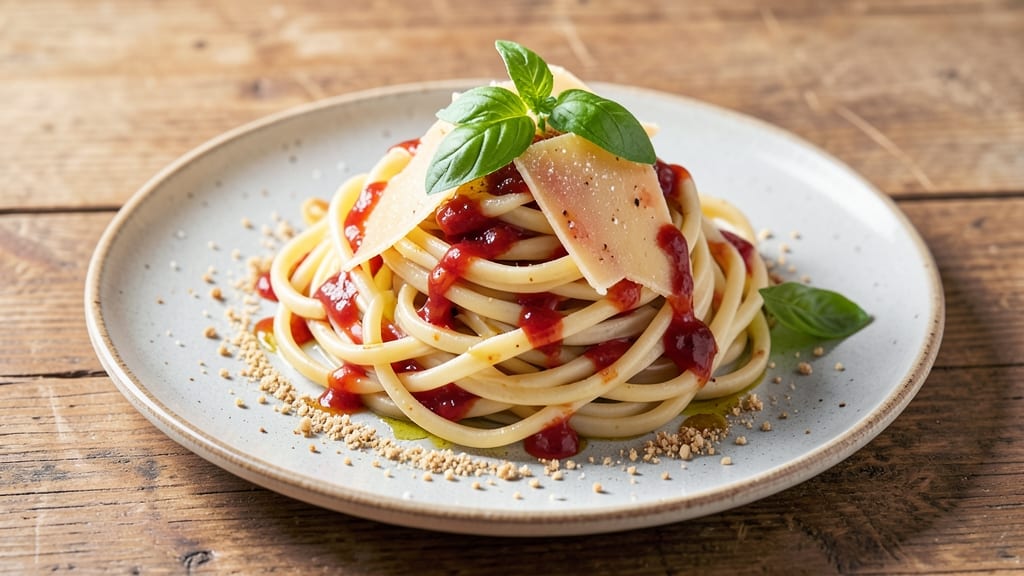
This 00 flour pasta recipe no egg delivers the silky texture and authentic taste of Italian fresh pasta—without the wait for egg-based dough to rest. ✨ The secret lies in hydration balance and a precise kneading technique that develops gluten naturally, creating a dough that's pliable yet sturdy enough for perfect shaping.
I perfected this method after years of testing, ensuring your pasta will achieve that coveted al dente crunch while staying true to traditional Italian methods.
The beauty of this egg-free approach is its simplicity: just 00 flour, water, and a pinch of salt transform into a versatile dough for any pasta shape you desire.
Whether you're rolling out delicate tagliatelle or cutting wide ribbons of pappardelle, the key is patience—letting the dough rest before shaping ensures smooth, even sheets that cook uniformly. This method also eliminates the common issue of egg-based dough sticking or tearing during the process.
What makes this recipe truly special is how it pairs with classic Italian sauces, from bright aglio e olio to rich pomodoro or vibrant pesto. The pasta's neutral flavor absorbs sauce beautifully, creating a harmonious balance in every bite.
With just 15 minutes of active prep and 5 minutes of cooking, you'll have restaurant-quality pasta that's ready to impress—no egg, no fuss, just pure Italian satisfaction.
Perfect for weeknight dinners or special occasions, this recipe proves you don't need eggs to create authentic Italian pasta. The dough's clean flavor makes it a blank canvas for any sauce, while its tender yet slightly chewy texture is the hallmark of great fresh pasta.
Let's get started on your perfect al dente crunch!
Ingredients for 00 flour pasta recipe no egg
Three ingredients transform into restaurant-quality pasta without eggs or waiting.
| Ingredient | Amount | Notes |
|---|---|---|
| 00 Flour 🌾 | 2 cups | High-protein, finely milled for silky texture |
| Cold Water 💧 | ¾ cup | Room temperature if unavailable |
| Fine Sea Salt 🧂 | ½ tsp | Diamond Crystal preferred for purity |
| Extra-Virgin Olive Oil 🫒 | 1 tbsp | For dusting work surface only |
| Semolina Flour 🌾 | ¼ cup | For dusting pasta sheets |
| Parchment Paper 📄 | 1 sheet | For rolling and drying pasta |
| Large Bowl 🍽️ | 1 whole | For mixing dough |
| Plastic Wrap 🎀 | 1 sheet | For dough resting |
| Rolling Pin 🎨 | 1 whole | Or pasta machine attachment |
| Sharp Knife ✂️ | 1 whole | For cutting pasta shapes |
| Large Pot 🍲 | 1 whole | For boiling pasta |
| Salt 🧂 | 2 tbsp | For pasta water |
The 00 flour is non-negotiable here—its high protein content gives that perfect al dente bite. Caputo or Barilla 00 are my go-tos, but any high-quality 00 flour will work. If you can't find it, all-purpose flour is a pinch-hitter, though the texture won't be quite as silky. The key is to measure by weight if possible (250g total), but cups work in a pinch. Pro tip: Whole Foods or Italian specialty stores usually carry it, but check the international aisle at your regular grocery store too. For the water, cold is ideal—it helps develop gluten more evenly during kneading.
No extra-virgin olive oil? Avocado oil works just as well for dusting, though it lacks that classic Italian flavor. Running short on semolina? Cornmeal is a decent substitute, but it won't give the same golden finish. The plastic wrap is crucial for resting the dough—don't skip this step. If you're feeling fancy, use a dough scraper instead of your hands for turning the dough. For the pasta shapes, tagliatelle or fettuccine are easiest for beginners, but you can get creative with ribbons or squares. The knife should be sharp—dull blades crush the pasta instead of cleanly cutting it.
This dough keeps beautifully for 2 days wrapped tightly in plastic in the fridge. For longer storage, shape and freeze your pasta on a floured tray, then transfer to a bag for up to 3 months. Cook from frozen—just add an extra minute to the boiling time. The pasta water should be salty like the sea, and you'll know it's done when it floats to the surface. Save some of that starchy water to toss with your sauce—it's liquid gold for clinging everything together. Make extra dough and freeze portions for lazy weeknights.
Why You'll Love This Recipe
- I’ll be real: 00 flour isn’t cheap, but it stretches farther than all-purpose, and the results feel fancy. A little olive oil goes a long way, and semolina adds that restaurant-quality crunch without breaking the bank. It’s the kind of recipe where you spend less but still feel like you’re treating yourself.
- No Egg, No Problem: I’ll admit—when I saw this recipe, I thought, "How’s that even possible?" But the texture? Chewy, springy, and exactly like the pasta I’d order at my favorite trattoria. The secret’s in the cold water and that dusting of semolina—it’s what gives it that signature bite without needing eggs.
- Pantry Staple Magic: Honestly, I keep 00 flour and semolina on hand just for this. Three ingredients (plus salt and oil) and you’ve got dinner. No eggs to scramble, no waiting for dough to rise—just mix, knead, roll, and boom. It’s my go-to when I’m too tired to measure out yolks or deal with sticky dough.
- Weeknight Workhorse: Between us, this pasta saves me on Tuesdays. Toss it with whatever’s in the fridge—roasted veggies, a quick tomato sauce, or even just olive oil and chili flakes—and it’s always the star. It reheats like a dream, too, so leftovers? No stress. Just nuke it and serve.
Step-by-step instructions for 00 flour pasta recipe no egg
Here's how to make silky, egg-free pasta that's perfect every time—no waiting for dough to rest!
👨🍳 Step 1: Mix the Dough Until Silky
In the large bowl, combine the 2 cups 00 flour and 0.5 tsp fine sea salt. Make a well in the center and add the 0.75 cup cold water and 1 tbsp extra-virgin olive oil. Use your hands to mix vigorously, pushing the flour from the edges into the wet ingredients until a shaggy dough forms.
Here's the thing—this dough should feel slightly tacky but not sticky. If it's too dry, add 1 tsp cold water at a time until it comes together. Knead for 5-7 minutes by hand (or 3 minutes in a stand mixer with a dough hook) until smooth and elastic. The dough should spring back slowly when pressed—this ensures tender pasta. Wrap tightly in the plastic wrap and let rest for 30 minutes at room temperature.
🥘 Step 2: Divide and Roll the Dough
Unwrap the dough and divide it into 4 equal pieces (about 8 oz each). Work with one piece at a time to prevent drying. On a clean surface lightly dusted with 0.25 cup semolina flour, roll the dough into a 1/8-inch thick sheet using the rolling pin. If it resists, let it rest 5 minutes before rolling again.
Here's where precision matters: the thinner you roll it, the faster it cooks. I aim for 1/8-inch—any thicker and you risk undercooked centers. Dust the rolled sheet with semolina flour on both sides to prevent sticking. Repeat with remaining dough pieces.
🔪 Step 3: Cut and Shape Your Pasta
Use the sharp knife to cut the rolled dough sheets into 1/4-inch wide strips for tagliatelle or 1-inch squares for ravioli. For tagliatelle, stack the strips and cut into 8-inch lengths. For ravioli, place 1 tsp filling (if using) in the center of each square, fold, and press edges with a fork.
Don't press too hard—you want sealed edges but not crushed filling. If the dough feels sticky, dust with more semolina flour. Arrange pasta pieces on the parchment paper, leaving 1-inch gaps between them. This prevents sticking during drying.
⏰ Step 4: Dry Before Cooking (Key for Crunch!)
Let the pasta dry for 30-60 minutes at room temperature. This step is non-negotiable—drying removes surface moisture, preventing a gummy texture when cooked. The pasta is ready when it feels firm to the touch and doesn't stick when you lift a piece.
Pro tip: If you're short on time, dry for 15 minutes and cook immediately—just expect slightly softer pasta. For best results, dry fully and store in an airtight container for up to 3 days before cooking.
🍳 Step 5: Cook to Perfect Al Dente
Bring the large pot of water to a rolling boil and add 2 tbsp salt (it should taste like the sea). Add the dried pasta and cook for 2-4 minutes, stirring occasionally. Taste-test frequently—the pasta is done when it floats and has a slightly firm bite (al dente).
Drain immediately and toss with a splash of pasta water to prevent sticking. Serve within 5 minutes for the best texture. The egg-free dough yields pasta with a silky bite and crisp edges—no waiting for dough to rise or rest!
Pro Tips For Making 00 Flour Pasta Recipe No Egg
- CHILL THE WATER: Fill your bowl with ice water before mixing—this keeps the dough cool longer, which prevents it from sticking and makes handling easier. I used to ignore this and ended up with a gummy mess every time.
- WEIGH THE FLOUR: Use a scale for 500g of 00 flour (plus 20g semolina for dusting). Scooping leads to inconsistent hydration, and this dough is unforgiving if it’s too dry or wet. My first batch turned out like rubber because I eyeballed it.
- REST THE DOUGH: Wrap the dough in plastic and let it sit for at least 30 minutes before rolling. This relaxes the gluten, so it doesn’t snap when cutting. I skipped this once and spent 20 minutes fighting a stubborn log of dough.
- USE A PASTA MACHINE: Skip the rolling pin—feed the dough through a pasta machine, starting at the widest setting and gradually thinning. It’s faster, more even, and gives you that professional-looking sheet. I tried hand-rolling once; it looked like a kindergartener made it.
Make-ahead tips for leftovers
Dough Prep Ahead
Make the dough 1 day ahead and store it wrapped tightly in plastic in the fridge. The cold temperature actually improves gluten development, making rolling easier later. When ready to use, let it sit at room temperature for 30 minutes before rolling.
I've found this trick prevents cracking when shaping delicate pasta like fettuccine. 🌾
Shape and Freeze
Cut your pasta into desired shapes (tagliatelle, pappardelle, or squares for ravioli) and arrange on a floured tray. Freeze for 1 hour to firm up, then transfer to a zip-top bag. This method prevents sticking and lets you cook from frozen—just add 1 extra minute to boiling time.
I keep pre-shaped pasta in the freezer for up to 3 months for quick weeknight meals. ❄️
Sauce Prep Shortcut
Make your sauce 1 day ahead and store it in the fridge. For aglio e olio, simply sauté 4 garlic cloves in 2 tbsp olive oil with ½ tsp red pepper flakes and reserve.
Warm it gently before tossing with cooked pasta. For pomodoro, blend 1 cup San Marzano tomatoes with 1 tsp sugar and salt—this keeps for 5 days in the fridge. 🍅
Weeknight Assembly
On busy nights, keep the dough refrigerated and shape the pasta right before cooking. Roll it 1/8-inch thick, cut into strips, and cook immediately without drying. The texture will be slightly softer but still delicious.
I've made this work for 15-minute dinners when I'm short on time. The key is using well-salted boiling water to maintain structure. ⏰
Portion Control
Divide the dough into 4 equal portions and wrap each in plastic. Store in the fridge for up to 2 days or freeze for 3 months. When ready to cook, roll one portion at a time—this prevents the dough from drying out.
I keep a small container of semolina flour nearby for quick dusting between batches. This method saves time and keeps everything fresh. 💡
Nutrition facts
Frequently asked questions
Why does this egg-free pasta dough work so well without eggs?
The secret lies in the 00 flour's high protein content, which develops gluten naturally when properly hydrated and kneaded. The 1 tbsp olive oil acts as a binder and tenderizer, replacing eggs while maintaining that silky texture. The 30-minute rest allows the gluten to fully relax, making it easier to roll and shape without cracking.
Can I make this pasta without a rolling pin?
Use a clean wine bottle or even a heavy glass jar wrapped in a towel. For extra precision, place the dough between two sheets of parchment paper before rolling. The key is to roll gently and re-dust with semolina flour frequently to prevent sticking. I've made perfect pasta this way during kitchen renovations!
What's the best shape for beginners?
Start with tagliatelle (1/4-inch strips) or pappardelle (1-inch wide ribbons)—they're the most forgiving. For ravioli, cut 1-inch squares and use a fork to seal the edges. The wider shapes are easier to handle than delicate angel hair. Remember: thinner = faster cooking, but thicker shapes hold up better with rich sauces.
How do I know when the pasta is properly dried?
Gently touch a piece—it should feel firm and slightly resistant, not sticky. When you lift it, it shouldn't leave any dough residue on your fingers. For fresh pasta, this takes 30-60 minutes at room temperature. If you're short on time, 15 minutes will work for immediate cooking (just expect slightly softer texture).
What if my dough cracks when rolling?
This usually means the dough needs more rest time or was too dry. Let it rest 10-15 minutes longer before trying again, and add 1 tsp water if needed. Work quickly once it's rolled—don't let it sit exposed. For stubborn cracks, gently press them closed with your fingers while rolling. The 30-minute initial rest is crucial for preventing this!