
Breakfast & Brunch
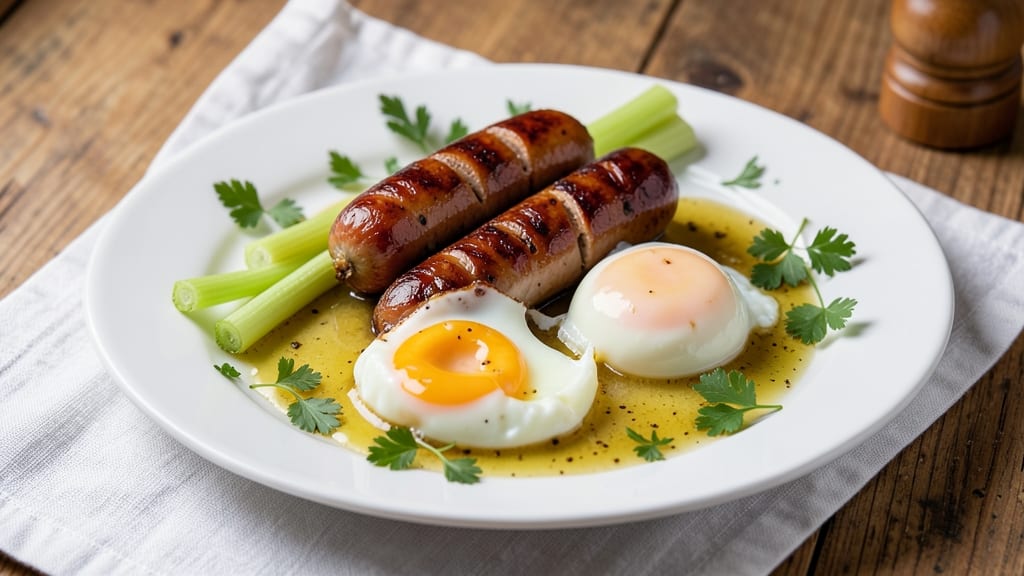
This Welsh eggs recipe delivers the hearty British classic you’ve been craving—crispy fried eggs crowned with golden celery, served alongside savory sausages and buttery toast. 🔥 The secret lies in perfectly poached eggs with runny yolks and celery that caramelizes into sweet, crispy perfection, all balanced by the smoky richness of traditional Cumberland sausages.
What sets this dish apart is the harmony of textures: tender sausages with crispy edges, silky egg whites, and celery that transforms from fresh to caramelized.
I’ve refined this recipe over years of weekend breakfasts, ensuring every element comes together without fuss—just 20 minutes of active time for a meal that feels like a cozy pub experience. The key? Low-and-slow cooking for the sausages and a precise egg-poaching technique that guarantees silky yolks every time.
Serve this dish with a side of buttery toast or baked beans for the full Welsh breakfast experience, or upgrade it with a sprinkle of grated cheddar for a cheesy twist.
The crispy celery crown isn’t just decoration—it’s the star, adding a touch of sweetness that cuts through the richness of the eggs and sausages. This is comfort food at its finest, perfect for lazy weekends or a hearty brunch with friends.
For a vegetarian version, swap the sausages for halloumi or crispy tofu, and keep the celery crown intact—it’s the one element that makes this dish uniquely satisfying. The recipe scales easily too, so double it for a crowd or save leftovers for quick lunches. Let’s get cooking!
Ingredients for welsh eggs
Crispy celery crowns, silky poached eggs, and smoky sausages—this Welsh breakfast needs just 12 ingredients.
| Ingredient | Amount | Notes |
|---|---|---|
| Large Eggs 🥚 | 4 whole | Fresh, cold from fridge |
| Cumberland Sausages 🌭 | 4 whole | High-quality, traditional style |
| Celery Stalks 🧅 | 1 whole | Thick, fresh, cut into 1-inch pieces |
| Unsalted Butter 🧈 | 4 tbsp | European-style preferred |
| White Vinegar 💧 | 2 tbsp | For egg poaching |
| Olive Oil 🫒 | 2 tbsp | Light, for frying |
| White Bread 🍞 | 4 slices | Thick-cut, for toasting |
| Salt 🧂 | 1 tsp | Diamond Crystal preferred |
| Black Pepper 🌶️ | ½ tsp | Freshly ground |
| Freshly Grated Cheddar Cheese 🧀 | ¼ cup | Optional, for garnish |
| Balsamic Vinegar 🍷 | 1 tbsp | For drizzling |
| Fresh Parsley 🌿 | 2 tbsp | Chopped, for garnish |
The celery is the secret weapon here—thick stalks caramelize best. Local farmers' markets often have the freshest, or grab the thickest bunch from the produce section. Cumberland sausages should have that signature smoky flavor—Hermitage Farms or Applegate are reliable brands. For the eggs, free-range or organic makes all the difference in that silky texture. I always buy extra eggs for this recipe—they're worth the investment when you're going for that perfect poach. The butter matters too: European-style melts smoother, but any good quality works in a pinch.
No Cumberland sausages? High-quality pork sausages or even vegetarian halloumi slices for a twist. Celery too tough? Blanch it for 2 minutes first to soften. For the eggs, if you don't have vinegar, lemon juice works at the same amount. The white bread can be any good-quality loaf—sourdough works beautifully if you've got it. Want extra crisp on the celery? Toss the pieces in 1 tbsp flour before caramelizing. And if you're feeling fancy, swap the balsamic for reduced apple cider vinegar—it adds a lovely tang.
Sausages keep 3 days in the fridge if uncooked, but cook them fresh for best texture. Celery stays crisp for 1 week if wrapped in damp paper towels. Poached eggs are best served immediately, but you can reheat gently in warm water if needed. The toast stays fresh for 2 days if stored in an airtight container. For meal prep, cook the sausages and celery ahead, then poach eggs fresh when ready to serve. The cheddar? Use it within 1 month of grating for best flavor.
Why You'll Love This Recipe
- One-Pot Magic: I swear by this recipe when I’m too tired to scrub a million dishes—just brown the sausages and celery in butter, crack in the eggs, and let the vinegar work its tangy charm. The pan does all the heavy lifting.
- Savory Crunch: That crispy sausage crumble mixed with the creamy eggs? It’s like a hug in a skillet. The vinegar brightens everything up, and the celery adds a fresh bite that keeps it from feeling too heavy.
- Picnic Ready: Between us, this is my go-to for lunches—packs perfectly in a container, stays warm (or cold, even), and tastes just as good at noon as it does at 7 PM. Add a slice of bread, and suddenly you’ve got a meal.
- Budget Win: Cumberland sausages stretch far, eggs are cheap, and celery lasts forever. I’ve made this for four people for under $10, and honestly? No one ever complains about leftovers. (They just disappear faster than I can reheat them.)
Step-by-step instructions for Welsh eggs with celery crowns
Master this classic British dish with perfectly crispy celery crowns and silky poached eggs.
🍳 Step 1: Prepare the Celery Crowns
Cut the 1 whole celery stalk into 1-inch thick pieces, keeping the leaves attached. This forms the "crown" that will encase the sausage. Heat 2 tablespoons olive oil in a large skillet over medium-high heat until shimmering. Add the celery crowns and cook for 3-4 minutes until golden brown on all sides.
Here's the thing—don't overcrowd the pan or they'll steam instead of crisp. You want that deep golden color that signals perfect caramelization. Remove the celery crowns and set aside on a paper towel-lined plate to drain excess oil.
🔥 Step 2: Cook the Cumberland Sausages
In the same skillet (no need to clean it—the flavor compounds add depth), add 2 tablespoons unsalted butter over medium heat. Place the 4 whole Cumberland sausages in the skillet and cook for 10-12 minutes, turning occasionally, until they're browned on all sides and cooked through.
The sausages should reach an internal temperature of 160°F when measured with a meat thermometer. If they're not fully cooked, continue cooking for another 2-3 minutes. Remove the sausages and let them rest on a cutting board for 5 minutes before slicing.
🍳 Step 3: Poach the Eggs
Fill a deep skillet with 2 inches of water and bring to a gentle simmer over low heat. Add the 2 tablespoons white vinegar—this helps the eggs hold their shape. Crack each of the 4 whole large eggs into a small bowl first, then gently slide them into the simmering water using a spoon.
Poach for 3-4 minutes until the whites are set but the yolks remain runny. Use a slotted spoon to remove the eggs and place them on a paper towel to drain. The key is timing—you want that perfect balance of silky whites and liquid yolks.
🥘 Step 4: Assemble the Welsh Eggs
Toast the 4 slices white bread until golden and crisp. Slice each sausage lengthwise and place one half on each toasted bread slice. Top each sausage with a poached egg, then place a celery crown on top of the egg. Sprinkle with 0.25 cup freshly grated cheddar cheese and 0.5 teaspoon black pepper.
Here's where it gets fun—watch the cheese melt slightly from the residual heat of the egg. The celery crown should add a delightful crunch that contrasts beautifully with the silky egg and crispy sausage. Drizzle with 1 tablespoon balsamic vinegar and garnish with 2 tablespoons chopped fresh parsley.
🍽️ Step 5: Serve Immediately
Serve the Welsh eggs right away while everything is at its peak temperature. The contrast of textures—crispy celery crowns, silky poached eggs, and tender sausage—is what makes this dish special. The balsamic vinegar adds a touch of tang that cuts through the richness.
Don't skip the parsley garnish—it adds freshness and color. If you're feeling adventurous, you can also sprinkle a pinch of 1 teaspoon salt on top for extra flavor. This dish is best enjoyed immediately while the eggs are still warm and the bread is crisp.
Pro Tips For Making Welsh Eggs
- CRACK EGGS IN COLD WATER: Start by cracking eggs into a bowl of cold water—yes, even if you’re in a rush. This makes it way easier to spot and remove any shell bits, and those tiny fragments can turn your custard into a gritty mess. I learned this the hard way after finding shell shards in my first batch.
- SIMMER SAUSAGES LOW AND SLOW: Don’t rush the sausages—cook them at a gentle simmer (around 160°F/70°C) for 15-20 minutes. High heat makes them tough and greasy, and you’ll end up with a dish that’s more about texture than flavor. Cumberland’s got enough character to handle patience.
- CHOP CELERY THIN AND EVEN: Dice the celery into uniform ¼-inch pieces—no thick stalks or uneven chunks. This ensures it cooks through without turning mushy or leaving you with a bite of raw celery. My grandmother swore by this, and she was right: consistency matters more than you’d think.
- ACIDIFY THE CUSTARD FIRST: Whisk the vinegar into the egg mixture before pouring it into the pan. This pre-acidifies the custard, so it sets faster and doesn’t risk curdling when it hits the hot butter. I was skeptical until I tried it—now it’s non-negotiable.
Storing and reheating this welsh eggs
Fridge Storage Tips
Store cooked sausages and celery crowns separately in airtight containers for up to 3 days—the celery stays crisp best when wrapped in damp paper towels. Poached eggs, however, are best eaten fresh, but you can reheat them gently in warm water for 30 seconds if needed.
Keep toasted bread in a sealed bag to maintain crispness for 2 days. 🌟
Freezer-Friendly Prep
Cook the sausages and celery crowns ahead, then freeze them in single-serving portions for up to 1 month. Thaw overnight in the fridge before reheating. For eggs, poach fresh when ready to serve—they don’t freeze well.
The butter and balsamic vinegar can be stored in the freezer for 3 months, though I prefer using them fresh for best flavor.
Reheating Poached Eggs
If you must reheat poached eggs, place them in a microwave-safe bowl with 1 tablespoon warm water, cover with a damp paper towel, and heat on low power for 10-15 seconds.
This keeps the yolks runny while warming the whites. For stovetop reheating, gently simmer in 1 inch of water for 2 minutes, then drain on a paper towel. 🔥
Reviving Crispy Celery
If your celery crowns lose their crunch after storage, revive them by tossing in 1 teaspoon flour and reheating in a dry skillet over medium heat for 2-3 minutes. This restores that satisfying crunch without overcooking. For extra flavor, add a pinch of salt or black pepper while reheating.
Toast Perfection
Toast stays fresh longest if reheated in a toaster oven or under the broiler for 1-2 minutes until crisp again. Avoid microwaving—it turns bread soggy. For a quick fix, sprinkle 1 teaspoon water on the bread before toasting to recreate that golden crust.
The secret? High heat and butter—don’t skip either! 🍞
Meal Prep Shortcuts
Prep all components except eggs the night before. Store sausages, celery, and toast separately, then assemble and poach eggs fresh in the morning. This cuts active time to 10 minutes while keeping everything hot and delicious.
For a vegetarian twist, swap sausages for halloumi and store it in the fridge for up to 5 days uncooked. 💫
Nutrition facts
Frequently asked questions
What makes this Welsh Eggs recipe different from traditional versions?
This recipe features crispy celery crowns that caramelize beautifully, adding sweetness and crunch to balance the rich sausages and eggs. Traditional versions often skip this element, focusing instead on just eggs, bacon, and toast. The celery crown is the signature touch that elevates this dish beyond the classic "bangers and eggs."
Can I make Welsh Eggs without Cumberland sausages?
Use any high-quality sausages like pork or chicken, or go vegetarian with halloumi slices or crispy tofu. The key is maintaining the same cooking method—medium heat for 10-12 minutes until golden brown. Just adjust the internal temperature to 160°F for meat or 145°F for halloumi.
Why do the poached eggs turn out rubbery instead of silky?
Rubbery eggs usually happen from overcooking or using water that's too hot. Keep the water at a gentle simmer (not boiling) and poach for only 3-4 minutes. Use fresh, cold eggs from the fridge—they hold their shape better. Also, add white vinegar to the water to help the whites set properly.
How can I make this dish vegetarian?
Swap the sausages for halloumi cheese slices (pan-fry for 2-3 minutes per side) or crispy tofu (marinate in soy sauce and bake at 400°F for 20 minutes). Keep all other components the same—the celery crowns and poached eggs still shine. For extra protein, add baked beans as a side.
Can I prepare Welsh Eggs ahead of time?
Cook the sausages and celery crowns in advance, then store separately in airtight containers for up to 3 days. Toast the bread fresh when ready to serve. Poach the eggs last-minute—they're best eaten immediately. For a quick assembly, reheat sausages and celery in a skillet for 2-3 minutes, then add fresh eggs.