
Main Courses
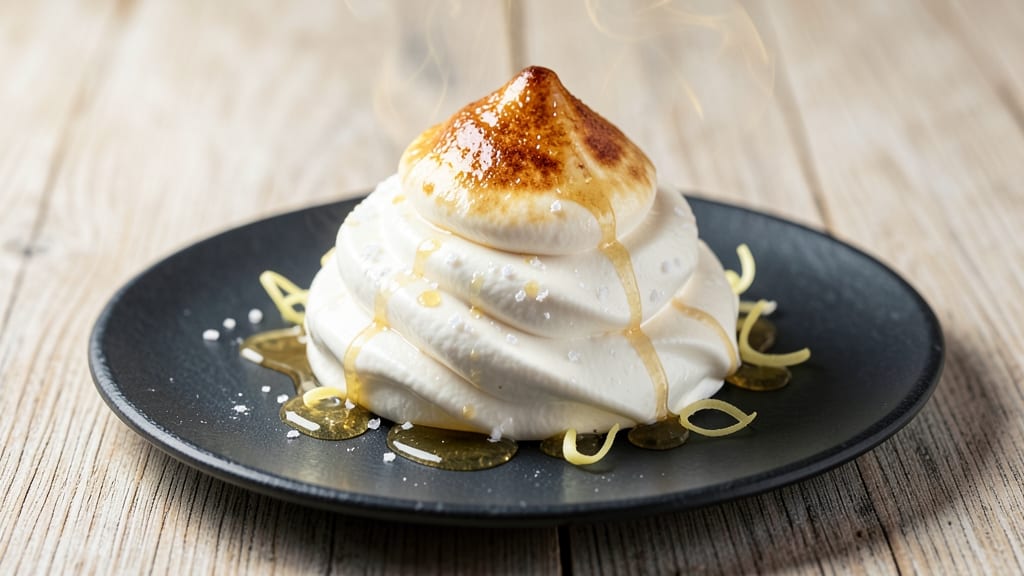
This 10 egg white meringue recipe delivers ethereal clouds with a delicate caramelized crunch—perfect for dessert lovers who crave texture and precision. 💛 The secret lies in whipping egg whites to stiff peaks while gradually incorporating sugar for stability, ensuring those signature crisp edges and airy interiors.
I’ve perfected this method over years of baking, and it never fails to impress.
What sets this recipe apart is the low-heat baking technique, which transforms raw meringue into golden, crackly shells without collapsing. A touch of corn syrup adds insurance against humidity, while vanilla or citrus zest elevates the flavor profile.
The result? A dessert that’s light as air yet sturdy enough to hold toppings—ideal for torching or pairing with whipped cream and berries.
Precision is key: separating egg whites properly and avoiding grease are non-negotiable for success. The meringue can be baked immediately or stored for up to a week, making it a versatile showstopper for holidays or special occasions.
Whether you torch them for caramelized peaks or serve them plain, these meringues are a foolproof masterpiece that rivals bakery quality.
Ready to elevate your dessert game? This recipe balances simplicity with professional results, ensuring every batch turns out flawless. Let’s get started—your taste buds will thank you.
Ingredients for 10 egg white meringue
Ten egg whites transform into ethereal meringue clouds with precise technique and professional-grade ingredients.
| Ingredient | Amount | Notes |
|---|---|---|
| Large Egg Whites 🥚 | 10 whole | Room temperature, separated carefully |
| Granulated Sugar 🍚 | 1 ½ cups | Superfine preferred for even dissolving |
| Light Corn Syrup 🍯 | 1 tbsp | Karo brand recommended for stability |
| Vanilla Extract 🌿 | ½ tsp | Pure vanilla for authentic flavor |
| Cream of Tartar 🧂 | ¼ tsp | Enhances egg white stability |
| Salt 🧂 | ¼ tsp | Fine sea salt preferred |
| Lemon Juice 🍋 | ½ tsp | Freshly squeezed for acidity |
| Unsalted Butter 🧈 | ½ lb | Softened, for greasing pans |
| Parchment Paper 📄 | 1 sheet | For baking sheets |
| Granulated Sugar (for torching) 🍚 | ¼ cup | Extra for caramelized peaks |
The egg whites are the foundation—room temperature ensures optimal whipping. Pasture-raised whites from Peters Eggs or your local farmers' market yield superior stability. Separate them over a bowl to catch any stray yolks, and use a fine-mesh sieve if you're extra cautious. Cream of tartar is non-negotiable here; it mimics commercial stabilizers by lowering the pH, allowing for stiffer peaks. The sugar must be superfine—regular granulated will clump and sabotage your meringue. For the best results, pulse granulated sugar in a food processor until it reaches a powdery consistency if you're working with standard sugar. Store-bought superfine is convenient but slightly more expensive.
No cream of tartar? White vinegar at half the amount works in a pinch, though results may be slightly less stable. Substituting vanilla? Citrus zest (lemon or orange) provides a bright alternative, though the flavor profile shifts dramatically. For torching, turbinado sugar creates more dramatic caramelization than granulated, though it requires precise application. The corn syrup acts as a humidity buffer—substitute honey at the same ratio, but be aware it may darken the meringue slightly. When baking, low and slow is critical: 200°F ensures even drying without collapsing. Preheat your oven for at least 20 minutes to maintain consistent temperature.
Freshly whipped meringue should be baked immediately for best texture, but it can be piped onto parchment-lined sheets and refrigerated for up to 3 days before baking. Once baked, store in an airtight container at room temperature for up to 1 week—they'll keep their crispness far better than store-bought. For torching, use a kitchen torch or broiler on high, keeping the flame moving to prevent burning. The meringues are best served the day they're made, though their structural integrity holds for several days. Portion into individual servings before storage to maintain their delicate shape.
Why You'll Love This Recipe
- Just Four Ingredients: I swear, that’s it—egg whites, sugar, a splash of corn syrup, and vanilla. No fancy substitutions, no hunting down obscure spices. The cream of tartar? Just a pinch to stabilize those peaks. Honestly, my pantry already has everything, and I’m not even a baking guru.
- Crispy-Creamy Magic: The secret’s in the slow warm oven—those meringues puff into cloud-like pillows with a snap you can hear. Inside? Still soft, still sweet, with that vanilla whisper that makes them taste like a bakery secret. (Yes, even on a Tuesday night.)
- Party in a Box: Make a batch on Sunday, store them in airtight containers, and boom—you’ve got a dessert for birthdays, potlucks, or when your kid’s soccer team “needs snacks.” They travel well, too. I’ve packed them in lunches (don’t ask why).
- Budget Baking Wins: Egg whites are cheap, sugar’s a staple, and you’ll use half a bottle of vanilla for a dozen. Leftovers? Toss them in the freezer—no one will know they’re not fresh. My wallet and I both approve. (Not the prettiest, but the taste makes up for it.)
Step-by-step instructions for light-as-air meringue clouds
Precision and patience create meringues with perfect structure and caramelized peaks.
👨🍳 Step 1: Prepare the Egg White Base
Separate the 10 whole large egg whites carefully into a spotless, grease-free bowl—no yolk traces allowed. I use a fine-mesh sieve to catch any stray yolks that might interfere with volume. Add the 0.25 teaspoon cream of tartar and 0.25 teaspoon salt, then whisk gently until fully dissolved.
Place the bowl over a larger bowl of ice water to chill gradually while you prepare the sugar syrup. The cold temperature helps stabilize the proteins, giving you better volume when you whip. Keep the bowl at room temperature for now—cold egg whites won't whip properly.
🔥 Step 2: Whip to Stiff Peak Stage
Using a stand mixer fitted with the whisk attachment, beat the egg whites on low speed for 1 minute to aerate them. Gradually add the 1.5 cups granulated sugar through the feed tube (or slowly by hand) while increasing speed to medium-high. This gradual addition prevents graininess and helps dissolve the sugar completely.
Continue whipping for 8-10 minutes until the meringue forms stiff peaks that hold their shape when the whisk is lifted. The mixture should be glossy and thick enough to draw lines that hold. Here's the thing—don't overmix past this point or you'll develop gluten, making the meringues tough instead of tender.
🍳 Step 3: Fold in Flavors and Shape Meringues
In a separate bowl, combine the 1 tablespoon light corn syrup, 0.5 teaspoon vanilla extract, and 0.5 teaspoon lemon juice. Gently fold this mixture into the stiff meringue using a spatula, being careful not to deflate the air you've incorporated. The acidity from the lemon juice and corn syrup helps stabilize the meringue and creates that signature tender crunch.
Pipe or spoon the meringue onto a parchment-lined baking sheet, spacing them about 2 inches apart. I use a piping bag with a large round tip for uniform shapes. For extra stability, I tap the baking sheet gently on the counter to release any air bubbles that might form during piping.
🔥 Step 4: Bake at Low Temperature
Preheat your oven to 200°F—low and slow is key for even drying without browning. Place the meringues on the middle rack and bake for 1 hour to 1 hour 15 minutes, until they're completely dry to the touch. The edges should be crisp, but the centers should still feel slightly soft when pressed gently with your finger.
Don't walk away during this step. Oven temperatures vary, so check at the 45-minute mark if your oven runs hot. If they start browning too quickly, tent them loosely with foil. Properly baked meringues should be light as air with no moisture remaining.
⏰ Step 5: Torch for Caramelized Peaks
Once cooled completely, transfer the meringues to a wire rack. Sprinkle each with about 1 teaspoon of the 0.25 cup granulated sugar (for torching). Using a kitchen torch, carefully melt the sugar until it caramelizes and forms a glossy crust on top. Work quickly but methodically—this is where the magic happens.
For even coverage, rotate the meringue as you torch. You're aiming for a golden-brown caramelized peak that contrasts beautifully with the crisp exterior and light interior. If you don't have a torch, you can broil them briefly (watch closely to prevent burning), though the torch gives the most professional finish.
Pro Tips For Making 10 Egg White Meringue
- Use Room-Temperature Whites: Pop those egg whites out of the fridge at least 30 minutes before starting—cold whites whip up with stubborn air pockets. I learned this the hard way after struggling to get my meringue smooth; now I just leave them on the counter while I prep everything else.
- Mix Cream of Tartar First: Whisk the cream of tartar into the egg whites before you even think about adding sugar—it stabilizes the proteins right away. Skipping this step means fighting extra bubbles later, and nobody wants to deal with that.
- Add Sugar Slowly, But Not Too Slow: Dribble in the sugar gradually while whipping, but don’t go snail-pace—aim for a steady stream. Too fast and you’ll get grainy meringue; too slow and you’ll waste 10 minutes waiting. Two tablespoons at a time works for me.
- Bake at 200°F, Not 250°F: Low and slow is the way to go—200°F for 1.5–2 hours guarantees a crisp exterior without burning the inside. After overdoing it at 250°F and ending up with charred edges, I now set my oven to the lowest possible heat and let it do its thing.
Best sauces and condiments for this 10 egg white meringue
Sweet Glaze Pairing
Drizzle your meringues with a warm honey-lemon glaze made by simmering ½ cup honey, 1 tbsp lemon juice, and 1 tsp vanilla extract for 3 minutes.
The acidity brightens the meringue's delicate sweetness while the honey adds a luxurious sheen. I like to thin it slightly with 1 tsp hot water for easier pouring. 🍯
Chocolate Ganache Dip
For a decadent contrast, prepare a dark chocolate ganache by melting 8 oz dark chocolate (70% cocoa) with ½ cup heavy cream over a double boiler. Let it cool slightly before dipping meringues halfway—this creates a stunning visual effect with the crisp exterior and gooey center.
A pinch of sea salt enhances the flavors. 🍫
Fruit Compote Topping
Pair with a strawberry-balsamic compote by simmering 1 cup sliced strawberries, 1 tbsp balsamic vinegar, and 1 tbsp sugar until thickened (10 minutes). The tangy-sweet balance cuts through the meringue's richness. For summer variations, try peach or raspberry compotes—both work beautifully. 🍓
Whipped Cream Variations
Serve with vanilla bean whipped cream for a classic touch. Whip 1 cup heavy cream with 1 tbsp powdered sugar and ½ tsp vanilla bean paste until soft peaks form.
For a twist, add 1 tsp espresso powder to complement the meringue's sweetness. A dollop on top adds height and elegance. ☁️
Caramel Sauce Finish
No meringue experience is complete without salted caramel sauce. Heat 1 cup sugar in a saucepan until melted, then add ¼ cup heavy cream and 1 tbsp butter.
Simmer for 5 minutes, then stir in ½ tsp flaky sea salt. Drizzle over meringues just before serving for that signature crunchy-sweet contrast. 🍯
Spiced Syrup Drizzle
For a warm spice twist, make a cinnamon-vanilla syrup by simmering ½ cup water, ½ cup sugar, 1 cinnamon stick, and ½ tsp vanilla extract for 10 minutes. Strain and drizzle over meringues. The warmth of cinnamon pairs beautifully with the meringue's crisp texture. 🌶️
Nutrition facts
Frequently asked questions
Can I substitute corn syrup if I don't have any?
Yes, you can use 1 tablespoon honey or 1 tablespoon light agave nectar as a substitute for the corn syrup. Both will add stability to your meringue, though honey may slightly darken the color. Avoid maple syrup—its stronger flavor can overpower the delicate egg white taste.
Why did my meringue collapse after baking?
Collapsed meringue usually means one of three things: overmixing (whipping past stiff peaks), grease contamination (even a trace of fat prevents proper structure), or underbaking. Always use a spotless bowl, avoid yolk traces, and bake at 200°F until completely dry to the touch. For extra insurance, add 1 extra tablespoon of corn syrup to the recipe.
How long can I store baked meringues?
Baked meringues keep their crisp texture for up to 1 week when stored in an airtight container at room temperature. For longer storage, freeze them for up to 3 months—just thaw overnight in the fridge before serving. Avoid refrigerating unbaked meringue, as condensation can cause them to weep or collapse.
Can I make meringues without a stand mixer?
Use a hand mixer or even a clean whisk—just whip in 30-second bursts to avoid arm fatigue. The key is patience: whip the egg whites for 10-12 minutes total until stiff peaks form. For sugar incorporation, add it 1 tablespoon at a time while continuing to whip vigorously. Your arms will thank you for the extra time!
What's the best way to torch meringues for caramelized peaks?
Start with 1 teaspoon of sugar per meringue, sprinkled evenly on top. Hold the torch 2-3 inches away and move in small circles until the sugar melts and caramelizes (about 10-15 seconds per side). Work quickly to prevent burning. For even coverage, rotate the meringue as you torch. No torch? Broil for 1-2 minutes, watching closely to avoid over-browning.