
Breakfast & Brunch
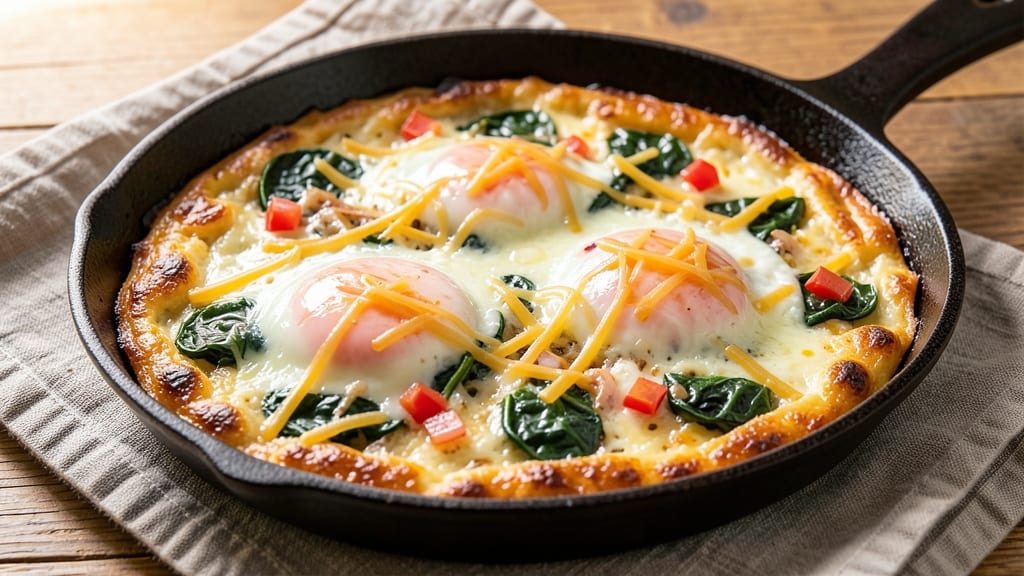
A 2-egg frittata delivers crispy edges and silky yolk perfection with minimal effort—ideal for busy mornings or lazy weekends. The secret lies in high-heat cooking and a precise egg-to-cheese ratio that creates a creamy, custard-like center while maintaining that coveted golden crust.
I’ve perfected this technique after years of testing, ensuring every bite balances texture and flavor without a single overcooked egg in sight.
This recipe transforms simple ingredients into a restaurant-worthy dish in just 10 minutes of active prep. The key is preheating your pan until it’s screaming hot before adding the eggs, which creates that signature crispy edge while keeping the inside tender and rich.
Unlike fluffy omelets, frittatas develop their signature texture through gentle shaking and a final broil—no flipping required.
What you’ll end up with is a crispy, golden-edged frittata with a velvety interior that holds its shape beautifully. The eggs cook evenly, the cheese melts into a creamy blanket, and the edges achieve that perfect balance between crisp and tender.
It’s the kind of breakfast that feels indulgent without requiring a single extra ingredient.
Customize it with your favorite add-ins—sautéed spinach, diced bell peppers, or crumbled feta—then serve with a side of fresh fruit or crusty toast. This frittata is as versatile as it is delicious, making it perfect for meal prep or a spontaneous weekend brunch. Let’s get cooking!
Ingredients for 2 egg frittata
Two eggs, crispy edges, silky yolk magic—this frittata delivers restaurant-quality breakfast in minutes.
| Ingredient | Amount | Notes |
|---|---|---|
| Large Eggs 🥚 | 2 whole | Room temperature for even cooking |
| Shredded Sharp Cheddar Cheese 🧀 | ½ cup | Freshly grated for best melt |
| Unsalted Butter 🧈 | 1 tbsp | European-style preferred for flavor |
| Fresh Spinach 🌿 | ¼ cup | Chopped, stems removed |
| Red Bell Pepper 🍅 | ¼ cup | Diced, any color works |
| Small Red Onion 🧅 | ¼ cup | Finely diced |
| Diamond Crystal Kosher Salt 🧂 | ¼ tsp | Adjust to taste |
| Freshly Ground Black Pepper 🌶️ | ¼ tsp | Cracked peppercorns preferred |
| Extra-Virgin Olive Oil 🫒 | ½ tsp | For greasing pan |
The eggs are non-negotiable here—use large eggs for that perfect yolk-to-white ratio. I always grab organic pastured eggs from Whole Foods or my local farm market—they whip up fluffier and richer. For the cheese, sharp cheddar melts beautifully, but Parmigiano-Reggiano or Monterey Jack work too. Freshly grate it yourself (the pre-shredded kind has anti-caking agents that prevent proper melting). The butter matters too—European-style unsalted butter like Plugrá has higher fat content, which gives you that perfect crispy edge without burning.
No fresh spinach? Frozen works in a pinch—just thaw and drain well. Swap the bell pepper for zucchini or mushrooms if you prefer. The onions can be subbed with green onions or leeks, but they’ll add a different flavor profile. If you’re avoiding dairy, use nutritional yeast for a cheesy flavor (though the texture won’t be identical). The olive oil is just for greasing—any neutral oil will do, but don’t skip it. A well-greased pan is the secret to that golden crust. And trust me, freshly ground black pepper makes all the difference—pre-ground loses its punch fast.
This frittata reheats beautifully—just pop it in the oven at 350°F for 5-10 minutes to restore crispiness. Store leftovers in the fridge for up to 3 days, wrapped tightly in foil to keep the edges crisp. For meal prep, slice into wedges and freeze for up to 2 months. Pro tip: Make it ahead and broil for 2 minutes before serving to revive that crispy texture. The cheese will keep it creamy, and the eggs will stay tender—just like fresh from the pan.
Why You'll Love This Recipe
- Two-Ingredient Magic: I swear by this—just eggs, cheese, and a handful of veggies. No fancy technique, no measuring cups, just crack, chop, and cook. The butter melts into a golden crust while the spinach wilts into oblivion, leaving that perfect tender bite.
- Cheese Pulls No Punches: That sharp cheddar? It’s the star. When it melts into strings and pools in the center, you’ll forget you’re eating something this simple. The bell pepper adds a sweet crunch that cuts through the richness—like a little surprise in every bite.
- Lunchbox Hero: Between us, this is my go-to for packed lunches. Slice it up, wrap it in foil, and boom—you’ve got a meal that survives the drive home. Kids (or adults) will eat it cold, warm, or straight from the pan. No reheating required.
- Pantry Savior: I make this when I’m low on groceries or short on time. Two eggs stretch further than you’d think, and the cheese stretches your budget too. Leftovers? They reheat in seconds—just slap it in the microwave and grab a fork. Done.
Step-by-step instructions for perfect frittata
Here's how to create a frittata with golden edges and set-yolk perfection every time.
Prep Ingredients and Heat the Pan
Start by chopping the 0.25 cup fresh spinach, 0.25 cup red bell pepper, and 0.25 cup small red onion into small, even pieces. The goal is to distribute them evenly throughout the frittata so every bite has flavor and texture. I like to cut the spinach stems off first—they're tough and don't cook down nicely.
In a 6-inch oven-safe skillet, melt the 1 tablespoon unsalted butter over medium heat until it foams but doesn't brown. Then add the 0.5 teaspoon extra-virgin olive oil to help create that perfect crispy edge. The butter should coat the pan evenly—this is your flavor foundation. If it starts to brown too quickly, reduce the heat slightly to prevent burning.
Sauté Vegetables Until Tender
Add the chopped vegetables to the skillet and cook for 3-4 minutes until they begin to soften and release their juices. Stir occasionally to prevent sticking, but don't overcrowd the pan—this keeps the vegetables from steaming instead of browning. You're aiming for a just-tender texture, not fully cooked mush.
Here's the thing—don't drain the vegetables after cooking. Those juices will help create the perfect sauce-like consistency in your frittata. When the vegetables look vibrant and slightly wilted, it's time to move to the next step. Sprinkle with 0.25 teaspoon diamond crystal kosher salt and 0.25 teaspoon freshly ground black pepper now so the flavors meld as we cook.
Whisk Eggs and Pour into Skillet
In a medium bowl, crack the 2 whole large eggs (room temperature, remember?) and whisk them vigorously until the yolks and whites are fully combined. The eggs should be uniform in color with no streaks of yellow. Add the 0.5 cup shredded sharp cheddar cheese and whisk again until it's evenly distributed throughout the egg mixture.
Pour the egg mixture evenly over the sautéed vegetables in the skillet. Use a spatula to spread the eggs gently to the edges of the pan, creating an even layer. This ensures the frittata cooks uniformly and develops that beautiful crispy edge. The eggs should begin to set immediately at the edges while remaining runny in the center.
Cook on Stovetop Until Set
Let the frittata cook undisturbed on the stovetop for 2-3 minutes until the edges begin to set and the top looks slightly dry. You'll notice the edges pull away from the pan slightly—that's your cue it's ready for the oven. Don't walk away during this time; you want to catch it at the perfect moment before it overcooks.
Real talk: This is where the magic happens. The stovetop cook creates that crispy edge we're after, while keeping the center just set enough to finish in the oven. If you see the edges browning too quickly, you can gently move the pan to a cooler spot on the burner or reduce the heat slightly. The goal is golden edges with a still-slightly-runny center.
Finish in the Oven for Perfect Texture
Transfer the skillet to a 375°F preheated oven and bake for 8-10 minutes. You're looking for the center to be just set—no longer runny, but with that perfect custard-like texture where the yolk is still slightly soft. The frittata should be golden brown on top with crispy edges all around.
Here's how to test for doneness: Insert a knife or skewer into the center. It should come out clean, but the frittata shouldn't be completely dry. If it's still too runny, return it to the oven for another 1-2 minutes. If it's dry, you've overcooked it—this is why timing is crucial. Let it rest for 2-3 minutes after removing from the oven before serving.
Pro Tips For Making 2 Egg Frittata
- Preheat Pan Like It’s Your Job: I used to skip this with frittatas and wondered why my cheese wouldn’t melt properly. Get that nonstick skillet screaming hot on medium-high for 2 full minutes with the butter—yes, even for just 2 eggs. The butter should foam but not brown before you pour in those eggs.
- Wilt Spinach First: Fresh spinach is great, but dumping it raw into the eggs turns your frittata into a sad, watery mess. Sauté the spinach and bell pepper in the same pan for 1-2 minutes until they collapse—just until they’re tender, not crispy. This cuts down on moisture and keeps the texture perfect.
- Don’t Overmix the Eggs: I learned this the hard way—whipping eggs into stiff peaks for a frittata is a one-way ticket to rubbery disaster. Crack those eggs into a bowl, add a splash of milk (if you’re using it), and give it one gentle stir with a fork. You’re making an omelet, not meringue.
- Finish Under the Broiler: The stove-top method works, but if you want that crispy, golden top without babysitting the pan, pop it under the broiler for 2-3 minutes. Watch it like a hawk—you want the cheese bubbling and the edges just starting to brown, not turning into a science experiment.
Best sauces and condiments for this 2 egg frittata
Classic Hollandaise Sauce
For a luxurious brunch pairing, drizzle your frittata with homemade hollandaise sauce—its creamy, tangy richness complements the crispy edges beautifully. Whisk 2 egg yolks, 1 tablespoon lemon juice, and ½ cup melted butter over a double boiler until thickened.
Season with ¼ tsp salt and a pinch of cayenne. Serve immediately while warm. 🍳
Spicy Sriracha Aioli
Add a kick with a sriracha aioli that cuts through the richness of the cheese. Mix ¼ cup mayonnaise, 1 tbsp sriracha, 1 tsp honey, and ½ tsp lime juice.
Thin with a splash of water if needed. Drizzle generously over slices for a perfect balance of heat and creaminess. I love this with a sprinkle of toasted sesame seeds for texture.
Garlic-Herb Butter
Infuse 2 tbsp softened butter with 1 minced garlic clove, 1 tsp chopped parsley, and a pinch of salt. Warm gently in a small pan until fragrant, then spread over warm frittata slices.
The garlic adds depth while keeping the dish light. This works especially well with a goat cheese frittata variation.
Pesto Drizzle
Store-bought or homemade basil pesto adds freshness and vibrant color. Use 2 tbsp pesto per serving, warmed slightly if needed. For extra richness, dollop with a spoonful of whipped ricotta mixed with a pinch of black pepper. This pairing is perfect for a spinach and sun-dried tomato frittata.
Chimichurri
Brighten up your plate with chimichurri sauce—a tangy, herby Argentine classic. Blend ½ cup parsley, 2 tbsp cilantro, 3 garlic cloves, 2 tbsp red wine vinegar, ¼ cup olive oil, and ½ tsp red pepper flakes.
Let it sit for 10 minutes before serving to let flavors meld. This pairs exceptionally well with a red pepper and onion frittata.
Salsa Verde
For a zesty kick, try salsa verde—a green tomato sauce with herbs. Blend 1 cup chopped green tomatoes, ¼ cup parsley, 1 garlic clove, 2 tbsp olive oil, and 1 tbsp white vinegar.
Season with salt and pepper. This sauce adds a refreshing contrast to the creamy cheese and crispy edges. 🌿
Nutrition facts
Frequently asked questions
Can I make this frittata without cheese?
While cheese adds richness, you can create a delicious cheese-free version by using 1 tablespoon nutritional yeast for a cheesy flavor or simply omitting it entirely. For extra flavor, add 1 teaspoon Dijon mustard to the egg mixture or top with fresh herbs like thyme or basil. The texture will still be creamy thanks to the eggs and vegetables.
Why does my frittata turn out rubbery?
Rubbery frittatas usually happen when overcooked or when the eggs are cooked too long at high heat. The key is to remove it from the oven when the center is just set (a knife should come out clean but slightly moist). Also, ensure your eggs are room temperature—they cook more evenly. For extra tenderness, reduce oven temp to 350°F and check frequently.
How do I make this frittata fluffier?
For a fluffier texture, whisk the eggs vigorously until they're fully combined and slightly frothy. Add a splash of water (1 tablespoon) to the egg mixture before pouring it into the pan. This creates steam during cooking, resulting in a lighter, airier frittata. Also, avoid overcrowding the pan with too many fillings—stick to ½ cup total of veggies/cheese for two eggs.
Can I use this recipe for meal prep?
Yes! This frittata reheats beautifully. Store leftovers in the fridge for up to 3 days, wrapped tightly in foil. For meal prep, slice into wedges and freeze for up to 2 months. To restore crispiness, broil for 2 minutes before serving. The cheese will keep it creamy, and the eggs will stay tender when reheated properly.
What's the best pan for making frittatas?
Use a 6-inch oven-safe skillet with sloped sides for easy release. Cast iron or stainless steel work best—they conduct heat evenly and create that perfect crispy edge. Avoid non-stick pans for this recipe; they don't get hot enough for proper browning. If using non-stick, add an extra ½ teaspoon olive oil to ensure crispiness.