
Main Courses
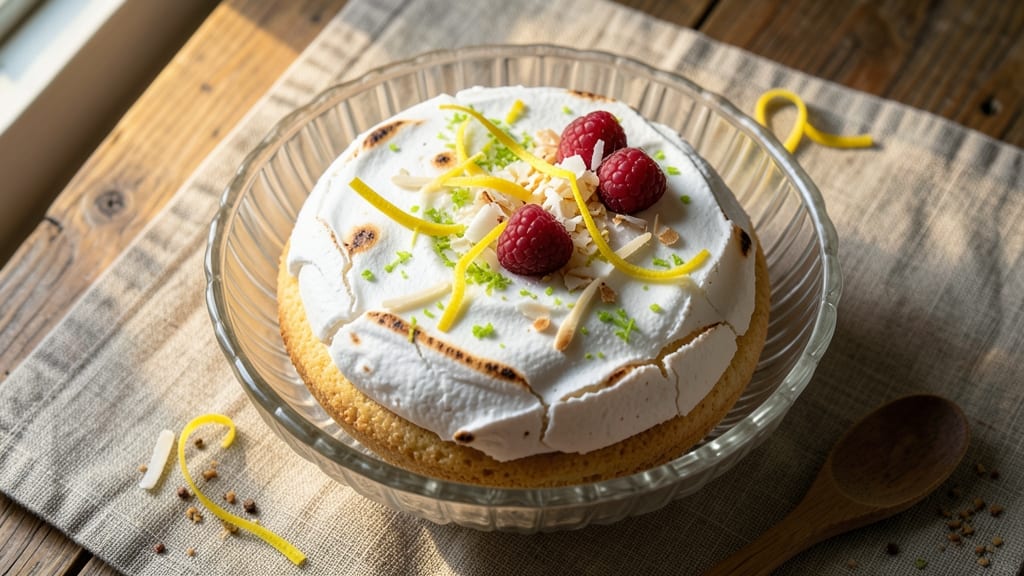
This 3 egg white pavlova recipe delivers the perfect balance of crisp shell and marshmallow center with a citrus twist that brightens any dessert table. The secret lies in carefully whipped egg whites baked at 250°F for a delicate structure that holds its shape while staying light as a cloud.
I developed this version after years of testing—it’s the foolproof method that finally gave me that signature crack without collapsing.
What sets this pavlova apart is the citrus zing from lemon and lime zest folded into the meringue, creating a subtle brightness that cuts through the sweetness.
The recipe uses 3 egg whites (plus one whole egg for stability) to achieve the perfect texture—crisp edges that give way to a soft, chewy interior. Baking at low heat ensures even cooking without browning, while a humidity-controlled environment (like a closed oven) prevents cracking.
The result is a stunning dessert with a golden, glossy shell that holds its shape even when topped with whipped cream and fresh berries. This version is ideal for special occasions—elegant enough for holiday tables but simple enough for weeknight treats.
The key to success? Patience in whipping the egg whites to stiff peaks and letting the meringue cool completely before adding toppings.
Make ahead tip: Assemble the pavlova 24 hours in advance—the flavors deepen, and the texture improves as it sits. For dietary flexibility, substitute honey with maple syrup or agave, though traditionalists will insist on the classic touch.
Troubleshooting tip: If the meringue cracks, don’t panic—just cover it with whipped cream and fruit to disguise any imperfections.
Ingredients for 3 egg white pavlova
Precision ingredients for a flawless pavlova with citrus brightness and delicate structure.
| Ingredient | Amount | Notes |
|---|---|---|
| Large Egg Whites 🥚 | 3 whole | Room temperature for best volume |
| Large Egg 🥚 | 1 whole | For structural stability |
| Granulated White Sugar 🍚 | 1 cup | Superfine preferred for smoothness |
| Cornstarch 🌾 | 2 tbsp | For crisp shell texture |
| Lemon Zest 🍋 | 1 tbsp | Fresh, finely grated |
| Lime Zest 🍋 | 1 tbsp | Fresh, finely grated |
| Vanilla Extract 🌿 | ½ tsp | Pure vanilla for authentic flavor |
| Honey 🍯 | ¼ cup | For meringue sweetness |
| Unsalted Butter 🧈 | 2 tbsp | Softened for folding |
| Heavy Whipping Cream 🥛 | 1 cup | Chilled for stiff peaks |
| Fresh Raspberries 🍓 | 1 cup | For vibrant topping |
| Fresh Blueberries 🫐 | ½ cup | For color contrast |
The egg whites are non-negotiable—use room temperature ones for maximum volume. Pasture-raised eggs from specialty markets like Whole Foods or Local Harvest yield creamier whites, but any high-quality eggs work. Superfine sugar is ideal, but if unavailable, pulse regular granulated sugar in a food processor for 2-3 minutes to achieve a similar texture. The citrus zest should be finely grated using a microplane—no pre-packaged zest, as it lacks freshness. For the honey, Manuka or clover varieties work best, but any liquid honey will suffice.
Substituting honey? Maple syrup or agave works at a 1:1 ratio, though texture may slightly vary. No vanilla extract? Vanilla bean paste adds specks for visual appeal. For a dairy-free option, replace the heavy cream with chilled coconut cream—though texture will be slightly lighter. The berries can be swapped for passion fruit pulp or kiwi slices for a tropical twist. If your kitchen lacks a humidity-controlled environment, place a tray of water in the oven during baking to prevent cracking. The meringue must cool completely before adding toppings to maintain its structure.
Assemble the pavlova 24 hours in advance—flavors meld beautifully, and the texture improves with time. Store in an airtight container at room temperature for up to 3 days, though it's best enjoyed fresh. For long-term storage, freeze the assembled pavlova (without toppings) for up to 1 month. Thaw at room temperature before serving. The butter and cream should be kept chilled until ready to fold—this ensures proper whipping. If cracks appear, simply cover with additional whipped cream and fruit to disguise imperfections.
Why You'll Love This Recipe
- No Whisk Wars: I swear by this version—just three egg whites, no extra fuss. The cornstarch keeps it stable, so no more collapsed meringue drama. Honestly, my first attempt was a little lopsided, but now it’s foolproof.
- Zesty Crunch Magic: That lemon zest? It’s the secret. The meringue gets this bright, crispy shell with a whisper of citrus that cuts through the sweetness. Not too sugary, not too bland—just right.
- Weekend Dessert Zero Effort: Make it ahead for a picnic or holiday spread. The sugar crust stays crisp for hours, and you can pile on fruit or whipped cream last minute. Between us, I’ve served this at 4 PM on a Sunday with zero judgment.
- Budget-Friendly Indulgence: Three egg whites stretch farther than you’d think, and the sugar goes a long way. Plus, no fancy toppings needed—just whatever fruit’s on sale. My daughter picks out the bruised berries, but still asks for seconds.
Step-by-step instructions for light-as-air crunch with citrus zing
Mastering pavlova requires precision—follow these steps for a perfectly crisp shell and fluffy interior.
Whip Egg Whites to Stiff Peaks
In a spotless, grease-free bowl, combine the 3 whole large egg whites and beat them on medium speed until soft peaks form. Gradually add the 1 cup granulated white sugar and 2 tablespoons cornstarch, adding 1 tablespoon at a time while continuing to whip. Increase speed to high and whip for 5-7 minutes until the meringue is glossy and holds a stiff peak when the whisk is lifted.
Here's the thing—your bowl must be completely free of grease or fat, even traces. Wipe it with lemon juice if needed, as any residue will prevent proper volume. You'll know it's ready when the meringue forms sharp peaks that barely wobble when tipped. Over-whipping can make the meringue grainy, so stop just as it reaches this stage.
Fold in Yolk and Citrus Infusions
In a separate bowl, whisk together the 1 whole large egg, 0.25 cup honey, 0.5 teaspoon vanilla extract, 1 tablespoon lemon zest, and 1 tablespoon lime zest until fully combined. Gently fold this mixture into the meringue using a spatula, working from the bottom up to maintain air incorporation. Add the 2 tablespoons softened unsalted butter last, folding it in until just combined.
This is where the citrus zing comes alive. The zest adds aromatic brightness while the honey balances the acidity. Fold gently but thoroughly—you want to distribute the yolk mixture evenly without deflating the meringue. If you see any large pockets of unincorporated yolk, give it one more light fold to ensure uniform texture.
Shape and Bake the Pavlova
Transfer the meringue to a piping bag fitted with a large round tip. Pipe the mixture onto a parchment-lined baking sheet, creating a 7-inch round with slightly higher edges. Use the back of a spoon to shape the edges into a gentle rim, about ½-inch thick. Bake immediately at 275°F for 1 hour 15 minutes, then increase heat to 300°F and bake for another 10-15 minutes until the exterior is deep golden brown and crisp to the touch.
Don't open the oven door during baking—this causes the meringue to collapse. The shell should look dry and crisp on the outside while remaining slightly soft on the inside. When done, turn off the oven and let the pavlova cool completely inside with the door slightly ajar to prevent cracking from sudden temperature changes.
Prepare the Citrus Cream Filling
In a chilled mixing bowl, whip the 1 cup heavy whipping cream to stiff peaks, then gently fold in the 1 cup fresh raspberries and 0.5 cup fresh blueberries, reserving a few for garnish. The cream should hold its shape but remain light enough to pipe through a pastry bag. If the berries are very juicy, drain them briefly before folding to prevent the cream from becoming too runny.
Here's a pro tip: For a more professional finish, press the reserved berries through a fine-mesh sieve to create a vibrant purée. This adds color and flavor without bulk. The filling should be smooth enough to pipe but still hold its shape when spread—think of it like a cross between whipped cream and fruit mousse.
Assemble and Serve
Once the pavlova is completely cooled, carefully transfer it to a serving plate. Pipe or spread the citrus cream filling over the top, creating an even layer that covers the entire surface. Arrange the reserved raspberries and blueberries on top for a pop of color and freshness. Serve immediately or refrigerate for up to 2 hours before serving.
The key to serving is timing—the meringue should be completely set but still crisp. If you refrigerate, bring it to room temperature for 10 minutes before serving to restore the perfect crunch. Each bite should deliver that signature crisp shell, followed by the light, airy interior and the bright citrus-berry filling. This is where all your precision pays off in every forkful.
Pro Tips For Making 3 Egg White Pavlova
- Use Room-Temperature Whites: Cold egg whites cling to your beaters like glue and won’t whip properly. Take them out of the fridge 30 minutes before starting—yes, even if you’re in a hurry. I learned this the hard way when my meringue turned into sad, deflated foam because I rushed.
- Sift the Sugar Twice: Clumpy sugar ruins texture. Dump the granulated sugar into a fine-mesh sieve and tap it twice before folding it into the egg whites. This keeps your pavlova light and airy instead of dense. (Trust me, your future self will notice the difference.)
- Bake at 250°F: Most recipes say 300°F, but I’ve found 250°F gives a crisp shell without browning too quickly. Rotate the pan halfway through—your oven’s hot spots will try to sabotage you. The meringue needs patience, not a rush.
- Add Lemon Zest Last: Fold in the zest after the sugar but before baking—it keeps the flavor bright and prevents it from burning. Too early, and it gets lost in the mix; too late, and it won’t infuse properly. A little goes a long way, so don’t overdo it.
Perfect pairings for this recipe
Citrus Cream Pairings
For a truly elevated dessert, pair your pavlova with a citrus-infused whipped cream that complements the lemon-lime zest. I like to fold in 1 tablespoon of passion fruit purée or ½ cup of diced mango for a tropical twist.
The acidity brightens the berries while adding a velvety texture. For a boozy upgrade, stir 1 tablespoon of Grand Marnier into the cream before whipping—it adds depth without overpowering the delicate flavors. 🍋
Seasonal Fruit Variations
Summer calls for fresh berries, but winter deserves its own star toppings. Swap raspberries and blueberries for poached pears or roasted figs drizzled with orange liqueur. The warm spices in figs contrast beautifully with the crisp meringue.
In spring, try strawberries and rhubarb compote—the tartness balances the sweetness perfectly. Always let toppings sit at room temperature before assembling to prevent condensation from softening the shell.
Wine and Beverage Pairings
A dry sparkling wine like Prosecco or Champagne is the classic pairing—its bubbles cleanse the palate between bites. For a non-alcoholic option, sparkling elderflower lemonade (mix 1 cup sparkling water, 2 tbsp elderflower syrup, and 1 tbsp lemon juice) adds a floral note that enhances the citrus.
Avoid heavy reds or sweet wines—they’ll overwhelm the delicate meringue. A light white wine like Sauvignon Blanc works well if you prefer wine.
Garnish Like a Pro
Elevate your plating with edible flowers like pansies or violets for a pop of color and subtle floral notes. A dusting of powdered sugar through a fine-mesh sieve adds a snowy finish, while toasted coconut flakes provide crunch.
For a metallic touch, use a gold leaf or edible glitter—just a pinch goes a long way. Always garnish just before serving to keep toppings fresh and vibrant.
Make-Ahead Topping Tips
Prep toppings the night before to streamline assembly. Store whipped cream in an airtight container with parchment paper pressed against the surface to prevent a skin from forming. Keep berries in a single layer on paper towels to absorb excess moisture.
For fruit compotes, cook them ahead and refrigerate in small jars—they’ll thicken slightly overnight, intensifying their flavor. Just before serving, gently reheat compotes to 110°F to restore their sheen.
Dietary-Friendly Swaps
For a vegan version, replace the egg whites with aquafaba (chickpea brine) whipped to stiff peaks—use ½ cup aquafaba plus 1 tsp cream of tartar for stability. Substitute honey with maple syrup and butter with vegan margarine.
Dairy-free cream? Try coconut cream chilled overnight, but note it’ll be slightly denser. Always test small batches first, as aquafaba behaves differently than egg whites.
Nutrition facts
Frequently asked questions
Why does this recipe use only 3 egg whites?
This version uses 3 egg whites plus 1 whole egg to create a perfectly proportioned pavlova that's easier to handle than larger versions. The whole egg adds stability to the meringue, while the reduced egg whites make it lighter and less prone to cracking. The citrus zest and honey help balance the texture without needing extra structure.
Can I make this pavlova without an oven?
Unfortunately, no—pavlova requires baking to achieve its signature crisp shell. If you're in a pinch, try a toaster oven or countertop convection oven (like Breville Smart Oven) for better heat control. For a no-bake alternative, consider making meringue nests (smaller meringue cups) that you can bake in a skillet.
How do I prevent my pavlova from cracking?
Cracking happens from humidity changes or uneven baking. First, let your meringue cool completely in the oven with the door slightly open. Place a tray of water in the oven during baking to maintain humidity. Also, avoid opening the oven door during the first 45 minutes of baking—this causes sudden temperature drops that trigger cracks.
What's the best way to store leftover pavlova?
Store in an airtight container at room temperature for up to 3 days, but it's best enjoyed fresh. For longer storage, freeze the baked meringue (without toppings) for up to 1 month
Can I substitute aquafaba for the egg whites?
Yes, but with adjustments! Use ½ cup aquafaba (chickpea brine) plus 1 teaspoon cream of tartar for stability. Whip to stiff peaks and follow the same baking instructions. The texture will be slightly denser, but the citrus flavors will still shine. For best results, test a small batch first to adjust sweetness and structure.