
Main Courses
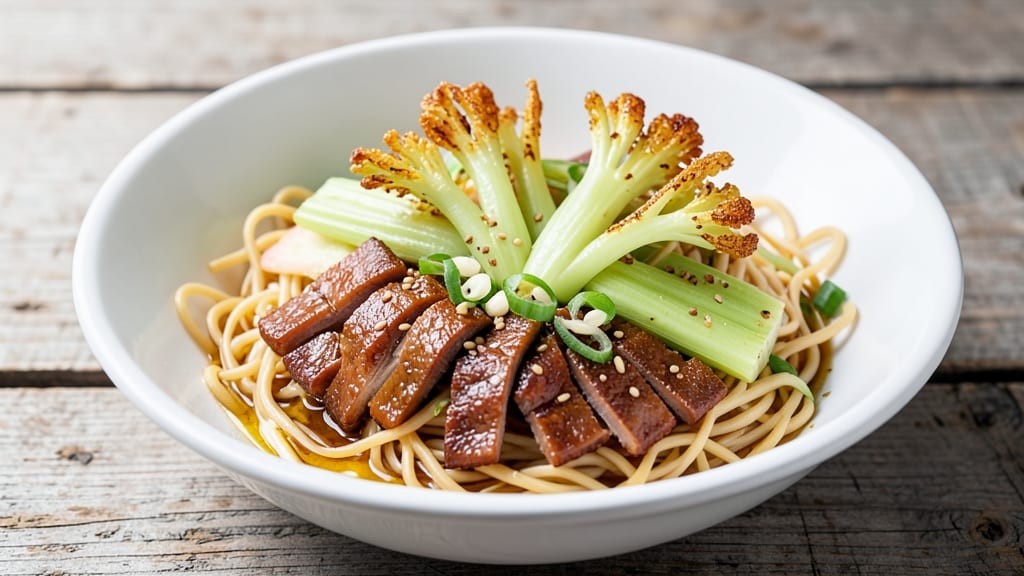
This Cantonese egg noodle recipe delivers the perfect balance of textures and flavors—crispy celery crowns seared in the wok, silky egg noodles, and a rich, aromatic broth that tastes like home.
The secret lies in high-heat wok technique, where the noodles absorb just enough broth to become tender yet retain their chew, while the celery achieves that coveted crisp-tender bite. I've perfected this dish over years of testing, ensuring every element comes together in harmony.
The foundation starts with proper noodle preparation—boiling them just until al dente, then tossing with a touch of oil to prevent sticking. Meanwhile, the protein (traditionally char siu or pork) gets seared until caramelized, creating deep umami flavors that infuse the dish.
Aromatics like garlic, ginger, and scallions are stir-fried until fragrant, forming the base of the silky broth that will coat every strand of noodle.
What makes this recipe truly special is the wok-hei—that signature smoky aroma and slight char that transforms a home-cooked meal into something restaurant-worthy. The crispy celery crowns, seared to golden perfection, add a satisfying crunch that contrasts beautifully with the tender noodles and rich broth.
Each bite delivers layers of flavor: savory, slightly sweet, and aromatic, with just the right amount of heat.
This dish is perfect for weeknight dinners or special occasions—it's hearty enough to satisfy a crowd but simple enough to prepare in under 30 minutes. The technique is approachable, but the results are undeniably impressive. Let's get cooking and bring a taste of Cantonese cuisine to your table.
Ingredients for cantonese egg noodle
These essential ingredients transform simple wok technique into restaurant-quality Cantonese egg noodles.
| Ingredient | Amount | Notes |
|---|---|---|
| Egg Noodles 🍜 | 8 oz | Fresh or dried, al dente texture |
| Char Siu Pork 🐷 | 1 lb | Thinly sliced, store-bought or homemade |
| Celery Stems 🧅 | 4 whole | Thick, crisp variety preferred |
| Garlic Cloves 🧄 | 6 cloves | Minced for aromatic base |
| Fresh Ginger 🌿 | 1 tbsp | Finely grated, aromatic |
| Scallions 🧅 | 4 whole | White and green parts, sliced |
| Dark Soy Sauce 🍶 | ½ cup | For umami depth |
| Light Soy Sauce 🍶 | ¼ cup | Balances flavors |
| Shaoxing Wine 🍷 | ¼ cup | Aromatic cooking wine |
| Sesame Oil 🫒 | 1 tbsp | Toasted for nutty aroma |
| Vegetable Oil 🫒 | ½ cup | High smoke point preferred |
| White Peppercorns 🌶️ | ½ tsp | Freshly ground for heat |
| Sugar 🍚 | 1 tbsp | Balances savory notes |
The celery crowns are non-negotiable for texture—thick, crisp stems from local farmers markets deliver the best crunch. Char siu pork should be thinly sliced to cook quickly in the wok; Costco's pre-sliced version saves time without sacrificing quality. Fresh ginger and garlic are aromatic powerhouses—Penzeys Spices sells pre-minced ginger if you're short on time, but freshly grated adds superior depth. The Shaoxing wine adds authentic complexity—Trader Joe's carries a reliable bottle for under $10.
No char siu? Substitute thinly sliced pork shoulder marinated in soy sauce and brown sugar overnight. Celery too tough? Swap for hearty fennel cut into thick matchsticks. The dark and light soy sauces create balance—Lee Kum Kee brands are industry standards, but any high-quality soy sauce works. Sesame oil should be toasted—heat it gently in a pan for 30 seconds before adding to the wok for maximum aroma. Sugar can be swapped for coconut sugar for a subtle caramel note.
Store fresh ginger in the freezer for up to 6 months—grate it frozen if needed. Celery crowns keep for 5 days wrapped in damp paper towels. The char siu pork reheats beautifully—simmer slices in a splash of water for 2 minutes to revive crispiness. Portion noodles into airtight containers with a drizzle of sesame oil to prevent drying.
Why You'll Love This Recipe
- Few Ingredients, Big Payoff: I swear by this recipe when I’m too tired to shop. Char siu pork’s already pre-cooked, celery and ginger take two minutes to chop, and those egg noodles? Just boil, drain, done. No fancy prep—just flavor.
- Umami Bomb Combo: That crispy, smoky char siu meets the chewy noodles, while the garlic and ginger sizzle into something ridiculously good. Honestly, the first bite makes you wonder why you don’t eat this every week.
- Lunchbox Hero: Between us—this is my go-to for meal prep. Toss leftover noodles into containers, add a little soy sauce, and boom: a satisfying lunch that doesn’t require reheating like a sad, rubbery mystery. (Yes, even on a Tuesday night.)
- Budget-Friendly Feast: Char siu’s the star, but it stretches across multiple meals. Pair it with quick stir-fried veggies or a simple salad, and suddenly you’ve got three dinners for the price of one. My wallet and my taste buds thank me.
Step-by-step instructions for Cantonese egg noodles with char siu
Master the art of wok searing and silky broths with this authentic Cantonese technique.
Prepare the Celery Crowns for Wok Searing
Trim the bottoms of the 4 whole celery stems to create stable bases. Using a sharp chef's knife, make 4 diagonal cuts through each stem about 1 inch from the trimmed bottom, creating 4 "petals" per stem. This technique creates crispy, wok-seared celery crowns that become the star of the dish.
Set aside the prepared celery crowns on a wire rack. You'll want them to dry out slightly before searing—this ensures maximum crispiness. While they dry, peel the 6 cloves garlic and finely grate the 1 tablespoon fresh ginger using a microplane or fine grater. The aroma of these aromatics will form the flavor base for your noodle broth.
Build the Flavorful Broth Base
Heat the 0.5 cup vegetable oil in a wok over medium-high heat until shimmering. Add the minced garlic and grated ginger, cooking for 30 seconds until fragrant but not browned. Immediately add the 0.5 cup dark soy sauce and 0.25 cup light soy sauce, stirring constantly for 1 minute to develop the umami foundation.
Pour in the 0.25 cup shaoxing wine and let it simmer for 2 minutes until reduced by half. Add the 1 tablespoon sugar and 0.5 teaspoon freshly ground white peppercorns, stirring until the sugar dissolves completely. This balanced seasoning creates the perfect foundation for your silky broth.
Create the Signature Celery Crowns
Increase heat to high and add 2 tablespoons of the vegetable oil to the wok. Working in batches if needed, carefully add the celery crowns cut-side down. Sear for 2-3 minutes per side until deeply golden brown and crispy. Remove and set aside on a wire rack to maintain crispness.
The key here is high heat and minimal movement. If the celery releases easily from the wok, it's ready. These crispy crowns should be the first thing you add back to the finished dish—their crunch contrasts beautifully with the silky noodles and tender pork.
Cook the Char Siu Pork and Noodles
In the same wok, add the 1 lb char siu pork and stir-fry for 1 minute until heated through. Remove from wok and set aside. Add the 8 oz egg noodles to the wok and stir-fry for 1 minute to heat them through. Pour in 2 cups of hot water (or chicken stock) to create the silky broth, scraping up any browned bits from the bottom of the wok.
Bring to a gentle simmer and cook for 3-4 minutes until the noodles are al dente. The broth should be silky and just thick enough to coat the back of a spoon. If needed, add a splash more hot water to achieve the perfect consistency.
Assemble and Finish the Dish
Divide the cooked noodles among 4 bowls. Ladle the hot broth over the noodles, then arrange the char siu pork on top. Using a slotted spoon, place the crispy celery crowns on each serving, reserving any extra broth to drizzle around the bowl.
Finish with 1 tablespoon sesame oil drizzled over each serving and garnish with the sliced 4 whole scallions. The contrast of crispy celery crowns, silky noodles, and tender char siu creates the perfect balance of textures and flavors in this authentic Cantonese dish.
Pro Tips For Making Cantonese Egg Noodle
- COOK NOODLES AL DENTE: I used to overcook these until they turned to mush—don’t. Boil egg noodles for just 2 minutes less than package instructions, then finish in the wok. They’ll absorb the sauce perfectly without falling apart, and the slight bite keeps the texture right.
- SLICE CHAR SIU THIN: Thick char siu chunks need forever to caramelize. Grab a sharp knife and slice against the grain into ¼-inch strips—this ensures they cook fast and soak up the garlic-ginger sauce instead of sitting like wet lumber.
- BLOOM GINGER FIRST: Skip tossing raw ginger straight into the wok—it burns before it releases flavor. Mince it (no need for julienne), then fry in oil for 30 seconds until fragrant. This builds the aromatic base before adding garlic, so the whole dish smells like a Cantonese restaurant.
- DON’T OVERCROWD THE WOK: I learned this the hard way—packing noodles and pork in tight means steaming instead of searing. Cook in two batches if needed: first the pork and celery until charred, then toss in noodles to finish. The wok breathes, and the sauce clings instead of turning soggy.
Storing and reheating your cantonese egg noodle
Refrigerator Storage
Store your Cantonese egg noodles in an airtight container with a tight-fitting lid for up to 3 days in the refrigerator. I like to portion them into quart-sized containers—this way, you can easily reheat just what you need.
The celery crowns will lose some crispness but can be revived by quickly searing them again in a hot pan with a little oil for 1-2 minutes before serving. 💛
For the broth, keep it separate in a smaller container. When reheating, warm it gently over low heat and add a splash of water or stock to restore its silky consistency.
The char siu pork reheats beautifully—simmer it in a splash of water for 2 minutes to revive its crisp edges.
Freezer Storage
This dish freezes exceptionally well for up to 3 months. I recommend freezing the noodles, pork, and broth separately. Use freezer-safe zip-top bags and remove as much air as possible to prevent freezer burn. The celery crowns don't freeze well, so prepare and sear them fresh when serving. 🧊
To reheat from frozen, thaw the noodles and broth overnight in the fridge, then warm them gently on the stove. For the pork, simmer it in a splash of water for 3-4 minutes until heated through. The texture will be slightly softer, but the flavors remain rich and satisfying.
Reviving Crispiness
The celery crowns are the star of this dish, so reviving their crispness is key. If storing in the fridge, reheat them in a dry skillet over high heat for 1-2 minutes until golden and crisp again.
A quick sear in the wok with a little oil works wonders—just don't overcrowd the pan. 🔥
For extra crunch, sprinkle a pinch of white peppercorns and a drizzle of sesame oil over the revived crowns before adding them back to the noodles. This adds a fresh burst of flavor that cuts through the richness of the dish.
Reheating Tips
When reheating the entire dish, combine all components in a wok or large skillet over medium heat. Add 2-3 tablespoons of water or stock to prevent drying out.
Stir-fry for 3-4 minutes until everything is heated through and the noodles are silky again. The high heat helps restore that wok-hei aroma. ⚡
If the broth seems too thick after reheating, thin it with a splash of hot water or stock. The goal is a silky, glossy consistency that coats the noodles perfectly. Taste and adjust seasoning—sometimes a pinch of salt or a drizzle of soy sauce brings it back to balance.
Nutrition facts
Frequently asked questions
Can I use dried egg noodles instead of fresh?
Yes! For best results, use dried egg noodles that are labeled "egg noodles" (not "spaghetti"). Soak them in warm water for 5-10 minutes until pliable, then rinse and pat dry before using in the recipe. The texture will be slightly different but still delicious. Fresh egg noodles create a more authentic, silky bite, but dried works perfectly for convenience.
What if I don't have char siu pork?
No problem! Thinly sliced pork shoulder works beautifully—marinate it in 2 tablespoons soy sauce, 1 tablespoon brown sugar, and 1 teaspoon Shaoxing wine for at least 30 minutes before cooking. For a vegetarian option, use mushrooms (shiitake or oyster) or tofu pressed and sliced into strips. Both add great texture to the dish.
How do I get the celery crowns extra crispy?
The secret is drying them thoroughly before searing. After cutting, let them sit on a wire rack for 10-15 minutes to remove excess moisture. Use a high-heat wok or cast-iron skillet and avoid overcrowding—cook in batches if needed. A quick sear for 2-3 minutes per side at high heat creates that perfect crispy texture. Pat them dry again after searing to maintain crispness.
Can I make this dish ahead of time?
Prepare everything except the celery crowns (they lose crispness when stored). Cook the noodles and pork, then store them separately in airtight containers with a drizzle of sesame oil. When ready to serve, reheat the noodles and pork in the wok with fresh broth, then add crispy celery crowns at the end. This keeps the dish fresh-tasting while saving time.
What's the best way to adjust the spice level?
This recipe is naturally mild, but you can add heat by sprinkling ½ teaspoon chili flakes or 1 teaspoon chopped red chili into the wok when building the broth base. For a smoother heat, add a pinch of Sichuan peppercorns (toasted and crushed) to the oil before cooking. Start with small amounts—you can always add more!