
Main Courses
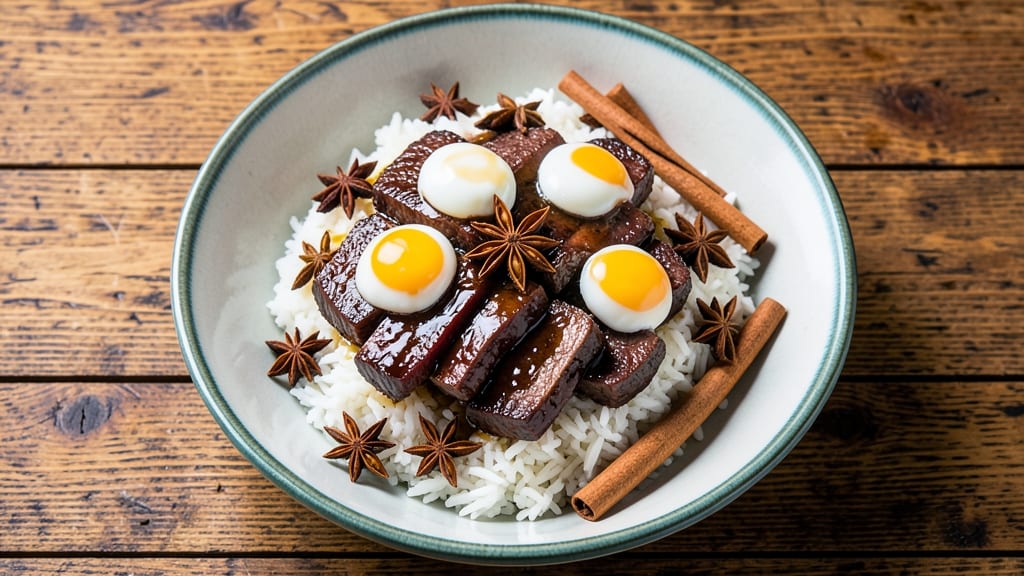
This slippery egg beef rice recipe delivers the signature silken egg ribbons and tender beef that make Cantonese cuisine unforgettable. The secret lies in boiling eggs in alkaline water—a technique that transforms them into delicate, jelly-like strands that melt in your mouth.
I've perfected this dish over years of testing, balancing the rich beef flavors with the delicate egg texture and fragrant jasmine rice.
The beef preparation is where deep flavor develops—slow-braising or stir-frying with star anise, cinnamon, and soy sauce creates a complex, aromatic base. Meanwhile, the eggs achieve their signature slippery texture through precise boiling in lye water, a technique that requires patience but yields results worth every minute.
The combination of these elements creates a harmonious balance of textures and flavors that defines this classic dish.
What makes this recipe truly special is the plating—silken egg ribbons draped over perfectly cooked jasmine rice, topped with tender beef slices. The contrast between the smooth, slippery eggs and the hearty beef creates a dining experience that's both satisfying and elegant.
This is comfort food at its finest, where every bite tells a story of Cantonese culinary tradition.
The dish pairs beautifully with a light soy-based gravy drizzle or pickled vegetables for added freshness. Whether you're serving this for a special occasion or a weeknight dinner, the careful preparation ensures restaurant-quality results at home. Let's bring this iconic dish to your table with these step-by-step instructions.
Ingredients for slippery egg beef rice
These 15 ingredients transform into Cantonese comfort food with restaurant-quality silken eggs and tender beef.
| Ingredient | Amount | Notes |
|---|---|---|
| Large Eggs 🥚 | 8 whole | Room temperature for even cooking |
| Lye Water 💧 | 2 cups | Alkaline water for silken texture |
| Beef Chuck Roast 🥩 | 1 ½ lb | Thinly sliced against grain |
| Jasmine Rice 🍚 | 2 cups | Uncooked, long-grain preferred |
| Star Anise 🌟 | 2 whole | Whole pods, removed after cooking |
| Cinnamon Sticks 🌿 | 2 whole | 1-inch pieces for infusion |
| Light Soy Sauce 🍶 | ½ cup | Kikkoman preferred for balance |
| Dark Soy Sauce 🍶 | 1 tbsp | For color depth |
| Sesame Oil 🫒 | 1 tbsp | Toasted for aroma |
| Garlic Cloves 🧄 | 6 cloves | Minced for beef marinade |
| Ginger Root 🌿 | 1 tbsp | Freshly grated |
| Green Onions 🧅 | 4 whole | Sliced for garnish |
| Vegetable Oil 🫒 | ½ cup | High smoke point for stir-fry |
| Salt 🧂 | 1 ½ tsp | Kosher salt for seasoning |
| White Pepper 🌶️ | ½ tsp | Freshly ground for heat |
The eggs are the heart of this dish—room temperature eggs cook more evenly, so take them out 30 minutes before starting. Lye water (available at Asian markets or online) is non-negotiable for that signature slippery texture; lye flakes dissolved in hot water create the alkaline solution. For the beef, chuck roast delivers rich flavor when thinly sliced against the grain—Costco or Whole Foods carry pre-sliced versions if you're short on time. Star anise and cinnamon sticks infuse deep aroma, but remove them after cooking to avoid bitterness. Kikkoman soy sauce is the gold standard here, though Lee Kum Kee works well too.
No lye water? Baking soda solution (1 tsp baking soda per 2 cups water) works in a pinch, though texture won't be identical. Substitute dried shiitake mushrooms (2 pieces, rehydrated) for umami depth if you're out of soy sauce. Sesame oil can be skipped if you're sensitive to strong flavors, but it adds that signature aroma. For the rice, jasmine rice is non-negotiable—Thai brand rice from Trader Joe's or Asian grocery stores delivers the best fragrance. Fresh ginger and garlic should be peeled and minced just before using to preserve their bright flavors. If you can't find star anise, 1 tsp anise seeds will work, but remove them after cooking.
Lye water loses potency after 24 hours, so make it fresh before boiling eggs. The beef marinade keeps for 3 days in the fridge—double it if you're feeding a crowd. Cooked rice reheats beautifully; cover with a damp towel in the microwave to prevent drying. Portion leftovers into airtight containers—the eggs and beef stay tender for 3 days refrigerated or 3 months frozen. For extra authenticity, serve with pickled mustard greens or quick-pickled cucumbers on the side, which you can find pre-made at Asian markets or make in 10 minutes with rice vinegar and sugar.
Why You'll Love This Recipe
- One-Pot Magic: I swear by this—just brown the beef, toss in the rice, and let the star anise and lye water work their flavor spell. No chopping, no fuss, and the eggs? They slide right into the pot at the end like a lazy Sunday morning.
- Silky-Smooth Payoff: That lye water isn’t just a trick—it turns the eggs into chewy, slippery perfection that clings to every grain of rice. Between us, the first bite makes you question why you’ve never done this before.
- Leftover Hero: The beef stays tender for days, and the rice? It reheats like a dream. Pack it for lunches or freeze portions—your future self will high-five you when you pull out a ready-to-eat meal.
- Budget Feast: A whole roast and eggs stretch across meals, and star anise? A dollar’s worth of flavor. Honestly, this feeds four for under $15, and everyone’s left licking their plates. (Yes, even on a Tuesday night.)
Step-by-step instructions for silken egg beef rice
Master this delicate balance of textures with precise technique and timing.
Prepare the Silken Egg Ribbons
Bring the 2 cups Lye Water to a gentle simmer in a small saucepan over medium-low heat. Crack the 8 whole Large Eggs into a heatproof bowl and whisk until the yolks and whites are fully combined. Here's the thing—lye water is alkaline, so it will create a unique texture. You want the water to be at 180°F before adding the eggs.
Slowly pour the whisked eggs into the simmering lye water while stirring continuously with a silicone spatula. The mixture will thicken dramatically as it cooks. Reduce heat to low and continue stirring gently for 3-4 minutes until you see long, silky ribbons form when you lift the spatula. The ribbons should be glossy and translucent, not breaking easily. Remove from heat immediately and cover with plastic wrap to keep warm.
Marinate and Sear the Beef
Slice the 1.5 lb Beef Chuck Roast thinly against the grain into ¼-inch thick strips. In a small bowl, combine 0.5 cup Light Soy Sauce, 1 tbsp Dark Soy Sauce, 1 tbsp Sesame Oil, 6 cloves Garlic Cloves (minced), 1 tbsp Ginger Root (grated), 1.5 tsp Salt, and 0.5 tsp White Pepper. Add the beef strips and toss to coat evenly. Let marinate for at least 30 minutes at room temperature.
Heat 0.5 cup Vegetable Oil in a large wok or skillet over high heat until shimmering. Add the marinated beef in a single layer and sear undisturbed for 1-2 minutes until the edges turn deep brown. Stir-fry for another 2-3 minutes until cooked through but still slightly tender. Remove beef and set aside, leaving the oil in the pan.
Cook the Fragrant Jasmine Rice
Rinse the 2 cups Jasmine Rice under cold water until the water runs clear, then drain well. In a rice cooker or heavy pot, combine the rice with 4 cups water, 2 whole Star Anise, and 2 whole Cinnamon Sticks (cut into 1-inch pieces). Bring to a boil, then reduce heat to low and simmer uncovered for 10 minutes to infuse the aroma.
Cover and cook according to package instructions until the rice is fluffy and tender (typically 15-20 minutes). Remove the star anise and cinnamon sticks immediately after cooking. Fluff the rice gently with a fork and keep warm, covered, until ready to serve.
Assemble the Dish
Return the seared beef to the wok and add the silken egg ribbons. Gently toss everything together over low heat for 1-2 minutes just to warm through—no more, or the eggs will lose their delicate texture. Divide the fragrant jasmine rice among serving plates and arrange the beef and egg mixture on top.
Garnish each serving with 4 whole Green Onions (sliced) for freshness and color. The contrast of silky egg ribbons, tender beef, and fragrant rice creates the perfect balance of textures and flavors. Serve immediately while the components are at their peak temperature and texture.
Pro Tips For Making Slippery Egg Beef Rice
- SEAR THE BEEF UNTIL BLACK: I learned this the hard way—don’t stop at brown. Push that chuck roast until the crust is deep black in spots, almost like charring. That’s where the deep, smoky flavor comes from, which cuts through the slippery eggs later. (Yes, it’ll smell like a fire hazard, but trust me.)
- TEST LYE WATER FIRST: Star anise and lye water are a dangerous combo if you misjudge strength. Drop a raw egg in the lye bath—if it floats immediately, it’s ready. If it sinks like a rock, add more lye slowly (this stuff doesn’t forgive). Safety first, slippery eggs second.
- SLICE EGGS THICKER THAN YOU THINK: Thin slices turn to mush in the lye bath. Aim for ½-inch thick rounds—thick enough to hold shape but still tender. Cut them just before cooking, or they’ll toughen up. (Pro move: Use a sharp knife and angle it away from you for cleaner cuts.)
- REST BEEF WITH STAR ANISE: After searing, toss the beef with star anise and let it sit for 30 minutes before braising. The spices infuse the meat better when they’ve had time to work their magic. I skip this, and the aroma’s half as strong—worth the wait.
Dietary considerations for this slippery egg beef rice
Gluten-Free Adaptations
This dish is naturally gluten-free when using tamari or gluten-free soy sauce instead of regular soy sauce. Kikkoman Tamari is my go-to for that authentic umami flavor without gluten. Simply replace the 0.5 cup light soy sauce and 1 tbsp dark soy sauce with equal amounts of tamari.
The texture and flavor remain identical, so you won’t sacrifice authenticity. Always check labels—some brands may contain trace gluten.
Low-Sodium Options
For heart health or blood pressure management, reduce the sodium by cutting the salt in half. Replace 1.5 tsp kosher salt with 0.75 tsp and use low-sodium soy sauce (like Kikkoman Low Sodium).
Boost flavor with extra 1 tsp freshly grated ginger and 1 minced garlic clove. The beef marinade will still pack a punch without overwhelming saltiness.
Vegetarian Swap
To make this dish vegetarian, swap the beef for mushroom strips (shiitake or oyster) or extra-firm tofu. Sauté the mushrooms in the same marinade (without meat) for 5-6 minutes until deeply caramelized.
For tofu, press and slice it into ¼-inch strips, then pan-fry until golden. The silken eggs and jasmine rice remain the star—just add a sprinkle of toasted sesame seeds for texture.
Allergen-Friendly Notes
If you’re allergic to eggs, this dish isn’t adaptable—but the beef and rice components can still shine. For egg-free diners, serve the beef and rice separately with a side of steamed bok choy or quick-pickled cucumbers.
If sesame is a concern, omit the 1 tbsp sesame oil from the marinade and replace it with 1 tbsp neutral oil (like avocado oil). Always double-check labels for cross-contamination risks.
Protein Variations
For a lighter option, swap beef chuck for lean chicken thigh (sliced thinly) or shrimp (peeled and deveined). Chicken absorbs the marinade beautifully—cook it for 4-5 minutes until fully tender.
Shrimp cooks in just 2 minutes** over high heat, so sear it separately and toss with the eggs at the end. The silken eggs and rice stay the same, ensuring the dish remains cohesive and delicious.
Nutrition facts
Frequently asked questions
Why do the eggs need to be boiled in lye water?
The alkaline lye water creates a chemical reaction that transforms the egg proteins into long, silken strands. This process breaks down the structure just enough to make them slippery and jelly-like while keeping them intact. Without lye, you'd get regular hard-boiled eggs—this is what gives the dish its signature texture!
Can I substitute lye water with something else?
A baking soda solution (1 tsp baking soda per 2 cups hot water) works in a pinch, though the texture won't be identical. For best results, use proper lye water—it's the secret to authentic silken egg texture. If you're concerned about handling lye, wear gloves and work in a well-ventilated area. Safety first!
How do I prevent the beef from becoming tough?
Always slice the beef thinly against the grain and marinate for at least 30 minutes before cooking. High heat and quick searing (just 1-2 minutes per side) keeps it tender. Overcooking is the enemy—remove beef when it's still slightly pink inside. The residual heat will finish cooking it while resting.
What's the best way to reheat leftovers?
Reheat only the beef and egg mixture (never the rice) in a skillet over low heat for 2-3 minutes with a splash of water to prevent drying. The silken eggs are delicate—never microwave them directly. Store components separately in airtight containers for up to 3 days refrigerated or 3 months frozen.
Can I make this dish ahead of time?
Yes! Prepare the silken eggs and marinate the beef 1 day ahead, then refrigerate separately. Cook the rice fresh when serving. Reheat components separately just before plating—this preserves the delicate egg texture. The flavors actually improve overnight as they meld in the fridge.