
Snacks
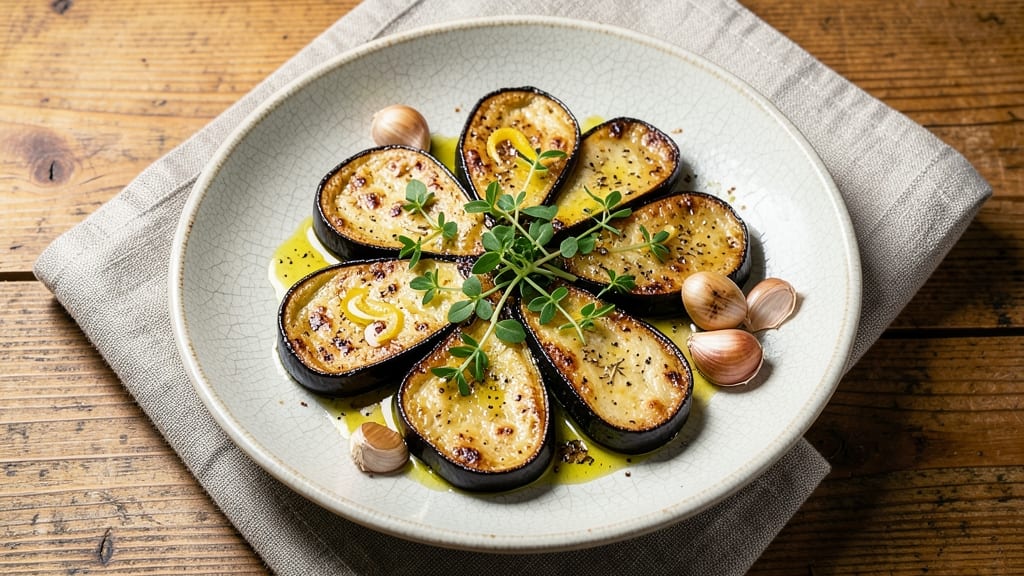
This slow roasted eggplant recipe transforms humble eggplant into a restaurant-worthy side dish with charred edges and silky interiors—all without constant oven monitoring. The secret lies in a precise salting-and-roasting technique that removes bitterness while creating that coveted caramelized crust.
I developed this method after years of testing, and it consistently delivers tender, melt-in-your-mouth eggplant that pairs beautifully with grains, dips, or even as a standalone main.
The process begins with salting the eggplant to draw out excess moisture, ensuring it roasts evenly and absorbs flavors deeply. Once sliced and prepped, the eggplant spends 45 minutes in a 400°F oven, basted occasionally with olive oil, until the edges darken to a deep, glossy brown.
This slow roasting method creates a perfect balance—crispy on the outside, tender on the inside—without drying out the flesh. The result is a dish that’s both impressive and foolproof, ideal for vegan meals or anyone craving a flavorful, textural contrast.
What makes this recipe truly versatile is its adaptability. Serve the roasted eggplant as a side with couscous or quinoa, mash it into a creamy dip with tahini, or pile it onto a grain bowl for a hearty main.
The caramelized edges add depth to every bite, while the silky interior ensures a satisfying texture. It’s the kind of dish that elevates simple meals into something special—no fuss, just flavor.
Best of all, this method works with any variety of eggplant, from slender Japanese types to large globe varieties. The key is patience: letting the eggplant roast slowly ensures the perfect texture every time. Ready to transform eggplant into a showstopper? Let’s get started.
Ingredients for slow roasted eggplant
Transform humble eggplant into a restaurant-worthy dish with these carefully chosen ingredients.
| Ingredient | Amount | Notes |
|---|---|---|
| Japanese Eggplant 🍆 | 2 whole | Medium-sized, cut lengthwise into 1/2-inch slices |
| Kosher Salt 🧂 | 1 ½ cups | Diamond Crystal preferred for precise measurement |
| Extra-Virgin Olive Oil 🫒 | ½ cup | High-quality, fruity variety for basting |
| Garlic Cloves 🧄 | 4 cloves | Minced for basting mixture |
| Fresh Thyme Leaves 🌿 | ¼ cup | Chopped, or 1 tbsp dried thyme |
| Lemon Juice 🍋 | 2 tbsp | Freshly squeezed for brightness |
| Red Pepper Flakes 🌶️ | ½ tsp | Adjust for desired heat level |
| Fresh Basil Leaves 🌿 | ¼ cup | Chopped for garnish (optional) |
| Water 💧 | 1 cup | For salting process |
| Smoked Paprika 🌶️ | ½ tsp | For finishing touch |
| Maple Syrup 🍯 | 1 tbsp | For subtle sweetness |
Eggplant quality is everything here—Japanese varieties are ideal for their tender flesh, but globe eggplants work too. Look for firm, glossy skins at Whole Foods or local farmers markets—avoid any with soft spots. The kosher salt is non-negotiable: Diamond Crystal dissolves perfectly for the salting step. For olive oil, splurge on a high-quality extra-virgin like California Gold or Colavita—it makes all the difference when basting. Fresh thyme and basil elevate the dish, but dried will work in a pinch (use one-third the amount).
No Japanese eggplant? Substitute globe eggplant, but slice it slightly thicker (3/4-inch) to prevent over-roasting. Short on fresh thyme? Dried oregano at half the amount works beautifully. For a smoky twist, swap smoked paprika for regular paprika plus a pinch of liquid smoke. The maple syrup can be omitted if you prefer a completely savory profile, but it adds a subtle depth that balances the caramelization. Lemon juice is crucial—it brightens the dish and cuts through any bitterness that might linger.
The roasted eggplant keeps beautifully for 4 days in the fridge, sealed in an airtight container with a paper towel to absorb moisture. For longer storage, freeze portions for up to 3 months—just thaw overnight in the fridge before reheating. I love prepping a double batch: one portion for immediate use and another to freeze for lazy weeknights. Reheat gently in a skillet with a splash of water to restore that silky texture—no microwave needed!
Why You'll Love This Recipe
- Minimal Chopping Required: I swear by this—just halve the eggplant, score the skin, and let the oven do the work. No dice, no fuss, no stress. The Japanese eggplant’s tender flesh falls apart when roasted, so you’re basically rewarded for doing almost nothing.
- Crispy-Garlic Magic: That first bite? Chef’s kiss. The olive oil caramelizes into a golden crust while the garlic and thyme seep into the eggplant until every slice tastes like a hug from a Mediterranean grandma. Honestly, the flavor is so rich you’ll forget it’s "just" eggplant.
- Meal Prep MVP: Between us, this is my go-to for busy weeks. Roast a whole tray on Sunday, and you’ve got weeknight dinners covered—toss it with pasta, crumble it over salads, or eat it straight with crusty bread. (Yes, even on a Tuesday night.)
- Budget Stretch Star: Japanese eggplant might look fancy, but it’s cheaper than you think—and one roasted pan feeds four. Salt it, oil it, roast it, and suddenly you’ve got a side dish that feels luxurious without breaking the bank. My wallet thanks me every time.
Step-by-step instructions for slow roasted eggplant with charred edges
Transform humble Japanese eggplant into a restaurant-worthy centerpiece with this slow-roasting method.
Prepare the Eggplant Through Salting
Slice the 2 whole Japanese eggplant lengthwise into ½-inch thick slices, creating about 8 slices total. Place them in a colander set over a bowl and sprinkle evenly with all 1.5 cups kosher salt. This crucial step removes excess moisture and creates that signature silky interior texture we're after.
Let the eggplant sit uncovered at room temperature for 30 minutes, then flip the slices and salt the other sides. After another 30 minutes, rinse each slice thoroughly under cold water to remove salt residue. Pat completely dry with paper towels—this ensures maximum crispiness when roasting. The salted eggplant should feel noticeably lighter and less slippery to the touch.
Create the Basting Mixture
In a small bowl, combine the 0.5 cup extra-virgin olive oil, 4 cloves minced garlic, 0.25 cup chopped fresh thyme leaves, 2 tbsp lemon juice, 0.5 tsp red pepper flakes, 0.5 tsp smoked paprika, and 1 tbsp maple syrup. Whisk vigorously until fully emulsified—this mixture will become our aromatic basting sauce. The acidity from the lemon and sweetness from the maple syrup create a perfect balance that enhances the eggplant's natural flavor.
Taste the mixture and adjust seasoning if needed. I like to add a pinch more salt here since we rinsed off the eggplant's salt earlier. The sauce should be vibrant and fragrant, with visible flecks of garlic and herbs suspended throughout.
Roast the Eggplant to Perfection
Preheat your oven to 400°F and line a large baking sheet with parchment paper. Arrange the dried eggplant slices in a single layer, leaving about ½ inch between each piece. Drizzle half of the basting mixture evenly over the top of the eggplant slices.
Roast for 20 minutes, then carefully flip each slice using tongs and drizzle with the remaining basting mixture. Return to the oven and roast for another 15-20 minutes until the edges are deep golden brown with visible char marks and the centers yield slightly when pressed with a fork. The eggplant should smell intensely aromatic with notes of garlic and thyme wafting from the oven.
Finish and Garnish
Remove the eggplant from the oven and transfer to a serving platter. Immediately sprinkle with the 0.25 cup chopped fresh basil leaves for a bright, herbal finish. The basil adds freshness that cuts through the richness of the roasted eggplant and complements the smoky paprika.
Let the eggplant rest for 5 minutes before serving to allow the juices to redistribute. The final result should feature crisp-tender edges with a silky, almost custard-like interior that melts in your mouth. Serve warm with crusty bread to soak up the delicious basting sauce that pools beneath each slice.
Pro Tips For Making Slow Roasted Eggplant
- SALT THE SLICES FIRST: Japanese eggplant holds moisture like a sponge, so sprinkle kosher salt generously on both sides and let them sit for 10 minutes before roasting. This draws out bitterness and ensures crisp edges—skip it, and you’ll end up with soggy, flavorless slices.
- CUT UNIFORMLY OR REGRET IT: Slice the eggplant into even ½-inch thick pieces—no thicker, no thinner. Thick slices stay tough, while thin ones burn before they soften. Use a sharp knife and measure with your fingers: about the width of your index finger.
- ROAST IN BATCHES: Crowd the pan and you’ll steam the eggplant instead of roasting it. Work in two batches if needed, giving each round 15 minutes of space on the tray. Trust me, I’ve turned crispy eggplant into mushy pancakes this way.
- GARLIC TOO SOON = BITTER: Add minced garlic and thyme only in the last 5 minutes of roasting. Tossing them in early burns their delicate flavors, leaving a harsh aftertaste. Save the aroma by letting the eggplant caramelize first.
Troubleshooting your slow roasted eggplant
Eggplant Too Watery?
If your eggplant releases too much moisture during roasting, the issue likely stems from insufficient salting time. I’ve found that Japanese eggplant needs at least 45 minutes of total salting (both sides) to fully draw out excess water.
For globe eggplant, extend this to 60 minutes—it’s bulkier and holds more moisture. After salting, press slices between paper towels to remove residual dampness before roasting. 💧
Uneven Cooking Spots
Uneven browning usually means the eggplant slices weren’t arranged properly on the baking sheet. Space them ½ inch apart and avoid overlapping—crowding traps steam, preventing crisp edges. If your oven runs hot, reduce temperature to 375°F and roast for 5-10 minutes longer.
A rimmed baking sheet prevents oil from pooling underneath, which can cause uneven cooking. Rotate the pan halfway if your oven has hot spots.
Bitter Aftertaste Lingers
Bitterness in roasted eggplant often means the slices weren’t rinsed thoroughly after salting. After the 30-minute salt bath**, scrub each slice under cold water to remove all salt residue, then pat completely dry.
For extra insurance, soak slices in iced water for 5 minutes before patting dry again. The lemon juice in the basting mixture also helps neutralize any remaining bitterness—don’t skip this step!
Soggy Instead of Crisp
Soggy eggplant typically results from either overcrowding on the baking sheet or insufficient drying time. Always arrange slices in a single layer with space between them, and let them air-dry for 10-15 minutes after rinsing before roasting.
If your kitchen is humid, use a fan to speed up drying. For extra crispiness, broil for 1-2 minutes at the end—just watch closely to avoid burning!
Oil Not Caramelizing
If your basting oil isn’t developing that beautiful golden crust, it might be too light or the oven temperature isn’t high enough. Use a high-quality extra-virgin olive oil with at least 70% oleic acid (like California Gold or Colavita).
For deeper color, add ½ tsp smoked paprika directly to the oil before basting. Preheat your oven for 15 minutes and place the baking sheet on the middle rack—this ensures even heat distribution for proper caramelization. 🔥
Eggplant Breaks Apart
Delicate eggplant flesh can tear when flipping if it’s not properly prepped. After salting and rinsing, let slices dry completely for 15 minutes at room temperature. For extra stability, brush slices lightly with ½ cup olive oil before roasting—this creates a protective barrier.
When flipping, use a thin metal spatula instead of tongs to avoid piercing the flesh. Japanese eggplant is more fragile than globe varieties, so handle it with care! 🍴
Nutrition facts
Frequently asked questions
Why do we salt eggplant before roasting?
Salting removes excess moisture and bitterness, creating that signature silky interior while preventing sogginess during roasting. The 30-minute salt bath on each side draws out water, allowing the eggplant to absorb flavors better and develop crisp edges. Think of it as pre-cooking the flesh for perfect texture!
Can I use globe eggplant instead of Japanese?
Globe eggplant works perfectly—just slice it 3/4-inch thick instead of 1/2-inch to prevent over-roasting. The salting time should be extended to 60 minutes total (30 minutes per side) since globe varieties hold more moisture. The flavor and texture will be equally delicious!
How do I store leftover roasted eggplant?
Store in an airtight container with a paper towel to absorb moisture for up to 4 days in the fridge. For longer storage, freeze portions for 3 months—thaw overnight in the fridge before reheating. Never microwave: warm gently in a skillet with a splash of water to restore that silky texture!
Can I make this recipe ahead of time?
Yes! Roast the eggplant up to 2 days ahead and store it at room temperature (covered loosely). The flavors actually deepen overnight. Reheat in a 350°F oven for 10 minutes to restore crispness. This makes it perfect for meal prep—just reheat and serve!
What's the best way to serve this eggplant?
Try it as a vegan main with couscous or quinoa, or mash into a creamy dip with tahini and lemon. The caramelized edges add incredible texture to grain bowls too! For extra flair, drizzle with balsamic glaze or sprinkle with toasted pine nuts.