
Breakfast & Brunch
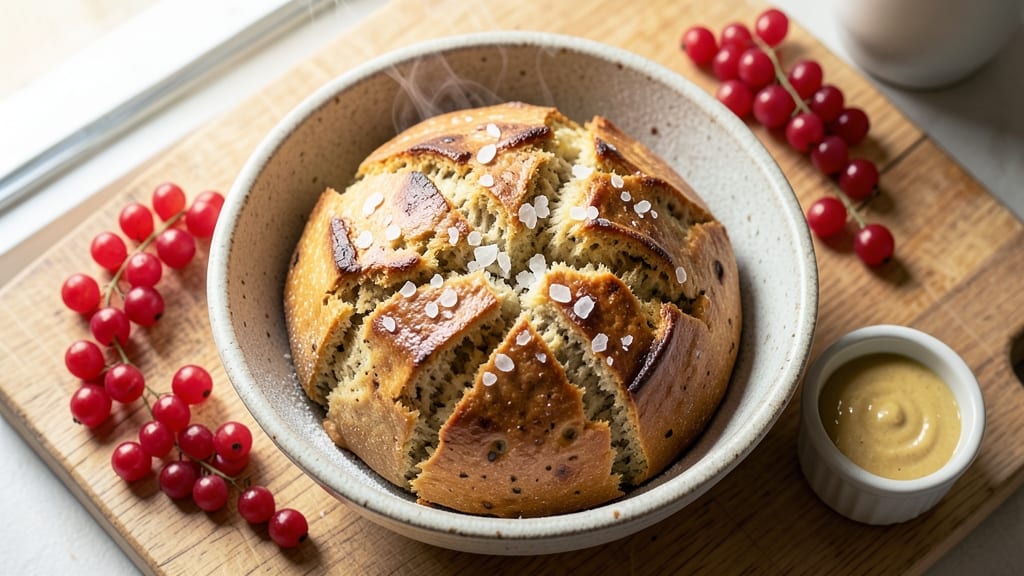
This no-egg soda bread recipe delivers the perfect balance of a crisp crust and tender, tangy crumb—just like your favorite Irish bakery. The secret lies in using buttermilk and a simple baking soda lift, creating that signature airy texture without a single egg.
I've perfected this version over years of baking, ensuring it stays moist for days while maintaining that classic rustic charm.
What makes this recipe truly special is its simplicity—just five core ingredients combine to create bread with a golden crust and a soft, slightly crumbly interior. The buttermilk adds that signature tang, while the baking soda creates lift without needing eggs.
This version is perfect for breakfast, sandwiches, or serving with soups, and it bakes up in just 30 minutes.
By the time you pull it from the oven, you'll have bread with a crisp exterior that gives way to a tender, buttery crumb. The aroma alone will fill your kitchen with warmth, and each slice will be packed with that classic soda bread flavor.
The best part? It stays fresh for days, making it ideal for meal prep or gifting.
Whether you're avoiding eggs for dietary reasons or simply want a foolproof method, this recipe delivers restaurant-quality results with minimal effort. Let's get baking!
Ingredients for soda bread recipe no egg
Five simple ingredients transform into golden, tangy soda bread with a crisp crust and tender crumb.
| Ingredient | Amount | Notes |
|---|---|---|
| All-Purpose Flour 🌾 | 4 cups | Unbleached preferred for lighter texture |
| Vegan Buttermilk 🥛 | 1 ½ cups | Store-bought or homemade (almond milk + vinegar) |
| Baking Soda 🍞 | 1 ½ tsp | Freshly opened for best lift |
| Salt 🧂 | 1 ½ tsp | Diamond Crystal preferred for accuracy |
| Flaxseed Meal 🌱 | 1 tbsp | For egg substitute binder |
| Water 💧 | 3 tbsp | To activate flaxseed binder |
| Plant-Based Butter 🧈 | 2 tbsp | Melted, full-fat for flavor |
| Maple Syrup 🍁 | 1 tbsp | For subtle sweetness and moisture |
The flour is where the magic happens—King Arthur or Bob's Red Mill work best for that signature crumb. I always grab the unbleached version for a lighter texture, but bleached works too if that's what you've got. The vegan buttermilk is non-negotiable for that classic tang—Forager or Silk brands are my go-tos, but any unsweetened plant milk with a splash of vinegar does the trick. Baking soda needs to be fresh (that means opened within the last 6 months), or your bread might not rise properly. Check the date on the container—it's worth it for that perfect lift.
No flaxseed? Chia seeds at double the amount work too—just mix with water and let sit for 5 minutes. Short on plant-based butter? Olive oil or coconut oil adds richness, though it won't be quite as flavorful. The maple syrup keeps things moist and adds a touch of sweetness, but agave or date syrup are great swaps if you prefer. For extra flavor, toss in 1 tsp cinnamon or 1 tbsp raisins—trust me, it elevates everything. And if you're feeling fancy, brush the top with melted butter after baking for that bakery-style shine.
This bread stays fresh for 4-5 days wrapped in a clean kitchen towel, but I like to freeze half the batch right after baking. Slice and toast straight from frozen—no thawing needed. The secret to reheating? Wrap a slice in foil and warm in a 350°F oven for 5 minutes. Leftovers? Toss them in a brown paper bag to keep them soft for days. And if you make a double batch, freeze the extra loaves—they'll be your new weeknight staple.
Why You'll Love This Recipe
- Here’s what sold me: it’s my go-to for breakfast, sandwiches, or even a quick snack. Slice it fresh for toast, freeze the rest for later, or pack it for lunch. Honestly, I’ve never met a bread that does more with so little.
- No-Fuss Mixing: I swear by this—just dump the flour, buttermilk, and flax egg into a bowl, stir once, and you’re done. No kneading, no waiting for dough to rest, just mix and bake. The flaxseed meal even adds a subtle nuttiness that surprises everyone.
- Tangy, Crispy Magic: That vegan buttermilk gives it a bright, almost buttery tang without a speck of dairy. The baking soda puffs it up just enough for that perfect crackly crust—like a hug for your toast or soup.
- Weeknight Workhorse: Here’s what sold me: it’s my go-to for breakfast, sandwiches, or even a quick snack. Slice it fresh for toast, freeze the rest for later, or pack it for lunch. Honestly, I’ve never met a bread that does more with so little.
Step-by-step instructions for soda bread no egg
Here's how to craft this golden-crusted loaf with a tender crumb and tangy buttermilk heart—no eggs needed.
Create the Flaxseed Egg Substitute
In a small bowl, whisk together the 1 tbsp flaxseed meal with the 3 tbsp water. Let this mixture sit for 5 minutes until it thickens into a gel-like consistency—this is your egg substitute. The flaxseed will bind the dough just like eggs do, giving structure without any animal products.
I like to test the readiness by running a finger through it—it should hold its shape without being too sticky. If it's still runny after 5 minutes, give it another minute or two. This step is crucial because underdeveloped flax eggs can make your bread dense instead of light and airy.
Mix Dry Ingredients Thoroughly
In a large mixing bowl, combine the 4 cups all-purpose flour, 1.5 tsp baking soda, and 1.5 tsp salt. Use your fingers to break up any flour clumps and create a uniform mixture. The baking soda will react with the buttermilk later to create lift, while the salt enhances flavor and controls gluten development.
I always give this dry mix a good stir with a whisk first to distribute the baking soda evenly. Then I use my fingers to work it into the flour—this helps prevent lumps in the final dough. The flour should look like fine crumbs with no visible powdery patches.
Combine Wet Ingredients
In a separate bowl, mix the 1.5 cups vegan buttermilk, 1 tbsp maple syrup, and the flax egg mixture. Then add the 2 tbsp melted plant-based butter. The buttermilk gives that signature tangy flavor while keeping the bread moist. The maple syrup adds subtle sweetness and helps with browning, while the butter contributes richness.
I like to warm the buttermilk slightly (not hot) before mixing—this helps it blend more smoothly with the other wet ingredients. The mixture should be slightly thick but pourable. If it looks too thin, let it sit for 2-3 minutes before proceeding.
Form the Dough and Shape
Pour the wet ingredients into the dry ingredients and stir gently with a wooden spoon until just combined. You'll notice the dough come together quickly—don't overmix. Once it forms a shaggy mass, turn it out onto a lightly floured surface and knead gently for 30 seconds to bring it together.
This dough is different from traditional bread dough—it's sticky and shouldn't be kneaded extensively. Shape it into a round loaf about 1.5 inches thick. I like to make a slight well in the center for the traditional soda bread look, but you can also shape it into an oval or rectangle if preferred.
Bake to Golden Perfection
Preheat your oven to 375°F and place a baking sheet on the middle rack. Sprinkle a generous amount of flour onto a piece of parchment paper, then transfer your shaped dough onto it. Score the top of the loaf with a sharp knife in a cross or diagonal pattern—this helps control expansion and creates that rustic look.
Bake for 45-50 minutes until the bread is deep golden brown and sounds hollow when tapped on the bottom. The internal temperature should reach 190°F. The crosshatch pattern will open up beautifully as it bakes, revealing a tender crumb inside. Let it cool on a wire rack for at least 30 minutes before slicing—this prevents a gummy texture.
Pro Tips For Making Soda Bread Recipe No Egg
- MEASURE FLAXSEED WATER FIRST: I learned this the hard way—skipping the prep step means your flaxseed "egg" will be either too watery or too thick. Mix 1 tablespoon ground flaxseed with 3 tablespoons hot water, stir, and let it sit for 5 minutes until it turns gel-like. No waiting? Your dough will fight you later.
- STOP MIXING AFTER 10 STIRS: Overworking the dough after adding baking soda turns your bread into a dense brick. Once the soda hits the buttermilk, combine everything with a spatula or wooden spoon—just until the flour is mostly incorporated. The gluten needs to rest, not develop.
- DON’T SKIP THE 10-MINUTE REST: I was skeptical until I tried it: let the dough sit covered for 10 minutes before shaping. This lets the baking soda fully activate and the flour absorb the buttermilk properly. Rushing here means a gummy center—trust me, you’ll taste the difference.
- BAKE AT 425°F UNTIL GOLDEN: Too low, and your bread turns out pale and underdone. Too high, and it burns before the center sets. Aim for 425°F and bake until the top is deep golden brown and the internal temp hits 205°F—yes, higher than you’d think. A toothpick should come out clean.
Serving suggestions for leftovers
Classic Pairings
Serve warm slices with vegan butter and a drizzle of local honey for a simple yet elegant presentation. The crisp crust pairs beautifully with sharp cheddar cheese or avocado slices for a hearty breakfast. I love adding smashed blackberries or sliced apples on top for a fresh contrast. 🍓
Breakfast Spreads
Toast slices until golden and top with almond butter and sliced banana for a quick morning treat. For a savory option, spread with vegan cream cheese and top with smoked salmon or cucumber slices.
My go-to is peanut butter with a sprinkle of cinnamon—it’s like a vegan PB&J upgrade. 🥜
Soup Companions
This bread is perfect with creamy tomato soup or lentil stew—the crust soaks up every bit of broth. For a lighter option, pair with gazpacho or vegan chili. I always keep a loaf on hand for clam chowder nights; the bread’s tang cuts through the richness beautifully. 🍲
Sandwich Potential
Slice thickly and layer with vegan mayo, turkey slices, and lettuce for a satisfying sandwich. For a veggie option, stuff with hummus, roasted red peppers, and spinach. The bread’s sturdy texture holds up perfectly—no soggy middle here! 🥪
Gift-Worthy Presentation
Wrap cooled slices in parchment paper and tie with twine for a rustic gift. Add a small jar of vegan jam or olive oil for an extra touch. I’ve seen bakeries sell these as "bread & butter" sets—it’s a hit at potlucks too! ✨
Nutrition facts
Frequently asked questions
Why does this recipe use flaxseed instead of eggs?
The flaxseed mixture creates a gel-like binder that mimics eggs perfectly—it provides structure and moisture without animal products. The 1 tbsp flaxseed + 3 tbsp water combo thickens into a gel in 5 minutes, acting as a natural egg substitute that keeps the bread tender and well-bound.
Can I make this bread without buttermilk?
Mix 1 cup plant-based milk with 1 tbsp vinegar or lemon juice and let sit for 5 minutes to create a tangy substitute. The acidity is key for that signature soda bread flavor. For extra richness, add 1 tbsp melted vegan butter to the wet ingredients.
What if my bread turns out dense instead of light?
Overmixing or underdeveloped flax eggs usually cause this. Stir the dough just until combined—don't knead it like traditional bread. Also ensure your baking soda is fresh (opened within 6 months) and let the flax egg sit for the full 5 minutes before mixing. A hotter oven (400°F) for the first 10 minutes can also help with lift.
How do I store leftovers to keep them fresh?
Wrap cooled slices in a clean kitchen towel and store in an airtight container for 4-5 days. For longer storage, freeze half the loaf wrapped in parchment paper. To reheat, wrap a slice in foil and warm in a 350°F oven for 5 minutes—this restores the crust's crispness while keeping the interior soft.
Can I add mix-ins like seeds or herbs?
Yes! Try 1 tbsp sesame seeds, 1 tbsp chopped rosemary, or ½ cup raisins for extra flavor. Fold them into the dough after combining wet and dry ingredients. Keep mix-ins to 10% of the flour volume to maintain the bread's signature texture and rise.