
Breakfast & Brunch
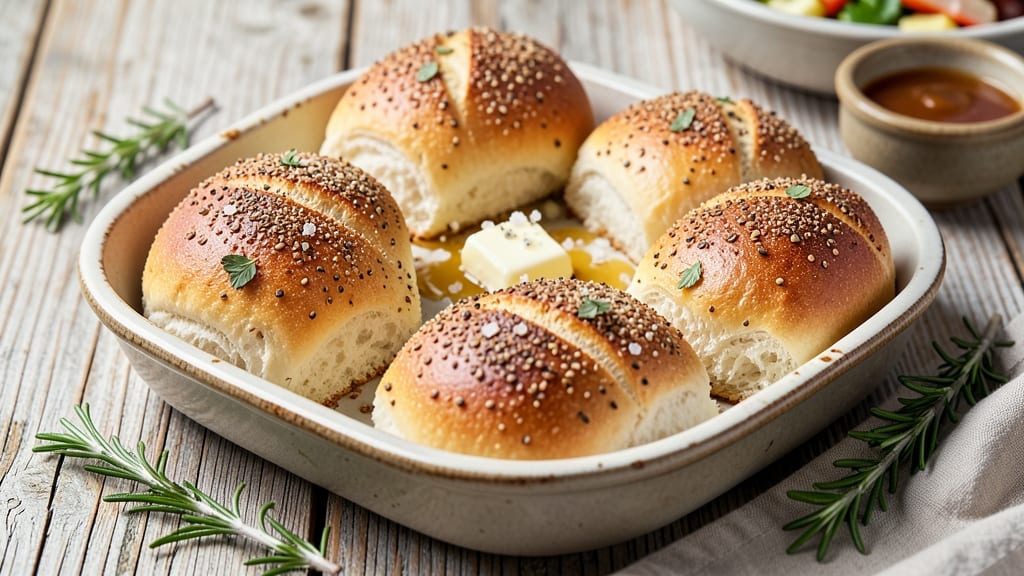
This soft dinner rolls recipe no egg delivers pillowy, buttery perfection without a single egg in sight—ideal for vegetarians or anyone avoiding eggs.
The secret lies in a simple flaxseed binder that creates the same tender, airy texture as traditional rolls, proving you don’t need eggs for restaurant-quality results. 💛 With just a few pantry staples and minimal effort, you’ll have golden, fluffy rolls ready in under an hour.
The magic happens in the dough, where warm water and a touch of sugar activate the yeast for maximum rise. A flaxseed "egg" (ground flax mixed with water) replaces the binding power of eggs, while butter and milk create that signature melt-in-your-mouth richness.
No kneading required—just mix, shape, and let the dough do the work while you prepare the rest of your meal.
By the time these rolls emerge from the oven, they’ll be soft, tender, and impossibly light, with a crisp golden crust that’s perfect for soaking up gravy or butter. The best part?
They stay fresh for days when stored properly, making them ideal for meal prep or holiday gatherings. This recipe proves comfort food can be both delicious and inclusive.
Whether you’re serving them alongside roasted chicken, beef stew, or as a vegetarian main with hummus and veggies, these rolls are a crowd-pleaser. Ready to master the art of egg-free baking? Let’s get started.
Ingredients for soft dinner rolls recipe no egg
Pantry staples plus one secret flaxseed trick. No eggs, all flavor.
| Ingredient | Amount | Notes |
|---|---|---|
| All-Purpose Flour 🌾 | 4 ½ cups | Unbleached preferred for softness |
| Active Dry Yeast 🍞 | 2 ¼ tsp | Ensure yeast is fresh |
| Granulated Sugar 🍚 | ¼ cup | Feeds yeast for rise |
| Ground Flaxseed 🌱 | 3 tbsp | For flaxseed 'egg' binder |
| Unsalted Butter 🧈 | ½ cup | Cold, cubed for flakiness |
| Warm Water 💧 | 1 ¼ cups | 110°F for yeast activation |
| Whole Milk 🥛 | ¼ cup | Warmed for richness |
| Salt 🧂 | 1 tsp | Kosher or sea salt |
| Vegetable Oil 🫒 | 1 tbsp | For greasing bowl |
The flour is your foundation—King Arthur or Bob's Red Mill are my go-tos for that perfect tender crumb. Yeast needs to be fresh, so check the date on the package (it expires!). For the flaxseed 'egg', Bob's Red Mill ground flaxseed works perfectly—just mix with 6 tablespoons warm water and let sit for 5 minutes. Butter matters here too: Land O'Lakes unsalted is my pick for that rich, melt-in-your-mouth texture. Warm the milk and water to about 110°F—yeast loves it, but don't let it get hotter than that or you'll kill it.
No flaxseed? Chia seeds work too—just double the amount. Short on butter? Vegan butter or coconut oil keeps it plant-based. The sugar can be swapped for honey or maple syrup if you prefer, but keep it to the same amount. For a lighter roll, add 1 tsp baking powder to the flour. And if you're making these ahead, freeze shaped rolls on a tray before baking—just thaw before popping in the oven.
Dough keeps for 24 hours in the fridge, covered tightly. For longer storage, wrap in plastic and freeze for up to 3 months. Fresh rolls? Stash in a paper bag at room temp for up to 2 days. Pro tip: Brush with extra melted butter right after baking—they stay soft for days. Perfect for meal prep or holiday gatherings!
Why You'll Love This Recipe
- No-Fuss Mix-In: I swear by this dough—just flour, yeast, and a splash of warm water. The ground flaxseed replaces eggs without any weird texture, and the butter keeps them tender without extra work. Honestly, it’s the kind of recipe that makes me feel like a baking pro even when I’m multitasking.
- Buttery Soft Magic: That melted butter folded into the dough? It’s what turns these rolls from good to ridiculously good. The sugar gives a subtle sweetness that balances the flaky layers, and the flaxseed adds a nutty depth you wouldn’t expect. Between us, these disappear faster than my willpower on a Sunday morning.
- Weeknight Wonder: I keep this dough on standby for everything—slathered with garlic butter for steak night, stuffed with cheese for a quick lunch, or even as a side for soup when I’m too tired to think. The best part? It freezes like a dream, so I can bake a batch on Sunday and pull them out whenever I need a fresh start.
- Budget-Buster Victory: Flour, yeast, and butter? That’s it. No specialty ingredients, no hidden costs. I make a double batch, freeze half, and still have rolls for days without breaking the bank. Plus, the flaxseed adds fiber—so it’s like sneaking veggies into my carbs. (Yes, even on a Tuesday night.)
Step-by-step instructions for soft dinner rolls no egg
Here's how to make pillowy, buttery dinner rolls without a single egg—no tricks, just perfect technique.
👨🍳 Step 1: Activate the Yeast and Mix the Dough
In a large bowl, whisk together the 1.25 cups warm water (about 110°F—too hot kills yeast), 0.25 cup granulated sugar, and 2.25 tsp active dry yeast. Let it sit for 5-10 minutes until foamy—this proves your yeast is alive and ready to work. If it doesn't bubble, start over with fresh yeast.
In a separate bowl, mix the 4.5 cups all-purpose flour and 1 tsp salt. Make a well in the center and pour in the yeast mixture along with the 3 tbsp ground flaxseed and 0.25 cup whole milk. Stir with a wooden spoon until a shaggy dough forms, then turn it out onto a lightly floured surface.
🥘 Step 2: Knead Until Silky Smooth
Knead the dough for 8-10 minutes by hand (or 5-6 minutes with a stand mixer using a dough hook) until it's smooth and elastic. You'll know it's ready when it springs back slowly when poked and leaves a clean surface on your fingers. Don't skip this step—proper kneading develops gluten, which gives those rolls their signature softness.
Here's the thing—this dough is egg-free, so it needs extra care. If it feels too sticky, add flour 1 tablespoon at a time until it comes together nicely. Wrap the dough in plastic wrap and let it rest at room temperature for 30 minutes. This first rest relaxes the gluten so it rises evenly later.
🔥 Step 3: Shape and First Rise
After the rest, punch down the dough to release air, then divide it into 12 equal pieces (about 2 ounces each). Roll each piece into a smooth ball, then place them in a greased 9x13-inch baking dish, leaving 1 inch between rolls. Cover with a clean kitchen towel and let rise in a warm place for 1-1.5 hours until nearly doubled in size.
I like to use the oven method for rising: preheat oven to 200°F, turn it off, place the dough inside with a bowl of hot water, and close the door. The steam creates a warm, humid environment that helps the dough rise beautifully. When the rolls reach the top of the dish, they're ready for baking.
🍳 Step 4: Add Butter and Second Rise
While the rolls rise, melt the 0.5 cup unsalted butter in a small saucepan over low heat. Once melted, brush it generously over the risen rolls, making sure to get into all the nooks and crannies. This butter is what transforms good rolls into extraordinary ones.
Cover the baking dish again and let the rolls rise for another 30-45 minutes until puffy and nearly touching each other. The butter will make them look glossy and irresistible. Don't rush this step—this second rise is what gives them that light, airy texture.
🔥 Step 5: Bake to Golden Perfection
Preheat your oven to 375°F while the rolls finish their second rise. Bake the rolls for 18-22 minutes until they're deep golden brown on top and sound hollow when tapped on the bottom. If they brown too quickly, tent with foil to prevent over-browning while they finish baking inside.
For extra browning, I like to broil for 1-2 minutes at the very end—just watch them like a hawk to avoid burning. Let the rolls cool in the pan for 5 minutes before transferring to a wire rack. Serve warm with butter melting into every bite—these rolls are perfect for soaking up gravy or just enjoying on their own.
Pro Tips For Making Soft Dinner Rolls Recipe No Egg
- MEASURE FLAXSEED PRECISELY: Ground flaxseed absorbs moisture like a sponge—use a kitchen scale for 1 tablespoon (about 8g) instead of eyeballing it. Too much makes rolls dense; too little won’t bind properly. I learned this after my first batch turned out gummy.
- KNEAD JUST UNTIL SMOOTH: Overworking the dough kills the yeast faster than you’d think. Stop when it’s uniformly elastic—about 5-6 minutes by hand. The flaxseed and butter already add tenderness, so no need to over-push it.
- LET THE DOUGH RISE TWICE: Skip the second rise at your peril. After shaping, let rolls sit 10 minutes covered, then rise another 30-45 minutes until puffy. This extra step guarantees softness—my first attempt without it gave me sad, flat rolls.
- USE COLD BUTTER: Cut the butter into tiny cubes and mix it in cold. It’ll melt during kneading, creating pockets of steam for fluffy rolls. I was skeptical until I tried it—now I never use softened butter.
Common mistakes when making this dish
Over-Kneading the Dough
Egg-free dough can get tough if you overwork it, so stop kneading once it's smooth and elastic—about 8-10 minutes by hand. I’ve seen beginners knead for 20+ minutes thinking more equals better, but this creates dense, chewy rolls.
Test readiness by poking the dough: if it springs back slowly, it’s perfect. 💫
Skipping the Rest Periods
Those 30-minute rests between kneading and shaping—and after shaping—are non-negotiable. Without them, gluten tightens up, making rolls dense instead of pillowy. I once rushed the first rest and ended up with rolls that looked flat and heavy. Trust the process!
Using Cold Ingredients
Cold water or butter can shock the yeast, slowing or even stopping fermentation. Always use warm water (110°F) for the yeast and melted butter for brushing. I keep a thermometer handy to avoid mistakes—yeast is finicky, and cold ingredients are a common culprit for underproofed rolls.
Underproofing the Rolls
Rushing the 1-1.5 hour rise leads to dense, compact rolls. They should nearly double in size and look puffy before baking. I’ve learned the hard way: underproofed rolls collapse in the oven.
If your kitchen is cold, use the oven method (preheat to 200°F, turn it off, and place dough inside with a bowl of hot water) for consistent results.
Overbrowning Before Cooking Through
Broiling too early can create a hard crust while the inside stays raw. Bake at 375°F until golden brown, then broil for just 1-2 minutes at the end. I watch rolls like a hawk during broiling—overcooking turns them dry. A toothpick inserted should come out clean, not wet.
Ignoring the Butter Brush
That final butter brush isn’t just for flavor—it creates steam during baking, which keeps rolls soft. Skipping it results in dry, crumbly texture. Melt ½ cup butter and brush generously over risen rolls before the second rise. Pro tip: Use a pastry brush for even coverage. 🧈
Nutrition facts
Frequently asked questions
Can I substitute flaxseed with another egg replacer?
Yes! For 3 tbsp ground flaxseed, try 3 tbsp chia seeds (mixed with 6 tbsp water) or ¼ cup unsweetened applesauce. Aquafaba (chickpea brine) also works—use 3 tbsp per egg. Each binder has slightly different texture results, so test what works best for your taste.
Why do my rolls turn out dense instead of soft?
Dense rolls usually mean underproofing or over-kneading. Ensure your dough rises until nearly doubled (1-1.5 hours) and keep ingredients warm (110°F water). Egg-free dough needs extra care—skip the rest periods at your own risk! Also, avoid adding too much flour during kneading.
Can I make these rolls ahead of time?
Shape the rolls, cover, and refrigerate for up to 24 hours. For longer storage, freeze shaped rolls on a tray before baking—thaw overnight before baking. Reheat in a 350°F oven for 5-10 minutes to restore freshness. The butter brush after baking keeps them soft for days.
How do I get extra buttery flavor without adding more butter?
Swap ¼ cup of the milk for heavy cream or add 1 tbsp melted butter to the dough. For a richer crust, brush with 1 tbsp melted butter after baking. The secret is in the butter brushing before the second rise—this creates steam that keeps rolls tender while adding flavor.
What if my yeast doesn't activate?
Test your yeast first by mixing ¼ tsp yeast with ¼ cup warm water and 1 tsp sugar. If it doesn't foam in 5-10 minutes, your yeast is dead. Replace it with fresh yeast—this is the #1 reason for failed rises! Always check expiration dates on your yeast package.