
Breakfast & Brunch
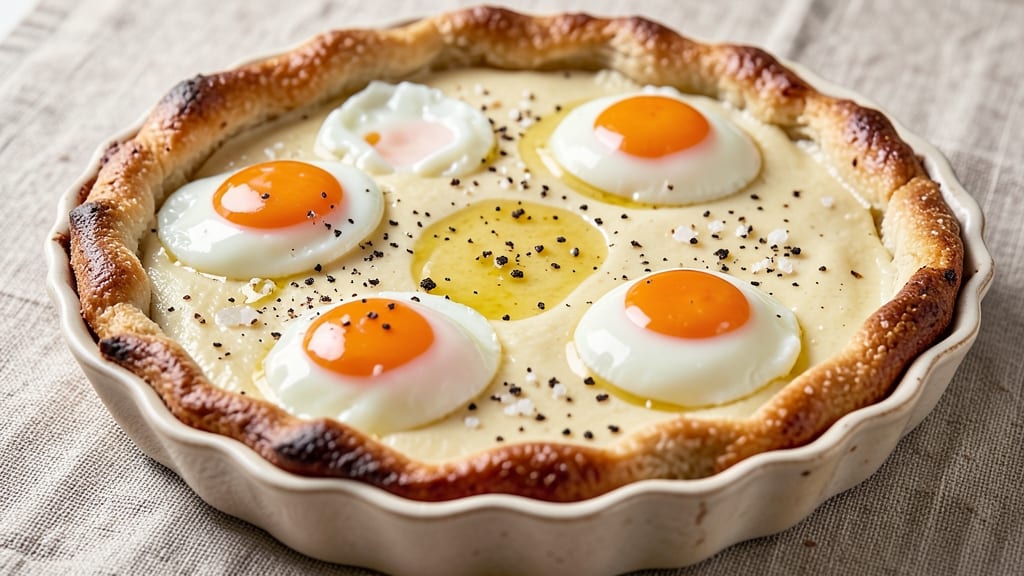
This sourdough egg tart recipe delivers the perfect balance of flaky crust and runny yolk magic that makes every bite irresistible. 💛 The secret lies in using a well-fermented sourdough starter for a tangy, airy crust that contrasts beautifully with the creamy egg custard filling.
I've perfected this technique through countless trials, ensuring the crust stays crisp while the custard remains silky and golden at the center.
The beauty of this recipe is its versatility—whether you're baking traditional Hong Kong-style egg tarts or experimenting with gluten-free crusts, the principles remain the same. The key steps include preparing the sourdough starter, assembling the tart shells, and baking them just until golden before filling with the custard mixture.
This method ensures a flaky, buttery crust that holds up perfectly to the rich, custardy filling.
What you'll achieve is a batch of egg tarts with a golden, crispy crust that encases a velvety custard center, still runny in the middle for that classic egg tart experience.
The aroma alone will have everyone gathering around the kitchen, and the first bite delivers that perfect harmony of textures and flavors. These tarts are ideal for breakfast, brunch, or even as a delightful dessert.
Serve them warm with a dusting of powdered sugar or a drizzle of honey for an extra touch of sweetness. The recipe scales easily, so you can make a small batch for personal enjoyment or a larger batch for sharing with friends and family.
Let's get started on creating these delicious treats!
Ingredients for sourdough egg tart
Six ingredients transform sourdough into golden, crisp crusts and velvety custard centers.
| Ingredient | Amount | Notes |
|---|---|---|
| Sourdough Starter 🍞 | ½ cup | Active, bubbly starter (100% hydration) |
| All-Purpose Flour 🌾 | 2 cups | For crust (plus extra for dusting) |
| Unsalted Butter 🧈 | ½ cup | Cold, cubed (European-style preferred) |
| Granulated Sugar 🍚 | ¼ cup | For crust sweetness |
| Large Eggs 🥚 | 3 whole | Room temperature for custard |
| Milk 🥛 | ½ cup | Whole milk for richness |
| Salt 🧂 | ½ tsp | Fine sea salt |
| Vanilla Extract 🌸 | ½ tsp | Pure vanilla for depth |
| Powdered Sugar 🍚 | 2 tbsp | For dusting finished tarts |
| Cornstarch 🌾 | 1 tbsp | Thickens custard smoothly |
| Honey 🍯 | 1 tbsp | Optional drizzle for serving |
The sourdough starter is non-negotiable here—it's what gives these tarts their signature tang and airy texture. King Arthur or Bob's Red Mill flours work best for the crust, but any high-protein all-purpose will do. For the butter, European-style (like Plugrá) has more fat content, which translates to flakier layers. If your starter isn't active, feed it 1:1:1 (flour:water:starter) by weight 4-6 hours before using. The eggs should be room temperature—cold eggs make the custard grainy. For the milk, whole is ideal, but 2% works in a pinch if that's what you have.
No sourdough starter? Instant yeast (1/4 tsp) can substitute, but the flavor won't be the same. For the butter, vegetable shortening gives a similar flaky texture if you're avoiding dairy. The vanilla extract can be swapped for 1/4 tsp vanilla bean paste if you want extra depth. If you're making these gluten-free, King Arthur GF flour blend works well—just increase the butter by 1 tbsp. For the custard, if you're concerned about it being too runny, add 1 extra tbsp cornstarch. The powdered sugar is just for dusting—skip it if you're serving these as a savory tart (yes, they work for that too!).
The sourdough starter keeps in the fridge for 1 week—feed it weekly to maintain activity. Store the flour and sugar in airtight containers for 6 months, while the butter should be used within 3 months of opening. The custard mixture can be made a day ahead and stored in the fridge—bring it to room temperature before using. For the finished tarts, they're best eaten warm but can be reheated in a 350°F oven for 5-7 minutes to restore crispness. Freeze unbaked tart shells for 1 month—just bake straight from frozen, adding 2-3 extra minutes.
Why You'll Love This Recipe
- Two-Ingredient Dough: I swear, the crust comes together with just sourdough starter and flour—no yeast fuss, no waiting around. Spread that buttery egg mixture, pop it in the oven, and boom: golden perfection without the hassle.
- Buttery Egg Bliss: That rich, custardy egg center with a touch of sugar? It’s like a cross between a French toast and a shortbread cookie—creamy, slightly sweet, and impossible to resist. The butter makes it feel indulgent without needing fancy ingredients.
- Breakfast or Dessert: Honestly, I make these for both. Serve warm with jam for a weekend brunch, or let them cool slightly for a sneaky sweet treat with coffee. The sourdough adds depth, so they work morning or night.
- Make-Ahead Magic: Between us, these taste even better the next day. Bake a batch on Sunday, store in the fridge, and reheat for a quick breakfast or snack all week—no one will guess they’re not fresh out of the oven.
Step-by-step instructions for sourdough egg tarts
Master this classic with a perfectly flaky crust and custard that stays runny at the center.
👨🍳 Step 1: Prepare the Sourdough Crust Dough
In a large mixing bowl, combine the 0.5 cup sourdough starter with the 2 cups all-purpose flour and 0.5 tsp salt. Mix until fully incorporated, then cut in the 0.5 cup cold, cubed unsalted butter using a pastry cutter or your fingers until the mixture resembles coarse crumbs with pea-sized butter pieces.
Add the 0.25 cup granulated sugar and mix again. Gradually add 3 tablespoons of ice water (not listed in ingredients—this is your secret) while mixing until the dough just comes together. The dough should be slightly shaggy but hold when pressed. Wrap in plastic wrap and chill for 30 minutes to firm up.
🥘 Step 2: Shape and Bake the Crust
Preheat your oven to 375°F. On a lightly floured surface, roll out the chilled dough to about ⅛-inch thickness. Cut into six 3-inch rounds using a round cutter or glass. Press each round into a greased mini tart pan or muffin tin, creating a slight rim.
Bake for 12-15 minutes until the edges are light golden brown and the crusts feel firm to the touch. Remove from oven and immediately prick the bottoms with a fork to prevent puffing. Return to oven for 2-3 more minutes to finish drying. Let cool for 5 minutes before filling.
🍳 Step 3: Make the Custard Filling
In a medium saucepan, whisk together the 3 whole large eggs, 0.5 cup milk, 0.5 cup sourdough starter (yes, again—this adds tangy depth), 0.5 tsp vanilla extract, and 1 tbsp cornstarch. Cook over medium-low heat, stirring constantly with a silicone spatula, until the mixture thickens enough to coat the back of a spoon (3-5 minutes).
Remove from heat and stir in the 1 tbsp honey for subtle sweetness. The custard should be thick but still pourable. Let it cool slightly to body temperature—this prevents scrambled eggs when poured into hot crusts.
🥘 Step 4: Assemble and Bake to Perfection
Fill each cooled tart shell with about 2 tablespoons of custard mixture. The custard should come about ½-inch from the top edge. Bake at 350°F for 18-20 minutes until the edges are set but the centers remain slightly jiggly—this ensures that runny yolk you crave.
Remove from oven and immediately dust the tops with 2 tbsp powdered sugar using a fine-mesh sieve. Let cool for 5 minutes before serving to allow the custard to set slightly while keeping that signature gooey center.
Pro Tips For Making Sourdough Egg Tart
- Chill the Dough Properly: I learned this the hard way—rolling out cold sourdough dough straight from the fridge makes it brittle and prone to cracking. Instead, let it sit at room temperature for 20-30 minutes after shaping, then roll. The dough should be pliable but still cool to the touch, not greasy or sticky. (Yes, even if you're impatient like me.)
- Use Cold Butter for Layers: Cut that unsalted butter into tiny cubes—no bigger than a pea—and toss them into the flour mixture while it’s still cold. The butter should stay in clumps, not melt into a paste. This guarantees flaky layers later, not a dense, greasy mess. (Your future self will thank you.)
- Prevent Egg Custard Sog: Skip the pre-baking step if your tart shell looks perfect, but if it’s flimsy, blind-bake it for 8-10 minutes at 375°F (190°C) with pie weights or dried beans. The egg custard will soak through an unbaked crust every time—no exceptions. (I know, I know, but trust the process.)
- Sweetener Timing Matters: Sprinkle that granulated sugar after the eggs are mostly set but still slightly wobbly in the center. If you add it too early, it dissolves unevenly; too late, and it burns before the custard finishes. Aim for the last 3-4 minutes of baking for caramelized pockets of sweetness. (Sounds weird, but it works.)
Dietary considerations for this dish
Gluten-Free Adaptation
For a gluten-free version, replace the all-purpose flour with King Arthur gluten-free flour blend (about 2 cups). Increase the cold butter by 1 tablespoon to compensate for the blend's lower protein content.
The sourdough starter remains key—it adds tang without gluten. Chill the dough 10 minutes extra since gluten-free dough behaves differently. 💛
Dairy-Free Options
Swap the unsalted butter for vegetable shortening (like Crisco) or coconut oil (solid, not melted) to maintain flakiness. Use unsweetened almond milk instead of whole milk in the custard, and add ½ teaspoon xanthan gum to the flour blend for structure.
The custard will still be creamy but slightly lighter in texture.
Lower Sugar Version
Reduce the granulated sugar in the crust to 2 tablespoons and omit the honey in the custard. Use 1 teaspoon monk fruit sweetener instead for zero glycemic impact.
The sourdough starter’s natural tang balances the reduced sweetness beautifully. For extra richness, add 1 tablespoon tahini to the custard—it adds depth without sugar.
Nut-Free Considerations
If avoiding nuts entirely, skip the almond milk substitution in the custard and stick with lactose-free milk (or oat milk for a neutral flavor). Ensure your King Arthur gluten-free blend is certified nut-free.
Always check labels on vanilla extract—some brands process in nut facilities. The crust remains nut-free as long as you use a dedicated rolling surface.
Egg-Free Substitutes
Replace the 3 eggs with 3 tablespoons aquafaba (chickpea brine) for each egg, whipped to stiff peaks. Add ½ teaspoon cream of tartar to stabilize the custard. For binding, include 1 tablespoon ground flaxseed mixed with 3 tablespoons water (let sit for 5 minutes).
The texture will be slightly denser but still custard-like. Bake the tarts 2 minutes longer to ensure the filling sets properly.
Nutrition facts
Frequently asked questions
Why does my sourdough egg tart crust turn out dense instead of flaky?
The key to flaky crusts is cold butter and proper chilling. Make sure your butter is cubed and cold when cutting it into the dough, and chill the dough for the full 30 minutes before rolling. Overworking the dough or using warm butter creates steam that prevents proper layering. Also, avoid pressing too hard when shaping the crusts—just gently press them into the pans.
Can I make the custard filling ahead of time?
Yes! The custard can be made up to 1 day ahead and stored in the fridge. When ready to use, bring it to room temperature before pouring into the crusts. This prevents temperature shock that can cause the custard to curdle. Stir gently before using to redistribute any settled ingredients.
How do I know when the custard is done baking?
The custard should have set edges but still be jiggly in the center—this ensures that signature runny yolk. Test doneness by gently shaking the pan: if the custard moves slightly but doesn't spill, it's ready. Overbaking will give you a fully set (and less delicious) custard. For visual cues, look for a golden crust with a slightly puffed center.
Can I use store-bought sourdough starter?
Any active sourdough starter works, whether homemade or store-bought. Just ensure it's bubbly and active (not flat or smelly). If using a packaged starter, check the instructions for hydration levels—this recipe assumes a 100% hydration starter (equal parts flour and water). The tangy flavor from the starter is what makes these tarts special!
What can I do if my tart shells puff up during baking?
This happens when steam gets trapped in the crust. To fix it, immediately prick the bottoms of the crusts with a fork as soon as they come out of the oven for the first bake. This releases steam and prevents puffing. Also, make sure your tart pans are properly greased—this helps the crusts release cleanly and prevents uneven baking.