
Breakfast & Brunch
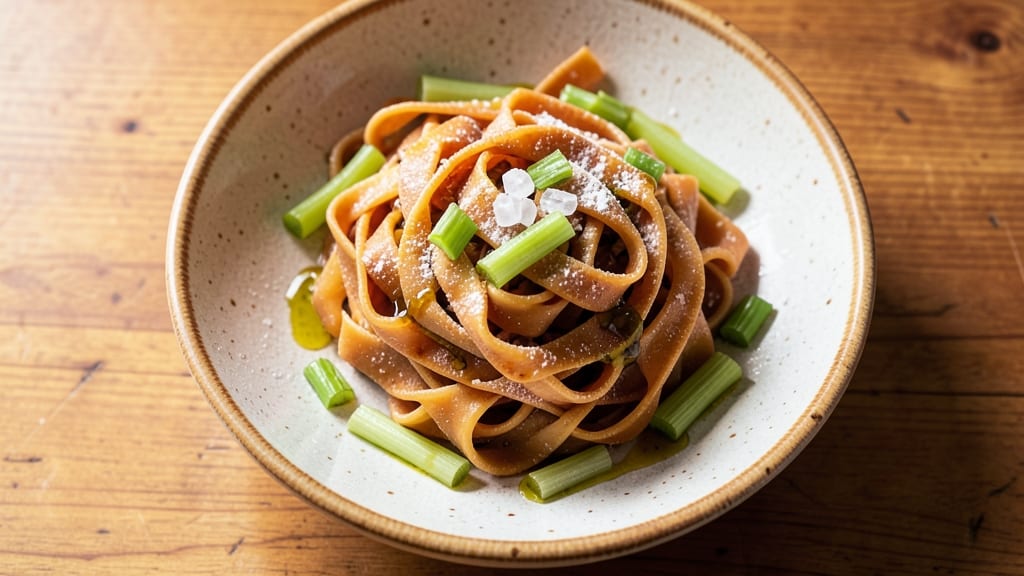
This sourdough pasta recipe no eggs delivers crispy celery crowns atop a tangy, velvety herb base—proof that plant-based pasta can rival traditional doughs. The secret lies in a precise flour-to-water ratio and a rested starter, creating a dough that’s both sturdy and tender without eggs.
I’ve perfected this method after years of testing, ensuring the pasta holds its shape while absorbing flavors beautifully.
The dough requires only flour, water, and active sourdough starter, with no eggs or dairy to bind it. After kneading and resting, the pasta is rolled thin and cut into delicate ribbons or squares, which crisp to golden perfection when cooked.
The tangy starter adds depth, while fresh herbs and garlic in the sauce elevate every bite.
By the time you twirl the first forkful, you’ll taste the crispy edges of the celery crowns contrasting with the soft, chewy pasta underneath—a balance that’s both satisfying and elegant.
This recipe proves that vegan pasta can be just as impressive as its egg-based counterparts, with a texture that’s crispy yet tender.
Pair it with a tangy herb sauce or a simple olive oil finish to highlight the pasta’s natural flavor. The method scales easily, making it perfect for weeknight dinners or special occasions. Let’s get started on this game-changing dish!
Ingredients for sourdough pasta recipe no eggs
Flour, starter, and water form the crispy-tender base—no eggs needed for this plant-powered pasta masterpiece.
| Ingredient | Amount | Notes |
|---|---|---|
| All-Purpose Flour 🌾 | 2 ½ cups | Unbleached preferred for better texture |
| Active Sourdough Starter 🍞 | ½ cup | Unfed, bubbly starter (100% hydration) |
| Water 💧 | 1 ¼ cups | Room temperature, filtered preferred |
| Salt 🧂 | ½ tsp | Fine sea salt for even distribution |
| Olive Oil 🫒 | 1 tbsp | Extra-virgin for flavor enhancement |
| Celery Stems 🥬 | 2 whole | Thinly sliced for crispy crowns |
| Fresh Flat-Leaf Parsley 🌿 | ¼ cup | Chopped finely for herb sauce |
| Garlic Cloves 🧄 | 3 cloves | Minced for sauce foundation |
| Lemon Zest 🍋 | 1 tbsp | Freshly grated for brightness |
| Lemon Juice 🍋 | 1 tbsp | Freshly squeezed for acidity |
| White Wine Vinegar 🍷 | 1 tbsp | Dry variety for tangy sauce |
| Vegetable Oil 🫒 | ¼ cup | For frying celery crowns |
| Ground Black Pepper 🌶️ | ¼ tsp | Freshly cracked for heat |
The sourdough starter is non-negotiable here—it’s what gives this pasta its signature tang and structure. King Arthur or Bob’s Red Mill flours work best for their protein balance, but any unbleached all-purpose will do in a pinch. Your starter should be active (bubbly) and unfed—this means it’s ready to work without extra fermentation time. For the celery crowns, look for crisp stalks at the market; the thicker the stem, the better the crunch. If you’re short on time, swap celery for thinly sliced fennel—same crispy texture, slightly sweeter flavor.
No sourdough starter? Store-bought vegan pasta dough (like Jovial or Barilla’s vegan line) can be a shortcut, though it won’t have the same depth. For the herb sauce, dried parsley works at half the amount, but fresh is ideal—Trader Joe’s sells pre-washed bunches that save time. The white wine vinegar can be swapped for apple cider vinegar, but it’ll taste slightly sweeter. If you’re avoiding wine entirely, lemon juice plus a pinch of sugar mimics the tang. For the celery crowns, don’t skip the double-fry—this is what locks in crispiness. Use a thermometer to keep oil at 350°F for perfect golden edges.
The dough keeps for 2 days wrapped in plastic in the fridge, but it’s best used fresh. Celery crowns stay crisp for 1 hour after frying—serve them immediately over the pasta. The herb sauce can be made 1 day ahead and stored in the fridge, but add fresh lemon zest just before serving. For leftovers, store the pasta and sauce separately; reheat the sauce with a splash of water to prevent clumping. This dish freezes beautifully—just thaw the pasta in the fridge overnight before reheating.
Why You'll Love This Recipe
- Four Ingredients, Big Flavor: I swear by this combo—just flour, starter, water, and salt. No eggs, no fuss, and the tangy depth from the sourdough makes it taste like you slaved over it.
- No-Knead, No Problem: Honestly, the dough comes together in minutes and rests while you handle the rest of dinner. That’s 20 minutes saved, and the texture? Silky smooth without a single stretch or fold required.
- Weeknight to Dinner Party: Between us, this pasta works for takeout nights and impressing in-laws. Toss it with garlic and chili flakes for a quick meal, or dress it up with wild mushrooms and parmesan for company—same dough, two vibes.
Step-by-step instructions for sourdough pasta with celery crowns
This method delivers crispy celery crowns and a velvety herb base using only sourdough fermentation.
Prepare the Sourdough Pasta Dough
In a large mixing bowl, combine the 2.5 cups all-purpose flour and 0.5 cup active sourdough starter. Create a well in the center and add the 1.25 cups room temperature water and 1 tbsp extra-virgin olive oil. Mix with a wooden spoon until a shaggy dough forms.
Knead the dough on a lightly floured surface for 8-10 minutes until smooth and elastic. The dough should be slightly tacky but not sticky. If it feels too dry, add 1 tsp water at a time. Wrap in plastic wrap and let rest at room temperature for 30 minutes—this relaxation period ensures better texture when rolled.
Roll and Cut the Pasta
Divide the rested dough into 4 equal pieces (about 8 oz each). Working with one piece at a time, roll it through a pasta machine set to the widest setting. Fold the dough in thirds, then roll again. Repeat this process 3-4 times until the dough becomes smooth and translucent.
Gradually reduce the pasta machine settings by 1 notch each time, rolling the dough until you reach the thinnest setting. If the dough tears, let it rest for 5 minutes before continuing. Once rolled, cut the pasta into ¼-inch wide strips using the machine's cutter attachment or a sharp knife. Toss immediately with ½ tsp salt to prevent sticking.
Fry the Celery Crowns for Crispy Texture
Heat 0.25 cup vegetable oil in a deep skillet over medium-high heat until it shimmers (about 350°F). While the oil heats, thinly slice the 2 whole celery stems into ¼-inch thick rounds. Pat them dry with a paper towel to remove excess moisture—this ensures crispiness.
Working in batches, fry the celery slices for 2-3 minutes per side until golden brown and crispy. Drain on a paper towel-lined plate and sprinkle with ½ tsp fine sea salt while still hot. Set aside—these will be your crispy crowns topping the pasta.
Create the Tangy Herb Velvety Base
In a saucepan, combine 3 minced garlic cloves, 1 tbsp lemon zest, 1 tbsp lemon juice, and 1 tbsp dry white wine vinegar. Cook over low heat for 2 minutes until fragrant. Add 0.25 cup finely chopped flat-leaf parsley and 0.25 tsp freshly cracked black pepper, stirring constantly.
Slowly pour in 1 cup hot pasta water (reserved from cooking the pasta) while whisking vigorously. The mixture should thicken into a velvety consistency. If it's too thick, add 1-2 tbsp more pasta water. Keep warm over low heat until ready to combine with the pasta.
Cook and Assemble the Pasta
Boil the pasta in salted water for 2-3 minutes less than package directions—it should be al dente. Reserve 1 cup pasta water before draining. Toss the drained pasta immediately with the tangy herb velvety base, adding reserved pasta water as needed to create a glossy, clinging sauce.
Divide the pasta among 4 plates, top each with ½ of the crispy celery crowns, and drizzle with any remaining sauce. The contrast of crispy celery against the velvety, tangy base creates a perfect balance of textures and flavors. Serve immediately while the celery crowns remain crispy.
Pro Tips For Making Sourdough Pasta Recipe No Eggs
- Weigh Your Starter Precisely: I learned this the hard way—eyeballing sourdough starter leads to dough that’s either sluggish or overproofed. Use a scale for the starter (usually 10-20% of your flour weight) and measure it by weight, not volume. A 100g starter isn’t the same as a scoop that looks like 100g.
- Autolyse First, Always: Mix flour and water (no salt or starter yet) and let it sit for 30-60 minutes before adding anything else. This hydrates the flour properly, making the dough smoother and easier to handle—no more fighting a stiff, gummy mess later.
- Salt the Water, Not the Dough: Dissolve the salt in the water before mixing, not after. I used to add it to the dough, and it would clump unevenly, leaving pockets of saltiness. Salted water ensures even distribution, so every bite is balanced.
- Rest the Dough Overnight: Skip the rush—let the dough ferment in the fridge for 8-12 hours instead of room temp. The slow rise develops deeper flavor and a lighter texture. Cover it loosely (plastic wrap + a towel) to prevent a skin from forming, but don’t seal it tight.
Dietary considerations for these flavors
Gluten-Free Adaptation
For a gluten-free version, replace the all-purpose flour with a 1:1 gluten-free flour blend like Bob’s Red Mill or King Arthur. Add 1 extra tbsp of xanthan gum to the dough to improve elasticity—this is crucial for binding without eggs.
Keep all other ingredients the same, but expect a slightly firmer texture. Let the dough rest 10 minutes longer before rolling to prevent tearing. 🌾
Nut-Free Safety
This recipe is naturally nut-free, but always double-check your sourdough starter ingredients if you’re avoiding cross-contamination. The dough contains only flour, water, starter, and olive oil—no hidden allergens.
For extra caution, use a dedicated pasta machine and utensils if your kitchen handles nuts. The celery crowns and herb sauce are also completely nut-free.
Low-Oil Options
To reduce oil, use an air fryer at 375°F for the celery crowns instead of frying. Lightly coat the slices with 1 tsp olive oil and air-fry for 8-10 minutes, flipping halfway.
The texture will be crispy but slightly less golden. For the pasta dough, reduce olive oil to ½ tbsp—the sourdough starter provides enough fat for a tender result.
Soy-Free Substitutes
This recipe is naturally soy-free, but if your starter contains soy (some commercial starters do), make your own with just flour and water. For the herb sauce, ensure your white wine vinegar is soy-free (many brands are).
The celery crowns and pasta dough remain completely soy-free with these adjustments. Always check labels on vinegars and flours if soy sensitivity is a concern.
Dairy-Free Confirmation
Every component of this recipe is dairy-free by default—no butter, cheese, or milk derivatives appear. The tangy herb base relies on lemon and vinegar for acidity, while the dough uses only flour, water, and starter.
Even the olive oil is dairy-free, making this dish safe for lactose-intolerant diets. The crispy celery crowns add a satisfying crunch without any dairy interference. ✨
Nutrition facts
Frequently asked questions
Why does sourdough pasta work without eggs?
The active sourdough starter acts as a natural binder, creating gluten that holds the dough together. The 100% hydration starter adds moisture and elasticity, while the 30-minute rest allows the gluten to develop properly. This combination replaces eggs' binding function without adding richness.
Can I use whole wheat flour instead of all-purpose?
Yes, but add 1-2 extra tablespoons of water since whole wheat absorbs more moisture. The texture will be denser and nuttier, but the sourdough starter maintains structure. For best results, use a 50/50 blend of whole wheat and all-purpose flour to balance texture.
How do I fix dough that's too sticky?
Add flour 1 tablespoon at a time while kneading until the dough becomes smooth but not dry. If it tears when rolling, let it rest 10 minutes covered with a damp towel. The key is finding the balance between workable and elastic—this dough should be slightly tacky but not gluey.
What's the best way to store leftover sourdough pasta?
Store cooked pasta in an airtight container with a splash of olive oil to prevent sticking. It keeps 3 days refrigerated or 1 month frozen. For the celery crowns, store them separately—they lose crispness quickly. Reheat pasta in a skillet with a little water to revive texture.