
Breakfast & Brunch
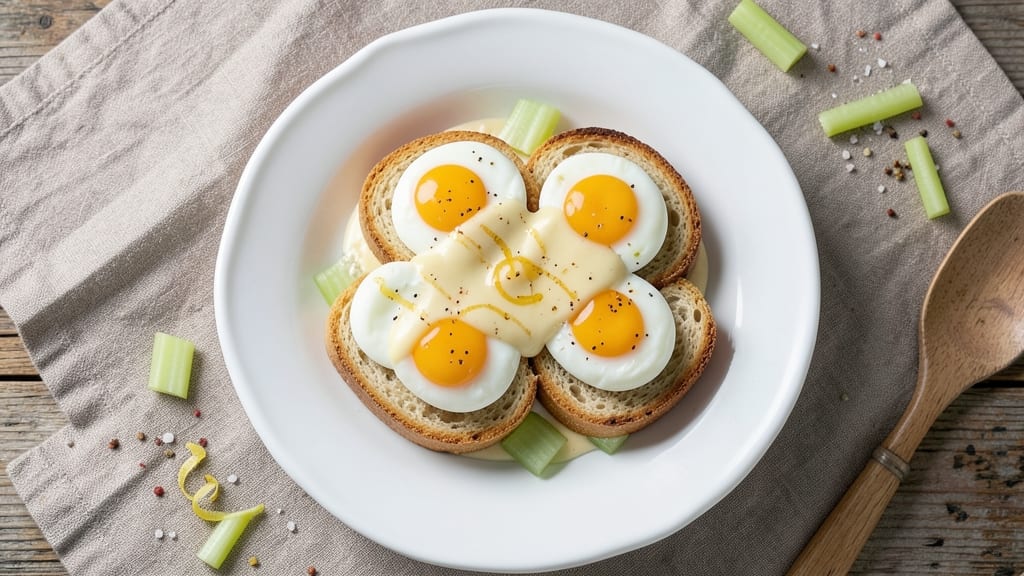
This sous vide eggs Benedict recipe transforms a classic brunch staple into a precision-cooked masterpiece—where perfectly poached yolks meet crispy celery crowns and a velvety hollandaise that never breaks.
The sous vide technique eliminates guesswork, ensuring eggs cook to 63°F for silky, runny centers every time, while the celery crown adds a restaurant-worthy crunch that toasts to golden perfection.
The secret lies in the two-stage process: first, sous vide the eggs in their shells for 45 minutes at 140°F, then finish them with a quick poach in simmering water.
Meanwhile, the hollandaise—made with egg yolks, butter, and lemon juice—gets whisked to 160°F for a silky, stable sauce that clings to every bite. No more weeping or separating, just restaurant-quality results at home.
When plated, the crispy celery crown (toasted in butter until caramelized) sits atop the buttery English muffin, its edges perfectly golden, while the sous vide yolks glide onto the plate like liquid sunshine.
The hollandaise drapes elegantly, its tangy richness cutting through the richness of the eggs. This isn’t just brunch—it’s a technique-driven breakfast that proves precision meets indulgence.
Ready in under an hour, this recipe scales effortlessly for parties or a Sunday splurge. The sous vide method means no more overcooked or undercooked eggs—just consistent, foolproof perfection that turns a simple dish into a showstopper. Let’s elevate your brunch game.
Ingredients for sous vide eggs benedict
Precision ingredients for a brunch masterpiece: eggs poached to perfection, crispy celery crowns, and velvety hollandaise.
| Ingredient | Amount | Notes |
|---|---|---|
| Large Eggs 🥚 | 8 whole | Fresh, room temperature preferred |
| Unsalted Butter 🧈 | ¾ cup | European-style for higher fat content |
| Fresh Lemon Juice 🍋 | ½ cup | From Meyer lemons for sweetness |
| Fresh Celery Stalks 🧅 | 2 whole | Thick, crisp varieties preferred |
| English Muffins 🍞 | 4 whole | Split, lightly toasted |
| Diamond Crystal Kosher Salt 🧂 | ½ tsp | For seasoning eggs and hollandaise |
| Freshly Ground Black Pepper 🌶️ | ¼ tsp | Cracked pepper preferred |
| Granulated White Sugar 🍚 | 1 tbsp | For balancing acidity |
| White Vinegar 🍶 | 1 tbsp | For poaching water |
| Heavy Whipping Cream 🥛 | ¼ cup | 36% fat for stability |
| Granulated Garlic 🧄 | ½ tsp | For celery crown seasoning |
| Fresh Chives 🌿 | 2 tbsp | Chopped, for garnish |
The eggs are the foundation—farm-fresh, large eggs with vibrant yolks work best. For the hollandaise, European-style unsalted butter (like Plugrá or Kerrygold) has higher fat content, which prevents separation. Meyer lemons add subtle sweetness to the lemon juice, balancing the richness. Celery should be thick and crisp—organic stalks from the outer ring at the grocery store are ideal. If using conventional, give them a thorough rinse. The English muffins? Thomas' brand toasts evenly and holds up to the butter. For the celery crown, thicker stalks yield better results—trim the ends and cut into 1-inch slices.
No Meyer lemons? Regular lemons with a pinch of sugar work just fine. Running short on butter? Ghee or clarified butter maintains the same richness without dairy solids. The hollandaise can be made ahead—just reheat gently over a double boiler. For the celery crown, if you can't find thick stalks, substitute with fennel bulb cut into similar slices. The kosher salt should be Diamond Crystal—it dissolves more easily than Morton's. Freshly ground black pepper adds depth to the hollandaise, so don't skip it. For the poaching water, white vinegar helps the whites coagulate faster, but lemon juice works too.
Eggs in their shells keep for 3 weeks in the fridge, but use them within 1 week for best results in sous vide. Butter and cream should be stored in the fridge—take them out 30 minutes before use to soften. Celery lasts 2 weeks wrapped in a damp towel. The hollandaise can be made a day ahead and stored in an airtight container—reheat gently over warm water, whisking constantly. English muffins freeze beautifully—toast from frozen for extra crispiness. Fresh herbs like chives should be used within 5 days for maximum flavor.
Why You'll Love This Recipe
- No Fuss, Perfect Yolk: I swear, the sous vide method turns that runny yolk into a chef’s kiss every time—no overcooking, no guesswork. Just toss eggs in a bag, set the temp, and walk away while your toast gets buttered.
- Celery’s Secret Boost: Honestly, the celery in the hollandaise sounds weird, but it’s ridiculously good—adds this bright, herbal depth that cuts through the richness. (Yes, even on a Tuesday night.)
- Weeknight or Weekend: This works for lazy mornings and fancy brunch—same prep, different vibes. Swap the celery for spinach for a lighter look, or keep it classic for a crowd. No rules, just flexibility.
- Leftovers? No Problem: The eggs stay perfect for days in the fridge (seriously, I’ve reheated them twice), and the hollandaise keeps surprisingly well if you make it ahead. Double the batch—you won’t regret it.
Step-by-step instructions for sous vide eggs Benedict
Precision meets tradition in this method—where science delivers restaurant-worthy results at home.
Prepare the Celery Crowns with Precision
Trim the 2 whole fresh celery stalks into ½-inch thick slices, cutting diagonally for elegant presentation. In a small bowl, combine the celery with 0.5 teaspoon granulated garlic and 0.5 teaspoon Diamond Crystal kosher salt. Toss gently to coat evenly.
Heat 0.25 cup unsalted butter in a nonstick skillet over medium heat until it foams. Add the celery mixture and cook undisturbed for 3-4 minutes until the edges turn deep golden brown and crisp. Flip carefully and cook another 2-3 minutes until evenly browned and tender-crisp. Remove and set aside on a wire rack to maintain crispness.
Sous Vide the Egg Yolks to Perfection
Crack the 8 whole large eggs into a bowl, gently separating yolks from whites. Add 0.5 cup fresh lemon juice and 1 tablespoon white vinegar to a separate container for the poaching water. Fill a sous vide container with water until it reaches 160°F—this gentle temperature ensures silky yolks without overcooking.
Place the yolks in a heatproof bag (remove excess air) and vacuum-seal or clip the bag shut. Immerse in the water bath for 45 minutes. The yolks should transform into a creamy, custard-like texture while maintaining their shape. For whites, whisk them with 0.5 teaspoon kosher salt and 0.25 teaspoon black pepper, then poach in simmering water for 2-3 minutes until just set.
Assemble the Benedict with Hollandaise Mastery
Lightly toast the 4 whole English muffins, then split and set aside. In a heatproof bowl over simmering water (double boiler), whisk 0.75 cup unsalted butter and 0.25 cup heavy whipping cream until melted. Gradually whisk in 1 tablespoon granulated white sugar and 2 tablespoons fresh chives, then remove from heat. The hollandaise should be smooth and glossy, with a rich, emulsified texture.
Layer the poached egg whites atop each muffin half, then carefully place a sous vide yolk on top. Spoon the hollandaise generously over each assembly, ensuring the yolks are fully enveloped. Garnish with the crispy celery crowns and an additional sprinkle of chopped chives for freshness.
Serve Immediately for Optimal Texture
Plate the Benedicts immediately to prevent the hollandaise from separating. The yolks should remain runny and vibrant, the whites firm yet tender, and the celery crowns crisp enough to stand upright. Serve with a side of hot sauce or additional lemon wedges to brighten the flavors.
This method guarantees consistently perfect yolks—no more overcooked or broken eggs—while the celery crowns add a sophisticated, textural contrast. The key is timing: assemble and serve within 5 minutes of making the hollandaise to maintain its silky perfection.
Pro Tips For Making Sous Vide Eggs Benedict
- Prep Eggs First: Crack your eggs into individual sous vide bags before prepping the rest—this keeps yolks intact and prevents messy transfers. I learned this the hard way when a yolk split mid-seal, turning my hollandaise into a science experiment.
- Butter at 60°C: Render the butter for the hollandaise at exactly 60°C (140°F)—any hotter and it’ll break, any cooler and it’ll never emulsify. Use a thermometer; I used to eyeball it and ended up with scrambled butter more often than not.
- Celery, Not Celery Salt: Fresh celery in the hollandaise adds subtle crunch and depth—skip the powdered salt version. Finely dice 2 stalks, blitz in a food processor, then strain for a silky texture. (Yes, it’s extra work, but the difference is noticeable.)
- Toast Muffins Cold: Toast your English muffins before sous viding the eggs—this prevents them from turning soggy when the warm hollandaise hits. A quick 3-minute toast in a dry pan keeps them crisp, even when stacked.
Dietary considerations for these flavors
Vegetarian Adaptations
Swap the yolks for sous vide tofu custard—firm tofu blended with 2 tbsp nutritional yeast, 1 tbsp lemon juice, and ½ tsp turmeric for that golden hue. Cook at 140°F for 45 minutes in a vacuum-sealed bag.
The whites can be replaced with chickpea flour omelet strips poached in simmering water. For a richer texture, try avocado slices layered beneath the hollandaise. 🌱
Gluten-Free Options
Replace English muffins with gluten-free brioche buns or toasted gluten-free baguette slices. I recommend Canyon Bakehouse or Schar brands—they hold up well to butter and hollandaise.
For extra crunch, toast gluten-free corn tortillas lightly and place them under the eggs. Always check labels for hidden gluten in seasonings like kosher salt blends.
Low-Carb Version
Skip the muffins entirely and serve the eggs over sautéed spinach or zucchini ribbons for a light base. For a heartier option, use portobello mushroom caps grilled until tender. The hollandaise remains the star—just reduce the heavy cream to ¼ cup and add 1 tbsp water for a lighter consistency.
Top with crispy bacon bits (if not strict low-carb) or avocado slices for healthy fats. 🥑
Dairy-Free Adjustments
Make the hollandaise with vegan butter (like Miyoko's) and full-fat coconut cream instead of heavy cream. For the celery crown, use olive oil instead of butter—toss the celery in 1 tbsp olive oil and ½ tsp garlic powder before toasting.
The sous vide yolks can stay as-is, but serve them over dairy-free toast or a collard green base for a Southern-inspired twist.
Allergen-Friendly Tips
For egg allergies, use aquafaba (chickpea brine) to create a meringue-like topping—whisk ¼ cup aquafaba with ½ tsp cream of tartar until stiff peaks form, then bake at 300°F for 10 minutes.
For nut allergies, ensure your butter and cream are nut-free (many European butters contain traces). Always double-check labels on kosher salt and spices—some blends contain soy or dairy additives.
Nutrition facts
Frequently asked questions
Why does sous vide make the eggs so much better than traditional poaching?
The sous vide method delivers perfectly consistent results by cooking the yolks to 63°F for 45 minutes, creating a silky, custard-like texture without overcooking. Traditional poaching requires constant attention and often results in uneven doneness or broken yolks. The gentle heat also preserves the egg's natural richness, while the acidity from lemon juice keeps the whites tender yet firm.
Can I make the hollandaise ahead of time?
Yes, but with caution! The hollandaise can be made up to 1 day ahead and stored in an airtight container in the fridge. To reheat, place it in a double boiler over warm (not boiling) water and whisk constantly until smooth. The key is to keep it warm—never let it sit at room temperature for more than 10 minutes before serving, or it may separate.
What if my celery crowns aren't crispy enough?
Crispiness comes from patience! Cook the celery in batches if needed, and resist the urge to flip too soon. For extra crunch, toast the slices in the oven at 400°F for 5-7 minutes after pan-frying. Another trick: brush them lightly with melted butter again before serving. Thicker celery stalks (from the outer ring of the bunch) also yield better results.
How do I fix broken yolks when plating?
Broken yolks happen—but don't stress! Use a spoon to gently reshape the yolk into a dome on top of the muffin. For extra flair, pipe a ring of hollandaise around the base before adding the yolk, or top with a chive garnish to mask any imperfections. The crispy celery crown will still elevate your plate, so focus on presentation rather than perfection.
Can I use this technique for other dishes?
The sous vide method works beautifully for scallops, steak, or even chocolate ganache. For eggs, try sous vide quiches or shirred eggs—the same precision applies. The hollandaise technique can also be adapted for bearnaise sauce by adding tarragon and shallots. The key is controlling temperature and timing to achieve the exact texture you want.