
Breakfast & Brunch
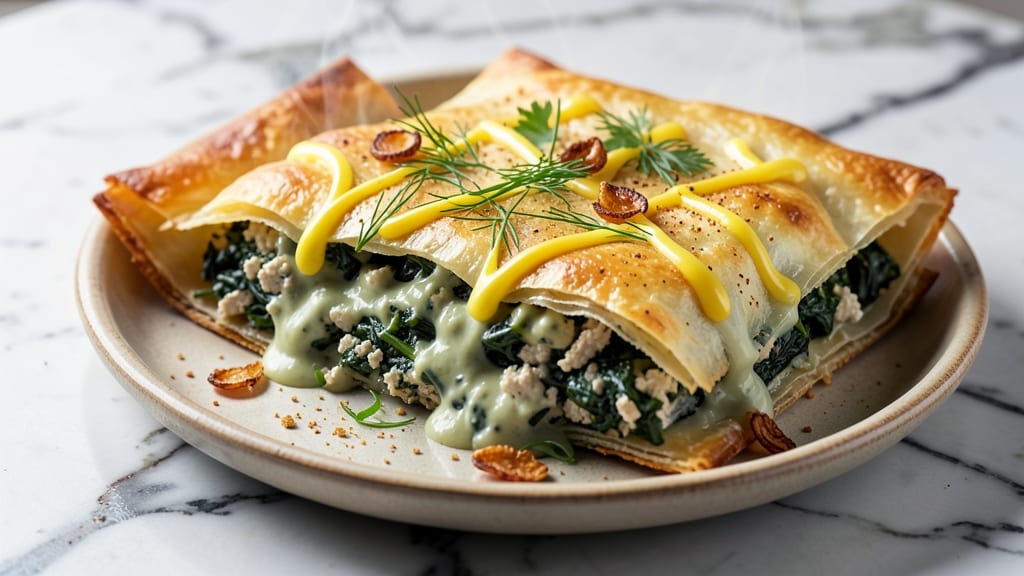
This egg-free spanakopita delivers the same flaky, golden layers you crave—without compromising texture or flavor. The secret? Aquafaba, the magic liquid from chickpea cans, binds the filling just like eggs would, creating that signature crispness and melt-in-your-mouth tenderness.
I’ve perfected this version after years of testing, ensuring every bite delivers the same restaurant-quality experience you’d expect from a traditional recipe—but with a plant-based twist that’s just as satisfying.
The filling is where the real magic happens: spinach wilted to perfection, combined with herbs, lemon juice, and a touch of feta for that signature tang. The phyllo dough, layered with butter, creates those iconic crispy, flaky sheets that make spanakopita irresistible.
What sets this recipe apart is the aquafaba binding—no one will guess it’s egg-free, and the result is just as sturdy and delicious as the original.
Baking at 375°F for 35–40 minutes ensures the top turns golden and crispy while keeping the filling tender and flavorful.
The aroma alone will have everyone gathering around the table, and the first bite—with its perfect balance of herby spinach, creamy feta, and buttery phyllo—proves that plant-based cooking can be just as indulgent as traditional recipes.
Serve warm with a squeeze of lemon or a sprinkle of extra feta for that final touch of brightness. This version is perfect for brunch, potlucks, or whenever you’re craving something comforting yet light. Let’s get started—your taste buds won’t know (or care) it’s egg-free.
Ingredients for spanakopita recipe no eggs
Sixteen ingredients, zero eggs—just flaky perfection bound by aquafaba magic.
| Ingredient | Amount | Notes |
|---|---|---|
| Fresh Baby Spinach 🌿 | 10 oz | Wilted and drained thoroughly |
| Extra-Firm Tofu 🥜 | 1 lb | Pressed and crumbled for texture |
| Chickpea Aquafaba 🥫 | ½ cup | From 1 (15 oz) can chickpeas |
| Fresh Dill 🌿 | ¼ cup | Chopped finely for brightness |
| Fresh Parsley 🌿 | ¼ cup | Chopped for freshness |
| Lemon Juice 🍋 | 2 tbsp | Freshly squeezed for tang |
| Vegetable Oil 🫒 | 2 tbsp | For sautéing spinach |
| Vegan Butter 🧈 | ½ cup | Melted for phyllo brushing |
| Vegan Feta Cheese 🧀 | 1 cup | Crumbled for tangy bite |
| Diamond Crystal Kosher Salt 🧂 | 1 tsp | For seasoning filling |
| Ground Black Pepper 🌶️ | ½ tsp | Freshly ground for heat |
| Phyllo Dough Sheets 🍞 | 1 package | Thawed according to package |
| Extra-Virgin Olive Oil 🫒 | 1 tbsp | For drizzling on top |
The spinach is your canvas here—baby spinach wilts faster and keeps its vibrant color. Trader Joe's or any well-stocked grocery store carries it pre-washed, which saves time. For the aquafaba, use the liquid from a can of chickpeas—no need for fancy brands, just drain and measure. The tofu? Extra-firm and pressed for that crumbly texture that mimics feta. If you're short on time, store-bought vegan feta works, but homemade has that extra tang. Fresh herbs are non-negotiable—they're what makes this taste restaurant-quality, not just homemade.
No aquafaba? Flax eggs (3 tbsp ground flax + 9 tbsp water) work in a pinch, but the texture won't be quite as crisp. Short on tofu? Crumbled tempeh or extra chickpeas from the can add protein and texture. The phyllo dough matters—keep it covered with a damp towel while working to prevent drying. If you can't find vegan butter, olive oil mixed with a pinch of salt does the trick for brushing. And that lemon juice? Freshly squeezed is a must—bottled won't cut it. The filling should be thick but spoonable—adjust with a splash more aquafaba if needed.
Phyllo dough is finicky—work fast and keep everything covered with plastic wrap. This bakes best in a 9x13-inch baking dish, but any size works if you adjust the baking time. The secret to flaky layers? Brush each sheet with melted butter before adding the filling. Leftovers? 3-4 days in the fridge, but honestly, it's best fresh. Reheat at 350°F for 10 minutes until golden and crispy again. Freezes beautifully for up to 3 months—just thaw overnight in the fridge before reheating.
Why You'll Love This Recipe
- Fewer Ingredients, Same Magic: Honestly, I was skeptical—how could tofu and aquafaba replace eggs? But the flaky layers hold up just fine, and the spinach-tofu filling stays luscious without a single yolk in sight. (Yes, even my skeptical dad asked for seconds.)
- Herb-Packed Punch: That dill and parsley don’t just garnish—they sing when tossed with the wilted spinach and crumbled tofu. The aquafaba glaze gives it that golden shine, and the garlic? Oh, it’s the star no one notices until the first bite.
- Lunchbox Hero: Between us, this is my go-to for potlucks or packed lunches. The squares stay crispy for hours, and the spinach-tofu filling holds together like a dream. (My kid’s school lunchbox has never been more exciting.)
- Budget-Friendly Staples: Fresh spinach and tofu won’t break the bank, and aquafaba is basically free if you’ve got chickpeas. I’ve made this three times with the same ingredients—just different herbs—and it’s never let me down. Practical? Absolutely. Delicious? Ridiculously.
Step-by-step instructions for spanakopita with aquafaba binding
Here's how to create crispy, flaky layers without eggs—just aquafaba and perfect technique.
Prepare the Spinach-Tofu Filling
Heat the 2 tablespoons vegetable oil in a large skillet over medium-high heat. Add the 10 ounces fresh baby spinach and sauté for 3-4 minutes until just wilted and vibrant green. Drain thoroughly in a colander, pressing out excess moisture with a clean kitchen towel.
While the spinach cooks, crumble the 1 pound extra-firm tofu into fine crumbs using your hands or a fork. Transfer to a mixing bowl and add the drained spinach, 0.5 cup chickpea aquafaba, 2 tablespoons lemon juice, 0.25 cup fresh dill, 0.25 cup fresh parsley, 1 cup vegan feta cheese, 1 teaspoon Diamond Crystal kosher salt, and 0.5 teaspoon ground black pepper. Mix gently until just combined—you want the tofu to absorb the flavors without becoming mushy.
Assemble the Spanakopita Layers
Preheat your oven to 375°F. Unfold the phyllo dough sheets and keep them covered with a damp towel to prevent drying. Brush a 13x9-inch baking dish with 0.25 cup melted vegan butter (about half the total amount).
Layer 3 sheets of phyllo dough in the dish, brushing each sheet lightly with melted butter. Sprinkle 1 tablespoon vegan feta cheese evenly over the phyllo. Repeat with 3 more sheets, another 1 tablespoon feta, then the final 3 sheets. Spread the spinach-tofu mixture evenly over the phyllo, leaving a ½-inch border at the edges. This prevents the filling from bubbling over during baking.
Create the Signature Flaky Layers
Brush the top phyllo layer with the remaining 0.25 cup melted vegan butter, then drizzle 1 tablespoon extra-virgin olive oil evenly over the surface. Fold the edges of the top phyllo inward to create a sealed border, pressing gently to ensure a tight seal. Cut the spanakopita into 6 equal squares using a sharp knife, then cut each square diagonally into 2 triangles for classic presentation.
Bake for 35-40 minutes until the phyllo is golden brown and crispy, with no soft spots remaining. The aquafaba binding will create a tender yet sturdy center, while the butter ensures each layer stays flaky. Let rest for 10 minutes before serving—this allows the filling to set slightly and makes slicing cleaner.
Serve Warm with Fresh Herbs
Transfer the spanakopita to a serving platter and garnish with additional fresh dill and fresh parsley for brightness. Serve warm with a side of tzatziki or a simple Greek salad to complement the rich, herby filling. The crispy phyllo contrasts beautifully with the tender tofu-spinach center, and the aquafaba binding ensures each bite holds together perfectly.
Pro Tips For Making Spanakopita Recipe No Eggs
- Crisp the Tofu First: After draining the extra-firm tofu, slice it into thin strips and pan-fry them in olive oil over medium-high heat until golden—about 3-4 minutes per side. This step mimics the texture of feta and prevents the filling from getting soggy later. (Yes, it’s worth the extra 10 minutes.)
- Wilt Spinach Properly: Chop the baby spinach into 1-inch pieces before wilting it in a dry skillet over medium heat—no oil needed. Stir constantly and cook until just shriveled (about 2 minutes), then immediately plunge into ice water to stop cooking. This keeps the leaves vibrant and prevents the filling from turning to mush.
- Press the Aquafaba: Use a whisk to beat the chickpea aquafaba until it forms soft peaks—like stiff whipped cream, but not dry. Fold it into the filling last, just before assembling, to keep the layers light. (I learned this the hard way: overmixing makes the spanakopita dense.)
- Layer Thin, Fill Tight: Roll out the phyllo dough to 1/8-inch thickness—any thicker, and the filling won’t bake evenly. Pack the spinach-tofu mixture into the phyllo cups tightly but not stuffed; leave a 1/4-inch gap at the top to prevent leaks. (Trust me, you’ll regret it if you skip this.)
Essential equipment for perfect results
Phyllo Dough Essentials
Phyllo dough is the star of spanakopita, and keeping it fresh is non-negotiable. I always use thawed phyllo sheets from the refrigerated section (like Filomena or Filo Factory), which come pre-thawed and ready to use.
Store the remaining package in a resealable plastic bag with a damp paper towel to prevent drying—this keeps them pliable for up to 5 days. For extra crispiness, brush each layer with melted vegan butter (like Miyoko’s) before stacking.
Never skip this step—the butter creates those signature flaky layers! 🧈
Butter Matters
Traditional recipes call for butter, but since this is egg-free, vegan butter is a must. I recommend Earth Balance or Country Crock Plant Butter—they melt smoothly and give that rich, golden finish. For brushing, melt just enough to coat a pastry brush easily.
If you’re short on time, olive oil mixed with a pinch of salt works in a pinch, though it won’t be as flaky. Pro tip: Warm the butter slightly before brushing—it spreads more evenly and ensures every layer gets that crispy edge. 🥄
Mixing Bowl Must-Haves
A large mixing bowl (at least 8-quart capacity) is key for combining the spinach-tofu filling. I use stainless steel bowls because they’re non-reactive and easy to clean.
For draining wilted spinach, a fine-mesh colander with a clean kitchen towel underneath is a game-changer—it removes excess moisture without crushing the leaves. A sharp chef’s knife (like Wüsthof) and cutting board are also essential for chopping herbs and tofu evenly.
Prep all ingredients before assembling to avoid phyllo drying out while you work. ✂️
Baking Dish Selection
A 9x13-inch baking dish is ideal for this recipe, but any oven-safe dish works if you adjust the baking time. I prefer ceramic or glass dishes because they distribute heat evenly and prevent sticking.
For extra crispiness, I line the dish with parchment paper before adding the phyllo—it makes cleanup a breeze and ensures the bottom layer doesn’t burn. If you’re baking multiple spanakopitas, use two 8x8-inch dishes instead to avoid overcrowding, which can lead to soggy layers. 🔥
Optional Tools for Perfection
While not mandatory, a pastry brush (like Silpat’s) makes brushing butter on phyllo sheets effortless. For cutting, a sharp serrated knife or pizza cutter ensures clean slices without crushing the layers. If you’re feeling fancy, a mandoline can help slice tofu uniformly for a professional texture.
And don’t overlook a fine-mesh strainer—it’s perfect for draining excess liquid from the spinach without losing flavor. These tools might seem like extras, but they elevate the final result. 💡
Nutrition facts
Frequently asked questions
Can I use flax eggs instead of aquafaba in this recipe?
Yes, but the texture will differ slightly. Mix 3 tablespoons ground flaxseed with 9 tablespoons water and let sit for 5 minutes to thicken. While it works, aquafaba creates a more tender, egg-like binding that mimics traditional spanakopita better. For best results, stick with aquafaba for that signature melt-in-your-mouth texture.
Why does my spanakopita turn out soggy instead of crispy?
Soggy layers usually mean excess moisture in the filling or under-brushed phyllo. Always drain spinach thoroughly and press out extra water. Brush every phyllo sheet with melted butter before stacking—don't skip layers! Bake until golden brown (375°F for 35-40 minutes) and avoid opening the oven door early. Patience is key for that perfect crisp.
Can I make this ahead of time?
Assemble the spanakopita and refrigerate uncovered for 1 hour before baking. This helps set the filling. For make-ahead, bake as directed, then store in an airtight container at room temperature for 3 days or freeze for 3 months. Reheat at 350°F for 10 minutes until crispy again. The flavors actually improve overnight!
What's the best way to reheat leftover spanakopita?
For maximum crispiness, place slices on a baking sheet and warm at 350°F for 8-10 minutes until golden. A toaster oven works too—just watch closely to avoid burning. Microwaving makes phyllo rubbery, so always use dry heat. For extra crunch, broil for 1-2 minutes at the end.
Can I substitute tofu with another protein?
Yes! For texture, try crumbled tempeh or extra chickpeas from the can. Avoid mushrooms—they absorb too much liquid. If using tempeh, marinate it first in lemon juice and herbs to enhance flavor. The protein should hold the filling together when baked, just like tofu does.