
Breakfast & Brunch
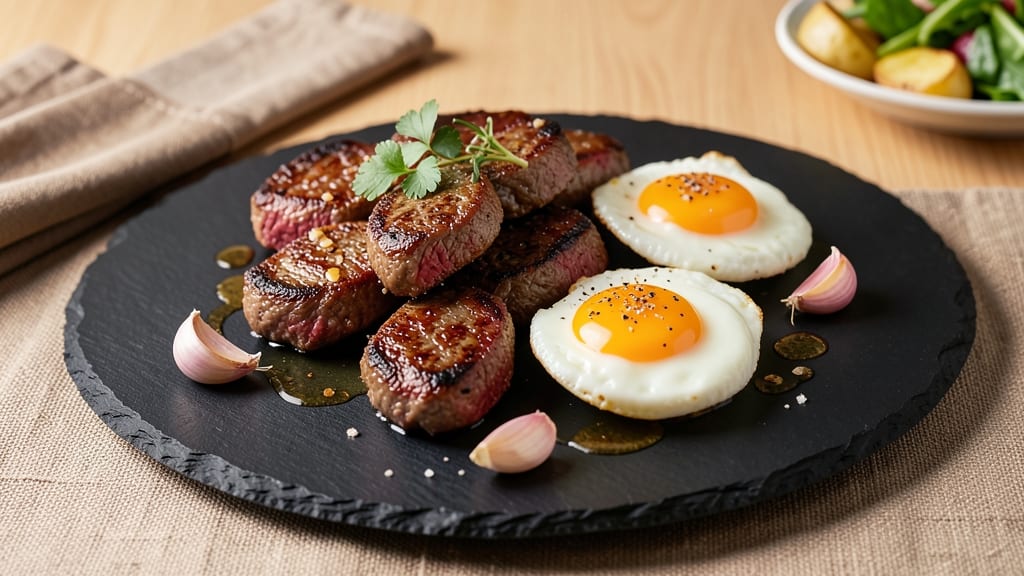
This steak tips and eggs recipe transforms breakfast into a restaurant-worthy meal with just two perfect components. 🔥 The secret lies in high-heat searing for steak that stays juicy with a caramelized crust, paired with eggs cooked to your ideal doneness—whether that means runny yolks or fluffy scrambles.
I've perfected this dish for weekend brunches when you want something hearty yet effortless. What makes this recipe special is the balance of textures and flavors: tender steak meets silky eggs, with optional sides like crispy hash browns or buttery toast to round out the plate.
The key technique is cooking the steak first while the eggs warm in the pan, so everything finishes at the same time without overcrowding. It's the kind of meal that feels indulgent but comes together in under 20 minutes.
By the time you plate this dish, you'll have perfectly seasoned steak with a deep pink center and eggs that shine with golden edges and creamy interiors. The aroma alone—smoky steak, sizzling butter, and warm eggs—will have everyone at the table asking for seconds.
This is breakfast elevated to dinner-level satisfaction. Serve with a simple arugula salad or roasted potatoes to complete the plate.
The beauty of this recipe is its flexibility—adjust the sides based on what you have on hand, and you'll always end up with a meal that feels special without requiring hours in the kitchen. Let's get cooking!
Ingredients for steak tips and eggs
Here's what you need to make restaurant-quality steak tips and eggs at home.
| Ingredient | Amount | Notes |
|---|---|---|
| Steak Tips 🥩 | 1 lb | Center-cut, 1-inch thick |
| Large Eggs 🥚 | 4 whole | Fresh, room temperature |
| Unsalted Butter 🧈 | 4 tbsp | Cold, cubed for searing |
| Kosher Salt 🧂 | 1 ½ tsp | Diamond Crystal preferred |
| Freshly Ground Black Pepper 🌶️ | ½ tsp | Cracked from peppercorn |
| Garlic Cloves 🧄 | 4 cloves | Minced, for steak seasoning |
| Extra-Virgin Olive Oil 🫒 | 1 tbsp | For egg cooking |
| Fresh Thyme Leaves 🌿 | ¼ tsp | Chopped, for garnish |
| Fresh Parsley 🌿 | ¼ cup | Chopped, for garnish |
| Flour 🌾 | 2 tbsp | All-purpose, for dredging |
| Lemon Wedges 🍋 | 2 whole | For serving |
| Hot Sauce 🌶️ | 1 tbsp | Optional, for serving |
The steak tips make or break this dish. Center-cut is key—it stays juicy while searing. I grab mine from Whole Foods or the butcher counter at Kroger—they usually have them pre-cut and ready. Look for pieces that are about 1-inch thick; thinner cuts will overcook before the center gets tender. If you can't find steak tips, sirloin tips or flank steak work in a pinch. The eggs should be fresh—room temperature makes all the difference for that perfect runny yolk. I always buy the organic, free-range kind from Trader Joe's; they're worth the extra few bucks for this dish.
No fresh thyme or parsley? Dried works at half the amount, but fresh is ideal for that bright pop of color. The flour is just for dredging—all-purpose works fine, but if you've got cornstarch, mix it half-and-half for extra crispiness. Short on butter? Olive oil or ghee will do, but butter gives that rich, caramelized flavor. For the eggs, if you're not a fan of runny yolks, cook them to soft or medium—just pull them out when the whites are set but the centers still jiggle a little. And trust me, lemon wedges on the side are non-negotiable—they cut through the richness perfectly.
The steak tips and eggs reheat beautifully—just pop them in a 350°F oven for 5-7 minutes. Store leftovers in the fridge for up to 3 days, but honestly, they're best fresh. If you're prepping ahead, cook the steak first and store it separately; warm the eggs in the pan right before serving. The butter and garlic can be prepped the night before and kept in the fridge. Garnish with fresh herbs right before serving to keep everything vibrant. This dish is all about that sizzle and aroma, so don't skip the fresh lemon and hot sauce when plating—it ties everything together.
Why You'll Love This Recipe
- Two-Ingredient Powerhouse: I swear by this combo—steak tips and eggs are already a match made in heaven, and adding just butter, salt, and pepper turns it into something ridiculously good. No fancy marinades, no complicated steps. Just sear, fry, and serve.
- Crispy-Creamy Magic: That first bite—crispy steak edges with a perfectly runny yolk? It’s the kind of flavor that makes you pause mid-fork. The butter bastes the steak while the eggs cook, so every mouthful is rich, salty, and satisfying.
- Breakfast or Dinner Fix: Honestly, this isn’t just breakfast. Serve it with toast for a lazy morning or swap in roasted potatoes for a weeknight dinner. Even my picky teenage son grabs seconds—(yes, even on a Tuesday night).
- Budget Breakfast Win: Steak tips are cheaper than you think, and eggs? The most affordable protein out there. I stretch a pound of steak across three meals, and the leftovers reheat like a dream. Frugal but feels fancy.
Step-by-step instructions for steak tips and eggs
Here's how to create perfectly seared steak tips with silky runny yolks—every bite is a flavor explosion.
🔥 Step 1: Season and Sear the Steak Tips
Pat the 1 lb steak tips dry with paper towels—this ensures a perfect crust. In a small bowl, mix together 1.5 tsp kosher salt and 0.5 tsp freshly ground black pepper. Rub this generously over each steak tip, pressing the seasoning into the meat so it sticks.
Heat a large cast-iron skillet over medium-high heat and add 2 tbsp of the cubed unsalted butter. Once the butter starts foaming (about 1 minute), add the steak tips in a single layer. Let them sear undisturbed for 2-3 minutes until a deep golden-brown crust forms. This is your signal to flip—press gently with a spatula to check for easy release.
🍳 Step 2: Cook the Garlic Butter and Dredge the Steaks
While the steaks cook, push them to one side of the skillet and add the remaining 2 tbsp cubed butter along with the 4 minced garlic cloves. Let the garlic sizzle for 30 seconds until fragrant—don't let it burn, or it'll turn bitter. Sprinkle the 2 tbsp flour over the garlic butter and stir vigorously for 1 minute until the mixture turns into a thick, glossy paste.
Remove the steak tips from the skillet and set them aside on a warm plate. Pour the garlic butter mixture over the steaks, coating them evenly. This creates a luscious, herby crust that'll keep the meat juicy. Return the steaks to the skillet for 1-2 minutes to let them absorb the flavorful coating.
👨🍳 Step 3: Fry the Perfect Runny Yolks
Crack the 4 whole large eggs into a small bowl and whisk them lightly—just enough to combine the yolks and whites. Heat 1 tbsp extra-virgin olive oil in a separate nonstick skillet over medium-low heat. Once the oil shimmers, add the eggs one at a time, spacing them about 1 inch apart. Cook for 2-3 minutes until the whites are set but the yolks remain liquid and slightly wobbly.
Here's the trick: the yolks should still jiggle gently when you shake the skillet. If they start to firm up too quickly, reduce the heat slightly. Remove the eggs and place them on a warm plate, keeping them covered until ready to serve.
🥘 Step 4: Assemble and Garnish
Plate the steak tips alongside the fried eggs. Drizzle any remaining garlic butter from the skillet over the top, then sprinkle with 0.25 cup chopped fresh parsley and 0.25 tsp chopped fresh thyme leaves for a pop of color and freshness. Serve immediately with the 2 lemon wedges on the side—squeeze a little over the eggs to brighten the flavors.
For an extra kick, add a dollop of 1 tbsp hot sauce to the plate. The contrast of tender, buttery steak tips with the creamy, runny yolks is pure indulgence. Every bite delivers that perfect balance of savory, rich, and fresh.
Pro Tips For Making Steak Tips And Eggs
- CRANK THE HEAT HIGH: Steak tips need that initial sear to lock in flavor, so don’t be shy—get your pan screaming hot before adding the meat. I used to hover around medium heat and ended up with sad, gray steak; now I wait until the butter sizzles like popcorn before laying down the steak tips.
- SALT THE STEAK TWICE: Kosher salt the steak tips generously before cooking, then again right after searing while they rest. The first layer seasons the surface, the second melts into the crust—this makes a real difference when you’re working with lean cuts that can dry out.
- DON’T OVERCROWD THE PAN: Cook the steak tips in batches if needed—piling them on will steam them instead of sear them. I learned this the hard way when my first batch came out greasy and undercooked; now I space them out like sardines on a tin.
- USE COLD BUTTER FOR EGGS: Chill the unsalted butter in the fridge for 10 minutes before cooking the eggs—it’ll melt slower and create a richer, more stable foam instead of burning instantly. Sounds weird, but it works: your eggs will have that golden, buttery finish without turning into scrambled bits.
Essential equipment for perfect results
Cast-Iron Skillet
A 10-12 inch cast-iron skillet is your secret weapon for this recipe—it retains heat beautifully and creates that perfect crust on the steak tips. I swear by my Lodge Pre-Seasoned Cast Iron skillet because it's pre-seasoned and ready to go right out of the box.
If you don't have cast iron, a heavy stainless steel skillet will work, but it won't hold heat as well. For the eggs, use a nonstick skillet—I like my All-Clad Stainless Steel with Nonstick Interior—to prevent sticking without needing excessive butter. 🔥
High-Quality Butter
Don't skimp on the butter—unsalted butter is a must for both searing the steak and making the garlic butter sauce. I prefer Plugrá European-Style Cultured Butter because it has a rich, complex flavor that stands up to the steak.
Keep it cold and cubed when searing the steak to prevent it from melting too quickly. For the eggs, use European-style butter for extra richness, or grass-fed butter if you prefer a milder taste. Store your butter in the fridge until ready to use.
Digital Meat Thermometer
A digital instant-read thermometer like the ThermoWorks ThermoPop ensures your steak tips are cooked to perfection without overdoing it. I aim for an internal temperature of 130-135°F for medium-rare steak tips—this guarantees a juicy center while still giving you a great sear.
For the eggs, a thermometer isn't necessary, but it's handy for checking the steak's doneness while you cook. This tool is a game-changer for anyone who struggles with guessing doneness. 🌡️
Tongs and Spatulas
Invest in a good pair of heat-resistant tongs (I use OXO Good Grips) to handle the steak tips without piercing them, which can cause juices to leak out. A flexible silicone spatula comes in handy for flipping the eggs and scraping up any leftover garlic butter from the skillet.
Avoid metal utensils when dealing with nonstick surfaces—they can scratch and ruin the coating. Keep your tools nearby while cooking for smooth, efficient prep.
Mixing Bowl and Whisk
A small stainless steel mixing bowl is perfect for whisking the eggs before cooking. I like the Nordic Ware Stoneware Bowl because it's durable and easy to clean.
Pair it with a balloon whisk (like the OXO Good Grips) to lightly combine the eggs without creating too many bubbles, which can make them spread out too much in the pan.
For seasoning the steak, a small bowl is also useful for mixing the salt, pepper, and minced garlic.
Plating Tools
For plating, I recommend a pair of long-handled tongs (like Mercer Culinary Genius) to transfer the steak tips and eggs to the plate without disturbing them. A small offset spatula helps with any remaining garlic butter or garnishes.
Don't forget a small plate or bowl for holding the lemon wedges and hot sauce on the side. Presentation matters—even if it's just for you! A wooden serving board or ceramic plate adds a rustic touch that elevates the dish. ✨
Nutrition facts
Frequently asked questions
Can I make this recipe without a cast-iron skillet?
A heavy stainless steel skillet works in a pinch, but cast iron is ideal for that perfect crust. If you're using stainless steel, increase the heat slightly and let the steak sear for an extra 30 seconds per side to compensate. For the eggs, any nonstick skillet will work—just make sure it's properly heated before adding oil. The texture won't be identical, but you'll still get great results!
How do I adjust this for medium or well-done steak?
For medium steak, aim for an internal temperature of 140-145°F—this takes about 3-4 minutes per side total. For well-done, cook to 150°F or until the center is firm to the touch. The key is to let the steak rest for 5 minutes after cooking to redistribute juices, even if it's well-done. Serve with extra garlic butter to compensate for any dryness!
What's the best way to reheat leftovers?
Reheat steak tips in a 350°F oven for 5-7 minutes on a wire rack over a baking sheet to prevent sogginess. For eggs, warm them gently in the same oven for 3-4 minutes—they won't be as runny but will still taste great. Never microwave steak tips, as this makes them tough. Store components separately in airtight containers for up to 3 days.
Can I substitute steak tips with another cut?
Sirloin tips, flank steak, or even ribeye steak (cut into serving pieces) work well. For flank steak, slice against the grain after cooking for maximum tenderness. Use the same thickness (1-inch) and cooking times. Thin cuts like filet mignon will overcook—avoid those. The key is maintaining that 130-135°F internal temperature for juicy results.
Why did my eggs turn out rubbery?
Overcooking is the most common cause—eggs are done when whites are set but yolks still jiggle slightly. Use medium-low heat and cook for 2-3 minutes max. Another culprit is cold eggs—let them sit at room temperature for 30 minutes before cooking. For extra insurance, whisk them lightly (just combine yolks and whites) rather than vigorously, which creates too many bubbles.