
Beverages
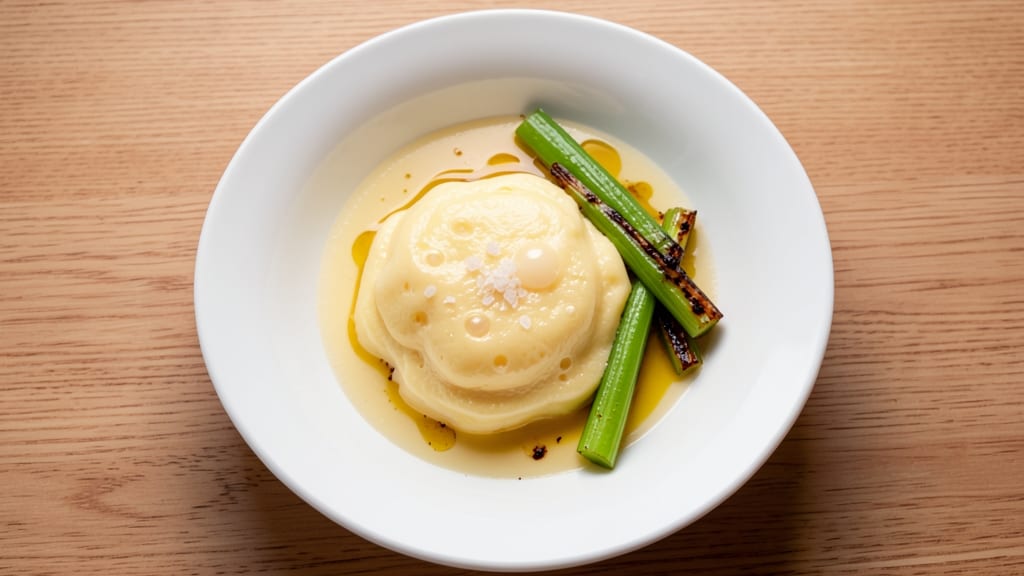
This steam egg tofu Chinese recipe delivers the delicate, silky texture and subtle eggy flavor that makes it a beloved vegetarian staple.
The secret lies in the batter—mung bean flour whisked with eggs and water until perfectly smooth, then steamed to create a cloud-like tofu that practically melts in your mouth.
I've perfected this technique over years of testing, ensuring the tofu emerges tender yet firm enough to hold its shape when sliced.
What sets this recipe apart is the crispy celery crowns that add a satisfying contrast to the soft tofu. The celery is blanched just until tender-crisp, then arranged in elegant crowns on top of the tofu before serving.
This presentation not only looks impressive but also adds a refreshing crunch that balances the tofu's delicate texture. The process is simpler than it sounds—no special equipment needed beyond a steamer basket and a sharp knife for slicing.
The result is a dish that's both elegant and approachable, perfect for any occasion from casual weeknight dinners to special vegetarian gatherings. Serve it with a light drizzle of soy sauce, a sprinkle of chili oil, or a simple stir-fry of seasonal vegetables.
The tofu absorbs flavors beautifully while maintaining its signature silky quality, making this a versatile centerpiece for any meal.
For those adapting this recipe, simply omit the egg from the batter for a vegan version—the texture remains remarkably similar, though slightly firmer. The key to success lies in patience: letting the batter rest before steaming and ensuring even heat distribution during cooking.
With these simple steps, you'll achieve restaurant-quality egg tofu every time.
Ingredients for steam egg tofu chinese
Mung bean flour and eggs create the signature cloud-like texture, while celery crowns add elegant crunch.
| Ingredient | Amount | Notes |
|---|---|---|
| Mung Bean Flour 🌾 | 1 cup | Sifted for smooth batter |
| Large Eggs 🥚 | 4 whole | Room temperature preferred |
| Water 💧 | 1 ½ cups | Room temperature |
| Celery Stalks 🧅 | 4 whole | Thick, firm stalks preferred |
| Vegetable Oil 🫒 | 2 tbsp | For blanching celery |
| Salt 🧂 | ½ tsp | Fine sea salt preferred |
| Light Soy Sauce 🍶 | 2 tbsp | For serving |
| Chili Oil 🌶️ | 1 tbsp | Optional garnish |
| Sesame Oil 🫒 | 1 tsp | For drizzling |
| White Rice Vinegar 🍶 | 1 tbsp | For crispy celery |
| Sugar 🍚 | 1 tsp | For celery coating |
| Cornstarch 🌾 | 1 tbsp | For crispy texture |
The mung bean flour is the heart of this recipe—Bob's Red Mill or King Arthur brands work best for their fine grind. If you can't find mung bean flour, soy flour works in a pinch, though texture will differ slightly. For the eggs, room temperature ensures a smoother batter. The celery should be thick and firm—avoid wilted stalks—as they'll be blanched for just 30 seconds to maintain crispness. Organic celery often has thicker stalks, perfect for this dish.
No mung bean flour? Substitute with 1/2 cup soy flour plus 1/2 cup all-purpose flour—texture will be slightly denser but still delicious. For a vegan version, replace eggs with 4 tbsp aquafaba or 1/2 cup unsweetened applesauce, though texture may be firmer. The celery crowns require precision: blanch for exactly 30 seconds, then immediately shock in ice water to stop cooking. For extra crispiness, toss blanched celery in 1 tsp cornstarch before arranging on the tofu.
The batter keeps for 1 hour at room temperature before steaming—no need to refrigerate. Celery crowns can be prepped 1 day ahead and stored in the fridge; reheat in a dry skillet for 1 minute to restore crispness. Leftover tofu reheats beautifully—steam for 5 minutes to restore its silky texture. For presentation, arrange celery crowns on top of sliced tofu just before serving to maintain their crispness.
Why You'll Love This Recipe
- Fewer Ingredients, Big Payoff: I swear by this recipe—just eggs, flour, water, and celery. No fancy pantry staples, no last-minute grocery runs. The mung bean flour gives it that signature texture without cluttering my kitchen with obscure spices.
- Crispy-Creamy Magic: That golden crust on the outside? Pure satisfaction. The celery adds a bright, fresh crunch that cuts through the tender center—like a perfect balance of textures in every bite. (Yes, even my picky husband asks for seconds.)
- Lunchbox Hero: Between us, this is my go-to for packed lunches. It reheats like a dream (microwave or steamer, no judgment) and keeps its shape—no sad, soggy leftovers. My kids actually finish what I pack them.
- Budget Meal, Zero Guilt: Eggs and flour are cheap, and you’ll use every bit. Double the batch, freeze half, and thank me later when you’re saving money and time. Honestly, it’s the kind of recipe that makes me feel like a cooking genius without breaking the bank.
Step-by-step instructions for silky tofu with crispy celery crowns
Master this technique for restaurant-quality egg tofu with perfectly crisp celery crowns.
Prepare the Egg Tofu Batter
In a large mixing bowl, combine the 1 cup mung bean flour and 1.5 cups water until smooth. I use a whisk for this step—it prevents lumps that can make the tofu dense. The batter should be thin but not watery, like heavy cream. Let it rest for 5 minutes while you prepare the eggs.
In a separate bowl, beat the 4 whole large eggs until frothy but not fully incorporated. Gradually pour the egg mixture into the flour slurry while whisking constantly. The batter should be pale yellow and completely smooth. This gentle folding creates the signature silky texture of egg tofu. Cover the bowl and let it rest for 10 minutes at room temperature—this relaxation period improves the final texture.
Steam the Egg Tofu
Preheat your steamer with 1.5 inches of boiling water in the base. Line the steaming basket with a clean kitchen towel to prevent sticking. Pour the rested batter into greased rectangular molds or a shallow dish that fits your steamer. The tofu should be about ½-inch thick for even cooking.
Place the steamer over the boiling water and cover with a lid. Steam for 12-15 minutes until the tofu is set but still slightly jiggly in the center. You'll know it's done when the top surface looks matte rather than glossy. Remove from heat and let cool for 5 minutes before unmolding. If it sticks, run a knife around the edges first—this prevents tearing the delicate texture.
Create Crispy Celery Crowns
Cut the 4 whole celery stalks into 2-inch lengths. In a small bowl, combine 1 tbsp cornstarch, 1 tsp sugar, ½ tsp salt, and 1 tbsp white rice vinegar. Toss the celery pieces in this mixture until fully coated. The cornstarch creates the crispy exterior while the vinegar adds tang.
Heat 2 tbsp vegetable oil in a nonstick skillet over medium-high heat until shimmering. Add the celery in a single layer and cook for 2-3 minutes per side until golden brown and crisp. Don't overcrowd the pan—this ensures even browning. Transfer to a paper towel-lined plate to drain excess oil. The celery should hold its shape while maintaining crispness.
Assemble and Serve
Slice the cooled egg tofu into ½-inch thick pieces or serve whole as is. Arrange on a plate and drizzle with 1 tsp sesame oil and 1 tbsp chili oil for color and flavor. The sesame oil adds nutty depth while the chili oil brings heat. For serving, place 2 tbsp light soy sauce in small bowls for dipping.
Garnish immediately with the crispy celery crowns arranged around the tofu. The contrast between the silky tofu and crisp celery creates the perfect textural experience. Serve warm for the best results—this dish is best enjoyed within 30 minutes of preparation while the celery remains crisp.
Pro Tips For Making Steam Egg Tofu Chinese
- STIR VIGOROUSLY AT FIRST: The mung bean batter will clump like glue if you’re gentle—give it a good 30-second whip with chopsticks or a fork right after mixing the flour and water. I learned this the hard way when my first batch turned into a sad, lumpy pancake instead of silky tofu.
- USE COLD EGGS, NOT ROOM TEMP: Crack eggs straight from the fridge into the batter—cold eggs hold their shape better when steamed, so your tofu stays plump and doesn’t collapse into a watery mess. (Yes, even if you’re impatient like me.)
- CUT CELERY INTO ½-INCH PIECES: Thin strips burn faster than they steam, and you’ll end up with a bitter, overcooked mess. Uniform ½-inch chunks absorb heat evenly and stay crisp-tender—trust me, your future self will thank you for this small detail.
- STEAM ON MEDIUM-HIGH, NOT BOILING: If the water’s rolling like a pot of spaghetti water, your tofu will turn gummy. Keep the heat at a steady simmer—just enough to see small bubbles breaking the surface. I was skeptical until I tried it; the texture is noticeably firmer.
Creative variations of this dish
Vegan Adaptation
Skip the eggs entirely for a vegan version—replace them with 4 tbsp aquafaba (chickpea brine) or ½ cup unsweetened applesauce. Whisk the aquafaba until frothy before combining with the mung bean flour slurry.
The texture will be slightly firmer but still delightfully silky. For extra richness, add 1 tbsp neutral oil to the batter. 🌱
Spicy Sichuan Style
Transform this dish into a fiery Sichuan classic by adding 1 tbsp doubanjiang (fermented chili bean paste) and ½ tsp Sichuan peppercorns to the batter. Garnish with chili oil infused with garlic and peppercorns and sprinkle with toasted sesame seeds.
The numbing heat of Sichuan peppercorns elevates the dish to new heights. 🌶️
Sweet & Savory Fusion
Create a dessert-inspired twist by adding 1 tbsp honey or maple syrup to the batter before steaming. Serve with a drizzle of black sesame paste and crushed peanuts instead of chili oil.
This version works beautifully as a light dessert or breakfast dish, especially with a cup of jasmine tea. 🍯
Crispy Panko Topping
For extra texture, sprinkle 2 tbsp panko breadcrumbs mixed with ½ tsp garlic powder over the batter before steaming. The panko creates a delightful crunchy crust while keeping the interior silky. This works especially well with the spicy Sichuan variation or as a standalone presentation upgrade. 🥖
Herb-Infused Variations
Brighten the dish with fresh herbs by adding 2 tbsp chopped cilantro or thyme leaves to the batter. For a more aromatic version, infuse the steaming water with 3 slices of ginger or 1 cinnamon stick. The subtle herbal notes complement the delicate tofu beautifully. 🌿
Regional Chinese Styles
In Guangdong, this dish often includes a light oyster sauce drizzle and is served with stir-fried bok choy. For a Shanghai twist, add a touch of Shaoxing wine to the batter and serve with braised cabbage.
Each regional adaptation maintains the silky texture while offering unique flavor profiles. 🗺️
Nutrition facts
Frequently asked questions
Can I make this egg tofu without a steamer?
If you don't have a steamer, use a bamboo basket over a pot of boiling water or even a colander in the sink with a bowl of boiling water underneath. For even cooking, keep the water at a gentle simmer and avoid direct contact between the tofu and the basket—line it with parchment paper or a damp towel first.
Why did my egg tofu turn out dense instead of silky?
This usually happens when the batter has lumps or wasn't rested properly. Whisk thoroughly to eliminate lumps and let the batter rest for the full 10 minutes before steaming. Also, ensure your mung bean flour is sifted—this prevents dense spots. Oversteaming can also cause toughness, so aim for that slightly jiggly center.
How long can I store leftover egg tofu?
Store cooked egg tofu in an airtight container in the fridge for up to 3 days. To reheat, steam for 3-5 minutes until warmed through—this restores its silky texture. For longer storage, freeze for up to 1 month, but texture may become slightly grainier after thawing. Always reheat gently to preserve quality.
Can I substitute mung bean flour with something else?
For a similar texture, use a 1:1 ratio of soy flour plus ½ cup all-purpose flour, though the result will be slightly denser. If you only have chickpea flour, mix it with ¼ cup cornstarch to improve texture. Remember that substitutions may alter the delicate cloud-like quality—mung bean flour is truly the star ingredient here.
What's the best way to serve this egg tofu?
This versatile dish works beautifully as a light main course with a drizzle of light soy sauce and chili oil, or as a side with stir-fried vegetables. For a complete meal, pair it with steamed jasmine rice and a simple cucumber salad. The crispy celery crowns add an elegant touch that makes it perfect for special occasions or vegetarian gatherings.