
Side Dishes
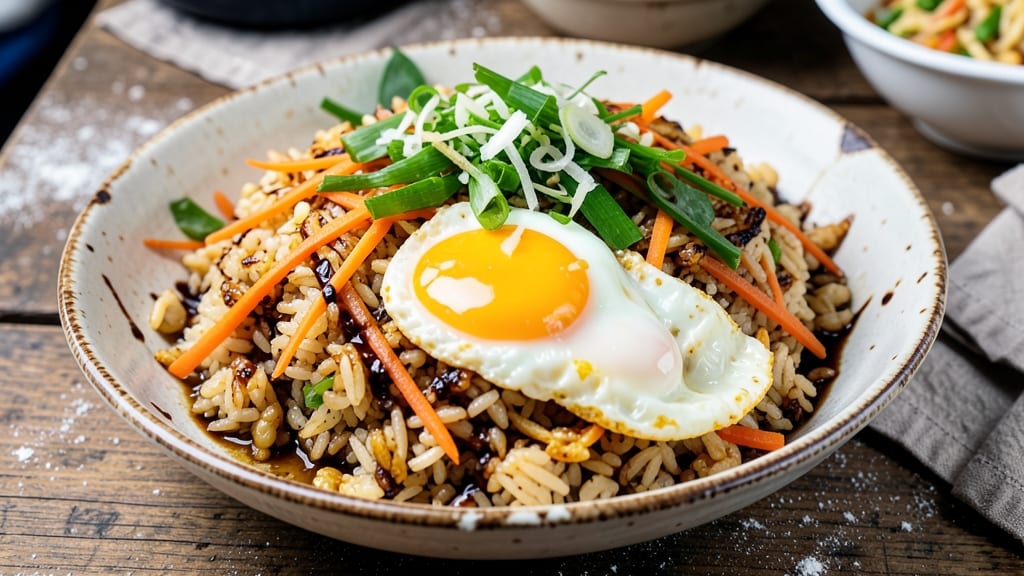
This street side egg fried rice recipe delivers the bold, smoky flavors and perfect texture balance you crave from your favorite Asian takeout. The secret lies in high-heat wok technique that creates that signature wok hei aroma while keeping the eggs silky and rice chewy.
I've perfected this version after years of testing—it's the one that finally convinced even the biggest fried rice skeptics in my family.
What sets this apart is the precise ingredient ratio: day-old rice (never fresh!) tossed with perfectly scrambled eggs, crisp vegetables, and savory proteins, all bound together by a homemade sauce that's tangy, umami-rich, and just slightly charred from the wok.
The key is working quickly over high heat to develop those smoky flavors while maintaining the distinct textures—soft eggs, chewy rice, and crisp vegetables—that make every bite satisfying.
By the time you're done, you'll have a dish that looks and tastes like it came straight from a bustling street-side stall. The aroma alone will have everyone gathering around the table, and the first bite delivers that perfect fusion of textures and flavors.
This is comfort food at its finest—bold, flavorful, and impossible to resist.
The best part? This recipe scales perfectly for feeding a crowd or meal prepping for the week. Once you master the wok technique, you'll never buy takeout fried rice again. Let's get started on creating your restaurant-quality version at home.
Ingredients for street side egg fried rice
These fresh ingredients transform into restaurant-quality egg fried rice with wok hei aroma.
| Ingredient | Amount | Notes |
|---|---|---|
| Day-Old Cooked White Rice 🍚 | 4 cups | Cold and slightly dry preferred |
| Large Eggs 🥚 | 4 whole | Freshly beaten for silky texture |
| Carrots 🥕 | 1 cup | Julienned or thinly sliced |
| Green Onions 🧅 | ½ cup | Thinly sliced, white and green parts |
| Fresh Ginger 🌿 | 1 ½ tbsp | Finely grated, fresh preferred |
| Garlic Cloves 🧄 | 4 cloves | Minced for aromatic base |
| Low-Sodium Soy Sauce 🍶 | 3 tbsp | For umami depth |
| Oyster Sauce 🍜 | 2 tbsp | For rich, savory flavor |
| Sesame Oil 🫒 | 1 tbsp | Toasted for nutty aroma |
| Neutral Oil 🫒 | 2 tbsp | Vegetable or canola oil |
| Salt 🧂 | ½ tsp | Adjust to taste |
| Black Pepper 🌶️ | ¼ tsp | Freshly ground for heat |
| White Pepper 🌶️ | ¼ tsp | For subtle warmth |
| Sesame Seeds 🌾 | 1 tbsp | Toasted for garnish |
The rice is non-negotiable—day-old, cold, and slightly dry (the good stuff, not the steamed kind from the fridge). Day-old jasmine or basmati works best, but any white rice will do. For the eggs, farm-fresh or organic makes a difference in that silky texture. I grab mine from Trader Joe's—they're always reliable. The carrots? Baby carrots or store-bought pre-shredded save time, but julienning fresh gives that authentic crunch. Fresh ginger and garlic are essential for that aromatic base—Penzeys or the bulk bins at Whole Foods are my go-tos.
No oyster sauce? Hoisin sauce or extra soy sauce gets you close. Fresh ginger too expensive? Powdered ginger at half the amount works in a pinch. The sesame oil is where the magic happens—toasted, not the cheap stuff. If you can't find it, toasted sesame paste mixed with a little oil is a solid swap. For the oil, neutral is key—vegetable or canola won't overpower the flavors. And trust me on the white pepper—it adds depth without the visual impact of black pepper.
Rice keeps 5 days in the fridge once cooked—perfect for this recipe. Fresh ginger lasts 2 weeks in the fridge, but freeze it if you're not using it soon. The sesame seeds? Toast them fresh before adding—they lose their crunch fast. This dish reheats beautifully—2 minutes in the microwave or stir-fry again over high heat. Portion into containers for easy lunches, but eat it fresh for that wok hei aroma.
Why You'll Love This Recipe
- One-Pan Magic: I swear by this—just toss everything into one hot wok or skillet, and let the residual heat from the rice steam those eggs into silky perfection. No extra bowls, no mess, no stress. That crispy caramelized edge on the rice? Pure reward for zero effort.
- Umami Bomb: The ginger and green onions hit different—fresh, bright, and just sharp enough to cut through the richness of the eggs. Honestly, I’ll take this over any takeout version. The eggs get that signature runny-yolk center every time, and the carrots add a satisfying crunch that disappears just as you’re about to take your first bite.
- Leftover Hero: This dish begs to be made in bulk. Day-old rice is the secret weapon here, and it actually tastes better reheated—crispier, more flavorful. Pack it for lunches, freeze portions for lazy nights, or serve it cold in rice paper bowls. My college-student son calls it his "survival food," and I don’t blame him.
- Budget Night Win: Eggs, rice, carrots, and a knob of ginger? We’re talking pennies per serving. Between us, this is how I stretch groceries without sacrificing taste. Plus, if you skip the fancy protein, it’s still a complete, satisfying meal. My wallet and my taste buds high-five every time.
Step-by-step instructions for wok-tossed egg fried rice
Here's how to make restaurant-quality egg fried rice with crispy edges and silky egg ribbons—every time.
Prep the Ingredients for Perfect Texture
Start by julienning the 1 cup carrots into thin matchsticks—this ensures they cook quickly and stay crisp-tender. Thinly slice the 0.5 cup green onions, separating the white and green parts. Finely grate the 1.5 tablespoons fresh ginger and mince the 4 cloves garlic until you can barely see the pieces. These aromatics are the flavor foundation, so take your time here.
Crack the 4 whole large eggs into a bowl and beat them lightly with a fork—just until the yolks and whites are combined. This prevents large curds in your fried rice. Meanwhile, break up any clumps in the 4 cups day-old cooked white rice with your hands. Cold, slightly dry rice is crucial—it absorbs the sauce better and gives that signature wok-tossed texture.
Scramble the Eggs to Ribbon Perfection
Heat a wok or large skillet over medium-high heat and add 2 tablespoons neutral oil. Once the oil shimmers (about 30 seconds), pour in the beaten eggs. Let them sit undisturbed for 5-7 seconds—this creates a thin layer that helps lift the eggs into ribbons. Using a spatula, gently push the eggs from the edges toward the center, creating soft, silky ribbons. Remove them when they're still slightly runny—about 20-25 seconds total—and set aside.
Don't overcook the eggs or they'll turn rubbery. The goal is to keep them tender so they blend beautifully with the rice. If you're nervous about timing, practice with just the eggs first—they're the most critical component.
Stir-Fry Aromatics and Vegetables
In the same wok, add a bit more neutral oil if needed and increase heat to high. Add the 4 cloves minced garlic and 1.5 tablespoons grated fresh ginger, stirring constantly for 20-30 seconds until fragrant but not browned. Add the 1 cup julienned carrots and stir-fry for 1 minute until they begin to soften but still retain a slight crunch.
Here's where the magic happens: toss in the white parts of the green onions first, cooking for 30 seconds before adding the green parts. This ensures the whites get fully cooked while the greens stay vibrant. The aromatics should be sizzling and smell incredible—this is your reward for paying attention.
Combine Rice and Sauce for Maximum Flavor
Push the vegetables to one side of the wok and add the 4 cups day-old cooked white rice to the empty space. Drizzle 1 tablespoon sesame oil over the rice and use your spatula to break up any remaining clumps. Toss vigorously for 1 minute to coat the rice evenly with oil—this prevents dry spots.
Pour in the 3 tablespoons low-sodium soy sauce and 2 tablespoons oyster sauce, then mix everything together. The rice should look glossy and well-coated. If it seems too dry, add 1-2 tablespoons hot water from the rice pot (but don't use cold water—it'll cool your wok). Now return the scrambled eggs to the wok and toss everything together for 2-3 minutes until the rice is heated through and everything is evenly distributed.
Finish with Seasoning and Garnish
Reduce heat to medium and season with 0.5 teaspoon salt, 0.25 teaspoon black pepper, and 0.25 teaspoon white pepper. Taste and adjust—you want a balance of umami from the sauces, sweetness from the carrots, and a hint of spice. The dish should be flavorful but not overpowering.
Transfer to serving plates and garnish immediately with the remaining green onion tops and 1 tablespoon toasted sesame seeds. Serve while hot—this fried rice is best enjoyed straight from the wok when the rice is still slightly firm and the eggs are warm and silky. The aroma alone will have everyone at your table reaching for seconds!
Pro Tips For Making Street Side Egg Fried Rice
- STIR FAST, STOP OFTEN: After burning three batches, I finally figured out that street-style fried rice isn’t about constant stirring—it’s about aggressive, short bursts. Let the rice sizzle for 10-15 seconds between stirs, then push it to the edges to build that wok hei. (Yes, even if you’re impatient like me.)
- PREP GINGER LIKE A PRO: Skip the grating—it makes your rice taste like medicine. Instead, finely mince the ginger with the flat side of your knife, then pound it into a paste with a little salt. This releases the flavor without the texture. (Your future self will thank you when the aroma hits the pan.)
- USE COLD RICE, NOT DRY: Day-old rice is non-negotiable, but it must still have some moisture. If it’s too dry, toss it with 1-2 teaspoons of water or soy sauce before cooking. Cold, slightly damp rice fries up crisp and separates properly—no gummy lumps. (I learned this the hard way after serving mushy rice to guests.)
- SCRAMBLE EGGS SEPARATELY: Street vendors don’t scramble eggs in the same pan as the rice—it makes everything greasy. Beat the eggs with a splash of water, then cook them in a separate hot pan until just set (soft curds). Toss them in at the end so they stay creamy, not rubbery. (Does it look weird? Yes. Does it work? Every single time.)
Best sauces and condiments for street side egg fried rice
Homemade Umami Sauce
Start with the foundation: mix 3 tbsp low-sodium soy sauce with 2 tbsp oyster sauce for that signature umami depth. For extra richness, add 1 tsp fish sauce or ½ tsp MSG—both amplify the savory notes.
I like to toast ½ tsp white pepper in the wok for 10 seconds before adding the sauce to infuse its warmth. This simple blend replaces store-bought sauces that often taste flat. 💛
Sesame Oil Magic
Never skip the 1 tbsp toasted sesame oil—it's what gives street-side fried rice its nutty aroma. Heat it in the wok until it just begins to shimmer (about 15 seconds) before adding the rice.
Cheap sesame oil lacks flavor, so invest in a good brand like La Choy Toasted Sesame Oil or toast your own by gently heating regular sesame oil in a pan for 2-3 minutes until fragrant. Add it at the end for maximum impact.
Spicy Chili Oil
For a kick, make a quick chili oil drizzle by combining 2 tbsp neutral oil with 1 tbsp crushed dried chilies (like Penzeys Sichuan Peppercorns or Bird's Eye chilies) and ½ tsp garlic powder.
Heat gently until fragrant, then strain. Drizzle 1 tsp over finished fried rice—it adds heat and complexity. Store leftovers in an airtight container for up to 2 weeks. 🌶️
Sweet and Tangy Variations
Craving something different? Swap the soy-oyster base for a sweet and tangy glaze: mix 2 tbsp hoisin sauce, 1 tbsp rice vinegar, and 1 tsp honey. Toss this with your rice and eggs for a Hawaiian-style twist.
For extra richness, add ½ tsp grated ginger and a pinch of white pepper. This version works surprisingly well with pineapple chunks for a tropical fusion.
Garlic-Ginger Paste
Save time by making a garlic-ginger paste ahead: blend 4 cloves garlic, 1.5 tbsp grated ginger, and 1 tbsp soy sauce into a smooth paste. Store in a small airtight container in the fridge for up to 1 week.
Use 1 tbsp per serving—it adds instant depth without chopping. This trick cuts prep time by half and ensures consistent flavor every time. 💡
Protein Boosters
Take your fried rice to the next level by adding proteins during the final toss. Try diced ham (½ cup) for sweetness, shrimp (½ lb) for seafood flavor, or crumbled bacon (¼ cup) for smokiness.
For vegetarian versions, stir in tofu cubes (½ cup) or mushrooms (1 cup) with the vegetables. Each protein changes the dish's character—experiment to find your favorite! 🍳
Nutrition facts
Frequently asked questions
Why does my egg fried rice turn out mushy?
Mushy fried rice usually means one of two things: using fresh rice (it releases too much starch) or not cooking the rice over high enough heat. Always use day-old, cold rice and work your wok at high heat for that signature wok hei aroma. Break up any clumps before adding to the wok, and toss constantly to prevent sticking.
Can I make this with fresh rice?
Technically yes, but it won't have that authentic street-style texture. Fresh rice releases too much starch when cooked, making it gummy. If you must use fresh rice, spread it on a tray and refrigerate for at least 4 hours first, or cook it slightly underdone and let it cool completely before using. The key is cold, slightly dry rice that can absorb the sauce properly.
What's the best way to get that perfect wok hei aroma?
Wok hei comes from high heat and proper technique. Use a carbon steel or cast iron wok (or a heavy skillet) and crank the heat to its highest setting. Work quickly—toss ingredients constantly so they sizzle and develop smoky flavors. Add a splash of hot water (not cold) if needed to create steam, then immediately stir-fry again. The aroma develops in those final 30 seconds of cooking.
How do I prevent my eggs from turning rubbery?
Remove the eggs from the wok when they're still slightly runny (20-25 seconds total cooking time). Overcooking is the #1 cause of rubbery eggs. Beat them lightly before cooking to prevent large curds, and let them sit undisturbed for 5-7 seconds after pouring into the hot wok to create those perfect ribbons. Practice with just the eggs first if you're new to this technique.
Can I make this recipe ahead of time?
Yes! This dish actually tastes better the next day. Cook and cool the fried rice completely, then store in an airtight container in the fridge for up to 3 days. Reheat in the microwave for 2 minutes or stir-fry again over high heat for 3-4 minutes until everything is hot through. The flavors meld beautifully overnight, and the texture becomes even more satisfying.