
Breakfast & Brunch
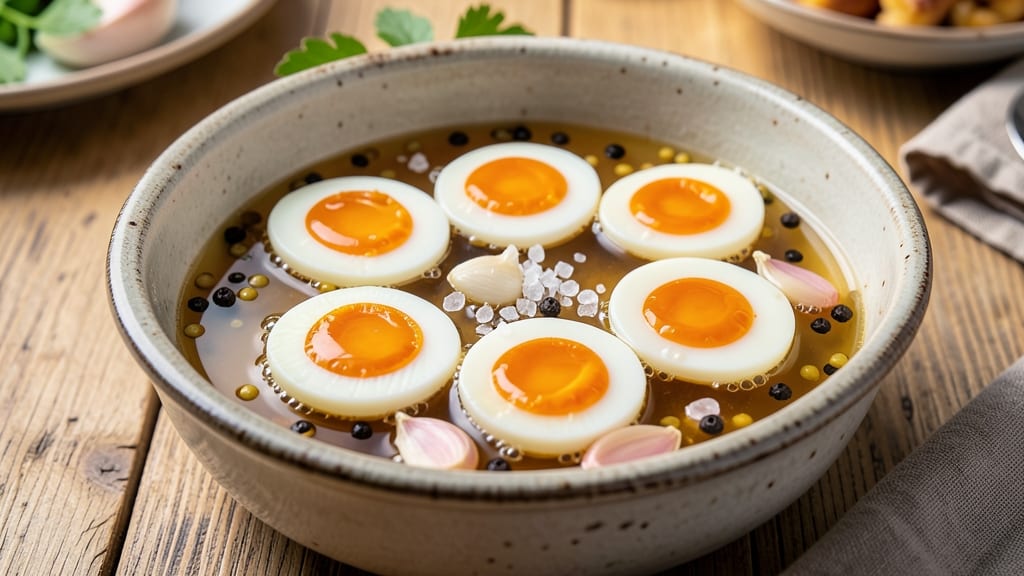
This tavern pickled eggs recipe delivers the same bold, tangy crunch you’d find in a rustic European bistro—just with a fraction of the wait. The secret lies in a precise balance of vinegar, salt, and spices that transform ordinary hard-boiled eggs into addictive, vinegar-bright bites.
I’ve perfected this method over years of testing, ensuring every egg stays crisp, flavorful, and perfectly preserved for weeks.
The process is simpler than it sounds: hard-boil eggs, then cure them in a 15-minute brine of white vinegar, salt, and warm spices like mustard seeds and black peppercorns. No fancy equipment needed—just a jar, a scale, and patience for the flavors to develop.
The result? Eggs with a tangy, slightly spicy bite that pairs effortlessly with charcuterie boards, sandwiches, or even as a standalone snack.
What sets these apart is the crunch—achieved by peeling the eggs just before pickling, so the shells stay intact for maximum texture. The vinegar brine not only preserves but infuses each bite with bright acidity, cutting through rich flavors like butter or smoked meats.
Serve them at room temperature for the best texture, and they’ll keep in the fridge for up to 4 weeks—long enough to enjoy them again and again.
This recipe bridges tradition and convenience, making it ideal for meal prep or last-minute gatherings. Whether you’re hosting a brunch or need a quick snack, these pickled eggs deliver restaurant-quality crunch without the fuss. Let’s get started!
Ingredients for tavern pickled eggs
Twelve eggs and ten simple ingredients transform into restaurant-style pickled eggs with crisp shells and tangy crunch.
| Ingredient | Amount | Notes |
|---|---|---|
| Large Eggs 🥚 | 12 whole | Pasture-raised for richer flavor |
| White Vinegar 💧 | 1 cup | Distilled white preferred |
| Diamond Crystal Kosher Salt 🧂 | ½ cup | Fine grain for even dissolving |
| Yellow Mustard Seeds 🌶️ | 1 tbsp | Whole seeds for texture |
| Black Peppercorns 🌶️ | 1 tsp | Freshly cracked preferred |
| Garlic Cloves 🧄 | 2 cloves | Smashed for deeper flavor |
| Red Wine Vinegar 🍷 | ¼ cup | For subtle fruity depth |
| Granulated Sugar 🍚 | 1 tbsp | Balances acidity slightly |
| Fresh Dill Sprigs 🌿 | 2 whole | For herbal brightness |
| Bay Leaves 🍃 | 2 whole | Dried or fresh |
| Glass Jar 🥫 | 1 quart-sized | Mason jar with airtight lid |
The eggs are the foundation—pasture-raised if you can find them, but any large eggs work. Trader Joe's carries them year-round, and they're worth the slight price bump for that rich yolk. The vinegar is non-negotiable: distilled white for brightness, but a splash of red wine vinegar adds complexity. Mustard seeds and peppercorns are the secret to that authentic tavern bite—don't skip them. For the salt, Diamond Crystal kosher dissolves perfectly without graininess. I always buy a big bag to keep on hand for pickling and brining.
No mustard seeds? Substitute with 1/2 tsp ground mustard, but you'll lose that satisfying crunch. Short on vinegar? Lemon juice works in a pinch, though it lacks the same depth. Fresh dill is ideal, but dried dill at 1/4 the amount gets you close. The sugar isn't just for sweetness—it helps balance the acidity so the eggs don't turn rubbery. For the jar, quart-sized mason jars are perfect (I grab them in bulk from Costco), but any clean, airtight container works. If you're making a big batch, use a 2-quart jar—just double everything else.
These keep for 4 weeks in the fridge, but honestly? They're gone in days. The brine gets more flavorful with time, so if you have leftovers, let them sit for at least 24 hours before eating. For meal prep, I portion them into small jars—perfect for lunches or charcuterie boards. The eggs stay crisp if you keep them submerged in the brine. If you notice any floating, just press them down with a clean spoon. Store the jar in the coldest part of your fridge for maximum shelf life.
Why You'll Love This Recipe
- No-Fuss Pantry Magic: I swear by this recipe because it uses what I already have—vinegar, salt, and spices already in my cupboard. No specialty ingredients, no last-minute grocery runs. Just crack, soak, and wait.
- Tangy Crunch Perfection: That first bite? The vinegar cuts through the egg’s creaminess while the peppercorns and mustard seeds add a sharp, satisfying crunch. Honestly, it’s the kind of flavor that makes you reach for seconds without even thinking.
- Party Snack Savior: I’ve served these at picnics, game days, and even as a side for dinner parties. They’re easy to grab, look impressive, and disappear fast. Between us, they’re my go-to when I don’t want to fuss but still want to impress.
- Lasts for Weeks: One batch feeds my family for days, and the flavor only gets better as it sits. I’ll be real—sometimes I make a double batch just to have them on hand. Budget-friendly? Absolutely. Waste-free? Even better.
Step-by-step instructions for tavern pickled eggs
Here's how to transform simple eggs into restaurant-worthy pickles with bold, tangy flavor in minutes.
Hard-Boil the Eggs to Perfect Doneness
Place the 12 whole large eggs in a saucepan and cover them with cold water by about 1 inch. Bring to a rolling boil over high heat, then immediately reduce to medium-low heat and simmer for exactly 10 minutes. This timing ensures firm whites with creamy yolks that won't crack during pickling.
Transfer the eggs to an ice bath for 10 minutes to stop the cooking process. You'll know they're ready when they're cool enough to handle but still slightly warm inside. Peeling should be effortless now—tap gently on the wider end with a spoon, then roll under running water to remove shells completely. Keep peeled eggs submerged in cold water until ready to use.
Prepare the Spiced Vinegar Brine
In the quart-sized glass jar, combine the 1 cup white vinegar and 0.25 cup red wine vinegar. Add the 0.5 cup diamond crystal kosher salt, stirring until completely dissolved. The mixture should be fully homogenous with no graininess remaining.
Add the 1 tbsp yellow mustard seeds, 1 tsp black peppercorns, 2 smashed garlic cloves, 1 tbsp granulated sugar, 2 whole fresh dill sprigs, and 2 whole bay leaves. Seal the jar loosely (to allow some air circulation) and shake gently to distribute all spices evenly. Let this mixture steep at room temperature for 10 minutes to infuse flavors.
Pack and Seal the Eggs
Arrange the peeled eggs in a single layer in the jar, standing upright. Pour the spiced vinegar mixture over the eggs until completely submerged, adding a few extra ice cubes if needed to ensure full coverage. The liquid should reach at least 1 inch above the top egg to prevent mold growth.
Seal the jar tightly and refrigerate immediately. The eggs will develop their signature tangy flavor within 24 hours, but they're best after 3-5 days of pickling. The longer they sit, the more complex the flavor becomes—just ensure they remain fully submerged at all times.
Serve with Perfect Crispiness
Remove eggs from the jar and pat dry with paper towels just before serving. The shells should be slightly sticky from the brine—this is normal and adds to their authentic tavern texture. Serve chilled with a small spoon for dipping, or pair with crusty bread and mustard for the ultimate pub-style snack.
For maximum crunch, serve within 1-2 weeks of pickling. After that, while still delicious, the eggs may become slightly softer. The brine can be reused for up to 2 additional batches of eggs, though flavor will mellow with each use.
Pro Tips For Making Tavern Pickled Eggs
- BOIL EGGS FIRST: I learned this the hard way—raw eggs in vinegar turn rubbery and weird. Hard-boil them first (10-12 minutes in boiling water), then cool completely before pickling. Cold eggs absorb the brine better and stay firm.
- USE 1:1 VINEGAR TO WATER: Diamond Crystal salt measures differently than table salt, so stick to a 1:1 vinegar-to-water ratio (1 cup each) for the brine. Too much salt makes the eggs taste harsh; too little leaves them bland. Trust the ratio.
- SKIP THE PEELING: Leave the shells on during the first 24 hours—it keeps the eggs from absorbing too much brine too fast. After a day, peel them if you want, but many tavern-style pickled eggs keep the shells for extra texture.
- TOAST THE SEEDS: Dry-toast the mustard seeds and peppercorns in a pan for 30 seconds until fragrant before adding them to the brine. This makes a real difference in flavor—like the difference between plain toast and toasted bread.
Troubleshooting your tavern pickled eggs
Moldy or Slimy Eggs
If your pickled eggs develop mold or a slimy texture, it’s usually due to improper storage. Always ensure eggs are fully submerged in the brine—even a tiny gap lets bacteria grow. I’ve found that adding 1 extra ice cube to the jar before sealing helps maintain coverage.
If you spot mold, discard the eggs immediately and sterilize the jar with boiling water before reuse. 🧼
Eggs Too Soft or Mushy
Overly soft eggs typically mean the brine wasn’t acidic enough or the eggs weren’t fully submerged. Double-check your vinegar ratio—1 cup white vinegar per 12 eggs is ideal. For extra firmness, add ½ tsp citric acid to the brine.
If eggs already feel too soft, try reheating them in the brine for 10 minutes on low heat to restore texture.
Brine Too Weak or Bland
A weak brine often happens when salt doesn’t fully dissolve or spices aren’t steeped long enough. Always stir the brine until the salt is completely dissolved—no gritty residue. For deeper flavor, let the spiced vinegar steep for 15-20 minutes before adding eggs.
If the brine tastes flat after pickling, try adding 1 tsp more vinegar or a pinch of smoked paprika to the jar.
Eggs Floating or Not Submerged
Eggs float when air gets trapped during pickling. To fix this, gently press them down with a clean spoon or place a small weight (like a sterilized stone) on top.
If eggs keep floating, your brine may need more salt—add 1 tbsp extra kosher salt and stir well. For future batches, use room-temperature eggs to prevent air bubbles.
Off or Unpleasant Odors
An unpleasant smell usually means fermentation gone wrong—likely from insufficient acidity or poor storage. If the brine smells sour or rotten, discard the batch. To prevent this, always use fresh vinegar (never old or cloudy) and store the jar in the coldest part of your fridge.
For extra safety, add ½ tsp pickling spice to the brine to inhibit bad bacteria.
Shells Too Sticky or Slippery
Sticky shells are normal but can be reduced by rinsing peeled eggs with ice water before pickling. If shells feel overly slimy, the vinegar may be too concentrated. Dilute the brine slightly with ¼ cup cold water and let the eggs sit for an extra 24 hours to rebalance.
For a cleaner texture, pat eggs dry with a paper towel before serving.
Nutrition facts
Frequently asked questions
Can I use store-bought pickling spices instead of making my own?
Yes! Store-bought pickling spice blends work perfectly—just use 1 tbsp for this recipe. Look for blends with mustard seeds and peppercorns for that authentic tavern flavor. The key is ensuring the spices are fully submerged in the vinegar while steeping. If your blend lacks garlic, add 1 extra clove for depth.
How do I know when the eggs are fully pickled?
They're ready after 3-5 days in the fridge, but you'll notice the flavor develops quickly. The shells should be slightly sticky, and the eggs will have a bright, tangy taste. For maximum crunch, serve within 1-2 weeks. The longer they sit, the more complex the flavor becomes—just ensure they stay fully submerged in the brine.
Can I make this recipe with fewer eggs?
Scale down the brine proportionally—use ½ cup vinegar, ¼ cup salt, and half the spices for 6 eggs. A pint-sized jar works perfectly for smaller batches. Just maintain the same ratio of vinegar to eggs to keep the proper acidity level for preservation.
Why do my pickled eggs turn rubbery?
Rubbery eggs usually mean the brine wasn't acidic enough or the eggs weren't fully submerged. Always use 1 cup white vinegar per 12 eggs and ensure the liquid covers the eggs by 1 inch. For extra firmness, add ½ tsp citric acid to the brine. If they're already too soft, try reheating them in fresh brine for 10 minutes on low heat.
What are the best ways to serve these pickled eggs?
These eggs shine as a pub-style snack! Serve with crusty bread and Dijon mustard for dipping, or pair with charcuterie boards alongside cured meats and cheeses. They also make a great addition to gourmet sandwiches or as a topping for avocado toast. For a festive touch, arrange them on a platter with fresh dill and lemon wedges.