
Breakfast & Brunch
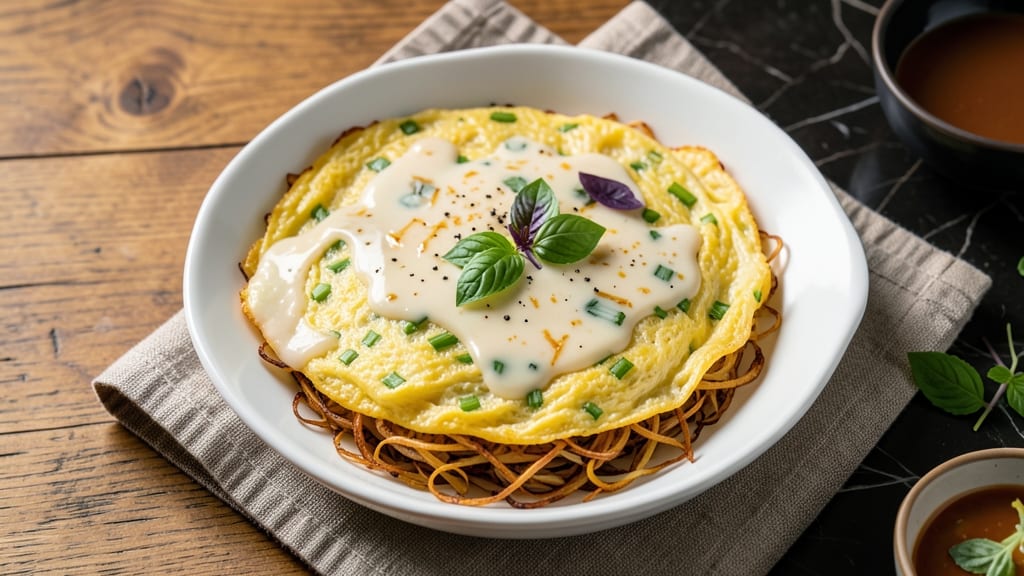
This Thai egg omelette recipe transforms a simple breakfast into a fragrant, celery-crusted masterpiece with lemongrass zing. The secret lies in a delicate balance of textures—crispy celery crust, silky egg ribbons, and a vibrant lemongrass-infused filling that bridges Thai flavors with Western technique.
I developed this after craving something lighter than traditional omelettes but still packed with bold, aromatic depth.
The magic starts with a crispy celery crust that adds crunch without overpowering the tender egg interior. Fresh lemongrass, Thai basil, and a touch of fish sauce (or vegetarian alternative) create that signature Thai brightness, while a hint of coconut milk in the filling adds subtle creaminess.
This isn't your average breakfast—it's a flavor explosion that feels both comforting and exciting, perfect for brunch or a quick, satisfying meal.
What makes this omelette special is how the flavors come together: the crispy celery crust contrasts beautifully with the velvety egg, while the lemongrass and basil infuse every bite with a fragrant, citrusy aroma.
It's a dish that feels restaurant-quality yet simple enough for weeknight cooking, with just a few key ingredients doing all the heavy lifting. The result is an omelette that's as visually stunning as it is delicious.
Serve it with sliced cucumbers, a drizzle of sweet chili sauce, and lime wedges for that perfect balance of freshness and heat. This recipe proves you can bring Thai-inspired flavors to breakfast without sacrificing simplicity or texture. Let's get cooking!
Ingredients for thai egg omelette
Twelve ingredients blend Thai aromatics with Western omelette technique for a restaurant-worthy breakfast masterpiece.
| Ingredient | Amount | Notes |
|---|---|---|
| Large Eggs 🥚 | 8 whole | Freshly cracked, room temperature |
| Celery Stalks 🧅 | 2 whole | Thinly sliced, ribs removed |
| Lemongrass Stalk 🌿 | 1 whole | Bruised, outer leaves removed |
| Thai Basil Leaves 🌿 | ¼ cup | Fresh, stems removed |
| Vegetable Oil 🫒 | 2 tbsp | High smoke point preferred |
| Coconut Milk 🥛 | ¼ cup | Full-fat for creaminess |
| Fish Sauce 🍶 | 1 tbsp | Vegetarian alternative if needed |
| Lime Juice 🍋 | 1 tbsp | Freshly squeezed |
| Garlic Cloves 🧄 | 2 cloves | Minced, aromatic |
| Salt 🧂 | ½ tsp | Diamond Crystal preferred |
| Black Pepper 🌶️ | ¼ tsp | Freshly ground |
| Sugar 🍚 | ½ tsp | Fine granulated |
| Sweet Chili Sauce 🍶 | 1 tbsp | For serving, optional |
The lemongrass is non-negotiable for that signature Thai brightness—bruise the stalk with the side of your knife before using to release oils. For fresh Thai basil, Asian markets often carry it, but if unavailable, holy basil works in a pinch. Celery should be crisp and pale green—avoid any with brown spots or limp stalks. The eggs must be freshly cracked at room temperature to prevent tearing when folded. For fish sauce, Red Boat is a reliable brand, but any vegetarian-friendly alternative (like soy sauce + a pinch of sugar) suffices if needed. Costco or Whole Foods typically stock high-quality coconut milk in cans for this recipe.
No lemongrass? Lime zest plus a dash of ginger mimics the citrusy aroma, though it won't replicate the exact flavor. Substitute Thai basil with regular basil plus a pinch of cinnamon for depth, but expect a slightly different profile. For the celery crust, fennel or green onion can replace half the amount if needed—just adjust the mincing for texture. The coconut milk can be swapped for Greek yogurt (thinned with water) for a tangier filling, though the creaminess will differ. If you're avoiding fish sauce entirely, soy sauce plus a splash of balsamic vinegar creates a similar umami punch. Pre-minced garlic works, but freshly minced garlic cloves elevate the dish significantly.
Fresh celery keeps for 5-7 days in the fridge, wrapped in damp paper towels. Lemongrass stays vibrant for 3-4 days in a sealed container with a damp paper towel tucked inside. The filling ingredients (coconut milk, fish sauce, lime juice) can be prepped 1 day ahead and stored in an airtight container in the fridge. For the omelette itself, reheat gently in a non-stick pan with a splash of water to maintain moisture—never microwave. Portion leftovers into single-serving containers for quick grab-and-go breakfasts, as they reheat best when fresh. The crust loses crispiness after 2 days, so enjoy within that window for optimal texture.
Why You'll Love This Recipe
- Fewer Ingredients, More Flavor: I swear by this recipe—just eggs, celery, lemongrass, and basil. No fancy pantry staples needed. The lemongrass alone transforms something simple into something that tastes like a street cart in Bangkok.
- One-Pan, No Fuss: Between us, I’ve burned omelettes before. This one’s forgiving: heat the oil, toss in the chopped celery and lemongrass, pour in the eggs, and let the basil fold in at the end. One pan, minimal cleanup, and zero stress.
- Leftover Hero: Make a double batch and reheat slices in a skillet—still crispy, still packed with that bright basil punch. I pack these for lunch all week, and they’re better cold than most takeout.
- Budget Breakfast Win: Eggs, celery, and fresh herbs? This feeds four for under $5. Honestly, it’s the kind of meal that makes me question why I ever ordered delivery when I could’ve had this instead.
Step-by-step instructions for Thai egg omelette
Master this delicate balance of textures and flavors—crisp celery crust, runny yolk, and aromatic lemongrass infusion.
Prepare the Celery-Crusted Egg Mixture
In a large bowl, whisk together the 8 whole Large Eggs until the yolks and whites are fully combined and the mixture is uniform in color. Add the 0.5 tsp Salt, 0.25 tsp Black Pepper, and 0.5 tsp Sugar, whisking until dissolved. This seasoning base ensures balanced flavor throughout the omelette.
Finely slice the 2 whole Celery Stalks into thin ribbons, removing any fibrous ribs. Add these to the egg mixture along with the 2 cloves minced Garlic Cloves and 1 tbsp Fish Sauce. The celery will create that signature crispy crust while the fish sauce adds umami depth. Let the mixture rest for 5 minutes at room temperature—this allows the flavors to meld and the celery to soften slightly for better texture.
Infuse the Coconut Milk with Lemongrass
While the egg mixture rests, bruise the 1 whole Lemongrass Stalk by gently pounding it with the side of a knife or rolling it under your palm. This releases the essential oils that will infuse the coconut milk. In a small saucepan, combine the 0.25 cup Coconut Milk with the bruised lemongrass and bring to a gentle simmer over medium-low heat for 3-4 minutes.
Remove from heat and let steep for 5 minutes, then strain through a fine-mesh sieve to remove any lemongrass fibers. Stir in 1 tbsp Lime Juice and set aside. This aromatic base will create the signature brightness that cuts through the richness of the eggs. Keep it warm until ready to use—it should maintain a silky, slightly thickened consistency.
Cook the Omelette to Perfection
Heat 1 tbsp Vegetable Oil in a 10-inch non-stick skillet over medium heat until shimmering but not smoking. Pour in the egg mixture, tilting the pan to distribute evenly. Cook undisturbed for 2-3 minutes until the edges begin to set and the bottom develops a delicate golden crust from the celery.
Here's the critical moment: when the edges lift slightly and the top is still slightly runny but the bottom is crisp, carefully pour the lemongrass-infused coconut milk evenly over the omelette. The heat will cause the coconut milk to create steam, creating a soft, custardy center while maintaining the crispy edges. Cook for another 1-2 minutes until the coconut milk is mostly absorbed but the center remains moist.
Finish with Thai Basil and Sweet Chili
Remove the omelette from heat and immediately sprinkle the 0.25 cup Thai Basil Leaves evenly over the surface. The basil's anise-like flavor will complement the lemongrass beautifully. Fold the omelette in half or roll it gently, pressing down lightly to help the basil adhere and distribute the filling evenly.
Let it rest for 1 minute to set slightly, then slice into 4 equal portions. Serve immediately with the 1 tbsp Sweet Chili Sauce on the side for dipping. Each bite should deliver a perfect harmony of textures—crisp celery crust, silky coconut milk center, and that signature runny yolk that pools in the middle when cut.
Pro Tips For Making Thai Egg Omelette
- Use Medium-High Heat: I learned this the hard way—low heat makes your omelette turn into a sad, rubbery pancake. For this Thai version, you want the eggs to sizzle and set quickly so they stay tender. Once you pour them in, let the pan do the work; resist the urge to stir constantly.
- Finely Chop Celery: Big chunks of celery just sit there like awkward guests. Dice that celery into tiny, almost rice-sized pieces so it cooks fast and blends into the eggs instead of turning to mush. (Yes, even if it takes a minute—your future self will notice.)
- Salt the Eggs First: Adding salt after the eggs are cooked? Too late—they’ll taste flat. Whisk the salt into your egg mixture before pouring, and trust me, it makes a real difference in flavor. Skip this, and you’ll wonder why your omelette lacks depth.
- Add Lemongrass Late: Bruise the lemongrass stalk with the side of your knife first—this unlocks its aroma without releasing bitter juice. Toss it in the pan just before folding the omelette so it stays fragrant, not bitter. (Pro move: Remove it before serving if you’re picky about texture.)
Essential equipment for this recipe
Non-Stick Skillet
A 10-inch non-stick skillet is your best friend for this recipe—it ensures the celery crust develops perfectly without sticking. I recommend a high-quality brand like All-Clad or Calphalon for even heat distribution and durability.
If you're on a budget, GreenPan offers excellent non-stick performance at a lower price. Avoid cast iron or stainless steel for this dish, as the delicate celery crust won't release properly. 🔥
Fine-Mesh Sieve
For straining the lemongrass-infused coconut milk, use a fine-mesh sieve to remove all fibers and achieve a silky texture. I prefer OXO Good Grips for its sturdy construction and easy handling.
A regular slotted spoon won't filter out the tiny lemongrass particles effectively, leaving behind a gritty texture that disrupts the smooth filling. This step is critical for that restaurant-quality finish.
High-Quality Knife
A sharp chef's knife (like Wüsthof or Shun) is essential for slicing the celery into thin ribbons and mincing the garlic. Dull knives crush the celery, releasing bitter juices that overpower the delicate egg mixture.
For the lemongrass, a cleaver works well for bruising the stalk—just place it on a cutting board and tap firmly with the side of your knife. Precision here makes all the difference in texture and flavor.
Whisk for Eggs
Use a balloon whisk (like Cuisinart or OXO) to fully combine the eggs, salt, and pepper into a uniform mixture. This prevents lumps that can create uneven cooking. I find a whisk works better than a fork for achieving that silky, airy consistency.
The whisk also helps incorporate the celery and garlic evenly, ensuring every bite has that crispy crust and aromatic filling. 💫
Measuring Tools
Precision matters with this recipe, so invest in a set of stainless steel measuring spoons (like OXO Good Grips) and a digital kitchen scale for accurate measurements. The fish sauce, lime juice, and coconut milk require careful balancing—too much or too little can throw off the flavor profile.
For the celery, a mandoline (with guard) makes quick work of thin, even slices. Don't skip measuring the sugar—it's key for balancing the savory and acidic notes.
Optional: Microplane
If you want to elevate the dish further, a microplane (like OXO) lets you finely grate the lemongrass instead of bruising it. This infuses the coconut milk with even more aromatic oils, deepening the Thai flavor profile.
You can also use it for fresh ginger if substituting. While not essential, it's a game-changer for home cooks who want that restaurant-quality infusion without extra effort. 🌿
Nutrition facts
Frequently asked questions
Can I make this Thai egg omelette without celery?
Yes, but the texture will change! Replace the celery with 2 green onions (thinly sliced) or 1/4 cup finely chopped shallots for a milder flavor. For a similar crispy effect, try 1/4 cup crushed potato chips (like potato chips) mixed into the egg batter before cooking. The celery adds a unique crunch that's hard to replicate.
How do I get that perfect runny yolk in the center?
Cook the omelette over medium heat (not high) and stop when the edges are just set but the center still looks slightly wet. The key is timing—pour the coconut milk when the edges lift easily but the top is still runny. For extra insurance, use very fresh eggs (within 1 week of purchase) and avoid stirring the eggs after they hit the pan.
What's the best way to reheat leftovers?
Reheat in a non-stick pan over low heat with a splash of water or coconut milk to prevent drying. Microwaving makes the crust soggy. For best results, store leftovers in an airtight container and reheat within 2 days. Keep the heat gentle to maintain the crispy crust and creamy filling.
Can I make this vegetarian without fish sauce?
Replace fish sauce with 1 tbsp soy sauce + 1 tsp sugar or 1 tbsp coconut aminos + 1/2 tsp miso paste. For extra umami, add 1/2 tsp nutritional yeast to the egg mixture. The combination will give you that savory depth while keeping it completely plant-based.
Why does my omelette taste bland?
Check your seasoning balance—this recipe needs all three components: salt (for base flavor), fish sauce/vegetarian sub (for umami), and sugar (to cut acidity). Also ensure your lemongrass was properly bruised and your coconut milk was infused long enough. Fresh Thai basil is non-negotiable for that signature aroma—dried basil won't work.