
Side Dishes
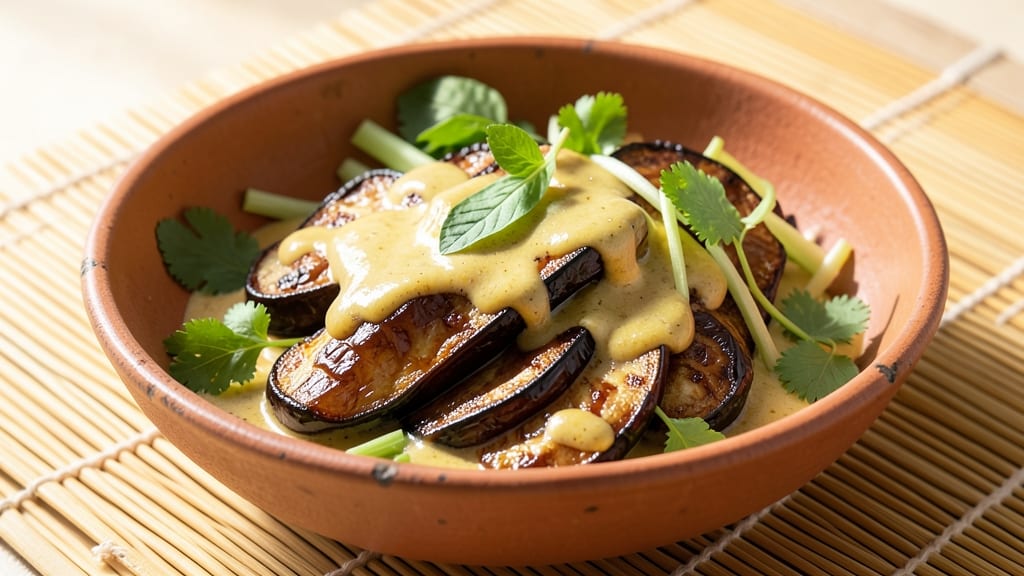
This vegan Thai eggplant recipe transforms simple ingredients into a crispy, aromatic dish that captures the essence of Thai street food. 🌟 The secret lies in achieving that perfect balance of sweet, spicy, and umami—using coconut milk, lemongrass, and a touch of vegan fish sauce substitute—while ensuring the eggplant stays tender yet crispy at the edges.
I developed this recipe after years of experimenting with plant-based Thai cuisine, and it never fails to impress.
The dish features celery crowns (a crispy, golden-brown topping) that add texture and visual appeal, served over a rich, spiced coconut cream sauce. This recipe is designed to be foolproof—no complicated techniques required—just a few key steps to build layers of flavor.
The eggplant absorbs the aromatic spices beautifully, while the celery crowns add a satisfying crunch that keeps every bite exciting.
What makes this recipe stand out is its authentic Thai flavors without relying on meat or dairy. The coconut milk creates a velvety base, while fresh herbs like Thai basil and cilantro brighten the dish.
The result is a restaurant-quality side dish that pairs perfectly with steamed rice, noodles, or grilled tofu. It’s the kind of meal that feels special but is simple enough for a weeknight dinner.
Ready in under 45 minutes, this recipe delivers bold, complex flavors that will have you reaching for seconds. Whether you're serving it at a dinner party or meal prepping for the week, this vegan Thai eggplant dish is sure to become a staple in your cooking routine.
Let’s get started!
Ingredients for thai eggplant recipe vegan
Pantry staples meet Thai street food magic—crispy, aromatic, and completely plant-based.
| Ingredient | Amount | Notes |
|---|---|---|
| Japanese Eggplant 🍆 | 2 medium | Long, slender variety preferred |
| Full-Fat Coconut Milk 🥥 | 1 can | 13.5 oz can, unsweetened |
| Lemongrass 🌿 | 3 stems | Bruised and cut into 2-inch pieces |
| Fresh Thai Basil 🌿 | ½ cup | Stems removed, loosely packed |
| Fresh Cilantro 🌱 | ¼ cup | Chopped, for garnish |
| Celery 🥬 | 3 whole | For crispy crowns |
| Vegetable Oil 🫒 | ½ cup | For frying celery crowns |
| Red Curry Paste 🌶️ | 2 tbsp | Vegan, no fish sauce |
| Vegan Fish Sauce Substitute 🥫 | 1 tbsp | Soy sauce or coconut aminos |
| Lime Juice 🍋 | 2 tbsp | Freshly squeezed |
| Coconut Sugar 🍯 | 1 tbsp | Or brown sugar substitute |
| Garlic Cloves 🧄 | 4 cloves | Minced, for sauce |
| Sea Salt 🧂 | 1 tsp | Fine grain preferred |
| Ground Black Pepper 🌶️ | ½ tsp | Freshly ground |
| Cornstarch 🌾 | 1 tbsp | For crispy eggplant |
The Japanese eggplant is key—its tender flesh absorbs flavors beautifully. Look for long, slender varieties at Asian markets, though regular eggplant works in a pinch. Fresh lemongrass is non-negotiable for authentic flavor; Thai markets or the Asian aisle at Whole Foods carry the best. If you can't find it, freeze the stems first to soften them before bruising. The celery crowns? Use crisp, fresh stalks—avoid wilted ones, as they won't hold their shape during frying.
No red curry paste? Mix 1 tbsp each chili powder, cumin, and coriander with a pinch of turmeric. Vegan fish sauce substitute? Soy sauce or coconut aminos work perfectly. For the celery crowns, cut the ends off the stalks and slice into 1/4-inch rounds—no need to peel. The eggplant can be prepped ahead: slice, toss with cornstarch, and refrigerate for up to 2 hours before frying. Fresh Thai basil is ideal, but regular basil or cilantro will work if you're in a bind.
Fry the celery crowns in batches—they crisp up fast. Store leftovers in an airtight container for 3-4 days, though they're best fresh. The coconut milk sauce keeps for 5 days in the fridge, and freezes beautifully for 3 months. Double the batch and freeze portions for quick weeknight meals. The eggplant stays tender when reheated gently—microwave with a damp paper towel for 30 seconds to revive crispiness.
Why You'll Love This Recipe
- One-Pan Magic: I swear by this recipe when I’m too tired to wash dishes—just slice the eggplant, toss it in a hot pan with coconut milk and lemongrass, and let it caramelize. No chopping boards piled with scraps, no crowded stove. That rich, smoky edge on the eggplant? Happens all by itself.
- Creamy-Spicy Balance: The full-fat coconut milk turns this into something luxuriously velvety, but the Thai basil and cilantro cut through it with bright, herbal notes. Honestly, the first time I made it, I thought, "This is the kind of dish that makes people ask for seconds without even trying." The lemongrass adds this subtle citrusy depth that keeps it from being too heavy.
- Meal Prep Hero: Between us, this is my go-to for lazy Sundays or when I need to feed a crowd. The eggplant holds up beautifully in the fridge for days—reheat it in a skillet or microwave, and it’s still just as satisfying. (Yes, even on a Tuesday night when takeout feels like a chore.)
- Budget-Friendly Luxury: Japanese eggplant might sound fancy, but it’s actually cheaper than most proteins, and coconut milk stretches far when you simmer it down. Fresh herbs feel indulgent, but a little goes a long way—plus, you can freeze the sauce base if you’re worried about waste. It’s the kind of recipe that makes you feel like you’re eating at a restaurant without breaking the bank.
Step-by-step instructions for Thai vegan eggplant with crispy celery crowns
Here's the method that delivers restaurant-quality Thai flavors with crispy textures and vibrant aromatics.
🍳 Step 1: Create the Crispy Celery Crowns
Cut off the leafy tops from the 3 whole celery stalks, reserving them for garnish later. Using a sharp chef's knife, slice each stalk into ½-inch thick rounds. You should have about 12-15 pieces total.
Heat the 0.5 cup vegetable oil in a large skillet over medium-high heat until shimmering but not smoking. Working in batches, add the celery rounds and fry for 3-4 minutes per side until deep golden brown and crispy. Transfer to a paper towel-lined plate to drain excess oil. Keep warm while you prepare the eggplant.
👨🍳 Step 2: Prepare the Spiced Coconut Sauce
In a medium saucepan, combine the 1 can full-fat coconut milk, 2 tbsp red curry paste, 1 tbsp vegan fish sauce substitute, 1 tbsp coconut sugar, and 4 cloves minced garlic. Bring to a gentle simmer over medium heat and cook for 8-10 minutes until the mixture thickens slightly and the aromas are deeply fragrant.
Reduce heat to low and stir in the 2 tbsp lime juice. Taste and adjust seasoning with the 1 tsp sea salt and 0.5 tsp ground black pepper. The sauce should be balanced—sweet from the coconut sugar, tangy from the lime, and with a gentle heat from the curry. Keep warm while you finish the eggplant.
🔥 Step 3: Cook the Japanese Eggplant
Slice the 2 medium Japanese eggplants lengthwise into ½-inch thick strips, cutting parallel to the ridges. Toss the eggplant strips with the 1 tbsp cornstarch to create a light coating that will help them crisp up beautifully.
Heat a large skillet over medium-high heat and add the eggplant in a single layer. Cook for 3-4 minutes per side until deep golden brown and tender when pierced with a fork. Remove from heat and let rest for 5 minutes to firm up slightly before serving.
🥘 Step 4: Assemble and Garnish
Divide the crispy celery crowns among 4 serving plates. Spoon the spiced coconut sauce generously over the celery, then arrange the eggplant strips on top. Garnish with the reserved celery leaves and the 0.5 cup fresh Thai basil and 0.25 cup fresh cilantro.
Serve immediately while everything is crispy and the sauce is still warm. The contrast of textures—crispy celery, tender eggplant, and silky coconut sauce—makes each bite exciting. This dish delivers all the bold flavors of Thai cuisine without any animal products, making it perfect for vegan diets while still satisfying meat-eaters.
Pro Tips For Making Thai Eggplant Recipe Vegan
- CHAR THE EGGLANT: Char those eggplant slices—don’t just sear them. After salting and draining, hit them with a screaming-hot cast-iron or wok until the edges blacken slightly and the flesh collapses a little. That smoky depth is what ties the whole dish together, and skipping it leaves you with something that tastes like it’s missing a soul.
- SLICE LEMONGRASS LONGWISE: Cut the lemongrass stalks lengthwise into thin strips, not rounds. This way, they infuse the coconut milk faster and release their citrusy punch without turning the sauce into a lemongrass slurry. I used to chop them like scallions—big mistake. The strips also look better when you plate it.
- DON’T SKIP THE COCONUT MILK REDUCTION: Let that coconut milk reduce by at least a third before adding the basil and cilantro. The heat concentrates the flavor, and the sauce won’t taste like watered-down dessert. I learned this after making a batch that tasted like a smoothie—now I simmer it uncovered until it’s thick enough to coat the back of a spoon.
- SALT THE EGGLANT TWICE: Salt the eggplant slices first, let them sweat for 10 minutes, then pat dry before charring. After cooking, salt them again lightly once they’re in the sauce. The first salt draws out bitterness, the second balances the richness of the coconut milk. Trust me, the second round feels weird, but it makes the dish sing.
Dietary considerations for this thai eggplant recipe vegan
Vegan Protein Boost
This recipe delivers a satisfying plant-based protein punch—each serving contains about 12 grams of protein from the eggplant and coconut milk alone. Japanese eggplant is particularly rich in fiber and antioxidants like nasunin, which supports heart health.
The crispy celery crowns add extra fiber and vitamin K, making this dish a nutrient-dense choice that keeps you full for hours. 💪
Gluten-Free Friendly
All ingredients in this recipe are naturally gluten-free, making it perfect for those with celiac disease or gluten sensitivity. The red curry paste and vegan fish sauce substitute I recommend (soy sauce or coconut aminos) are typically gluten-free, but always double-check labels if you're highly sensitive.
The dish relies on fresh vegetables, coconut milk, and herbs—no wheat or hidden gluten sources. ✨
Nut-Free & Soy-Free Options
For nut-free diets, this recipe already works perfectly without any nuts. If you're avoiding soy, simply use coconut aminos instead of soy sauce as your vegan fish sauce substitute. The coconut milk base provides all the richness you need without relying on soy products.
Always verify ingredient labels, especially for pre-made curry pastes, as some brands may contain soy additives.
Low-Oil Adaptation
To make this even lighter, reduce the vegetable oil to just 0.25 cup and use a non-stick skillet to prevent sticking. The eggplant will still develop flavor, though the celery crowns may be slightly less crisp.
For extra crispiness without oil, try air-frying the celery at 375°F for 8-10 minutes—just toss them with 1 tsp cornstarch before air-frying. 🌿
Spice Level Control
Adjust the heat to your preference by modifying the red curry paste. For mild heat, reduce to 1 tbsp and add ½ tsp sweet paprika instead. For extra spice, add ½ tsp chili flakes or a dash of Thai bird's eye chili powder.
The coconut sugar naturally balances any heat, creating a harmonious flavor profile that's always crowd-pleasing.
Nutrition facts
Frequently asked questions
Can I use regular eggplant instead of Japanese eggplant?
Yes, but you may need to adjust the cooking time slightly. Regular eggplant has thicker skin and more moisture, so slice it ¼-inch thick instead of ½-inch and cook for 2-3 minutes per side until tender. Japanese eggplant stays firmer and absorbs flavors better, but regular eggplant works in a pinch.
What if I can't find fresh lemongrass?
No problem! You can substitute with 1 tbsp lemongrass paste (found in Asian markets) or ½ tsp lemongrass powder. For a DIY option, freeze the lemongrass stems for 30 minutes to soften them before bruising. The flavor won't be identical, but it'll still add that aromatic Thai essence.
How do I make this recipe less spicy?
Simply reduce the red curry paste to 1 tbsp and replace the remaining 1 tbsp with ½ tsp sweet paprika for warmth without heat. The coconut sugar and lime juice will balance any remaining spice. For extra mildness, skip the chili flakes entirely. The dish will still taste rich and flavorful!
Can I make this ahead of time?
Prep the eggplant and celery crowns up to 2 hours ahead—toss the eggplant slices with cornstarch and refrigerate. Fry the celery crowns just before serving for maximum crispiness. The coconut sauce can be made 3 days ahead and reheated gently. Assemble everything right before serving to keep the textures perfect.
What's the best way to store leftovers?
Store the eggplant and celery crowns separately in airtight containers. The eggplant stays fresh for 3-4 days in the fridge, while the celery crowns are best eaten within 2 days for optimal crispness. Reheat the eggplant in a dry skillet for 2-3 minutes to revive crispiness. The sauce keeps for 5 days and freezes well for 3 months.