
Breakfast & Brunch
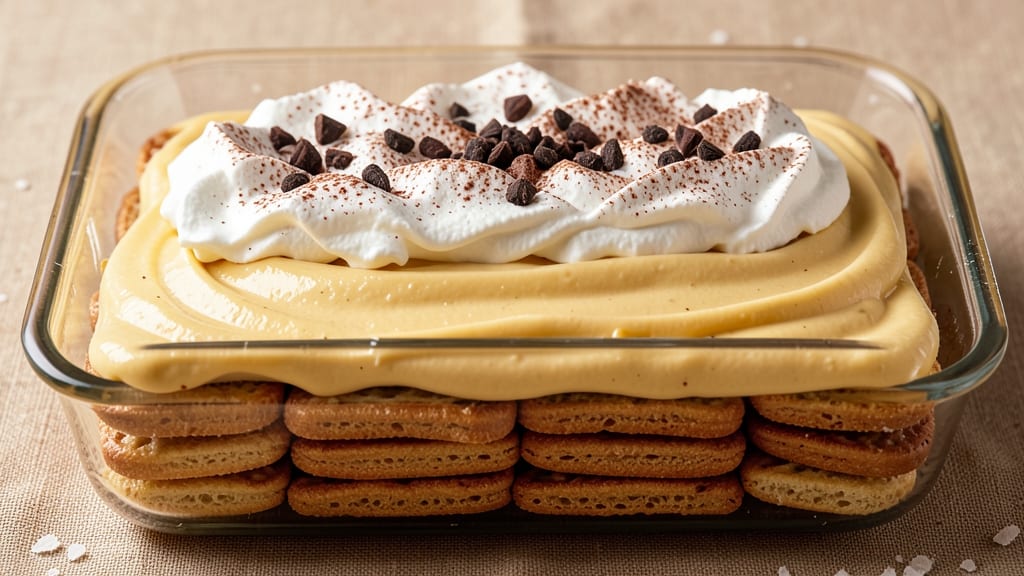
This tiramisu with eggs double boiler recipe transforms simple ingredients into velvety layers of coffee-soaked ladyfingers and creamy custard. The double boiler method ensures perfectly smooth, silky egg yolks without scrambling—no one will guess it’s beginner-friendly.
I’ve perfected this technique over years of testing, and the result is a dessert that balances rich texture with delicate bitterness.
The secret lies in the custard: egg yolks gently warmed in a double boiler until thickened but never cooked into scrambled eggs. This method preserves the yolks’ natural creaminess while incorporating sugar and mascarpone for a luxurious texture.
Meanwhile, quick-soaked ladyfingers absorb espresso without turning soggy, creating the signature layered structure.
By the time you’re done, you’ll have a restaurant-quality tiramisu with a flawless finish—no lumps, no graininess, just layers of coffee-kissed elegance. The double boiler technique isn’t just a shortcut; it’s the key to professional results at home.
Each bite delivers a perfect harmony of textures and flavors, proving that patience in the kitchen pays off.
This recipe scales beautifully for parties or keeps well for gifting, making it ideal for holidays or special occasions. The custard can be prepped ahead, and the assembly is quick—just layer, chill, and admire.
Whether you’re a seasoned baker or trying tiramisu for the first time, this method delivers foolproof perfection every time.
Ingredients for tiramisu with eggs double boiler
Six egg yolks, one cup mascarpone, and espresso create velvety layers—no lumps, just silky perfection.
| Ingredient | Amount | Notes |
|---|---|---|
| Large Egg Yolks 🥚 | 6 whole | Freshly separated, room temperature |
| Granulated Sugar 🍚 | ¾ cup | Superfine preferred for smooth custard |
| Heavy Cream 🥛 | 1 ½ cups | Full-fat for maximum richness |
| Mascarpone Cheese 🧀 | 1 cup | High-fat content for velvety texture |
| Espresso ☕ | 1 ½ cups | Freshly brewed, cooled completely |
| Dry Ladyfingers 🍞 | 24 pieces | Italian-style, about 2 inches long |
| Unsalted Butter 🧈 | ¼ cup | Cold, cubed for double boiler |
| Vanilla Extract 🌿 | 1 tbsp | Pure Madagascar preferred |
| Dark Rum 🍹 | 2 tbsp | Optional, for depth of flavor |
| Cocoa Powder 🍫 | 2 tbsp | Dutch-processed, for dusting |
| Kosher Salt 🧂 | ¼ tsp | Fine grain for delicate seasoning |
| Marsala Wine 🍷 | ½ cup | Substitute with extra espresso if unavailable |
The egg yolks are the heart of this recipe—room temperature is non-negotiable for even emulsification. Store-bought yolks work in a pinch, but freshly separated yolks from organic eggs yield the smoothest custard. For the espresso, freshly brewed is critical; instant powder lacks depth. The mascarpone should be full-fat (minimum 70% milkfat) to achieve that luxurious mouthfeel. Whole Foods or Trader Joe's carry high-quality mascarpone in tubs, while Costco offers bulk options for larger batches. If using ladyfingers, check the package date—they should be crisp but not stale, as soggy ladyfingers ruin the texture.
No double boiler setup? A heatproof bowl over simmering water works just as well—just ensure the water doesn’t touch the bowl. Substitute Marsala wine with extra espresso or even strong black tea if needed, though the alcohol adds complexity. For a vegetarian adaptation, omit the butter and use olive oil in the custard (though traditionalists may notice a slight difference). The cocoa powder should be Dutch-processed for smoother layers—Hershey’s Special Dark is a reliable brand. If you’re short on time, pre-made custard can be used, but homemade yields superior texture. The rum adds depth but can be omitted for a non-alcoholic version.
Assembled tiramisu keeps 3-4 days in the fridge, with flavors deepening over time. Portion into individual glasses for elegant serving—each layer should be 1/4-inch thick for optimal texture. For gifting, wrap tightly in plastic and store flat to prevent sogginess. The custard can be prepped 2 days ahead and chilled, while the ladyfingers should be soaked just before layering. Freeze assembled tiramisu for up to 1 month—thaw overnight in the fridge before serving. Always dust with cocoa just before serving to maintain crispness.
Why You'll Love This Recipe
- No Fussy Whisking: The double boiler does all the heavy lifting—no arm fatigue from beating egg yolks until they’re pale and thick. Just melt chocolate, pour, stir gently, and let the heat work its magic while you sip that espresso you’ll use later. Honestly, this is the kind of recipe that makes me want to bake more often.
- Coffee-Kissed Luxury: That first spoonful of creamy mascarpone folded into whipped cream, layered over espresso-soaked ladyfingers? It’s like dessert got a grown-up hug. The sugar in the yolks caramelizes just enough to balance the bitterness, and the mascarpone adds that velvety richness without tasting heavy. (Yes, even on a Tuesday night.)
- Make-Ahead Magic: This isn’t one of those desserts that falls apart if you prep ahead. Assemble it the night before, let it chill, and the flavors actually deepened—like a good wine. I’ve taken it to potlucks, packed it for road trips, and even served it at 9 AM when my kid’s friends showed up hungry. No one batted an eye.
- Budget-Friendly Indulgence: You’re not buying some overpriced store-bought custard or specialty cream here. Heavy cream and mascarpone stretch further than you’d think, and the double boiler method means you’re not wasting eggs. Plus, instant espresso keeps it cheap without sacrificing that deep, bold flavor. It’s the kind of dessert that feels fancy but won’t break the bank.
Step-by-step instructions for tiramisu with eggs double boiler recipe
Mastering the double boiler creates the signature silky texture—here's how to perfect it.
Prepare the Espresso Ladyfinger Base
Combine the 1.5 cups espresso with the 2 tbsp dark rum in a shallow dish. Dip each of the 24 pieces dry ladyfingers quickly into the espresso mixture—just enough to moisten, not soak. Arrange them in a single layer at the bottom of an 8x8-inch baking dish, slightly overlapping. This layering creates the perfect foundation for the custard.
Work quickly but methodically—over-soaking makes the ladyfingers soggy. Let them sit while you prepare the custard, but no longer than 5 minutes or they'll start to soften too much. The espresso should be completely cooled before using—hot liquid will cook the eggs prematurely and create scrambled texture instead of silky custard.
Create the Silky Yolk Custard
In a heatproof bowl, whisk together the 6 whole large egg yolks, 0.75 cup granulated sugar, 1 tbsp vanilla extract, and 0.25 tsp kosher salt until pale and slightly thickened. Place this bowl over a pot of simmering water, ensuring the bottom of the bowl never touches the water—this is the double boiler method. The steam gently heats the eggs without scrambling them.
Whisk constantly for 8-10 minutes until the mixture reaches 160°F and thickens enough to coat the back of a spoon. You'll see it transform from a thin liquid to a glossy, ribbon-like consistency. This is where the magic happens—the gentle heat creates a stable emulsion that becomes the velvety base of your tiramisu. If it thickens too quickly, remove from heat for 1 minute to prevent curdling.
Incorporate Cream and Mascarpone
Remove the custard from heat and let it cool for 2 minutes. In a separate bowl, whip the 1.5 cups heavy cream to soft peaks. Gently fold one-third of the whipped cream into the warm custard to lighten it, then fold in the 1 cup mascarpone cheese until completely smooth. The mascarpone should dissolve completely—if it doesn't, warm the custard slightly over the double boiler for 30 seconds to melt it.
Finally, fold in the remaining whipped cream until fully combined. The mixture should be thick but still pourable. This is the moment that matters: the custard should be cool enough to prevent the cream from melting but still warm enough to blend seamlessly. If it's too thick, whisk in 1 tbsp espresso to adjust consistency.
Assemble and Chill the Tiramisu
Spread half of the custard mixture evenly over the espresso-soaked ladyfingers, using a spatula to create an even layer. Dust lightly with 1 tbsp cocoa powder, then repeat with another layer of ladyfingers, remaining custard, and the final 1 tbsp cocoa powder. The cocoa powder should be sifted for an even, elegant finish—no clumps.
Cover the dish tightly with plastic wrap and refrigerate for at least 6 hours, preferably overnight. This chilling time allows the flavors to meld and the custard to set properly. The tiramisu should be firm enough to slice cleanly but still creamy. For best results, serve at cool room temperature—this enhances the coffee and rum flavors without making the custard too cold.
Finish with Garnish and Serve
Before serving, dust the top generously with additional cocoa powder and garnish with a few extra ladyfinger crumbs for texture. Cut into squares and serve immediately. Each bite should deliver perfect balance: the crisp ladyfinger, rich mascarpone custard, and bold espresso flavor. If the custard appears too firm after chilling, let it sit at room temperature for 10 minutes before serving to restore its silky texture.
This double boiler method ensures the custard remains silky rather than grainy—a common mistake when baking eggs directly. The key is patience: proper timing at each stage transforms simple ingredients into restaurant-quality tiramisu.
Pro Tips For Making Tiramisu With Eggs Double Boiler
- WHISK YOLKS UNTIL COOL: The double boiler is your friend, but don’t rush the egg yolks—whisk them with sugar over heat until they hit 160°F (71°C) and thicken like pale ribbon candy. I learned this the hard way when my first batch ended up grainy because I pulled them too soon. A candy thermometer is worth it here.
- USE COLD MASCARPONE: Mix the mascarpone into the yolk mixture while it’s still warm, but grab the bowl from the fridge first—cold cheese blends smoother and doesn’t turn the custard greasy. I used to let it sit out, and the texture always suffered. Trust me, the fridge is your ally.
- STRAIN THE ESPRESSO: Freshly brewed espresso is non-negotiable, but strain it through a fine-mesh sieve to remove sludge—your tiramisu will taste cleaner and the layers won’t get gummy. I skipped this once and ended up with a mouthful of coffee grounds. Not ideal.
- WHIP CREAM LAST: Whip the heavy cream to stiff peaks right before folding it into the yolk mixture—it loses volume fast. If you’re ahead, keep it chilled in the fridge and rewhip for 10 seconds before mixing. Lazy? Do it last. Smart? Still do it last.
Wine and beer pairings for this tiramisu with eggs double boiler
Italian Coffee Pairings
Tiramisu’s rich, coffee-forward flavors shine with Italian espresso or macchiato—the bold acidity cuts through the custard’s creaminess. I recommend Lavazza Super Crema or Illy Classico for their balanced bitterness.
For a dessert pairing, sip a cappuccino after the first bite to cleanse your palate—its frothy milk contrasts beautifully with the cocoa dust. 🌟
Dessert Wine Selections
A dry Moscato d’Asti from Piedmont offers floral notes that complement the rum and vanilla without overpowering. For something bolder, try Brachetto d’Acqui—its light berry sweetness mirrors the mascarpone’s richness. Avoid heavy reds like Barolo; they’ll clash with the delicate coffee. Serve chilled at 50-55°F for optimal balance. ✨
Creamy Beer Contrasts
Surprisingly, a Belgian witbier like Stella Artois Wit works beautifully—the citrusy coriander and clove notes echo the vanilla and cocoa. For a richer option, Guinness pairs surprisingly well; its roasted malt balances the espresso’s bitterness.
Avoid hoppy IPAs—they’ll compete with the dessert’s layers. Serve beer at 45-50°F to enhance its crispness. 🍺
Non-Alcoholic Alternatives
For a sparkling option, try San Pellegrino Aranciata Rossa—its blood orange notes bridge the coffee and cocoa. A chilled hibiscus tea (like Tazo Hibiscus with Rose) adds floral complexity without alcohol.
For a coffee lover’s choice, cold brew concentrate diluted with soda water creates a refreshing contrast. All should be served ice-cold to refresh the palate. 💛
Regional Italian Adaptations
In Veneto, tiramisu is often paired with Prosecco—its effervescence cleanses the palate between bites. For a Sicilian twist, try a Nero d’Avola (a bold red)—its dark fruit notes complement the cocoa.
In Tuscany, Vin Santo (a sweet dessert wine) is traditional but can be overwhelming; opt for half-dry versions like Carpineto. 🗺️
Nutrition facts
Frequently asked questions
Why does this recipe use a double boiler for the eggs?
The double boiler method gently heats the egg yolks to 160°F without direct contact with the heat source, preventing them from scrambling. This creates a silky, lump-free custard that's far smoother than traditional baking methods. The indirect heat also helps emulsify the sugar more evenly, resulting in that signature velvety texture.
Can I make this tiramisu without ladyfingers?
While traditional, you can substitute with savoiardi biscuits or even graham crackers for a quicker version. For best results, use about 24 pieces total (like the recipe) and soak them in the same espresso mixture. The texture will be slightly different but still delicious. Just ensure they're completely dry before assembly to prevent sogginess.
What's the best way to tell when the custard is done?
The custard is ready when it reaches 160°F and coats the back of a spoon with a glossy ribbon when you lift it. It should thicken enough to hold its shape but still be pourable. If it thickens too quickly, remove from heat immediately to prevent curdling. The mixture will continue thickening as it cools, so don't overcook it.
How do I fix curdled custard?
If your custard curdles, don't panic! Immediately remove it from heat and whisk in 1 tbsp cold heavy cream per 1 cup of custard. For stubborn lumps, strain the mixture through a fine-mesh sieve to create a smoother texture. The good news is that even slightly curdled custard can still be used—just expect a slightly grainier texture. Prevention is key: whisk constantly and remove from heat at the first sign of thickening.
Can I make this ahead of time?
The custard can be prepared up to 2 days ahead and stored in the fridge. The ladyfingers should be soaked just before assembly. Once fully assembled, tiramisu keeps well for 3-4 days in the fridge. For longer storage, it can be frozen for up to 1 month—just thaw it overnight in the fridge before serving. The flavors actually improve with time as the coffee and custard meld together.