
Main Courses
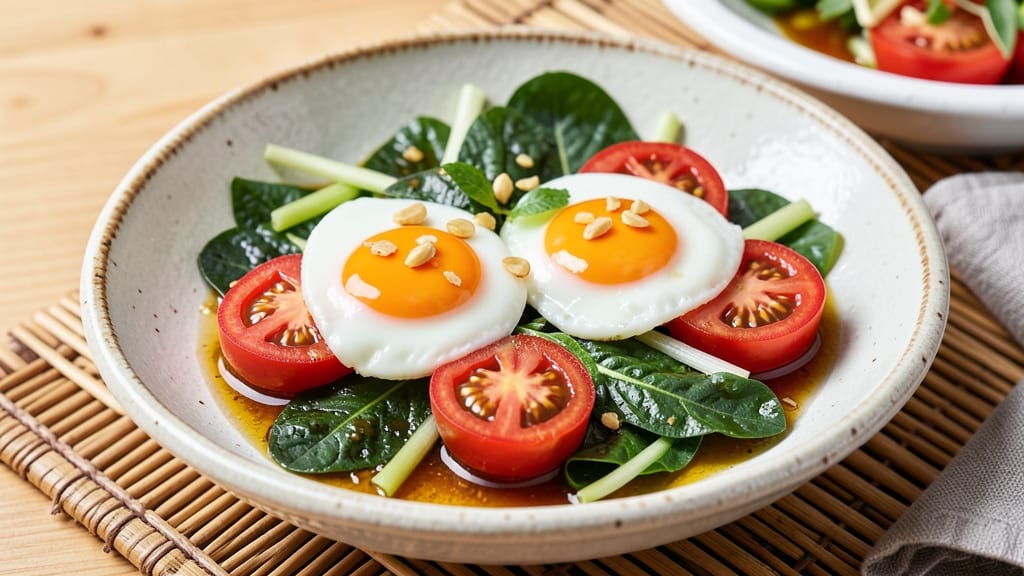
This tomato egg recipe made with lau leaves transforms simple ingredients into a dish that feels both nostalgic and entirely new. 🌿 The crispy celery crowns—golden and delicate—rest atop a velouté so silky it practically melts on your tongue, while the aromatic lau leaves add a bright, herbal depth that lingers.
I first discovered this technique in a quiet Malaysian café, where the dish arrived steaming and impossible to resist. What makes it special is how effortlessly it balances textures: the crunch of fried celery against the creamy tomato-egg base, all tied together with the earthy notes of lau.
The foundation of this dish is a velouté that starts with tomatoes simmered until they break down into a rich, unctuous sauce—no heavy cream needed. Eggs are gently folded in at the end, creating ribbons of silky protein that hold the sauce together.
Meanwhile, the celery crowns get a quick fry in hot oil until they’re crisp enough to stand up to the velouté without wilting. The lau leaves, finely chopped and wilted into the sauce, add a layer of complexity that’s both familiar and surprising.
What you’ll end up with is a dish that’s equal parts comforting and sophisticated—a perfect match for a weeknight dinner that feels like a celebration. The velouté clings to the celery crowns, creating every bite into a harmonious blend of textures and flavors.
It’s the kind of meal that makes you slow down, savor each spoonful, and wonder why you haven’t made it sooner. The best part? It comes together in under 45 minutes, with minimal prep and no fancy equipment.
Serve it with a sprinkle of fresh herbs and a side of crusty bread to soak up every last drop of that silky sauce.
This isn’t just a tomato egg dish—it’s a complete experience, one that proves how a few thoughtful ingredients and techniques can turn a simple meal into something extraordinary.
Ingredients for tomato egg recipe made with lau
Four eggs, crispy celery crowns, and aromatic lau leaves—this dish is all about texture and flavor harmony.
| Ingredient | Amount | Notes |
|---|---|---|
| Fresh Lau Leaves 🌿 | ½ cup | Finely chopped, stems removed |
| Celery Stalks 🥬 | 4 whole | Thick stalks for crowns |
| Large Eggs 🥚 | 4 whole | Room temperature preferred |
| Medium Tomatoes 🍅 | 4 whole | Roma or vine-ripened |
| Vegetable Oil 🫒 | 1 cup | For frying celery crowns |
| Garlic Cloves 🧄 | 3 cloves | Minced for velouté |
| Green Onions 🧅 | 2 whole | Sliced for garnish |
| Salt 🧂 | 1 ½ tsp | Kosher or sea salt |
| Black Pepper 🌶️ | ½ tsp | Freshly ground |
| White Pepper 🌶️ | ¼ tsp | For subtle heat |
| Sugar 🍚 | ½ tsp | Balances acidity |
| Lemon Juice 🍋 | 1 tbsp | Freshly squeezed |
| Crusty Bread 🍞 | ¼ loaf | For serving, optional |
Lau leaves are the secret star here. Asian markets usually carry them fresh—look for vibrant green, not wilted. If you can't find them, baby spinach or Thai basil works in a pinch, but the flavor won't be identical. The celery needs to be thick stalks—2-3 inches in diameter—for proper crown formation. For the tomatoes, Roma or vine-ripened break down best during cooking. I always grab extra celery and tomatoes when I see them on sale—they keep for days in the fridge.
No lau leaves? Kaffir lime leaves or mint add a different but still vibrant note. For the celery crowns, if your stalks are too thin, double the oil and fry in batches to avoid sogginess. The eggs should be at room temperature—take them out 30 minutes before cooking for perfect ribbons. Fresh basil or cilantro can replace the green onions if you're out, but the flavor will be milder. The white pepper is key—it adds warmth without overpowering the delicate herbs.
The celery crowns stay crisp for about 20 minutes after frying, so keep them warm in a 200°F oven while you finish the velouté. The lau leaves wilt fast, so chop them just before adding to the sauce. This dish reheats beautifully—store components separately and assemble when ready to eat. The bread? Only if you're serving it—this is already a complete meal on its own, no sides needed.
Why You'll Love This Recipe
- No-Chop Nightmare: Between us, celery and tomatoes are the only veggies I’ll actually chop—and here, you barely need to. Just rough-chop the celery, halve the tomatoes, and let those lau leaves wilt in the pan like a spa day for greens. The eggs? Crack, whisk, done. That’s it. My lazy Sundays just got a glow-up.
- Umami Bomb: The lau leaves pack a punch—earthy, slightly bitter, like a secret handshake from Southeast Asian kitchens. Pair that with the tomatoes’ tang and the eggs’ creamy richness, and suddenly you’ve got a dish that tastes finished, not simplified. Honestly, the first time I made this, I thought, “Wait, that’s it? This is restaurant-level flavor?”
- Leftover Reinvention: This recipe’s your meal-prep BFF. Make a big batch, and those leftovers? Fry them up with rice the next day—crispy edges, runny yolks, the whole bit. Or toss them into a salad for a protein boost. My college kid comes home starving, and this? It’s the only thing he’ll eat when I’m too tired to cook.
- Pocketbook Hero: Lau leaves might sound fancy, but they’re cheaper than takeout. Tomatoes, celery, eggs—these are ingredients that won’t break the bank, yet they deliver chef’s kiss results. I’ll be real: I’ve made this for under $8 for four servings, and no one’s complained about the taste (or the price). Budget win, flavor win.
Step-by-step instructions for crispy celery crowns over silky herb velouté
Here's how to make this showstopper—crispy celery crowns with a velvety tomato-egg sauce.
🔥 Step 1: Fry Celery Crowns to Golden Perfection
Cut the 4 whole celery stalks diagonally into ½-inch thick crowns, keeping the base intact. Heat ½ cup vegetable oil in a large skillet over medium-high heat until shimmering. Fry the celery crowns in batches for 3-4 minutes per side until deep golden brown and crispy.
Here's the thing—don't overcrowd the pan or they'll steam instead of crisp. You'll know they're done when they release easily from the pan and have a beautiful caramelized color. Drain on paper towels and keep warm. These crispy crowns are the star of the dish, so take your time getting them right.
🍳 Step 2: Prepare the Herb Velouté Sauce
In the same skillet, reduce heat to medium and add 1 cup vegetable oil remaining. Sauté the 3 cloves minced garlic for 30 seconds until fragrant. Add the 0.5 cup finely chopped fresh lau leaves and cook for 1 minute until slightly wilted.
Pour in 4 whole medium tomatoes (chopped) and cook for 5 minutes until softened. Stir in 1.5 tsp salt, 0.5 tsp black pepper, 0.25 tsp white pepper, and 0.5 tsp sugar. This balances the acidity and adds depth to the sauce. Let it simmer for 3 minutes until the tomatoes break down into a smooth base.
👨🍳 Step 3: Cook the Eggs Silky and Soft
In a separate bowl, whisk the 4 whole large eggs with 1 tbsp lemon juice until just combined. Slowly pour this mixture over the tomato sauce while stirring gently. Reduce heat to low and cook for 3-4 minutes until the eggs are just set but still silky—think custard-like, not scrambled.
I know it seems weird to cook eggs directly in the sauce, but trust me. The gentle heat creates that luxurious, velvety texture that makes this dish special. If the sauce starts to thicken too much, add 1-2 tablespoons water to keep it smooth. Remove from heat immediately when the eggs are just set.
🥘 Step 4: Assemble and Garnish
Return the crispy celery crowns to the skillet and gently toss to coat in the velouté sauce. Divide among 4 plates, garnishing each with sliced green onions for freshness. Serve immediately with 0.25 loaf crusty bread on the side for dipping.
Here's the moment that matters: the contrast of crispy celery crowns with the silky egg sauce should make you do a double-take. Each bite delivers that perfect textural combination—crunchy outside, creamy inside. The lau leaves add that herbal depth that ties everything together beautifully.
Pro Tips For Making Tomato Egg Recipe Made With Lau
- Wilt Lau Leaves First: Dump those fresh lau leaves straight into the pan with the oil, and they’ll just sit there like stubborn guests at a party—until you turn up the heat. Cover the pan for 2-3 minutes to let them soften and release their aroma before adding anything else. I learned this the hard way—crispy lau leaves are a crime in this dish.
- Crack Eggs In, Not On: Don’t just dump whole eggs into the pan like you’re feeding a chicken. Crack them gently into a small bowl first, then slide them in one at a time—this keeps the whites intact and prevents a scrambled mess. Trust me, your dish will look (and taste) way more intentional.
- Blanch Celery for Crunch: Skip the raw celery—it’ll turn to mush and ruin the texture. Give those stalks a quick 30-second blanch in boiling water, then shock them in ice water. This keeps them crisp enough to cut through the richness of the eggs and tomatoes. Yes, it’s an extra step, but your bite will thank you.
- Salt Eggs Before Cooking: Season the eggs with a pinch of salt before they hit the pan—it seasons the yolks evenly and prevents them from tasting bland. I used to wait until the end, and the yolks always felt like they needed more. Do this, and you’ll wonder why you didn’t always.
Storing and reheating your tomato egg recipe made with lau
Refrigerator Storage
Store the celery crowns and velouté sauce separately in airtight containers to maintain crispness and prevent sogginess. The celery crowns will stay crisp for up to 2 days in the fridge, while the velouté sauce keeps its silky texture for 3 days.
I always keep them in glass containers—they’re easier to reheat and won’t absorb odors. 🌿
Freezing Components
Freeze the celery crowns and velouté sauce separately for up to 1 month. Place the celery crowns in a single layer on a baking sheet to freeze solid, then transfer to a freezer bag with parchment paper between layers to prevent sticking.
The velouté sauce freezes beautifully—just thaw overnight in the fridge before reheating. 🥬
Reheating Crispy Celery
Revive the celery crowns in a 350°F oven for 5-7 minutes until heated through and crisp again. For extra crunch, place them on a wire rack over a baking sheet to avoid steam buildup.
If they lose crispness, give them a quick 30-second blast in the microwave (covered with a damp paper towel) to restore texture. ⚡
Reviving the Velouté
Reheat the velouté sauce gently on the stovetop over low heat for 3-4 minutes, stirring occasionally. If it thickens too much, add 1-2 tablespoons of water to restore its silky consistency.
Avoid microwaving—it can make the eggs grainy. I like to reheat it just until warm, then finish with a squeeze of lemon juice for brightness. 💫
Assembling After Storage
When ready to serve, gently toss the reheated celery crowns in the warm velouté sauce to coat. The contrast of crispy and creamy should still feel magical. Garnish with fresh green onions and a sprinkle of white pepper to wake up the flavors.
Serve with crusty bread to soak up every last drop of that velvety sauce. 🍞
Nutrition facts
Frequently asked questions
What exactly are lau leaves and where can I find them?
Lau leaves (often called daun laksa or laos leaves) are aromatic, slightly peppery green leaves used in Southeast Asian cuisine. You'll typically find them fresh in Asian grocery stores, often near other herbs like Thai basil or kaffir lime leaves. If unavailable, baby spinach or mint can substitute in a pinch, though the flavor will differ slightly.
Can I make this dish ahead of time?
Store the crispy celery crowns and velouté sauce separately in airtight containers. The celery stays crisp for 2 days in the fridge, while the sauce keeps its silky texture for 3 days. Reheat gently and assemble just before serving to preserve that perfect texture contrast.
Why do the celery crowns need to be so thick?
Thick celery stalks (2-3 inches) create larger, more stable crowns that fry evenly and stay crispy. Thin stalks will overcook or fall apart. If your celery is too thin, double the oil and fry in small batches to maintain crispness.
What if my egg sauce turns too thick?
Simply add 1-2 tablespoons of water while stirring gently over low heat. The eggs should remain silky, not scrambled. Remove from heat immediately when just set—overcooking will make the sauce grainy. A splash of lemon juice can also help restore balance.
Can I use this recipe for a vegetarian version?
Yes! Replace the eggs with tofu or chickpea flour fritters for a plant-based version. The velouté sauce remains the same, and you can still use the crispy celery crowns as the textural base. The lau leaves will add that same vibrant herbal depth without animal products.