
Main Courses
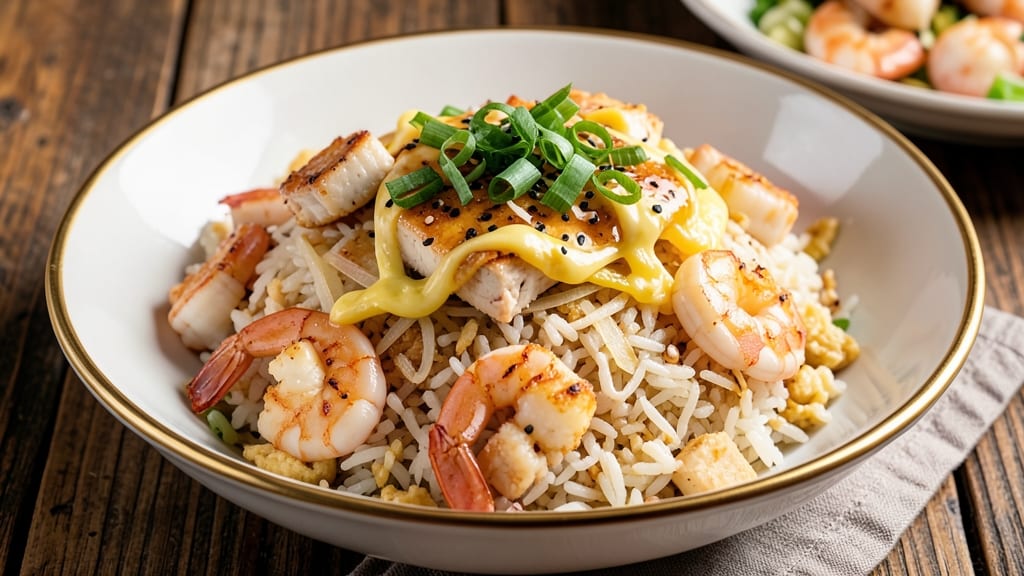
This traditional Chinese egg fried rice recipe delivers the wok-heated flavor and perfect texture balance that makes it a restaurant staple. The secret lies in high-heat stir-frying and precise ingredient ratios—day-old rice, scrambled eggs, and proteins like shrimp or chicken all come together in a symphony of textures and aromatics.
I've refined this recipe over years of testing, ensuring every bite captures that authentic "wok hei" smokiness while keeping the dish approachable for home cooks.
The foundation begins with properly prepped ingredients: cold, day-old rice prevents mushiness, while eggs are scrambled just until set but still slightly runny for that signature silky texture.
Aromatics like ginger, garlic, and scallions form the flavor base, while soy sauce, sesame oil, and a touch of sugar create the perfect balance of savory, umami, and subtle sweetness. The stir-frying technique—small batches in a hot wok—is what transforms simple ingredients into something extraordinary.
What you'll achieve is a dish with crisp edges on the rice, tender yet slightly runny eggs, and aromatic proteins all coated in a glossy, flavorful sauce. The high heat creates that coveted smoky aroma ("wok hei") while keeping the ingredients distinct yet harmonious.
This isn't just fried rice—it's a restaurant-quality meal that brings the heart of Chinese home cooking to your kitchen.
Whether you're serving it as a weeknight dinner or preparing for a family gathering, this recipe scales beautifully while maintaining its authenticity. The method is straightforward, but the results are anything but basic—every bite delivers that perfect contrast of textures and flavors that defines traditional Chinese egg fried rice.
Let's get started on creating this timeless classic.
Ingredients for traditional chinese egg fried rice
These 13 ingredients transform simple pantry staples into restaurant-quality egg fried rice with wok-heated perfection.
| Ingredient | Amount | Notes |
|---|---|---|
| Day-Old Cooked White Rice 🍚 | 4 cups | Cold and slightly dry for texture |
| Large Eggs 🥚 | 4 whole | Freshly beaten for silky texture |
| Boneless Chicken Breast 🍗 | 1 lb | Diced into small pieces |
| Large Shrimp 🦐 | ½ lb | Peeled and deveined |
| Green Onions 🧅 | ½ cup | Sliced into 1-inch pieces |
| Fresh Ginger 🧄 | 1 ½ tbsp | Finely minced for aromatic base |
| Garlic Cloves 🧄 | 6 cloves | Minced for deep flavor |
| Light Soy Sauce 🍶 | ½ cup | For authentic umami |
| Sesame Oil 🫒 | 1 tbsp | Toasted for nutty aroma |
| Granulated Sugar 🍚 | 1 tbsp | Balances flavors perfectly |
| Vegetable Oil 🫒 | ½ cup | High smoke point for wok-hei |
| Salt 🧂 | ½ tsp | Kosher for seasoning |
| White Pepper 🌶️ | ¼ tsp | Freshly ground for subtle heat |
The rice is non-negotiable—day-old, cold rice prevents mushiness and creates those crisp edges. Grab any leftover rice from dinner the night before and let it dry out slightly. For proteins, chicken breast and shrimp work perfectly, but swap in pork or tofu if you prefer. Fresh ginger and garlic are essential—Asian markets carry the best quality, but regular grocery stores work too. Just make sure your ginger has no soft spots and your garlic is firm. The light soy sauce is key here—dark soy sauce will color the rice but overpower the delicate flavors.
No shrimp? Scallops or extra chicken work beautifully. Running short on ginger? Ginger powder at half the amount gets you close, but fresh is always better. The sesame oil is where the magic happens—toast it in the wok first to release its nutty aroma before adding other ingredients. For the eggs, scrambled just until set but still slightly runny gives that signature silky texture. The sugar might seem odd, but it balances the soy sauce's saltiness perfectly. Need a substitute? A pinch of sugar-free sweetener works in a pinch.
Rice keeps for 5 days in the fridge, but it's best used within 2 days for optimal texture. Ginger and garlic can be prepped ahead and stored in the fridge for 1 week in airtight containers. The cooked proteins can be refrigerated for 2 days before adding to the fried rice. For leftovers, reheat in a skillet with a splash of water to restore crispiness. This dish freezes beautifully for 3 months—just thaw and reheat gently to preserve texture.
Why You'll Love This Recipe
- One-Pan Magic: I swear by this recipe because it’s literally one pan, one spatula, and zero dishes to wash. The eggs scramble right into the rice while the chicken and shrimp sizzle—no flipping, no fuss, just that perfect wok-hei aroma filling my kitchen.
- Umami Bomb: That first bite? Chef’s kiss. The soy sauce and light fish sauce cut through the richness of the eggs, while the shrimp’s briny snap and chicken’s tender bite make it dangerously addictive. Honestly, I’ve tried store-bought versions—this tastes like my grandma’s, but with half the effort.
- Leftover Hero: This dish begs to be made in bulk. The flavors actually get better the next day—crispier edges, more balanced taste. I portion it into containers and grab it for lunch all week, or freeze half for those nights when I’m too tired to cook.
- Budget Meal Power: I stretch a few simple ingredients into a full meal: day-old rice (no waste!), affordable chicken thighs or shrimp, and eggs that add protein without breaking the bank. Between us, this feeds four for under $10—and everyone clears their plates.
Step-by-step instructions for traditional Chinese egg fried rice
Here's how to achieve that signature wok-hei flavor and perfect texture balance every time.
Prepare the Protein and Aromatics
Start by dicing the 1 lb boneless chicken breast into small, even pieces—about ½-inch cubes—so they cook quickly and evenly. Pat the shrimp dry with paper towels and cut them into ¼-inch chunks, removing any remaining vein. Mince the 6 cloves garlic and 1.5 tbsp fresh ginger into a fine paste using a knife or mortar and pestle—this ensures they release their full flavor into the oil.
In a small bowl, whisk together 4 whole large eggs until the yolks and whites are fully combined. Season the chicken with 0.25 tsp white pepper and 0.25 tsp salt (reserve the rest for later), and set aside. The proteins should be prepped and ready to go—this keeps everything moving efficiently in the wok.
Create the Wok-Hei Foundation
Heat a 14-inch wok or large skillet over high heat until it's smoking hot. Add 0.5 cup vegetable oil and swirl to coat the bottom evenly. Once the oil shimmers, add the chicken and cook for 3-4 minutes until the edges turn light golden brown and the meat is no longer pink in the center. Remove the chicken with a slotted spoon and set aside.
In the same wok, add the shrimp and cook for 1-2 minutes until they turn opaque and curl slightly. Remove them and set aside with the chicken. Now add the garlic-ginger paste and stir for 30 seconds until fragrant—this step is crucial for building the aromatic base. Immediately add the 0.5 cup sliced green onions and stir for another 30 seconds before removing them and setting aside with the proteins.
Scramble the Eggs for Silky Texture
Reduce the heat to medium-high and add 1 tbsp sesame oil to the wok. Pour in the beaten eggs and let them sit undisturbed for 5-7 seconds until the edges begin to set. Using a spatula, gently push the eggs from one side of the wok to the other, creating soft, silky curds. Continue folding until the eggs are just set but still slightly runny—this ensures they stay creamy rather than rubbery.
Remove the eggs from the wok and set aside with the other proteins. Wipe out any leftover egg from the wok with a paper towel—this prevents the rice from sticking later. The eggs should be bright yellow and glossy, with a tender, almost custard-like texture when folded.
Stir-Fry the Rice with Perfect Technique
Return the wok to high heat and add the 4 cups day-old cooked white rice, breaking up any clumps with your spatula. Stir-fry for 2-3 minutes, letting the rice absorb the heat and dry out slightly—this creates that signature "sticky but not mushy" texture. Sprinkle the rice with 0.5 tsp salt, 0.25 tsp white pepper, and 1 tbsp granulated sugar, then stir to coat evenly.
Pour in the 0.5 cup light soy sauce and toss vigorously for 1-2 minutes until the rice is glossy and evenly seasoned. The rice should look dry but not crunchy, with a slight sheen from the soy sauce. This is where the magic happens—don't rush it, or the rice will turn out bland or gummy.
Combine and Finish with Wok-Hei Flavor
Return all the proteins and green onions to the wok, along with the scrambled eggs. Toss everything together for 1-2 minutes until the rice is hot throughout and the shrimp and chicken are reheated. Drizzle with an additional ½ tbsp sesame oil for extra aroma and toss once more to distribute evenly.
Taste and adjust seasoning if needed—you might want to add a splash more soy sauce or a pinch of sugar to balance the flavors. Serve immediately while the rice is steaming hot and the wok-hei flavor is at its peak. The dish should be bold, savory, and slightly sweet, with each bite delivering a perfect balance of texture and umami.
Pro Tips For Making Traditional Chinese Egg Fried Rice
- STIR-FRY THE RICE FIRST: Don’t wait until everything else is ready—get the rice sizzling in the wok immediately on high heat. The first 30 seconds of rapid stirring with a splash of oil (about 1 tablespoon) breaks up clumps and toasts the grains, which prevents that sad, gluey texture later. I used to add eggs first, but the rice needs that initial crisp to lock in flavor.
- CHOP CHICKEN SMALLER THAN YOU THINK: Cut the chicken breast into ½-inch cubes, not 1-inch chunks—this ensures even cooking and melts it faster in the wok. Overlooking this means some pieces stay rubbery while others turn dry. Pro tip: Slice against the grain and pound the meat lightly with a rolling pin before dicing—it cooks in half the time.
- SCRAMBLE EGGS IN A SEPARATE PAN: Skip the messy egg-in-the-wok approach—whisk eggs in a cold, nonstick pan first, then slide them onto a plate. This keeps them fluffy and intact when you fold them into the rice later. I learned this after watching my first batch of eggs disintegrate into a scrambled mess mid-stir.
- USE COLD SHRIMP FOR CRISP EDGES: Pat the shrimp completely dry and refrigerate them for 15 minutes before cooking—this tightens the flesh and guarantees a crisp exterior. If you’re impatient, at least wipe them with paper towels and resist the urge to thaw frozen shrimp in water (they’ll turn mushy). The difference in texture is night and day.
Make-ahead tips for leftovers
Rice Prep Ahead
Cook your rice 24 hours in advance and store it uncovered in the fridge to dry out completely. This is non-negotiable for that signature crisp texture—day-old rice absorbs flavors better and develops those coveted edges when stir-fried.
I like to make a big batch on Sunday so I can use it for fried rice all week. 🍚
Protein Prep Shortcuts
Cook and chop your proteins the night before to save 15-20 minutes of prep time. Store them separately in airtight containers in the fridge. For shrimp, toss them with ½ tsp cornstarch to prevent curling during reheating. The chicken stays juicier when pre-cooked and chilled this way. 🦐
Flavor Base Prep
Mince your ginger and garlic ahead of time and store in a small container with 1 tsp sesame oil to preserve freshness. This aromatic paste keeps well for 3 days in the fridge.
I also pre-mix the soy sauce, sugar, and pepper in a bowl so I can pour it all in at once during cooking. This saves me from measuring mid-stir-fry chaos. 🧄
Egg Prep Hack
Beat your eggs the night before and store them in the fridge in a sealed container. When ready to cook, let them sit at room temperature for 10 minutes before scrambling—they'll cook more evenly.
I've found this prevents that rubbery texture some home cooks struggle with. Pro tip: Add a pinch of salt to the eggs while beating them. 🥚
Complete Assembly
Here's my game-changing strategy: Keep all your prepped components in separate containers in the fridge. When ready to cook, simply assemble everything in the wok in this order: oil, proteins, aromatics, eggs, then rice.
This keeps everything hot and ready to go with minimal prep time. The whole process takes just 10 minutes after the wok heats up! ⏱️
Storage Solutions
Store leftovers in airtight containers for up to 3 days in the fridge. To reheat, use a nonstick skillet over medium heat with 1 tbsp water per serving—this restores crispiness.
For freezing, portion into single servings and freeze for up to 3 months. Thaw overnight in the fridge before reheating. 🧊
Nutrition facts
Frequently asked questions
Why does traditional Chinese egg fried rice use day-old rice?
Day-old rice is essential because it's drier and less sticky than fresh rice, preventing mushiness when stir-fried. The cold temperature also helps create those signature crisp edges while absorbing flavors better. Never use freshly cooked rice—it will turn out gummy and bland.
Can I make this recipe without a wok?
Use a large nonstick skillet or cast-iron pan instead. The key is maintaining high heat and working in small batches. A wok distributes heat better, but a good skillet can still achieve that wok-hei flavor with proper technique. Just make sure your pan is hot before adding oil.
What's the secret to getting the eggs silky instead of rubbery?
Scramble the eggs on medium-high heat until they're just set but still slightly runny (about 30-45 seconds total). Let them sit undisturbed for 5-7 seconds before folding, and avoid overmixing. Room-temperature eggs also scramble better—let them sit out for 10 minutes before cooking.
How do I adjust this recipe for vegetarians?
Replace the chicken and shrimp with 1 cup firm tofu (pressed and cubed) and ½ cup mushrooms. Add 1 tsp soy sauce to the tofu before cooking, and consider adding ½ cup peas or corn for extra texture. The egg remains the star protein in vegetarian versions.
Why does my fried rice turn out bland?
Blandness usually comes from underseasoning or low heat.