
Breakfast & Brunch
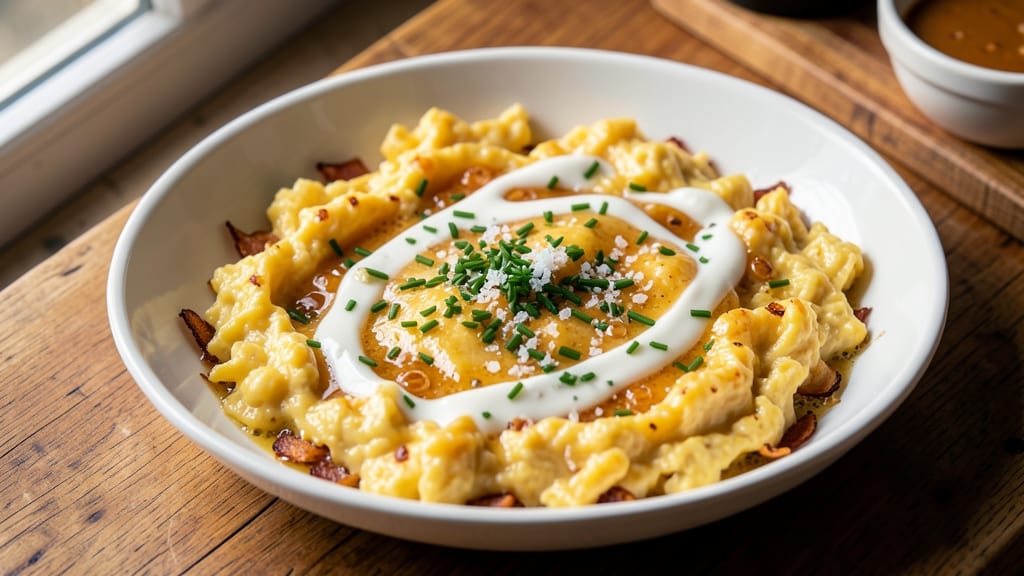
Mastering the types of scrambled eggs recipe transforms breakfast into an art form—each style delivers a distinct texture and flavor. This collection of five chef-inspired variations covers everything from velvety French-style to hearty cheesy scramble, ensuring you have the perfect recipe for any morning.
The secret lies in heat control and technique, which I’ll break down for each method to guarantee success every time.
French-style scrambled eggs remain the gold standard, with their creamy, custard-like texture achieved through low-and-slow cooking. For those craving fluffiness, the American method delivers light, airy eggs with a touch of butter and cream.
Meanwhile, the cheesy scramble adds richness with melted cheddar, while the vegan version proves plant-based eggs can be just as satisfying. Each style builds on fundamental techniques but adapts to dietary needs without sacrificing flavor.
What sets these recipes apart is their versatility—whether you’re preparing a quick weeknight breakfast or a brunch spread for guests. The instructions emphasize precision in heat and stirring, ensuring consistent results. Garnishes like fresh herbs, hot sauce, or avocado elevate each variation, making them customizable for any taste.
Ready to elevate your scrambled eggs game? Let’s dive into the techniques that make each style shine.
Ingredients for types of scrambled eggs
Five distinct styles using just 15 ingredients—each delivers a signature texture and flavor profile.
| Ingredient | Amount | Notes |
|---|---|---|
| Large Eggs 🥚 | 8 whole | Fresh, room temperature preferred |
| Unsalted Butter 🧈 | 2 tbsp | European-style preferred for flavor |
| Heavy Cream 🥛 | ¼ cup | Full-fat for optimal texture |
| Whole Milk 🥛 | ⅛ cup | Warmed for smoother scramble |
| Shallots 🧅 | 2 whole | Finely minced for French-style |
| Fresh Chives 🌿 | 2 tbsp | Chopped, for garnish |
| Sharp Cheddar Cheese 🧀 | ½ cup | Shredded, aged variety preferred |
| Extra-Virgin Olive Oil 🫒 | 1 tbsp | For vegan variation |
| Silken Tofu 🍲 | ¾ cup | Blended for vegan texture |
| Nutritional Yeast 🍃 | 2 tbsp | For cheesy vegan flavor |
| Diamond Crystal Kosher Salt 🧂 | ½ tsp | Adjust to taste |
| Freshly Ground Black Pepper 🌶️ | ¼ tsp | Cracked peppercorns preferred |
| Avocado Oil 🫒 | 1 tbsp | High smoke point for American style |
| Fresh Dill 🌿 | 1 tbsp | Chopped, optional garnish |
| Hot Sauce 🌶️ | 1 tbsp | For serving, optional |
The foundation begins with fresh, room-temperature eggs—never straight from the fridge. For the French-style, European-style unsalted butter (like Plugrá or Kerrygold) delivers a richer, deeper flavor than American brands. The shallots should be finely minced, almost paste-like, to create that signature custard texture. If you can't find fresh chives, substitute green onions at double the amount. For the cheesy scramble, aged sharp cheddar (like Cabot or Vermont) melts more smoothly than pre-shredded varieties. The silken tofu for the vegan version must be blended until completely smooth to mimic egg texture.
No heavy cream? Whole milk plus 1 tbsp melted butter works in a pinch. Substituting cream cheese for the vegan version requires blending it into the tofu mixture for a richer texture. Diamond Crystal kosher salt measures differently than table salt—use half the amount if you only have table salt. For the American-style fluffiness, avocado oil has a higher smoke point than butter, allowing you to cook faster without burning. The nutritional yeast adds that umami depth to the vegan version, but if unavailable, white miso paste (½ tsp) creates a similar effect. Always taste as you go—scrambled eggs are forgiving but benefit from precise seasoning.
Eggs scramble best when cooked immediately, but you can prep components ahead: whisk eggs and dairy mixtures in advance and store in the fridge for up to 2 days. The silken tofu blend keeps for 3 days in an airtight container. For the French-style, pre-minced shallots can sit in the fridge for 1 day before cooking. Garnishes like chives and dill should be added fresh at the end—store them in damp paper towels in a sealed container for 5 days. Leftover scrambled eggs reheat beautifully in a nonstick skillet over low heat, with a splash of milk to restore creaminess.
Why You'll Love This Recipe
- No-Fuss Technique: I swear by this method—just melt butter in a pan, toss in finely diced shallots until soft, then pour in eggs mixed with cream and milk. No flipping, no stress, just perfect silky curds every time.
- Creamy Luxury: That heavy cream and whole milk combo turns ordinary eggs into something dangerously rich. The shallots add a subtle sweetness that balances the richness—like a fancy brunch without the fuss.
- Weeknight Superstar: Make a big batch on Sunday and reheat for breakfast all week. Or serve it alongside toast for a quick dinner when you’re too tired to think. It’s my go-to when I’m running on empty.
- Budget-Friendly Splurge: Eggs and butter are cheap, but this recipe feels indulgent. I’ll be real: my kids don’t know it’s not from a restaurant. The cream makes it special without breaking the bank.
Step-by-step instructions for chef's signature scrambled egg styles
Master these five professional techniques to elevate your scrambled eggs from ordinary to extraordinary.
Classic French Scrambled Eggs with Shallots
In a nonstick skillet, melt the 2 tbsp unsalted butter over low heat until it foams but doesn't brown. Add the 2 whole finely minced shallots and cook for 3-4 minutes until completely translucent and just beginning to caramelize. This gentle cooking prevents bitterness and builds depth of flavor.
Whisk together the 8 whole large eggs with the 0.5 tsp kosher salt and 0.25 tsp black pepper. Slowly pour the egg mixture into the skillet, letting it settle for 10 seconds before gently stirring with a silicone spatula. The key is to lift and fold the eggs rather than scraping the bottom—this creates soft, creamy curds. Cook for 2-3 minutes until the eggs are just set but still slightly runny in the center. Remove from heat immediately and cover with a lid for 30 seconds to finish steaming.
American-Style Scrambled Eggs with Cream
Heat the 1 tbsp avocado oil in a heavy-bottomed skillet over medium-low heat until shimmering. In a separate bowl, whisk together the 8 whole eggs, 0.25 cup heavy cream, and 0.125 cup warmed whole milk until completely combined. Season with the 0.5 tsp kosher salt and 0.25 tsp black pepper.
Pour the egg mixture into the skillet and let it sit undisturbed for 15 seconds to set slightly at the edges. Using a wooden spoon, gently push the eggs from one side of the pan to the other in small sections, repeating until the eggs are softly set with just a hint of moisture remaining. This technique creates the signature American-style texture—creamy yet slightly firm. Remove from heat when the eggs reach 150°F internally and immediately fold in the 0.5 cup shredded sharp cheddar cheese.
Vegan Silken Tofu Scramble with Nutritional Yeast
In a blender, combine the 0.75 cup silken tofu, 2 tbsp nutritional yeast, 0.5 tsp kosher salt, and 0.25 tsp black pepper. Blend until completely smooth, scraping down the sides as needed. The result should be a thick, custard-like consistency that mimics egg texture.
Heat the 1 tbsp extra-virgin olive oil in a nonstick skillet over medium heat until hot but not smoking. Pour in the tofu mixture and cook for 4-5 minutes, stirring gently with a spatula to create small curds. Unlike traditional scrambled eggs, vegan scramble benefits from slightly firmer texture—continue cooking until the mixture pulls away from the pan in soft clumps. Garnish immediately with the 2 tbsp chopped fresh chives and 1 tbsp chopped fresh dill for brightness.
Cheesy Herb Scramble with Avocado Oil Finish
Melt the 2 tbsp unsalted butter in a skillet over medium heat until foamy. Add the 8 whole beaten eggs along with the 0.5 cup shredded sharp cheddar cheese, stirring gently until the cheese begins to melt completely. The residual heat will finish cooking the eggs as they incorporate.
In the final 30 seconds of cooking, drizzle in the 1 tbsp avocado oil while stirring continuously. This high-smoke-point oil adds richness without overpowering the cheese flavor. Remove from heat when the eggs reach 145°F and are just set. Immediately fold in the 2 tbsp chopped fresh chives and 1 tbsp chopped fresh dill, then transfer to warmed plates. Serve with the 1 tbsp hot sauce on the side for those who prefer heat.
Restaurant-Style Scrambled Eggs with Perfect Texture
Whisk the 8 whole eggs with the 0.25 cup heavy cream and 0.125 cup warmed whole milk until fully combined. Season generously with the 0.5 tsp kosher salt and 0.25 tsp black pepper. Heat a heavy-bottomed skillet over low heat and add the 2 tbsp unsalted butter, allowing it to melt completely without browning.
Pour the egg mixture into the skillet and let it cook undisturbed for 20 seconds before gently stirring with a silicone spatula. The secret to restaurant-style eggs lies in the timing—continue cooking for 3-4 minutes total, stirring constantly in small sections. The eggs should be creamy yet slightly firm, with no visible liquid remaining. For the final touch, remove from heat and immediately fold in the 0.5 cup shredded sharp cheddar cheese, allowing it to melt completely through the warm eggs.
Pro Tips For Making Types Of Scrambled Eggs
- Whisk Like You Mean It: Crack those eggs into a bowl first, then whisk vigorously for 30 seconds—no lazy stirring. The cream and milk blend better when the eggs are fully emulsified, and you’ll avoid those stubborn, uncooked streaks in the middle. I used to rush this, and my eggs always tasted half-finished.
- Melt Butter Slowly: Heat the butter over medium-low until it’s just melted and foaming, then turn off the heat for 30 seconds. This prevents burning the shallots and keeps the butter from scorching before the eggs hit the pan. I learned this the hard way after one batch tasted like a campfire.
- Salt the Shallots: Thinly slice the shallots and toss them in a pinch of salt before cooking. This draws out moisture, so they caramelize instead of steaming into mush. Sounds weird, but it works—your eggs will taste richer, not watery.
- Pull Heat Early: As soon as the eggs start to set at the edges (about 2 minutes in), lower the heat to the barest simmer and let them cook undisturbed. Stirring constantly makes them rubbery; patience gives you creamy, custardy eggs. I skip this when I’m lazy, but the dish is noticeably better when I don’t.
Serving suggestions for this dish
Breakfast Plating
For a restaurant-worthy presentation, serve French-style scrambled eggs on a white stoneware plate with a gold-rimmed edge—it makes the creamy yellow eggs pop. I like to create a small well in the center for the eggs and arrange 2-3 microgreens around the perimeter for color contrast.
Add a drizzle of truffle oil (just ½ tsp) for an elegant touch. 💛
Brunch Spread
Turn scrambled eggs into a brunch centerpiece by layering them in a warmed cast-iron skillet with crispy bacon and sautéed mushrooms. Top with crumbled goat cheese and toasted sourdough crostini for texture.
For a vegan option, use the tofu scramble with avocado slices and pickled red onions. Serve with fresh berries on the side for a pop of color.
Taco or Burrito Filling
American-style scrambled eggs make an excellent taco or burrito filling. Cook the eggs with ½ tsp cumin and ¼ tsp smoked paprika for a Mexican-inspired twist. Serve in warm corn tortillas with shredded lettuce, diced tomatoes, and sour cream.
For a protein boost, stir in ½ cup cooked chorizo during the last minute of cooking.
Garnish Ideas
Fresh herbs elevate any scrambled egg dish. I always keep chives, dill, and parsley on hand for garnishing. For French-style eggs, a sprinkle of flaky sea salt (like Maldon) adds a sophisticated finish.
The vegan tofu scramble benefits from a dash of smoked paprika or everything bagel seasoning for extra flavor. Always add garnishes right before serving to keep them vibrant.
Leftovers Reinvented
Leftover scrambled eggs transform into egg salad or frittatas with minimal effort. For egg salad, chop the eggs into ¼-inch pieces and mix with 1 tbsp mayonnaise, ½ tsp Dijon mustard, and 1 tbsp chopped celery.
Serve on toasted rye bread for a hearty lunch. For frittatas, pour leftover eggs into a greased oven-safe skillet, top with shredded cheese and veggies, then bake at 350°F for 10-12 minutes.
Global Twists
Give your scrambled eggs an international flair. For a Japanese-inspired version, stir in 1 tsp mirin and top with sesame seeds and scallions. A Mexican-style scramble includes ½ cup black beans and corn kernels, finished with salsa verde.
For a French bistro touch, fold in crumbled Gruyère cheese and serve with crusty baguette slices. Each twist keeps the core technique intact while adding exciting new flavors. ✨
Nutrition facts
Frequently asked questions
What’s the difference between French-style and American-style scrambled eggs?
French-style eggs use low heat and gentle stirring to create a creamy, custard-like texture with soft curds. American-style eggs incorporate cream or milk and are stirred more aggressively for a lighter, fluffier result. The French method relies on butter and shallots for depth, while the American style often finishes with cheese for richness.
Can I make vegan scrambled eggs without tofu?
Yes! Blend ½ cup chickpea flour with ½ cup water, 1 tbsp nutritional yeast, and ½ tsp turmeric for color. Cook in a skillet with 1 tbsp oil over medium heat for 4-5 minutes, stirring constantly. The result mimics egg texture but requires constant attention to avoid drying out.
Why do my scrambled eggs turn out rubbery?
Overcooking or high heat causes rubbery eggs. Keep heat at low-medium and remove them when they’re just set (around 150°F internally). Stirring too aggressively also breaks down the proteins—use a spatula to gently fold rather than scrape. For extra creaminess, finish with a splash of warm milk or cream off the heat.
How do I reheat scrambled eggs without drying them out?
Add a splash of milk or water (about 1 tbsp per 2 eggs) and stir to restore moisture. Reheat in a nonstick skillet over low heat for 2-3 minutes, stirring gently. For microwave reheating, cover with a damp paper towel and heat in 20-second bursts until warmed through—this prevents drying.
What’s the best way to make scrambled eggs ahead of time?
Cook eggs underdone (slightly runny) and refrigerate in an airtight container for up to 2 days. Reheat gently with a splash of milk or cream. Alternatively, pre-whisk egg mixtures (without dairy) and store in the fridge for 1 day, then cook fresh. Never fully cook eggs ahead—they’ll turn rubbery when reheated.