
Snacks
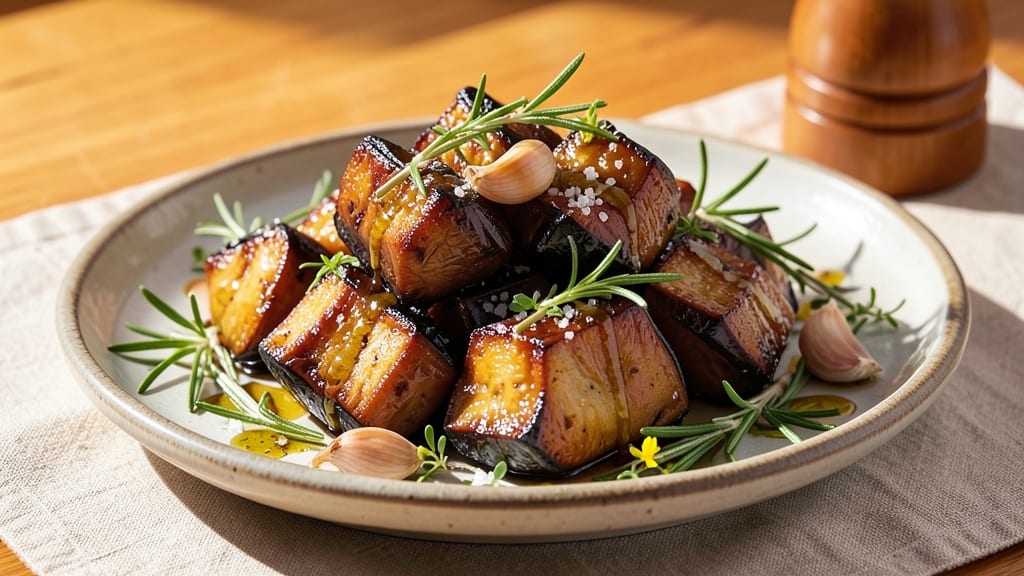
This vegan roasted eggplant recipe transforms simple ingredients into a dish with smoky char and a creamy interior that rivals any restaurant version. The secret lies in proper salting and drying—steps that draw out excess moisture for that perfect texture.
I perfected this method after years of experimenting, and it delivers restaurant-quality results without dairy or meat.
What makes this recipe stand out is the balance of flavors: caramelized edges meet tender, velvety centers, all infused with aromatic herbs and a touch of garlic. The roasting technique ensures even cooking, while a light drizzle of olive oil enhances the natural sweetness of the eggplant.
This dish is versatile enough for weeknight dinners or elegant gatherings.
By the time you pull it from the oven, you'll have golden-brown slices with crispy edges and a creamy interior that melts in your mouth. The aroma alone will have everyone asking what's for dinner.
Serve it as a main dish with a fresh salad or as a side with grains and proteins for a complete meal.
This recipe also works beautifully as a base for stuffed eggplant or Mediterranean bowls. The possibilities are endless, and the best part? It's entirely plant-based, proving that vegan dishes can be just as satisfying as their non-vegan counterparts. Let's get started!
Ingredients for vegan roasted eggplant
Simple plant-based ingredients create restaurant-quality roasted eggplant with smoky char and creamy texture.
| Ingredient | Amount | Notes |
|---|---|---|
| Large Eggplant 🍆 | 2 whole | Japanese or Italian variety preferred |
| Extra-Virgin Olive Oil 🫒 | ½ cup | High-quality, fruity variety |
| Kosher Salt 🧂 | 2 tbsp | Diamond Crystal preferred |
| Garlic Cloves 🧄 | 4 cloves | Freshly minced |
| Fresh Rosemary 🌿 | ¼ cup | Chopped, stems removed |
| Fresh Thyme Leaves 🌿 | 1 tbsp | Or 1 tsp dried thyme |
| Smoked Paprika 🌶️ | 1 tsp | For smoky depth |
| Ground Black Pepper 🌶️ | ½ tsp | Freshly cracked |
| Lemon Juice 🍋 | 1 tbsp | Freshly squeezed |
| Unsweetened Almond Milk 🥛 | ¼ cup | For creamy drizzle |
| Nutritional Yeast 🍞 | 2 tbsp | For cheesy flavor |
| Fresh Parsley 🌿 | ¼ cup | Chopped, for garnish |
The eggplant variety matters—Japanese or Italian types have fewer seeds and more tender flesh. Look for firm, heavy eggplants with glossy skin at Whole Foods or your local farmers market. The skin should be smooth, not wrinkled. If you can't find fresh rosemary, dried works at half the amount, but fresh gives that bright aroma. Smoked paprika is key for that restaurant-quality smokiness—Penzeys or Trader Joe's carry excellent options. For the almond milk, unsweetened is crucial; Silk or Califa Farms are reliable brands that won't overpower the dish.
No smoked paprika? Liquid smoke at 1/4 tsp works in a pinch, but it's not the same. Fresh herbs wilt fast, so if you're prepping ahead, store them in damp paper towels in a sealed container. The eggplant can be roasted up to 2 days ahead—just reheat at 350°F for 10 minutes. For extra creaminess, blend the almond milk with 1 tbsp tahini before drizzling. The nutritional yeast adds that savory depth without dairy—don't skip it if you want that restaurant-quality umami. And if you're feeling fancy, a sprinkle of flaky sea salt on top right before serving takes it to the next level.
Roasted eggplant keeps beautifully in the fridge for 4-5 days—store it in an airtight container with a paper towel to absorb any excess moisture. For longer storage, freeze portions for up to 3 months. The dish reheats wonderfully in a skillet with a splash of water or almond milk to restore moisture. I always make extra because it's perfect for stuffing into Mediterranean bowls or wrapping in flatbreads the next day. The leftovers actually taste better because the flavors meld even more overnight.
Why You'll Love This Recipe
- One-Pan Magic: I swear by this—just slice, toss, and roast. No chopping boards to clean, no extra pots, and that olive oil caramelizes into pure flavor without any fuss.
- Crispy-Creamy Perfection: The skin gets gloriously crisp while the inside stays tender—like a charred, herby hug. That garlic-rosemary oil? It’s the secret weapon making this taste like a restaurant dish.
- Meal Prep MVP: Roast a whole eggplant ahead, and you’ve got ready-to-eat bowls for days. Toss it into salads, mash it into dips, or serve it with toast—it’s the ultimate lazy-day ingredient.
- Budget-Friendly Luxury: Eggplant is cheap, and this recipe stretches it far. A single roasted eggplant feeds four with leftovers that actually improve overnight—no waste, all flavor.
Step-by-step instructions for vegan roasted eggplant
Master this technique and you'll transform simple eggplant into a restaurant-worthy dish with smoky char and velvety texture.
Prep and Season the Eggplant
Start by preheating your oven to 425°F. Cut the 2 whole large eggplant lengthwise into ½-inch thick slices, then cross-cut into 1-inch cubes. I like to use a Japanese or Italian variety—they're denser and hold up better to roasting.
Spread the eggplant cubes on two rimmed baking sheets in a single layer, leaving ½ inch between each piece. This ensures even browning and crispy edges. In a small bowl, whisk together the 0.5 cup extra-virgin olive oil, 2 tbsp kosher salt, 1 tsp smoked paprika, and 0.5 tsp ground black pepper. Toss the eggplant cubes thoroughly until evenly coated.
Roast Until Deeply Charred
Place the baking sheets in the preheated oven and roast for 20 minutes, stirring halfway through. You're looking for deep golden brown edges with some charred spots—this is where the smoky flavor develops. The eggplant should be tender when pierced with a fork but still hold its shape.
Here's the thing—don't rush this step. The longer you roast, the more concentrated the flavor becomes. If your oven runs hot, reduce the temperature to 400°F after the first 15 minutes to prevent burning. The eggplant should yield slightly when pressed but not fall apart.
Build the Herb Sauce
While the eggplant roasts, prepare the herb sauce. In a small saucepan, combine the 0.25 cup chopped fresh rosemary, 1 tbsp fresh thyme leaves, 4 cloves minced garlic, and 1 tbsp lemon juice with 0.25 cup unsweetened almond milk. Simmer over low heat for 5 minutes until fragrant and slightly reduced.
Remove from heat and stir in the 2 tbsp nutritional yeast and 0.25 cup chopped fresh parsley. This sauce adds depth and a cheesy umami note that balances the smoky eggplant. The nutritional yeast is key here—it's what gives that rich, savory quality without any dairy.
Combine and Rest
Once the eggplant is roasted, transfer it to a serving platter and immediately pour the herb sauce over the top. Gently toss to coat evenly, letting the sauce soak into the tender flesh. The eggplant will continue steaming slightly from its residual heat, absorbing all that herby goodness.
Let the dish rest for 5 minutes before serving. This resting period allows the flavors to meld together and the eggplant to absorb the sauce completely. The result should be tender yet firm eggplant with a glossy, aromatic coating and those beautiful charred edges.
Serve Warm with Fresh Garnish
Taste and adjust seasoning if needed—sometimes the eggplant needs a touch more salt, especially if you're using a mild variety. Garnish with additional chopped fresh parsley for color and freshness. This dish serves beautifully as a main course with crusty bread or as a side alongside grains and roasted vegetables.
Each bite should deliver that perfect contrast: crispy, charred edges giving way to creamy, herb-infused flesh. The smoky paprika and rosemary create a complex flavor profile that's both satisfying and elegant—exactly what makes this vegan eggplant so special.
Pro Tips For Making Vegan Roasted Eggplant
- SALT THE SLICES FIRST: Eggplant bleeds like a cut—rub each slice with salt and let them sit 10 minutes on a rack. I learned this the hard way after soggy, waterlogged roasted eggplant ruined a dish. Pat them thoroughly dry afterward, or the oil won’t stick.
- USE HIGH HEAT THEN LOW: Start roasting at 425°F (220°C) for 10 minutes to blister the skin—this locks in flavor. Then drop to 375°F (190°C) for another 15–20 minutes. Skipping the high-heat start means mushy eggplant instead of crisp edges.
- CHOP ROSEMARY FINE: Tiny sprigs of rosemary cling to eggplant like barnacles. Pulse them in a food processor for 2 seconds—just enough to release oils without turning to mush. Fresh rosemary loses its punch if you’re too heavy-handed.
- GARLIC SKINS ON: Peel the cloves after roasting, not before. The skins add aroma and protect the garlic from burning. Toss whole cloves with the eggplant, then peel and crush them into the pan at the end—no wasted flavor, no charred bits.
Storing and reheating this dish
Fridge Storage Tips
Store your roasted eggplant in an airtight container with a paper towel on top to absorb any excess moisture—this keeps it fresh for up to 4-5 days. I like using glass Pyrex containers because they let me see the contents and reheat directly in the oven.
The eggplant's texture remains tender when stored properly, though the edges may lose some crispness over time. 🌿
Freezer-Friendly Method
For longer storage, freeze portions in single-serving portions using quart-sized freezer bags. Lay the eggplant flat in the bag to save space, then squeeze out excess air before sealing.
Frozen eggplant keeps its quality for up to 3 months. When ready to use, thaw overnight in the fridge before reheating—this prevents a soggy texture. 🥶
Reheating for Best Texture
For stovetop reheating, warm the eggplant in a non-stick skillet over medium-low heat for 5-7 minutes, adding 1 tablespoon almond milk or water to restore moisture. If using the oven, spread on a baking sheet at 350°F for 10 minutes—this crispifies the edges again.
Microwave reheating works in a pinch, but cover with a damp paper towel to prevent drying. 🔥
Make-Ahead Sauce Trick
Prepare the herb sauce separately and store it in a small glass jar in the fridge for up to 3 days. When reheating, simply toss the eggplant with fresh sauce to revive its flavors.
This keeps the eggplant and sauce components separate until ready to serve, ensuring maximum freshness. The sauce's aromatic herbs stay vibrant when stored this way. ✨
Portion Control for Leftovers
Divide leftovers into smaller containers before storing to make reheating easier. I often portion mine into ½-cup servings—perfect for lunches or stuffing into wraps. Label containers with dates to track freshness. The eggplant reheats beautifully when portioned this way, maintaining its ideal texture for each serving. 📅
Reviving Day-Old Eggplant
If your eggplant feels dry after storage, revive it by sprinkling with 1 teaspoon warm water and letting it sit for 5 minutes before reheating. The moisture helps restore its tender quality.
For extra flavor, add a pinch of smoked paprika or garlic powder when reheating—this boosts the dish's depth without altering the original recipe. 💡
Nutrition facts
Frequently asked questions
Why do I need to salt eggplant before roasting?
Salting removes excess moisture from the eggplant, which prevents a watery texture when roasted. Sprinkle the cubes with salt, let them sit for 10 minutes, then pat dry. This step is crucial for achieving that perfect creamy interior with crispy edges.
Can I use a different variety of eggplant?
Japanese or Italian eggplants work best—they're denser and hold up better to roasting. If using a larger, seedier variety, cut the cubes slightly smaller (½-inch) and roast for 5-10 minutes longer to ensure full tenderness.
What if my eggplant turns out too dry?
If the eggplant loses moisture during roasting, toss it with 1 tablespoon almond milk or water after removing from the oven. The herb sauce will also help restore moisture while adding flavor. For future batches, reduce oven temperature to 400°F if your kitchen runs hot.
How can I make this dish more filling?
Turn the roasted eggplant into a complete meal by serving it over quinoa or couscous with a side of greens. For extra protein, add chickpeas or white beans to the herb sauce. The eggplant's creamy texture pairs perfectly with hearty grains and fresh vegetables.
Can I bake this eggplant instead of roasting?
Yes, but roasting gives better flavor development. If baking, spread the eggplant on a sheet pan at 400°F for 25-30 minutes, flipping halfway. For deeper char, broil for the last 2 minutes. The high heat of roasting creates those smoky, caramelized edges that baking can't match.