
Breakfast & Brunch
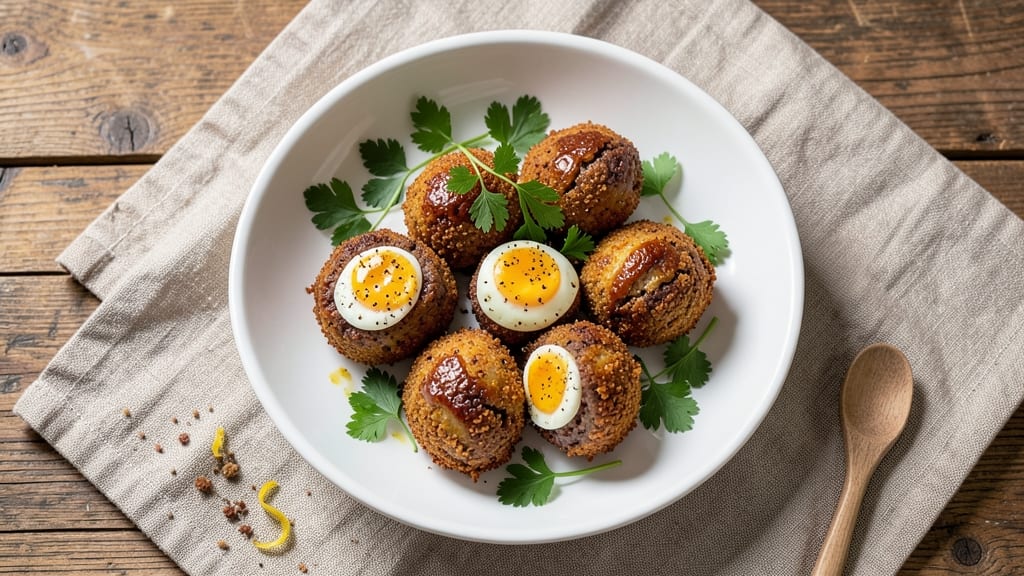
This venison Scotch egg recipe transforms gamey meat into a breakfast masterpiece with crispy breading and herbed yolk magic. The secret lies in finely grinding the venison and blending it with mustard and breadcrumbs for maximum flavor absorption. Traditional Scotch eggs deserve this gourmet twist—rich, savory, and satisfying.
What sets these apart is the venison's deep umami flavor, elevated by a perfectly seasoned yolk center. The breading stays crispy even after frying, while the yolk remains runny and luxurious.
This dish bridges rustic tradition with refined technique, making it ideal for hunters, food enthusiasts, or anyone craving a protein-packed breakfast.
Each bite delivers a symphony of textures: shatteringly crisp breading, tender venison, and a velvety yolk that ties everything together. The herbed mustard adds a bright contrast to the rich venison, balancing richness with acidity.
Perfect for brunch gatherings or a special weekend breakfast, these Scotch eggs prove venison can star in any meal.
Ready in just 30 minutes, this recipe delivers restaurant-quality results with minimal effort. The venison mixture can be prepped ahead, making it ideal for meal prep. Whether you're feeding a crowd or treating yourself, these Scotch eggs are guaranteed to impress. Let's get started!
Ingredients for venison scotch egg
Gamey venison meets crispy perfection with these herbed Scotch eggs—rich texture and runny yolk magic.
| Ingredient | Amount | Notes |
|---|---|---|
| Venison Meat 🦌 | 1 ½ lb | Finely ground, lean cut preferred |
| Large Eggs 🥚 | 4 whole | Room temperature for even cooking |
| Panko Breadcrumbs 🍞 | 2 cups | Light and crispy preferred |
| All-Purpose Flour 🌾 | ½ cup | For extra crunch in breading |
| Dijon Mustard 🍯 | 2 tbsp | For herbed flavor base |
| Fresh Parsley 🌿 | ¼ cup | Finely chopped, for herbed coating |
| Fresh Chives 🌱 | 2 tbsp | Finely chopped, for herbed coating |
| Granulated Garlic 🧄 | 1 tbsp | For herbed flavor enhancement |
| Salt 🧂 | 1 ½ tsp | Kosher or sea salt preferred |
| Ground Black Pepper 🌶️ | ½ tsp | Freshly ground for best flavor |
| Extra-Virgin Olive Oil 🫒 | ½ cup | For frying, high smoke point |
| Vegetable Oil 🫒 | ½ cup | For frying, neutral flavor |
| Cornstarch 🌾 | 1 tbsp | For crispier breading |
The venison is the star here, so lean cuts like shoulder or leg work best—ground finely for maximum flavor absorption. For best results, freeze the meat for 20 minutes before grinding to make it easier. Costco or specialty butchers often carry venison, or look for pre-ground in the freezer section. If you can't find venison, ground beef or pork works in a pinch, but the flavor will differ. The eggs must be large and room temperature—cold eggs can cause cracking during frying. I always buy extra eggs for this recipe since they're used in both the filling and breading.
No panko? Regular breadcrumbs plus an extra tablespoon of cornstarch work just fine. Fresh herbs are ideal, but dried parsley and chives at half the amount will do if you're short on time. The mustard adds a bright contrast to the rich venison—Dijon is key for that tangy kick. For extra crispiness, mix the cornstarch into the breadcrumbs before coating. The oil blend (olive and vegetable) gives you both flavor and stability for frying. If you're frying multiple batches, keep the oil at 350°F—any hotter and the breading burns before the egg cooks through.
Prep the venison mixture ahead and refrigerate for up to 2 days—it actually tastes better after resting. The breaded eggs keep well in the fridge for 1 day if you fry them ahead, but they're best served fresh. For meal prep, freeze the unbreaded eggs in a single layer before adding the coating—this prevents them from sticking. When reheating, toaster oven at 375°F for 5-7 minutes keeps the breading crispy. Store any leftover oil in an airtight container for up to 1 month—it's perfect for future frying.
Why You'll Love This Recipe
- Here’s what sold me: venison’s lean, so every bite counts. Use the whole egg—yolk and all—no sad half-used cartons here. And if you make extras? They reheat like a dream, whether it’s lunch the next day or a snack straight from the fridge.
- Lean Protein Powerhouse: I swear by this for when I need something filling but not greasy—venison packs serious flavor without the guilt. That Dijon mustard in the mix? It cuts through the richness like a bright little wake-up call.
- Crispy Without Effort: Between us, I’ve burned more panko than I’d like to admit, but this recipe’s forgiving. Toss the crumbs with a little oil first, press them on gently, and you’ll get that golden crust every time—no flipping or frying circus.
- Tailgate to Tuesday: Honestly, these are my go-to for hunting season leftovers or a last-minute potluck. Serve them warm with a side of mustard or piccalilli, and suddenly you’ve got a crowd-pleaser that’s way more impressive than store-bought sliders.
Step-by-step instructions for venison Scotch eggs
Here's the precise method for crafting Scotch eggs with rich venison filling and a perfectly crisp herbed coating.
Prepare the Venison Filling
In a mixing bowl, combine the 1.5 lb finely ground venison meat, 2 tbsp Dijon mustard, 1 tbsp granulated garlic, 1.5 tsp salt, and 0.5 tsp ground black pepper. Using your hands or a fork, mix until the ingredients come together into a cohesive, slightly sticky mass. The texture should be moist but not wet—if it feels too dry, add 1 tbsp of the extra-virgin olive oil to help bind it.
This step is crucial for flavor development. The Dijon mustard adds depth while the garlic and seasonings penetrate the meat evenly. For best results, work quickly to maintain the freshness of the venison. Once mixed, cover the bowl and refrigerate for 15 minutes to allow the flavors to meld together.
Assemble the Egg Centers
Remove the 4 whole large eggs from the refrigerator and let them sit at room temperature for 10 minutes. This ensures even cooking. Crack each egg into a small bowl, being careful not to break the yolks. In a separate bowl, whisk the egg whites until they form soft peaks.
Gently fold the egg yolks into the venison mixture, reserving 1 tbsp of the egg whites for later. Using a spoon, shape the mixture into 4 equal balls, about 1.5 inches in diameter. Roll each ball in the reserved egg whites to create a smooth, sealed coating. This step prevents the filling from leaking during frying.
Create the Herbed Breading
In a shallow bowl, combine the 0.5 cup all-purpose flour, 2 cups panko breadcrumbs, 1 tbsp cornstarch, 0.25 cup finely chopped fresh parsley, 2 tbsp finely chopped fresh chives, and 1 tbsp granulated garlic. Mix well to distribute the herbs evenly. The cornstarch ensures an extra-crispy coating, while the herbs add freshness to balance the gamey venison.
This is where the magic happens—don't skip the cornstarch. It creates that satisfying crunch that defines a great Scotch egg. If your breading seems too dry, add 1 tbsp of the vegetable oil to help it stick to the egg centers.
Bread and Fry the Scotch Eggs
Heat 0.5 cup vegetable oil and 0.5 cup extra-virgin olive oil in a deep skillet over medium heat until the oil reaches 350°F. Working in batches to avoid overcrowding, roll each egg center in the herbed breading mixture, pressing gently to adhere. Carefully lower the breaded eggs into the hot oil and fry for 4-5 minutes until golden brown on all sides.
Here's the thing—don't rush this step. The oil should be hot enough to sizzle gently when the eggs are added. If the breading starts to brown too quickly, reduce the heat slightly. Once golden, use a slotted spoon to transfer the Scotch eggs to a paper towel-lined plate to drain excess oil.
Serve Immediately
Serve the venison Scotch eggs immediately while still hot. The contrast of the crispy herbed coating with the rich venison filling and runny yolk creates an unforgettable bite. For an extra touch, sprinkle additional chopped parsley and chives on top before serving. These eggs are best enjoyed fresh, as the coating loses its crispness as it cools.
This recipe yields 4 perfect Scotch eggs, each with a delicate balance of gamey venison, herbed crunch, and silky yolk. The key to success lies in the precise timing of the frying—golden brown on the outside, perfectly cooked on the inside. Enjoy immediately for the ultimate experience!
Pro Tips For Making Venison Scotch Egg
- USE COLD VENISON: Venison cooks faster than beef—if your meat’s still warm, it’ll dry out before the crust sets. Pat it dry, then pop it in the fridge for 20 minutes before shaping. (Yes, even if you’re impatient like me.)
- SALT THE CRUST: Skip salting the panko mix until after dredging—it’ll just make the breadcrumbs clump. Instead, toss the breaded eggs in a bowl with 1 teaspoon of salt after coating. The crust stays crisp, not soggy.
- FRY IN BATCHES: Crowd the pan, and your eggs turn greasy instead of golden. Fry just 2 at a time over medium-high heat, and resist the urge to flip too soon. The crust needs 3-4 minutes per side—don’t rush it.
- MIX THE MUSTARD: Slather the Dijon inside the egg whites before wrapping, not just on the venison. It adds depth to every bite, and the acidity cuts through the richness of the meat. (I used to skip this—big mistake.)
Wine and beer pairings for these flavors
Red Wine Pairings
Venison’s rich, gamey flavor pairs beautifully with Pinot Noir from Oregon or Burgundy. Its earthy notes and subtle acidity cut through the venison’s intensity while complementing the herbed breading.
I reach for a 2019 Domaine Drouhin Oregon Pinot Noir—it’s light enough to not overpower but deep enough to stand up to the venison’s umami. Serve slightly chilled (55-60°F) to enhance its bright fruit flavors. 🍷
White Wine Options
For a lighter contrast, try a dry Riesling from Germany’s Mosel region. The wine’s crisp acidity and mineral notes balance the gamey richness while the herbed coating adds a fresh herbal note.
A Dr. Loosen Blue Slate Riesling is my go-to—its citrus and stone fruit flavors refresh the palate between bites. Serve at 45-50°F to preserve its brightness.
Beer Pairings
A Belgian-style witbier like Hoegaarden or Stella Artois is my top choice. The beer’s coriander and orange peel notes mirror the herbed coating, while its effervescence cleanses the palate between bites.
For a heartier option, a German Helles Lager offers malty sweetness that contrasts nicely with the venison’s depth. Serve both at 45-50°F for the best experience. 🍺
Spiritous Contrasts
If you prefer spirits, a rye whiskey like Bulleit Rye adds smoky warmth that complements the venison’s richness. Sip it neat or on the rocks to let its caramel and spice notes harmonize with the herbed crust.
For a lighter option, a gin and tonic with cucumber and mint refreshes the palate between bites—especially if you’re serving these as a brunch appetizer.
Non-Alcoholic Pairings
Don’t overlook non-alcoholic options! A sparkling apple cider like Martinelli’s adds effervescence and tartness to balance the venison’s richness. For a savory twist, try a ginger beer with a hint of honey—it echoes the Dijon mustard’s tang while refreshing the palate.
Both work beautifully at 40-45°F for that crisp, clean finish. 💛
Nutrition facts
Frequently asked questions
Can I substitute venison with another meat?
While venison is ideal for its rich, gamey flavor, you can substitute with ground beef (80/20 blend) or pork sausage for a similar texture. For authenticity, use lean ground lamb—it mimics venison's depth. Just reduce cooking time slightly since these meats cook faster than venison.
Why is my breading falling off during frying?
This usually happens when the egg centers aren't fully sealed or the oil isn't hot enough. First, ensure your egg whites form stiff peaks before coating. Second, maintain oil at 350°F—too cool oil causes soggy breading. Press the breading firmly onto each egg center, and don't overcrowd the pan.
How do I make these ahead of time?
Prepare the venison mixture up to 2 days ahead and refrigerate. For the finished eggs, bread them and refrigerate for up to 24 hours before frying. To reheat, fry again in 350°F oil for 2-3 minutes or bake at 375°F for 10 minutes to restore crispiness. The yolk stays best when served fresh, though!
What's the secret to a perfect runny yolk?
The key is frying at 350°F for exactly 4-5 minutes—no longer! Use a meat thermometer to check the center reaches 145°F (medium doneness). Serve immediately on a warm plate to maintain heat. Cold eggs or overcooking turn yolks firm.
Can I bake these instead of frying?
Preheat oven to 400°F and brush breaded eggs with oil. Bake for 18-20 minutes until golden. For extra crispiness, broil for 1-2 minutes at the end. The texture will be slightly different (less crispy), but still delicious—great for meal prep!