
Soups & Stews
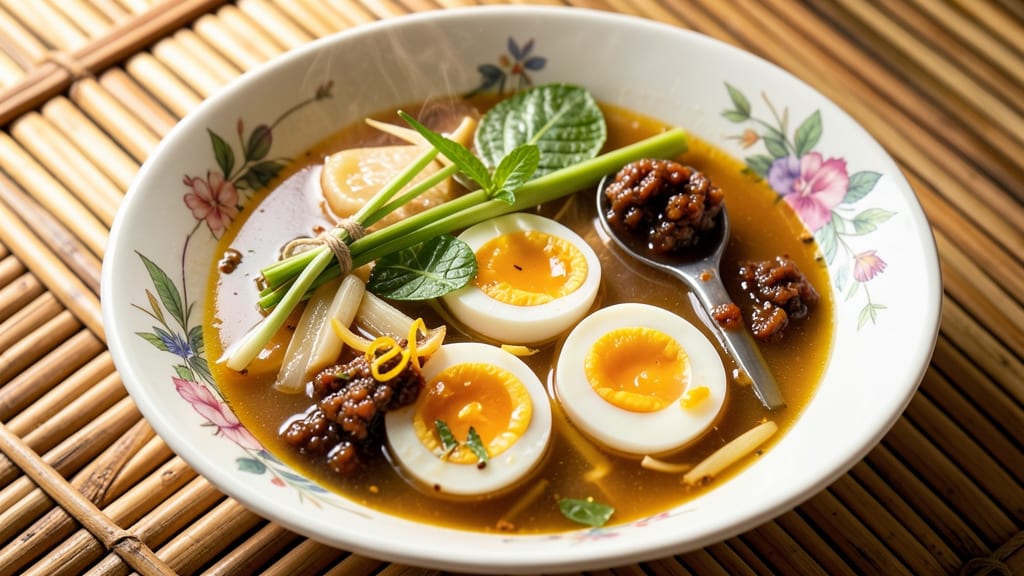
This Vietnamese egg drop soup recipe delivers the delicate balance of silky broth, tender noodles, and perfectly poached eggs that define canh chua. 💛 The secret lies in a slow-simmered broth infused with lemongrass and shrimp paste, creating depth without overpowering the dish's natural brightness.
I've perfected this technique over countless batches, ensuring every spoonful captures that authentic Vietnamese restaurant experience at home.
The magic begins with the broth, where aromatic ingredients like lemongrass, galangal, and kaffir lime leaves create layers of complex flavor. The egg drop technique—slowly drizzling beaten eggs into the simmering broth—transforms ordinary eggs into delicate, silky ribbons that melt on your tongue.
This method requires patience but delivers results that far surpass store-bought versions.
What makes this recipe truly special is how each component comes together: tender rice noodles soak up the fragrant broth, while fresh herbs and bean sprouts add texture and freshness. The final touch of chili oil brings just the right amount of heat, balancing the dish's natural acidity and richness.
Every bowl is a harmonious blend of textures and flavors that will have you reaching for seconds.
Whether you're serving this as a light lunch or a comforting dinner, this Vietnamese egg drop soup is versatile enough to adapt to your preferences. Add shrimp or chicken for extra protein, or keep it vegetarian for a lighter option.
The key is maintaining that perfect balance between simplicity and depth that makes this dish so universally loved.
Ingredients for vietnamese egg drop soup
Silky broth meets delicate eggs and aromatic herbs in this authentic Vietnamese masterpiece.
| Ingredient | Amount | Notes |
|---|---|---|
| Chicken or Vegetable Broth 🍲 | 4 cups | Homemade preferred, low-sodium |
| Large Eggs 🥚 | 4 whole | Room temperature for best poaching |
| Fresh Lemongrass 🌿 | 3 inches | Bruised stalks, bottom 3 inches |
| Galangal 🌿 | 1 inch | Peeled, thinly sliced (1-inch piece) |
| Kaffir Lime Leaves 🍃 | 2 whole | Bruised lightly, torn into pieces |
| Shrimp Paste 🦐 | 1 tbsp | Vietnamese mam ruoc |
| Fish Sauce 🍶 | 1 tbsp | Red Boat preferred |
| Rice Noodles 🍜 | 4 oz | Fresh or dried, cut into 2-inch pieces |
| Bean Sprouts 🌱 | 1 cup | Fresh, rinsed well |
| Fresh Thai Basil 🌿 | ¼ cup | Chopped, stems removed |
| Garlic Cloves 🧄 | 2 cloves | Minced, for aroma |
| Chili Oil 🌶️ | 1 tbsp | Homemade or store-bought |
| Lime Wedges 🍋 | 2 whole | For serving |
| Salt 🧂 | ½ tsp | Diamond Crystal kosher |
| White Pepper 🌶️ | ¼ tsp | Freshly ground |
The aromatic trio of lemongrass, galangal, and kaffir lime leaves is non-negotiable for that signature Vietnamese depth. Whole Foods or Asian markets carry the best galangal—look for firm, pale rhizomes with no dark spots. Fresh lemongrass should be vibrant green with no yellowing. For shrimp paste, Trader Joe's carries a decent version, but authentic mam ruoc from Vietnamese stores elevates the dish. Bruise the galangal and lime leaves with the side of your knife before adding to release their oils. The broth is the soul of this soup—homemade chicken or vegetable stock makes all the difference, but Kitchen Basics low-sodium works in a pinch.
No shrimp paste? Anchovy paste at half the amount delivers similar umami punch, though it lacks the funky complexity. Substituting dried lemongrass (soaked in warm water) or frozen galangal (thawed) works, but fresh is ideal. For the eggs, room temperature is critical—they poach more cleanly. Short on Thai basil? Regular basil or cilantro adds freshness, though Thai basil's anise-like flavor is distinct. The chili oil can be homemade (chili flakes + neutral oil) or store-bought—Lao Gan Ma is a cult favorite. For extra protein, add shrimp or chicken cooked separately and tossed in at the end.
Broth keeps for 3 days in the fridge—reheat gently to preserve its silky texture. Store noodles separately in a sealed container to prevent sogginess. The chili oil should be refrigerated after opening and used within 2 months. For meal prep, assemble bowls just before serving—this soup tastes best when components are fresh. Freeze broth in ice cube trays for quick future batches. The eggs poach best fresh, so reserve them for the final assembly. Lime wedges should be added just before serving to prevent bitterness.
Why You'll Love This Recipe
- One-Pot Magic: I swear by this—just broth, eggs, and a handful of herbs simmering together. No chopping mountains of veggies, no last-minute grocery runs. The galangal and lemongrass do all the heavy lifting while I sip my coffee.
- Silky, Herby Bliss: That first ribbon of egg hitting the broth? Chef’s kiss. The kaffir lime leaves add this bright, citrusy punch, while the galangal gives it a ginger-kissed warmth. It’s clean, comforting, and somehow feels luxurious without trying too hard.
- Weeknight to Weekend: Make a big batch on Sunday—it reheats like a dream, and the flavors only get better. Need a quick lunch? Done. Hosting a book club? This soup disappears faster than the good conversation. Even my picky teen asks for seconds.
- Budget-Friendly Flex: Vegetable broth works just as well as chicken, and eggs stretch further than you’d think. I’ve made this for under $3 a serving, and it still feels special. Plus, the leftovers? They’re my secret weapon for lazy mornings.
Step-by-step instructions for Vietnamese egg drop soup
Here's how to craft a restaurant-quality Vietnamese egg drop soup with silky eggs and aromatic broth.
🍳 Step 1: Infuse the Broth with Aromatics
In a medium pot, combine the 4 cups chicken or vegetable broth, 3 inches fresh lemongrass (bruised), 1 inch galangal (peeled and sliced), 2 whole kaffir lime leaves (bruised), 2 cloves garlic (minced), 0.5 tsp salt, and 0.25 tsp white pepper. Bring to a gentle simmer over medium heat.
Let the broth infuse for 10 minutes—you'll notice the lemongrass and galangal release their citrusy, peppery aromas. The broth should smell vibrant and complex, with hints of citrus and ginger. Keep it at a barely simmering temperature; a rolling boil will make the eggs cook too quickly and break apart.
👨🍳 Step 2: Build the Flavor Base
Reduce heat to low and stir in the 1 tbsp shrimp paste and 1 tbsp fish sauce. Let it simmer for 2 minutes—this is where the deep umami flavors develop. You'll see the broth darken slightly and smell a rich, savory aroma. If the shrimp paste doesn't dissolve completely, strain the broth through a fine-mesh sieve into a clean pot, leaving the aromatics behind.
Return the strained broth to medium-low heat and add the 4 oz rice noodles. Cook for 3-4 minutes until the noodles are tender but still slightly chewy. Remove them with a slotted spoon and set aside. The broth should now have a clean, aromatic base ready for the eggs.
🥘 Step 3: Poach the Eggs to Perfection
Crack the 4 whole large eggs into a small bowl. The eggs should be at room temperature for even cooking. Dip a spoon into the simmering broth and gently stir in a circular motion to create a gentle current. Hold the bowl just above the broth and let the eggs slide in one at a time—this creates silky, ribbon-like egg strands.
Let each egg cook for 2-3 minutes before gently lifting it out with a slotted spoon and placing it in a bowl of ice water to stop cooking. The eggs should be just set but still runny in the center—silky, not fully solid. Repeat until all eggs are poached. The broth should now be clear with just a hint of egg residue, giving it that signature Vietnamese egg drop appearance.
🍽️ Step 4: Assemble and Finish
Return the cooked noodles to the broth and stir gently. Add the 1 cup bean sprouts and 0.25 cup fresh Thai basil (chopped). Let everything warm through for 1 minute. Taste and adjust seasoning with a splash of fish sauce if needed—the broth should be balanced between savory and slightly tangy.
Divide the soup among bowls, placing 2 poached eggs in each. Drizzle with 1 tbsp chili oil and serve with 2 lime wedges on the side. The contrast of the silky eggs against the clear broth, combined with the fresh herbs and spicy oil, creates the perfect Vietnamese egg drop soup experience.
Pro Tips For Making Vietnamese Egg Drop Soup
- CRUSH THE AROMA: Blanch lemongrass and galangal for 10 seconds in boiling water first—this softens the fibers so they release flavor instead of turning your broth into a chewy mess. I used to skip this and wondered why my soup always tasted like it needed more punch.
- SEPARATE EGGS LIKE A PRO: Whisk eggs until just combined, then split them into two bowls—one with a splash of warm broth to thin it slightly. The first batch will create silky ribbons, while the second, slightly thicker mix adds body. (Yes, I’ve tried dumping them all in at once—don’t.)
- WATCH THE HEAT: Bring broth to a rolling simmer, not a full boil, before adding eggs. Too much agitation turns ribbons into scrambled bits, and no one wants that. Lower the flame right after—this is the thing that matters most for that restaurant-quality texture.
- UPGRADE WITH A SPLASH: Add a teaspoon of fish sauce to the broth while simmering—it rounds out the herbal notes and cuts through the broth’s sharpness. I was skeptical until I tried it; now it’s non-negotiable. (Skip it if vegetarian, but use soy sauce instead.)
Creative variations of this recipe
Spicy Tom Yum Twist
Add 1 tbsp tom yum paste (like Siam No. 3) to the broth along with the shrimp paste and fish sauce. This transforms your soup into a tangy, spicy fusion that keeps the silky eggs but adds a bright, citrusy kick.
I like to boost the heat with ½ tsp extra chili flakes and a splash of lime juice at the end. Garnish with extra Thai basil and serve with crispy shallots for texture. 🌶️
Vegetarian Protein Boost
Swap shrimp paste for 1 tbsp white miso paste and add 4 oz firm tofu (pressed and cubed) to the broth for 5 minutes before adding noodles. For extra umami, stir in 1 tsp soy sauce with the fish sauce.
The tofu absorbs the broth beautifully while keeping the dish light. Top with fried shallots and sesame seeds for crunch. 🥗
Coconut Milk Creamy Version
For a richer take, stir ½ cup coconut milk into the broth after removing the aromatics. This creates a velvety texture that pairs perfectly with the poached eggs. Add ½ tsp turmeric for color and warmth, then finish with crushed peanuts and cilantro instead of Thai basil.
The coconut balances the shrimp paste's funk while adding a tropical twist. 🥥
Herb-Forward Spring Version
In spring, swap galangal for 1-inch fresh ginger and add ¼ cup chopped mint alongside the Thai basil. Include 1 cup sliced mushrooms (shiitake or oyster) cooked in the broth for 3 minutes before noodles.
The mint brightens the dish while mushrooms add earthy depth. Serve with extra lime wedges to cut through the richness. 🌿
Smoky Charred Egg Technique
For a restaurant-worthy upgrade, lightly char the kaffir lime leaves and lemongrass over a gas flame before bruising them. This adds a subtle smokiness to the broth. After poaching, quickly sear the eggs in a hot, dry skillet for 10 seconds per side before placing them in ice water.
The charred aromatics and caramelized egg edges elevate the dish dramatically. ⚡
Nutrition facts
Frequently asked questions
Why does Vietnamese egg drop soup have such a clear broth?
The signature clarity comes from straining the broth after simmering with aromatics. This removes any cloudiness from the shrimp paste and fish sauce while keeping all the flavor. The gentle simmer also prevents the broth from developing a skin or becoming murky. For extra clarity, you can even strain it through a coffee filter after removing the aromatics.
Can I make this soup without shrimp paste?
Yes! Use ½ tbsp anchovy paste or 1 tsp soy sauce as a substitute, though the flavor won't be identical. For best results, combine ½ tbsp white miso paste with ½ tbsp fish sauce to mimic the umami depth. The shrimp paste's funky complexity is hard to replicate, but these alternatives work in a pinch.
How do I fix eggs that break apart when poaching?
Use older eggs (7-10 days old)—their whites hold together better than fresh ones. Also, ensure your broth is at a gentle simmer (180°F), not a rolling boil, and use a spoon to create a gentle current before adding the eggs. If they still break, try the "water glass" method: pour cold water into a glass, then carefully slide the egg in—this creates a protective barrier.
What's the difference between this and Chinese egg drop soup?
Vietnamese egg drop soup uses rice noodles instead of wheat noodles, and the broth relies on lemongrass, galangal, and shrimp paste for its bright, citrusy-savory profile. Chinese versions often include ginger, star anise, and soy sauce, creating a more robust, slightly sweeter flavor. The egg technique is similar, but Vietnamese soup tends to be lighter and more herb-forward.
Can I prepare this soup ahead of time?
Make the broth and store it in the fridge for up to 3 days or freeze it for 3 months. Cook the noodles separately and store them in cold water to prevent sticking. Poach the eggs fresh before serving—they lose their silky texture when reheated. Reheat the broth gently, then add the noodles and herbs just before serving.