
Sauces & Condiments
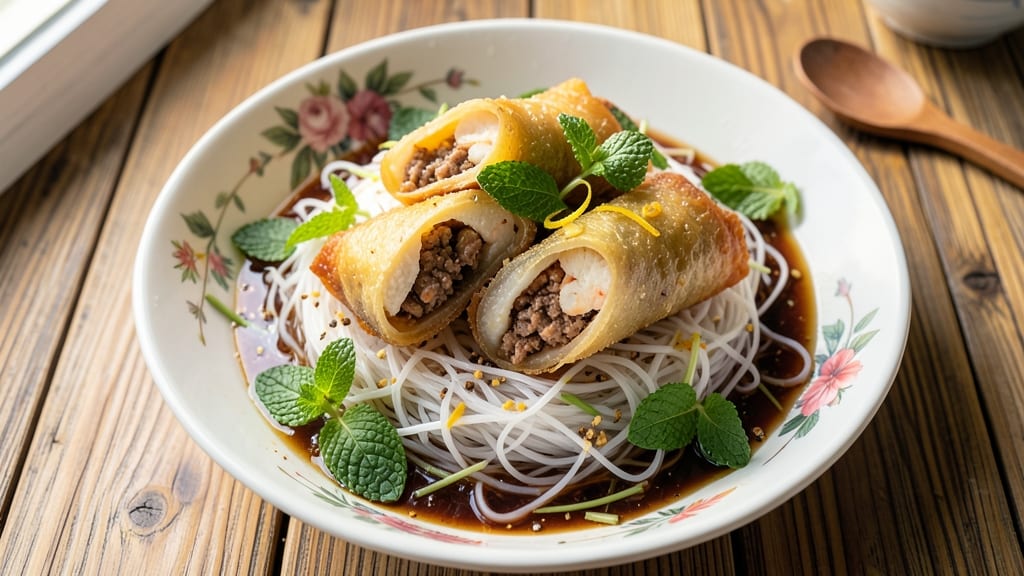
Vietnamese egg roll fish sauce transforms simple ingredients into a dish where crispy celery crowns meet a tangy, umami-rich broth—this is the recipe that captures Vietnam's street food magic in your kitchen. The secret lies in balancing sweet, savory, and sour flavors through careful fish sauce reduction, creating a sauce that clings to every bite of the golden, deep-fried egg rolls.
The filling starts with a mix of shrimp, pork, and fish cake bound together with vermicelli and fresh herbs, all wrapped in delicate rice paper. When fried to a golden finish, the egg rolls develop that signature crispy exterior while staying tender inside.
The fish sauce-based dipping broth—simmered with garlic, sugar, and lime—adds depth that makes every bite unforgettable.
What makes this recipe special is the harmony between technique and flavor. Rolling the egg rolls requires patience (don't rush the layers!), while frying them in small batches ensures even crispiness. The fish sauce broth, reduced to a glossy consistency, ties everything together with its signature tangy-sweet profile.
Serve these egg rolls with fresh herbs and lettuce cups for a complete experience—just like the ones you'd find at a bustling Hanoi street stall. The combination of textures and flavors makes this dish perfect for gatherings or a special weeknight treat.
Ingredients for vietnamese egg roll fish sauce
Crispy egg rolls meet a tangy umami broth—these ingredients bring Hanoi street food to your kitchen.
| Ingredient | Amount | Notes |
|---|---|---|
| Shrimp (Peeled and Deveined) 🦐 | ½ lb | Medium size, tail-on preferred |
| Ground Pork 🐷 | ½ lb | Lean, finely ground |
| Fish Cake (Surimi) 🍣 | 6 oz | Asian-style, finely chopped |
| Rice Vermicelli Noodles 🍜 | 2 oz | Fine strands, soaked in warm water |
| Rice Paper Wrappers 🍱 | 12 whole | 6-inch round, standard thickness |
| Fresh Mint Leaves 🌿 | ¼ cup | Finely chopped, stems removed |
| Fresh Thai Basil Leaves 🌿 | ¼ cup | Finely chopped |
| Celery Stems 🧅 | 2 whole | Cut into 1-inch pieces |
| Fish Sauce 🍶 | ½ cup | Red Boat preferred |
| Garlic Cloves 🧄 | 6 cloves | Minced, for filling and broth |
| White Sugar 🍚 | ¼ cup | Granulated, for broth |
| Fresh Lime Juice 🍋 | ¼ cup | Strained, for broth |
| Vegetable Oil 🫒 | 3 cups | For deep-frying, high smoke point |
| Salt 🧂 | 1 tsp | Kosher or sea salt |
| Black Pepper 🌶️ | ½ tsp | Freshly ground |
The shrimp and pork form the heart of the filling, so freshness is key. Grab shrimp with tails on—they add texture and look impressive. For the pork, ground chuck gives the best flavor, but lean ground pork works too. Asian markets often have pre-chopped fish cake, but if you can't find it, substitute with finely diced imitation crab. Celery crowns are non-negotiable—they add that signature crunch. Look for firm, crisp stems at Trader Joe's or Whole Foods for the best quality. The rice paper wrappers should be pliable but not soggy; store them in a sealed bag with a damp paper towel to keep them flexible.
No fish sauce? Soy sauce plus a dash of anchovy paste works in a pinch, but you'll lose some depth. The broth is where the magic happens—balance is everything. Too much sugar and it's cloying; too little and the acidity overpowers. Red Boat fish sauce has the perfect balance, but Three Crabs is a solid backup. Fresh lime juice is essential—bottled won't cut it. For the herbs, Thai basil is a must, but if you can't find it, regular basil plus a pinch of anise gets close. The celery crowns can be swapped for water chestnuts if you prefer a sweeter crunch, but they lose that classic texture.
Keep the rice paper wrappers sealed in the fridge until ready to use—they dry out fast. The filling ingredients can be prepped 2 days ahead and stored in an airtight container. The fish sauce broth should be made fresh, but the sugar and lime mixture can be prepped separately. For frying, maintain oil at 350°F—too hot and they burn outside before cooking through. These keep for 2 days in the fridge, but they're best served fresh. The broth reheats beautifully—simmer gently to preserve the flavors.
Why You'll Love This Recipe
- No-Fuss Assembly: I swear, the hardest part is boiling the shrimp—everything else is just tossing ingredients in a bowl. The rice paper wrappers take seconds to soften, and the filling comes together while you wait for the noodles to soak. Honestly, I’ve made this on days when I couldn’t even be bothered to measure.
- Umami Bomb: That fish sauce? It’s the star. The shrimp and pork soak it up, while the fish cake adds a chewy, salty punch—like a little flavor explosion in every bite. Between us, the first time I tasted this, I immediately doubled the recipe.
- Lunchbox Hero: Pack these for work or school—no reheating needed. The rice paper holds up surprisingly well, and the noodles stay tender. My son takes his to soccer practice, and he’s always got friends begging for a bite. (Yes, even on a Tuesday night.)
- Budget Meal Stretch: Ground pork and shrimp stretch far, and fish cake is cheaper than you’d think. I’ve fed four people for under $10, and there’s always leftovers for lunch. Plus, the rice paper is the only thing that costs a little, but it’s worth every penny for that fresh, wrap-worthy texture.
Step-by-step instructions for Vietnamese egg roll fish sauce
Master the balance of crispy textures and umami depth with these precise techniques.
Prepare the Celery Crowns and Deep-Fry for Crispiness
Cut the 2 whole celery stems into 1-inch pieces, keeping the leaves attached for presentation. In a small bowl, whisk together 0.5 cup fish sauce, 0.25 cup white sugar, and 0.25 cup fresh lime juice until the sugar fully dissolves. Add the celery pieces and toss to coat evenly. Let them marinate for 10 minutes while you prepare the frying setup.
Heat 3 cups vegetable oil in a deep fryer or heavy pot to 350°F. Fry the celery in batches for 2-3 minutes until golden brown and crisp. Drain on paper towels and set aside. The celery should hold its shape while developing a caramelized crust—this is your crispy crown element that balances the dish.
Assemble the Egg Roll Fillings with Proper Texture
In a large bowl, combine 0.5 lb ground pork, 6 cloves minced garlic, 0.5 tsp black pepper, and 1 tsp salt. Mix until fully combined but avoid overworking the meat. Add 6 oz finely chopped fish cake (surimi) and gently fold together. The filling should be moist but not sticky—this ensures clean rolls without filling leakage.
In a separate bowl, combine 0.25 cup chopped fresh mint leaves, 0.25 cup chopped fresh Thai basil leaves, and 2 oz soaked rice vermicelli noodles. Toss gently to distribute the herbs evenly. Soak the 12 rice paper wrappers in warm water for 10 seconds until pliable, then lay flat on a damp towel to prevent drying.
Roll the Egg Rolls with Perfect Sealing Technique
Place 1 tablespoon of pork mixture near the bottom of a rice paper wrapper. Add 1 teaspoon of the herb-noodle mixture on top. Fold the bottom edge over the filling, then fold in both sides, and finally roll tightly from the bottom up. The wrapper should form a neat cylinder with no gaps—this prevents filling from escaping during frying.
Repeat with remaining wrappers and fillings. Arrange the completed rolls seam-side down on a plate. Cover with a damp towel to maintain moisture until ready to fry. The rolls should hold their shape without cracking when lifted—this indicates proper wrapping technique.
Fry the Egg Rolls Until Golden and Crisp
Heat the same oil to 375°F. Fry the egg rolls in batches for 3-4 minutes until golden brown on all sides. The exterior should develop a crispy, lacy texture while maintaining a soft interior. Drain on a wire rack to allow excess oil to drip away while keeping the bottoms crisp.
For the fish sauce broth, combine 0.5 cup fish sauce, 0.25 cup white sugar, and 0.25 cup lime juice in a saucepan. Simmer over medium heat for 5 minutes until slightly reduced and syrupy. The broth should coat the back of a spoon with a glossy sheen—this is your tangy umami base.
Serve with Crispy Celery Crowns and Fresh Herbs
Arrange the fried egg rolls on a platter with the crispy celery crowns on top. Drizzle with the reduced fish sauce broth and garnish with additional chopped mint and Thai basil. The contrast of crispy celery crowns against the tender egg rolls creates the signature Vietnamese texture balance.
Serve immediately with extra fish sauce broth on the side for dipping. Each bite should deliver a perfect harmony of crispy exterior, tender filling, and umami-rich sauce. The celery crowns add a refreshing crunch that cuts through the richness of the pork and fish cake.
Pro Tips For Making Vietnamese Egg Roll Fish Sauce
- Blanch Shrimp First: Toss peeled shrimp in boiling water for 30 seconds before using—this stops them from curling into tight spirals when cooked later. I learned this the hard way after wrestling with shrimp that refused to stay flat in the egg roll filling.
- Slice Fish Cake Thin: Cut the surimi into ¼-inch slices, not the usual ½-inch. Thinner pieces cook faster, absorb the fish sauce better, and blend seamlessly into the filling. My first attempt used thick slices, and the texture was all wrong.
- Soak Rice Paper Fast: Dip wrappers in warm (not hot) water for 10–15 seconds, then lay flat on a damp towel. Too long, and they’ll tear; too short, and they’ll crack when rolling. I now keep a bowl of fresh warm water nearby to reset wrappers if they dry out mid-use.
- Salt the Pork Early: Mix ½ teaspoon salt into the ground pork before cooking it with garlic and fish sauce. This ensures even seasoning—rushing it later means some spots stay bland. I used to add salt at the end, and the flavor was always uneven.
Creative variations of vietnamese egg roll fish sauce
Spicy Lemongrass Twist
Add 1 tbsp minced lemongrass and ½ tsp chili flakes to the fish sauce broth for a bold Southern Vietnamese variation. Simmer the broth with 1 stalk lemongrass (bruised) and 1-2 slices of fresh chili (like Thai bird's eye) for 5 minutes before straining.
This transforms the sauce into a vibrant, citrusy-spicy dip that pairs perfectly with the crispy egg rolls. 🌶️
Vegetarian Adaptation
Replace the shrimp and pork with 1 lb mushrooms (shiitake or oyster) and ½ lb tofu (pressed and crumbled). Sauté the mushrooms with 1 tbsp soy sauce and 1 tsp sugar until tender, then mix with the tofu and herbs.
The fish sauce broth remains the same, but add 1 tsp miso paste for depth. This version keeps the umami punch while making it fully plant-based. 🌱
Seafood-Focused Variation
Swap the pork for 1 lb white fish fillets (like cod or tilapia) and ½ lb shrimp. Poach the fish in ½ cup fish sauce and 1 cup water for 5 minutes, then flake into the filling.
Add 2 tbsp chopped cilantro and 1 tsp fish sauce to the herb-noodle mix. The broth stays identical, but the filling gains a delicate, seafood-forward brightness. 🦞
Sweet Chili Glaze
Create a glaze by reducing ½ cup sweet chili sauce (like Maesri) with 1 tbsp fish sauce and 1 tsp lime juice until thickened. Brush this glaze over the fried egg rolls before serving.
The sweet-spicy contrast elevates the dish, especially when paired with the tangy fish sauce broth. Drizzle extra glaze over the crispy celery crowns for a double flavor punch. 🍯
Herb-Infused Oil Drizzle
Infuse ¼ cup vegetable oil with 1 tbsp chopped Thai basil, 1 tbsp mint, and 1 minced garlic clove for 5 minutes on low heat. Strain and drizzle lightly over the finished egg rolls.
This adds a fragrant, aromatic layer that complements the fish sauce broth without overpowering it. The oil should be warm but not hot when drizzled. ✨
Regional Northern Style
For a Hanoi-inspired version, add ½ cup shredded daikon radish to the filling and top the fried egg rolls with thinly sliced green onions. Use 1 tbsp rice vinegar instead of lime juice in the broth, and finish with a sprinkle of toasted sesame seeds.
The radish adds a subtle sweetness, while the vinegar gives the sauce a lighter, more delicate profile. This mimics the subtle flavors of Northern Vietnamese street food. 🗺️
Nutrition facts
Frequently asked questions
Can I make the egg roll filling ahead of time?
The filling keeps well for 2 days in an airtight container in the fridge. Store the components separately (pork mixture, herb-noodle mix) to prevent sogginess. Reassemble just before wrapping to maintain texture. For longer storage, freeze the filling for up to 1 month—thaw overnight in the fridge before using.
Why does my fish sauce broth taste too salty?
Fish sauce is potent, so taste as you go! Start with 0.3 cup instead of 0.5 cup if you're new to it. Balance by adding 1-2 tbsp warm water or 1 tsp sugar to mellow the saltiness. The broth should taste tangy-sweet, not briny. Adjust gradually—you can always add more fish sauce later.
How do I keep the rice paper wrappers from cracking?
Work quickly but gently! Soak each wrapper for only 10 seconds in warm water, then lay it flat on a damp towel. Keep your hands slightly damp while rolling to prevent sticking. Fill with 1 tbsp of mixture max—overfilling causes pressure cracks. If a wrapper tears, patch it with a small piece of extra wrapper before frying.
What's the best way to reheat leftover egg rolls?
For crispy results, reheat in a 375°F oven for 8-10 minutes on a wire rack. Avoid microwaving—they'll get soggy. For extra crunch, sprinkle with a little water and broil for 1-2 minutes at the end. The fish sauce broth reheats best on the stove over low heat for 3 minutes—just don't boil it.
Can I substitute regular basil for Thai basil?
You can, but Thai basil has a distinct anise-like flavor that regular basil lacks. For closest results, mix 0.125 cup regular basil with 0.125 cup mint and add 1/8 tsp ground anise to the filling. The celery crowns and fish sauce will still shine, but the herb profile will be subtly different. Freshness matters most—wilted herbs ruin the dish!