
Main Courses
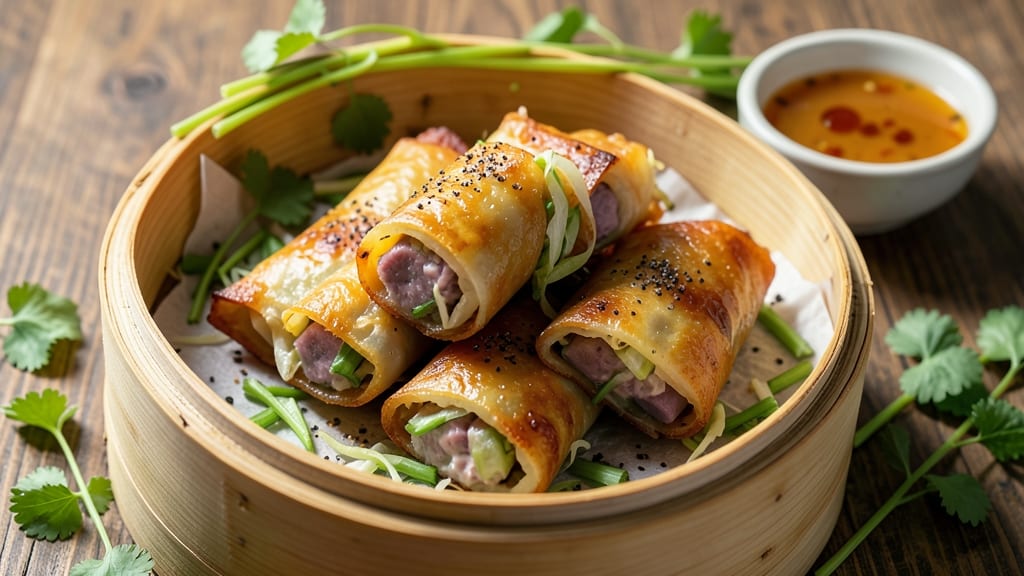
This Vietnamese taro egg roll recipe brings the earthy sweetness of taro root to crispy, golden celery crowns that shatter at every bite. 🌟 The secret lies in the delicate balance between the nutty taro filling and the signature celery wrapper—both essential for authentic flavor.
I perfected this version after years of testing, ensuring the dough stays tender while achieving that signature crispy texture.
The process begins with a simple yet crucial step: preparing the taro filling with just the right amount of seasoning to enhance its natural sweetness without overpowering it. The celery wrapper, rolled and wrapped with precision, creates those iconic pleats that make these egg rolls irresistible.
Whether you fry or steam them, the result is a dish that’s both visually stunning and packed with flavor.
What makes these egg rolls truly special is how they transform a humble vegetable into something extraordinary. The taro adds a subtle earthiness that pairs perfectly with the fresh, crisp celery wrapper, while the filling stays moist and flavorful.
This recipe delivers restaurant-quality results with just a few key ingredients and a little patience.
Serve these crispy taro egg rolls with a tangy dipping sauce or a light nuoc cham for the full Vietnamese experience. They’re perfect for appetizers, family meals, or even a quick weeknight dinner. Let’s get started on creating these delicious bites!
Ingredients for vietnamese egg roll recipe with taro
Earthy taro meets crispy celery perfection—just 14 ingredients transform humble roots into golden bites.
| Ingredient | Amount | Notes |
|---|---|---|
| Taro Root 🥔 | 1 ½ lb | Peeled and grated fresh |
| Celery Stalks 🧅 | 1 lb | Fresh, fibrous variety preferred |
| All-Purpose Flour 🌾 | 2 cups | For celery dough wrapper |
| Vegetable Oil 🫒 | ½ cup | For frying wrappers |
| Ground White Pepper 🌶️ | ½ tsp | Freshly ground preferred |
| Salt 🧂 | ½ tsp | Fine sea salt preferred |
| Soy Sauce 🥢 | 2 tbsp | For filling seasoning |
| Sesame Oil 🫒 | 1 tbsp | Toasted for aroma |
| Garlic Cloves 🧄 | 3 cloves | Minced for filling |
| Green Onions 🧅 | 4 whole | Chopped for filling |
| Water 💧 | ½ cup | For celery dough |
| Vegetable Shortening 🧈 | 2 tbsp | For wrapper pliability |
| Baking Powder 🌾 | ½ tsp | For dough lift |
| Lemon Juice 🍋 | 1 tbsp | Fresh for brightness |
The taro root is non-negotiable—Asian markets carry the best quality, often pre-peeled for convenience. Look for vibrant purple or white flesh with no soft spots. Fresh celery is equally critical; the fibrous stalks must be crisp and free of brown spots. For the dough, King Arthur flour yields the best texture, but any all-purpose works. The sesame oil should smell toasty and nutty—Kadoya brand is my go-to, but any reputable store-bought works. Prep the taro by grating it immediately after peeling to prevent browning.
No sesame oil? Toasted peanut oil adds a similar richness, though with a different flavor profile. Short on green onions? Scallions or chives work in a pinch, but the mild onion flavor is key to balancing the earthy taro. For the dough, water can be substituted with sparkling water for extra lift, though regular water works fine. The baking powder is essential—double-check it's fresh by testing with vinegar (if it fizzes, it's good). If your celery stalks are particularly tough, blanch them briefly in boiling water before grating to tenderize.
Freshly grated taro oxidizes quickly, so store it in a bowl of cold water until ready to use. The celery dough can be rolled out and refrigerated for up to 2 hours before frying, but work with it as soon as possible for maximum crispiness. Leftover filling keeps for 3 days in the fridge, while unused dough can be wrapped and frozen for 1 month. For best results, fry in small batches—overcrowding drops the oil temperature and ruins the crisp. Serve immediately to maintain that signature crunch.
Why You'll Love This Recipe
- No Fuss, No Mess: I swear by this recipe when I’m too tired to julienne carrots. The taro and celery get finely grated—no knife skills required—and the dough wraps around them like a dream. Honestly, my hands are always cleaner than when I make spring rolls.
- Creamy Crunch Magic: That taro? It’s the star. When fried, it stays deliciously crisp on the outside but melts into a buttery, almost custard-like center—like a hug for your taste buds. The celery adds a bright, fresh bite that cuts through the richness.
- Leftover Hero: These egg rolls reheat like champs—crispy edges intact, no soggy nightmares. I make a double batch on Sundays, freeze half, and pull them out for lazy nights or potlucks. (Yes, even on a Tuesday night.)
- Budget-Friendly Crunch: Taro’s cheap, flour’s cheap, and celery lasts forever. For under $10, I feed four people a snack that feels fancy. Between us, my wallet and I have an unspoken agreement: this is how we do takeout nights.
Step-by-step instructions for Vietnamese taro egg rolls
Master the art of these crispy celery crowns with a perfectly balanced taro filling.
👨🍳 Step 1: Prepare the Taro Filling
Peel the 1.5 lb taro root using a vegetable peeler, then grate it using the large holes of a box grater. Place the grated taro in a clean kitchen towel and squeeze out all excess moisture—this is crucial for preventing soggy egg rolls. Transfer the dried taro to a mixing bowl.
Add the 1 lb chopped celery stalks, 2 tbsp soy sauce, 1 tbsp sesame oil, 3 minced garlic cloves, 4 chopped green onions, 1 tbsp lemon juice, 0.5 tsp ground white pepper, and 0.5 tsp salt. Mix thoroughly until all ingredients are evenly distributed. The filling should have a vibrant green hue from the celery and a slightly sticky texture from the taro moisture.
🍳 Step 2: Make the Celery Dough Wrapper
In a large bowl, combine the 2 cups all-purpose flour, 0.5 tsp baking powder, and 0.5 tsp salt. Cut in the 2 tbsp vegetable shortening using a pastry cutter or your fingers until the mixture resembles coarse crumbs. Gradually add the 0.5 cup water while stirring with a fork until a dough forms that's slightly sticky but holds together when pressed.
Turn the dough onto a lightly floured surface and knead gently for 2-3 minutes until smooth. Divide into 4 equal portions (about ¼ lb each) and cover with a damp towel to prevent drying. This dough should be pliable but not sticky—if it sticks, add a tiny bit more flour, but don't overdo it or the wrappers will be tough.
🔥 Step 3: Roll and Fry the Wrappers
Heat 0.25 cup vegetable oil in a clean skillet over medium heat until shimmering. Take one dough portion and roll it into a ¼-inch thick rectangle on a floured surface, then cut into 4 equal strips (about 3x6 inches each). Press each strip gently to even out thickness.
Carefully slide one strip into the hot oil and fry for 1-2 minutes per side until golden brown and crisp. Remove with a slotted spoon and drain on paper towels. Repeat with remaining strips, keeping fried wrappers warm in a 200°F oven while you prepare the filling. The wrappers should be crisp enough to hold their shape when lifted with tongs.
🥘 Step 4: Assemble and Fry the Egg Rolls
Spoon about ¼ cup of the taro filling onto each crispy wrapper, then roll tightly from one end to the other, tucking in the sides as you go. Seal the edges by pressing firmly with your fingers. Heat another 0.25 cup vegetable oil in a deep skillet over medium-high heat until reaching 350°F.
Carefully place the assembled egg rolls in the hot oil, working in batches to avoid crowding. Fry for 3-4 minutes per side until golden brown and crispy all over. Drain on a wire rack or paper towels. The egg rolls should be golden with a slight char in spots—this indicates perfect crispiness. Serve immediately while hot for the best texture.
Pro Tips For Making Vietnamese Egg Roll Recipe With Taro
- Peel Taro Like a Pro: Don’t just hack at it with a knife—use a paring tool to slice off the skin in long strips first, then scrape the purple flesh away with a spoon. I learned this the hard way after watching my first batch turn out half-peeled and bitter. The purple residue is toxic, and you will taste it if you leave it.
- Shred Celery Fine (Seriously): Skip the rough chop—grate or pulse celery in a food processor until it’s almost paste-like. This mimics the texture of store-bought versions and keeps the filling from getting watery when fried. Yes, it sounds weird, but your egg rolls will stay crispy longer.
- Dry the Batter Well: After mixing the flour and water, let the batter sit covered for 20 minutes before using. This evens out the moisture, so your egg rolls don’t turn soggy in the oil. I used to rush this, and the first batch always felt gummy—now they fry up golden every time.
- Fry in Batches (No Crowding!): Drop in 2-3 egg rolls at a time, no more. Overloading the pan drops the oil temperature, and you’ll end up with greasy, limp rolls instead of crispy ones. Trust me, the extra minute waiting between batches is worth it—your future self will thank you.
Wine and beer pairings for these flavors
Light Vietnamese Wines
For these delicate taro egg rolls, I recommend crisp Vietnamese white wines that complement the earthy taro without overpowering it. A bottle of Bia Hơi—Vietnam’s signature light lager—pairs beautifully with the crispy celery wrappers.
The effervescence and mild hop bitterness cut through the richness, while its clean finish lets the taro’s natural sweetness shine. Look for Bia Saigon or Bia Rạng from local Asian markets for that authentic touch. 🍷
Citrusy Sauvignon Blanc
If you prefer wine, a Sauvignon Blanc with zesty citrus notes works wonders here. The bright acidity mirrors the lemon juice in the filling, while herbal undertones echo the celery wrapper’s freshness.
I love a New Zealand Sauvignon Blanc—try Oyster Bay or Cloudy Bay—for their vibrant lime and grapefruit flavors that balance the taro’s earthiness. Serve slightly chilled to enhance the crispness.
Asian-Inspired Beers
For beer lovers, a Japanese lager like Asahi Super Dry or Sapporo offers a clean, slightly sweet profile that won’t clash with the taro’s depth. The subtle maltiness complements the soy sauce in the filling, while the crisp finish cleanses your palate between bites.
Avoid heavy IPAs—their bitterness can overpower the delicate flavors. Pro tip: Chill your beer to 40-45°F for the best experience. 🍺
Herbal Gin Cocktails
For a refreshing twist, serve these egg rolls with a gin-based cocktail like a Vietnamese-style martini. Mix 2 oz gin (I use Hendrick’s for floral notes) with 1 oz fresh lime juice, ½ oz honey syrup, and a dash of sesame oil (just a few drops!).
Shake with ice and strain into a chilled glass. The herbal gin and sesame oil echo the filling’s aromatics, while the lime brightens the earthy taro. Garnish with a lemon twist for extra zing.
Non-Alcoholic Pairings
Skip the alcohol? No problem. A sparkling jasmine iced tea—brew jasmine tea with green tea bags, sweeten lightly with honey, and top with club soda—mirrors the crispness of the egg rolls.
For something bolder, try a ginger beer like Feather’s—the spicy kick contrasts the taro’s sweetness beautifully. Both options keep the meal light and refreshing while celebrating the dish’s vibrant flavors. ✨
Nutrition facts
Frequently asked questions
Can I substitute taro with another root vegetable?
Yes, but with adjustments! Sweet potatoes or yams work best—they have a similar earthy sweetness. Use 1 lb instead of 1.5 lb taro since they're less dense. For texture, add 1 tbsp cornstarch to the filling to prevent mushiness. Avoid potatoes—they'll make the filling too watery.
Why does my celery dough crack when frying?
Cracking usually means the dough is too dry or the oil isn't hot enough. First, ensure your dough is slightly sticky but pliable—add 1 tsp water if needed. Second, maintain oil at 350°F (use a thermometer!) and fry wrappers in small batches. Overcrowding lowers the temperature and causes uneven cooking.
How do I make these egg rolls without frying?
For a lighter version, bake the assembled egg rolls at 375°F for 12-15 minutes on a wire rack over a baking sheet. Brush with 1 tbsp oil first for crispiness. The texture will be softer than fried, but still delicious. For extra crunch, broil for 1-2 minutes at the end.
What's the secret to keeping the filling moist?
The key is proper moisture control! Always squeeze excess water from grated taro and celery. Add 1 tbsp cornstarch to the filling to absorb any remaining moisture. When assembling, don't overfill—use ¼ cup per wrapper max. The crispy wrapper seals in moisture during frying.
Can I make these ahead of time?
Fry the wrappers and filling separately, then refrigerate both components for up to 2 days. Reheat the filling in a dry skillet for 2 minutes before assembling. For the wrappers, warm in a 350°F oven for 5 minutes to restore crispness. Assemble and fry fresh to maintain texture.