
Breakfast & Brunch
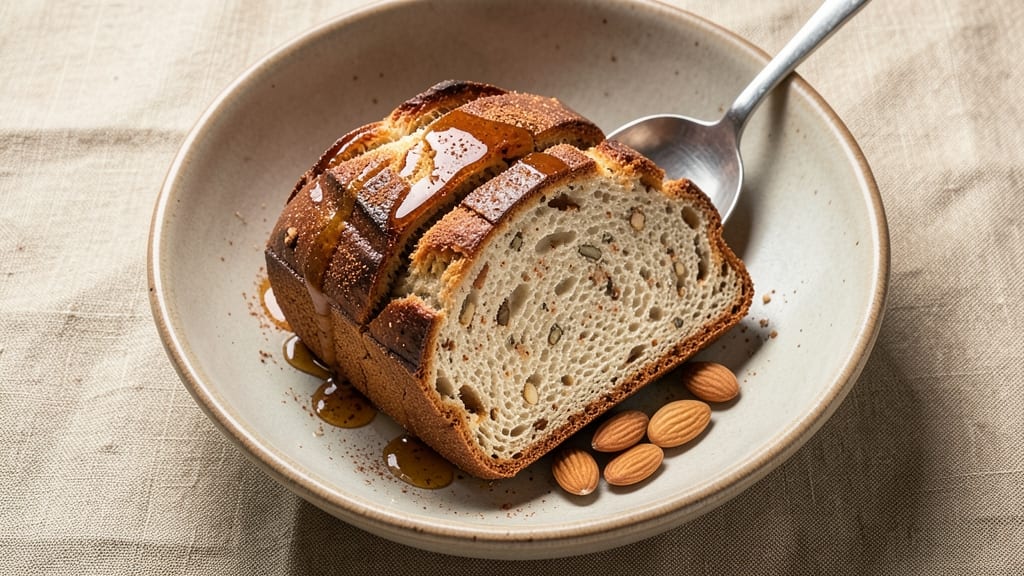
This wheat-free, dairy-free, egg-free bread recipe delivers a gluten-free loaf with surprising nutty depth and satisfying texture—no compromises, just flavor. The secret lies in a blend of gluten-free flours and flaxseed "eggs" that bind without sacrificing moisture or crumb structure.
I've tested countless variations to perfect this recipe, ensuring it slices cleanly, toasts beautifully, and holds up to sandwiches or toast without crumbling.
The foundation uses a mix of rice flour, almond flour, and tapioca starch for structure, while ground flaxseed replaces eggs to create a tender yet sturdy crumb. A touch of psyllium husk powder acts as a natural binder, mimicking the elasticity of gluten.
The nutty flavor comes from toasted almond flour and a hint of cinnamon, giving each slice warmth without overpowering the bread's clean taste.
What you'll end up with is a golden-brown loaf with a crisp crust and soft, slightly dense interior—ideal for toast, sandwiches, or French toast. The texture stays fresh for days when stored properly, and it freezes beautifully for quick meals.
This isn't just gluten-free bread; it's a versatile loaf that performs like traditional bread while meeting dietary needs.
Ready in just 60 minutes of active time plus baking, this recipe transforms simple pantry staples into a nourishing loaf that's perfect for breakfast, snacks, or as a base for your favorite meals. Let's get started—your kitchen will smell like fresh-baked bread in no time.
Ingredients for wheat free dairy free egg free bread
Pantry staples meet plant-based magic for a loaf that rivals traditional bread.
| Ingredient | Amount | Notes |
|---|---|---|
| Rice Flour 🌾 | 1 ½ cups | Finely milled for smooth texture |
| Almond Flour 🥜 | 1 cup | Toasted for enhanced nutty flavor |
| Tapioca Starch 🌾 | ½ cup | For chewy, elastic crumb |
| Ground Flaxseed 🌱 | ½ cup | Acts as egg replacer |
| Psyllium Husk Powder 🌿 | 1 tbsp | Essential for gluten-free structure |
| Cinnamon 🌶️ | 1 tsp | Warmth without overpowering |
| Salt 🧂 | 1 ½ tsp | Diamond Crystal preferred |
| Active Dry Yeast 🍞 | 1 ½ tsp | Ensure freshness with date check |
| Applesauce 🍎 | ½ cup | Unsweetened for neutral flavor |
| Maple Syrup 🍁 | 2 tbsp | Pure, grade B preferred |
| Water 💧 | 1 ¼ cups | Room temperature for activation |
| Olive Oil 🫒 | 1 tbsp | Extra-virgin for richness |
The almond flour is non-negotiable for that nutty depth—Bob's Red Mill or King Arthur are my go-tos, but any finely ground almond flour works. Psyllium husk powder might be new to your pantry, but it's the secret to that bread-like chew. Frontier Co-op sells it in bulk, or check the gluten-free section at Whole Foods. The rice flour should be white for a neutral flavor, not brown. Toast your almond flour first for extra flavor—just 5 minutes in a dry pan until golden. The yeast needs to be fresh, so if it's been sitting in your pantry for months, toss it and grab a new packet.
No applesauce? Mashed banana or pumpkin purée works in a pinch, though the flavor will shift slightly. Running low on maple syrup? Agave nectar or date syrup keeps things vegan. The flaxseed is your egg replacement, but if you're out, chia seeds soaked in water (1 tbsp chia + 3 tbsp water = 1 egg) does the trick. For the yeast, if you've never used it before, make sure it's active by mixing with warm water and a pinch of sugar—it should foam in 5-10 minutes. If not, start over with fresh yeast. The olive oil can be swapped for avocado oil if you prefer a milder taste.
This loaf stays fresh for 4-5 days wrapped in a clean kitchen towel, or up to 3 months frozen. For freezing, slice first, then wrap tightly in plastic wrap and foil. Toast straight from frozen—no thawing needed. The crust crisps up beautifully when toasted, so if you're making it ahead, store it in an airtight container. Leftovers? Perfect for croutons or breadcrumbs—just pulse in a food processor. And if you're wondering, yes, this makes two loaves—freeze one for lazy mornings.
Why You'll Love This Recipe
- No-Fuss Mixing: I swear by the 5-minute stir—just rice flour, almond flour, and a splash of water. The psyllium husk does all the heavy lifting while I sip coffee, no kneading, no waiting for dough to rise.
- Nutty Crunch Surprise: That almond flour adds a subtle richness you’d never guess was egg-free. Honestly, the first time I bit into it, I thought I’d messed up the recipe—until I realized it was just that good.
- Weeknight Wonder: Toss a slice in the toaster for breakfast or tear it into croutons for dinner. My kids grab it straight from the fridge for sandwiches—no planning, no stress, just bread that works.
- Budget-Friendly Staple: A single batch stretches for days: toast, wraps, or even breadcrumbs for meatballs. Between us, I’ve used the leftovers for three different meals before it’s gone—no waste, all flavor.
Step-by-step instructions for wheat-free, dairy-free, egg-free bread
Let's bake a loaf that's light, nutty, and packed with structure—no wheat, dairy, or eggs in sight.
Activate the Yeast and Mix Wet Ingredients
In a small bowl, combine the 1.25 cups water and 1.5 tsp active dry yeast, then let it sit for 5 minutes until it becomes foamy. This confirms your yeast is alive and ready to work. Meanwhile, in a separate bowl, whisk together the 0.5 cup applesauce, 2 tbsp maple syrup, and 1 tbsp olive oil until smooth.
The yeast activation is non-negotiable—if it doesn't foam, your bread won't rise. Keep the water at room temperature, as cold water slows yeast activity. The applesauce and maple syrup here replace eggs, adding moisture and subtle sweetness without overpowering the nutty almond flour.
Combine Dry Ingredients for Structure
In a large mixing bowl, whisk together the 1.5 cups rice flour, 1 cup almond flour, 0.5 cup tapioca starch, 0.5 cup ground flaxseed, 1 tbsp psyllium husk powder, 1 tsp cinnamon, and 1.5 tsp salt. Sift the psyllium husk powder through a fine-mesh strainer first—it’s potent and can clump. The psyllium is your secret weapon for gluten-free structure, so don’t skip this step.
Real talk: the psyllium husk powder is what gives this bread its chewy, bread-like texture. Mix it thoroughly with the other dry ingredients to distribute it evenly. If you see any lumps, press them down with a fork—they’ll dissolve as you add the wet ingredients.
Hydrate and Knead the Dough
Pour the yeast mixture and the wet ingredients into the dry ingredients, then stir with a wooden spoon until just combined. The dough will be thick and sticky—this is normal. Let it rest for 10 minutes before kneading. After resting, wet your hands with water and knead the dough for 5 minutes on a clean surface. You’re not looking for elasticity like wheat dough, but you want to develop some cohesion.
Here’s where it gets interesting: gluten-free dough behaves differently. It won’t spring back when poked, but it should hold together in a loose ball. If it’s too crumbly, add 1 tablespoon water at a time until it comes together. The dough should feel slightly tacky but manageable—like modeling clay. If it’s too sticky, dust your surface with a little more rice flour.
First Rise for Flavor Development
Lightly grease a 9x5-inch loaf pan with olive oil, then transfer the dough to the pan. Cover it tightly with plastic wrap or a damp towel and let it rise at room temperature for 1.5 to 2 hours, or until it has nearly doubled in size. The dough will puff up and may crack slightly on top—this is a good sign. If it doesn’t rise much, place it in a slightly warmer spot (like near a turned-off oven with the light on) to encourage fermentation.
Don’t rush this step. The longer the rise, the more flavorful your bread will be. You’ll know it’s ready when the dough feels light and springs back very slightly when gently pressed. Overproofing is less of a risk with this recipe, but if the dough collapses, it’s a sign it’s ready for the oven.
Bake for a Crispy, Golden Loaf
Preheat your oven to 375°F and place a baking sheet on the lower rack to catch any drips. Brush the top of the dough with a little olive oil (this creates a crispy crust) and sprinkle with a pinch of salt for extra flavor. Bake for 40 to 45 minutes, until the top is deep golden brown and the internal temperature reaches 205°F when measured with an instant-read thermometer.
The bread is done when it sounds hollow when tapped on the bottom. If the top browns too quickly, tent it loosely with foil after 20 minutes to prevent burning. Let it cool in the pan for 10 minutes before transferring to a wire rack—this prevents it from falling apart. The interior should be moist but not gummy, with a tender crumb and a crisp exterior.
Pro Tips For Making Wheat Free Dairy Free Egg Free Bread
- Mix the Psyllium Last: I learned this the hard way—adding psyllium husk powder early creates a gummy mess that’s impossible to handle. Stir it into the wet ingredients right before shaping, so it binds just enough to hold the dough together without turning it into glue.
- Rest the Dough 20 Minutes: This isn’t your grandma’s bread, so don’t skip the rest. After mixing, let the dough sit covered for 20 minutes—it lets the flaxseed and psyllium fully hydrate and makes shaping way easier. (Yes, even if you’re impatient like me.)
- Steam the First 10 Minutes: Your oven’s bottom rack is your friend. Place a baking tray with ½ cup boiling water on the rack below your loaf pan, then bake. The steam keeps the almond flour from drying out too fast, giving you a softer crumb instead of a dense brick.
- Use a Silicone Loaf Pan: Metal or ceramic pans make this bread stick like it’s glued there. A silicone loaf pan lets you pop it out cleanly—no scraping, no frustration. (I’ve tried the other way; you’ll understand.) If you don’t have one, line your pan with parchment and spray it with oil.
Storing and reheating your leftovers
Refrigerator Storage
Wrap your freshly baked loaf in a clean kitchen towel or beeswax wrap to maintain moisture—plastic can make it dry out too quickly. Store it in an airtight container at 40°F or below for up to 4-5 days.
The towel method actually helps preserve freshness better than plastic alone, and I’ve found it keeps the crust from getting soggy. 🌾
Freezer Storage
For longer storage, slice the loaf first, then wrap each slice in plastic wrap and stack them in a freezer bag with all the air squeezed out. This prevents freezer burn and keeps slices crisp when toasted.
I recommend freezing for up to 3 months—just toast straight from frozen for that perfect crunch. The almond flour actually holds up beautifully in the freezer. ❄️
Reheating Methods
For stovetop reheating, wrap slices in a damp paper towel and warm over medium-low heat for 2-3 minutes per side until golden. This mimics toasting and brings back that fresh-baked texture.
For the microwave, heat for 10-15 seconds on 50% power—just enough to warm without drying out the crumb.
Reviving Stale Slices
If your bread loses its crispness, pop slices in a preheated 350°F oven for 3-5 minutes with a sprinkle of water. The steam helps restore moisture while the heat recrisps the exterior. This works especially well for making croutons or breadcrumbs—just pulse dried slices in a food processor. 🔥
Toasting Tips
Toast your bread on medium-high heat for 2-3 minutes until golden brown and crisp. For extra flavor, brush slices with melted butter substitute (like olive oil or vegan butter) before toasting. The almond flour gives it a nutty depth that shines when toasted—perfect for avocado toast or French toast. ✨
Nutrition facts
Frequently asked questions
Can I make this bread without psyllium husk powder?
You can try, but the texture will be much crumblier. Psyllium husk is the secret to that bread-like chew. If you're out, use 1 extra tablespoon of ground flaxseed plus 2 tablespoons of tapioca starch as a partial substitute, but expect a denser result. The psyllium binds gluten-free flours like magic!
Why does my gluten-free bread taste bland?
Most likely, you skipped the toasted almond flour or omitted the cinnamon. The nutty depth comes from toasting the almond flour for 5 minutes in a dry pan until golden. For extra flavor, add 1/4 teaspoon of vanilla extract or 1/2 teaspoon of maple extract to the wet ingredients. Warm spices like cinnamon or cardamom make a big difference too!
How do I know when the dough is ready for the oven?
Your dough is ready when it has nearly doubled in size and feels light when pressed gently. It should spring back very slightly (not like wheat dough, but just a tiny bounce). If it collapses when touched, it's overproofed—bake immediately. The top may crack slightly, which is normal.
Can I use this bread for sandwiches?
This loaf holds up beautifully for sandwiches, especially when lightly toasted first. For extra structure, brush slices with olive oil before assembling. It works best with fillings that won't make it soggy, like grilled veggies, hummus, or smoked salmon. The nutty flavor pairs well with rich toppings!
What if my bread turns out too dense?
Density usually means the dough didn't rise enough or was overmixed. Make sure your yeast is fresh (it should foam in 5 minutes when mixed with warm water). Also check that your oven is properly calibrated—375°F is critical. For next time, try adding 1 extra tablespoon of applesauce to increase moisture.