
Main Courses
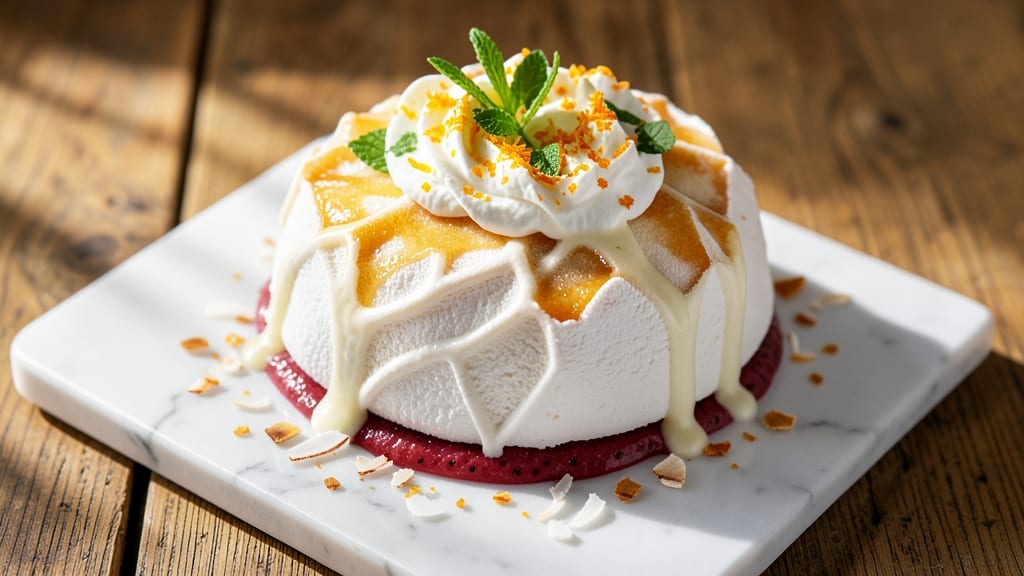
This 2 egg white pavlova recipe delivers a delicate, crisp meringue shell that's lighter than air—perfect for showcasing fresh berries and citrus zest. The secret lies in carefully whipping egg whites to stiff peaks and gradually folding in sugar for a glossy, stable structure.
I've perfected this technique to avoid the common pitfall of cracking during baking, ensuring your pavlova stays intact from oven to plate.
What makes this recipe special is its simplicity—just two egg whites create the entire meringue base, while corn syrup prevents crystallization. The addition of citrus zest infuses subtle brightness that pairs beautifully with whipped cream and seasonal fruit.
Unlike traditional recipes that require multiple egg whites, this version achieves the same stunning results with half the effort.
By the time it emerges from the oven, you'll have a crisp outer shell with a marshmallow-like center—ideal for holding toppings without collapsing. The high sides create a dramatic presentation perfect for special occasions or summer gatherings.
With proper cooling and storage, this pavlova stays fresh for up to 48 hours, making it ideal for make-ahead desserts.
For best results, use room-temperature egg whites and avoid overmixing the batter. The key to success is patience during baking—low heat prevents cracking while developing that signature crisp texture.
Once cooled, your pavlova will be ready to impress with vibrant toppings and a light, airy structure that melts in your mouth.
Ingredients for 2 egg white pavlova
Just two egg whites and a touch of citrus make this showstopping dessert—crisp outside, marshmallow inside.
| Ingredient | Amount | Notes |
|---|---|---|
| Large Egg Whites 🥚 | 2 whole | Room temperature for best volume |
| Granulated Sugar 🍚 | 1 cup | Superfine preferred for smooth texture |
| Corn Syrup 🍯 | 2 tbsp | Light corn syrup, not dark |
| Lemon Zest 🍋 | 1 tbsp | Freshly grated, vibrant yellow |
| Orange Zest 🍊 | 1 tbsp | Freshly grated, bright orange |
| Vanilla Extract 🌸 | ½ tsp | Pure vanilla for authentic flavor |
| Heavy Whipping Cream 🥛 | 1 ½ cups | Cold, for perfect whipped texture |
| Powdered Sugar 🍚 | ½ cup | For sweetening whipped cream |
| Fresh Berries 🍓 | 2 cups | Strawberries, raspberries, or mixed |
| Unsalted Butter 🧈 | 1 tbsp | For greasing baking sheet |
Room-temperature egg whites are non-negotiable—they whip up to stiff, glossy peaks that hold their shape. Kirkland brand or Organic Valley egg whites work best, but any large egg whites will do. For the sugar, superfine granulated dissolves faster, but regular sugar works if you pulse it in a food processor first. Citrus zest? Use a microplane—those box graters leave too much pulp. I always zest two lemons and oranges, but one of each works too. The corn syrup is your secret weapon—it keeps the meringue from crystallizing, so don't skip it!
No corn syrup? Light maple syrup at half the amount works in a pinch, though the texture won't be quite as stable. Short on citrus? Double the zest from one type, but balance with a splash of vanilla. For the whipped cream, Trader Joe's heavy whipping cream is my go-to—it whips up fluffier than store brands. If you're feeling fancy, add a pinch of vanilla bean paste to the cream. The berries can be fresh or thawed frozen—just pat them dry to avoid soggy pavlova. And if you're worried about cracking, chill your meringue 10 minutes after shaping before baking.
This pavlova is a make-ahead marvel—assemble it the night before and store in an airtight container. The meringue shell keeps its crispness for 48 hours at room temperature, while the whipped cream should be added fresh. For extra drama, dust the top with powdered sugar or a sprinkle of edible gold leaf. The butter-greased baking sheet is key—use enough to coat the entire area, then sprinkle with sugar to prevent sticking. Once baked, let it cool completely before adding toppings, or you'll end up with a soggy bottom!
Why You'll Love This Recipe
- No Whisk Fatigue: I swear by this version—just two egg whites means less arm work, and the meringue still holds like magic. That corn syrup blend keeps it silky without the guesswork of separating yolks.
- Zesty Crunch Magic: The lemon and orange zest? Chef’s kiss. It’s bright, crisp, and cuts through the sweetness so well you’ll want to eat it straight from the bowl. No frosting needed—just pure flavor.
- Weeknight Dessert Hack: Make it ahead for dinner parties or grab it to-go for book club. The texture stays perfect for hours, and you only need a bowl and a mixer. Honestly, it’s my go-to when I don’t want to bake.
- Budget-Friendly Luxury: Two eggs, sugar, and a splash of syrup—that’s it. No fancy ingredients, no wasted leftovers (if they last that long). It’s dessert that doesn’t break the bank or the rules.
Step-by-step instructions for light-as-air meringue with citrus zest
Here's how to create a perfect pavlova with crispy edges and marshmallow center.
Prepare the Baking Sheet and Beat the Egg Whites
Preheat your oven to 275°F—this low temperature is key for even baking. Line a baking sheet with parchment paper and lightly grease it with the 1 tablespoon unsalted butter, then wipe off any excess. This prevents sticking without making the meringue greasy.
In a spotlessly clean, grease-free mixing bowl, beat the 2 whole large egg whites with an electric mixer on medium speed until they form soft peaks. This should take about 2-3 minutes. I like to use a stand mixer for this step—it gives you more control over the speed and prevents overbeating. The bowl must be completely dry; even a drop of water can prevent proper whipping.
Gradually Add Sugar and Corn Syrup
With the mixer running on medium speed, gradually add the 1 cup granulated sugar and 2 tablespoons corn syrup over 5-7 minutes. Start slow—add about 1 tablespoon at a time—then increase speed to high as the mixture thickens. This gradual addition prevents the sugar from breaking down the egg whites too quickly.
Continue beating until the meringue is glossy, thick, and holds stiff peaks when the beaters are lifted. You'll know it's ready when the bowl feels cool to the touch and the meringue forms a sharp peak that doesn't flatten immediately. This usually takes another 3-5 minutes. The meringue should be smooth and shiny, with no graininess—this is your signal to move to the next step.
Fold in Citrus Zest and Vanilla
Gently fold in the 1 tablespoon lemon zest, 1 tablespoon orange zest, and 0.5 teaspoon vanilla extract using a spatula. Be careful not to deflate the meringue—work quickly and fold just until everything is evenly distributed. The citrus zest adds that bright, zesty flavor that makes this pavlova special, while the vanilla rounds out the citrus notes beautifully.
Transfer the meringue to a piping bag fitted with a large round tip (or a zip-top bag with a corner snipped off). Pipe the meringue onto the prepared baking sheet, creating a 6-inch round nest shape. The edges should be about ½-inch thick—this ensures they'll crisp up nicely while the center stays soft. Tap the baking sheet gently on the counter to release any air bubbles that may have formed during piping.
Bake Low and Slow for Perfect Texture
Bake the pavlova in the preheated 275°F oven for 1 hour and 15 minutes. The oven door should remain closed during baking—opening it causes the meringue to collapse. You'll know it's done when the outside is crisp and dry to the touch, and the inside is still soft and marshmallow-like when you gently press the center.
Turn off the oven and let the pavlova cool completely inside the oven with the door slightly ajar. This slow cooling prevents cracking and allows the meringue to set properly. Once cooled, the meringue should be crisp on the outside but still soft and chewy in the center—this is what makes a perfect pavlova.
Whip the Cream and Assemble
In a chilled mixing bowl, beat the 1.5 cups heavy whipping cream on medium speed until soft peaks form. Gradually add the 0.5 cup powdered sugar and continue beating until the cream holds stiff peaks. This should take about 2-3 minutes. The cream should be light and airy, with no liquid pooling at the bottom of the bowl.
Spread the whipped cream evenly over the cooled pavlova base. Top with the 2 cups fresh berries, arranging them in a decorative pattern. Serve immediately for the best texture—this dessert is all about that perfect contrast of crispy meringue, creamy filling, and fresh fruit. Enjoy with a spoon and savor the bright citrus flavors that make this pavlova truly special!
Pro Tips For Making 2 Egg White Pavlova
- WHISK TO STIFF PEAKS: Use a stand mixer with the whisk attachment—no hand whipping. Stop when the meringue forms soft peaks that hold their shape but still glisten slightly. Overbeating dries it out fast, and this is a two-egg-white recipe where every bit of moisture counts.
- CHILL THE BOWL FIRST: Place your mixing bowl in the freezer for 10 minutes before starting. Cold helps stabilize the egg whites, so they whip faster and hold volume better. I learned this the hard way when my meringue collapsed mid-bake because the whites were too warm.
- SKIP THE SPOON TEST: That old "tap the bowl to see if it’s done" trick? Forget it. Instead, lift the whisk and check the underside of the meringue—it should be glossy and firm, not sticky. A spoon test just adds time and risk of deflating your delicate structure.
- WEIGH YOUR SUGAR: Use a kitchen scale for the sugar and corn syrup combo. Eyeballing leads to uneven sweetness or a meringue that’s too stiff. Aim for 1:1 ratio with egg whites by weight (e.g., 2 egg whites = ~100g total, so ~50g sugar + corn syrup combined). Precision here makes the difference between a crisp shell and a gummy mess.
Common mistakes when making your 2 egg white pavlova
Overwhipped Egg Whites
I've ruined more pavlova shells than I'd like to admit by overwhipping the egg whites. Once they reach stiff peaks and turn glossy, stop immediately—any extra time in the mixer turns them dry and grainy.
The meringue will lose its ability to hold shape, leading to a sad, flat dessert. If you accidentally overwhip, start over with fresh egg whites; there's no saving them at this point. 🥚
Sugar Added Too Quickly
Dumping all the sugar at once is a rookie mistake that breaks down the egg whites too fast. The sugar should be added gradually over 5-7 minutes while mixing on medium speed. If you rush it, the meringue will turn grainy or even collapse.
For best results, add sugar 1 tablespoon at a time at first, then increase to a slow stream once the mixture thickens.
Skipping the Corn Syrup
This is the secret ingredient that prevents crystallization, and omitting it can ruin your pavlova. Corn syrup (or light maple syrup) prevents sugar crystals from forming, which would make your meringue grainy.
If you forget it, your pavlova might still bake, but the texture will be dry and crumbly instead of crisp and chewy. Use 2 tablespoons—don't substitute with honey or molasses, as they'll darken the meringue and alter the flavor.
Opening the Oven Door
Every time you peek at your pavlova during baking, you risk causing it to collapse. The sudden temperature change creates air currents that deflate the meringue. Once you pipe the shape, leave the oven door closed for the full 1 hour and 15 minutes.
If you must check, open the door just enough to peek through the oven window—no dramatic swings!
Rushing the Cooling Process
Taking your pavlova out of the oven too soon is a fast track to cracking. After baking, turn off the oven and let it cool completely inside with the door slightly open. This slow cooling helps the meringue set properly and prevents the top from cracking as it contracts.
If you're impatient, you might end up with a beautiful shell but a ruined center—patience is key here! ⏳
Using Cold Egg Whites
Cold egg whites won't whip up properly, leading to a flat, dense meringue. Always use room-temperature egg whites—let them sit out for 30 minutes before whipping. If you're in a hurry, place the carton in warm water for 5 minutes to speed up the process.
Cold whites trap air poorly, resulting in a meringue that lacks volume and crispness. Trust me, this small step makes a huge difference! 💡
Nutrition facts
Frequently asked questions
Why does this recipe only use 2 egg whites instead of the usual 4-6?
This recipe achieves the same stunning structure with just 2 egg whites by using corn syrup and superfine sugar to stabilize the meringue. The citrus zest and vanilla extract also enhance flavor without adding bulk, making the meringue lighter and more delicate. It's perfect for those who want a smaller batch or want to avoid overworking multiple egg whites.
Can I make this pavlova without corn syrup?
You can substitute 2 tablespoons light maple syrup or agave nectar in a pinch, but corn syrup is ideal for preventing sugar crystallization. Without it, your meringue may develop a grainy texture. If you omit it completely, your pavlova will still bake but may lack the signature crisp-chewy contrast. For best results, stick with the original recipe!
How do I prevent my pavlova from cracking during baking?
Cracking usually happens from sudden temperature changes or humidity. Always bake at 275°F with the oven door closed, then let it cool completely inside the turned-off oven with the door slightly open. Avoid humid days—if needed, place a small dish of water on the oven rack to balance moisture. Patience is key: never rush the cooling process!
Can I make this ahead of time for a party?
Bake the meringue shell 24 hours ahead and store it in an airtight container. Add the whipped cream and berries just before serving to maintain freshness. The meringue stays crisp for 48 hours, while the cream should be added fresh. This makes it perfect for make-ahead desserts that still look stunning!
What's the best way to store leftovers?
If you have leftovers, store the meringue shell separately from the whipped cream in an airtight container. The shell keeps well for 2 days at room temperature, but the cream is best added fresh. For longer storage, freeze the meringue shell (without cream) for up to 1 month, then thaw at room temperature before adding toppings.