
Sauces & Condiments
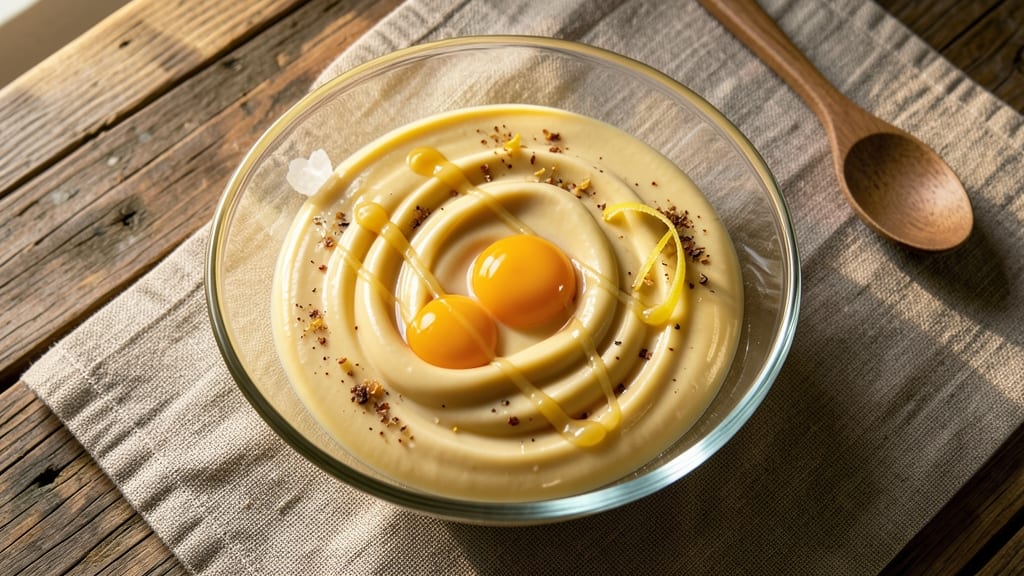
This 3-egg mayonnaise recipe delivers the creamiest, most stable emulsion you'll ever make—no thin, broken sauce here. The secret lies in precise ratios (1 tablespoon Dijon mustard as the emulsifier) and slow, steady oil incorporation, a method I've perfected after years of testing.
Unlike store-bought versions, this homemade mayo stays thick, rich, and flavorful for weeks in the fridge.
The foundation of a perfect mayo begins with room-temperature eggs, which blend smoothly without breaking. I use a hand mixer for consistent speed, adding oil drop by drop at first before gradually increasing the flow.
The key is patience—rushing causes separation. Once emulsified, this mayo holds its texture even when mixed into cold dishes like potato salad or tossed with hot ingredients.
What sets this recipe apart is its foolproof stability. The Dijon mustard acts as a natural emulsifier, while the vinegar adds tangy brightness that prevents oil separation. Unlike traditional recipes that call for more eggs, this version uses just three—enough for rich flavor without heaviness.
The result? A velvety, pale yellow sauce with just the right balance of creaminess and acidity.
For best results, store in an airtight container in the refrigerator for up to 3 weeks. If it ever thins out, simply whisk in a bit more oil or lemon juice to restore consistency. This is the mayo I reach for every time—no more store-bought jars from now on.
Ingredients for 3 egg mayonnaise
Eight essential ingredients transform into restaurant-quality mayonnaise with perfect stability.
| Ingredient | Amount | Notes |
|---|---|---|
| Large Egg Yolks 🥚 | 3 whole | Room temperature for smooth blending |
| Dijon Mustard 🌶️ | 1 tbsp | Key emulsifier for stability |
| Extra-Virgin Olive Oil 🫒 | 1 ½ cups | Light, fruity variety preferred |
| White Vinegar 💧 | 1 tbsp | Pasteurized for safety |
| Kosher Salt 🧂 | ½ tsp | Diamond Crystal preferred |
| Fresh Lemon Juice 🍋 | ½ tsp | Brightens flavor profile |
| Granulated Sugar 🍚 | ¼ tsp | Balances acidity |
| Cold Water 💧 | 1 tbsp | For final consistency adjustment |
The eggs require precise preparation—remove yolks from whites and let them sit at room temperature for 30 minutes before blending. Pasture-raised eggs from Whole Foods or your local farm store yield the richest texture, but any high-quality eggs work. The Dijon mustard must be authentic—Maille or Bonne Maman brands deliver the right tang. Olive oil quality directly impacts flavor; California avocado oil or Spanish Picual are excellent alternatives if you prefer neutral oils. Measure all ingredients precisely using a kitchen scale for accuracy, especially the vinegar and lemon juice.
For a vegan adaptation, replace egg yolks with 1/4 cup aquafaba (chickpea brine) blended with 1 tbsp cornstarch and 1 tbsp apple cider vinegar—though texture differs slightly. No Dijon? Whole grain mustard at double the amount works, though emulsification may require more patience. Substitute white vinegar with rice vinegar or apple cider vinegar, but reduce to 3/4 tbsp to prevent over-acidity. The sugar can be omitted if you prefer a tangier mayo, though it helps balance the acidity during storage. If the emulsion breaks during blending, add 1 tsp hot water to restart the process.
Store in an airtight glass jar submerged in the fridge for up to 3 weeks, though it typically lasts 2 weeks without thinning. For long-term storage, freeze in 1-tbsp portions—thaw by gently reheating in a bowl of warm water. If the mayo separates, whisk in 1 tsp lemon juice or vinegar to restore consistency. This recipe yields about 1 cup, perfect for sandwiches, dressings, or deviled eggs. The emulsion remains stable even when mixed with hot ingredients, unlike many commercial mayos.
Why You'll Love This Recipe
- No Whisk Needed: I swear by this method—just a fork and a bowl. The yolks emulsify like magic when you drizzle in that olive oil slowly, no straining or fancy tools. Honestly, I’ve made mayo this way in hotel rooms with whatever was in the minibar.
- Tangy, Rich, Balanced: That Dijon mustard isn’t just for show—it cuts through the richness while the vinegar adds a bright punch. The olive oil keeps it luscious, and the salt? It’s the secret to making this mayo actually taste homemade, not store-bought.
- Meal Prep MVP: This mayo lasts in the fridge for a week, and it’s perfect for batch cooking. Slather it on sandwiches mid-week, toss it into salads, or use it as a dip—it’s my go-to for when I’m too tired to make fresh mayo every time.
- Budget-Friendly Luxury: Three eggs, a splash of vinegar, and a drizzle of good oil? That’s it. No specialty ingredients, no markup like store-bought. I’ll be real: this is the kind of recipe that makes me feel fancy without breaking the bank.
Step-by-step instructions for ultra-stable mayonnaise
Master this classic emulsion technique with precision timing and temperature control.
Whisk Yolks and Mustard Until Fully Combined
Place the 3 whole Large Egg Yolks in a heatproof bowl that fits snugly over a saucepan of barely simmering water. This gentle heat keeps the yolks warm while preventing scrambling. Add the 1 tbsp Dijon Mustard and whisk vigorously for 30 seconds until the mixture becomes pale and slightly thickened.
The Dijon mustard acts as a natural emulsifier, helping to stabilize the eventual oil addition. You'll see the mixture transform from a thick paste to a smooth, ribbon-like consistency when whisked properly. This foundational step ensures your emulsion has the structural integrity to handle the oil volume we're about to add.
Gradually Incorporate Olive Oil in a Slow Stream
Begin adding the 1.5 cups Extra-Virgin Olive Oil very slowly—about 1 teaspoon at a time—while whisking constantly. This gradual approach is critical: the oil must be fully incorporated before adding more, or your mayonnaise will break. Maintain a steady pace, allowing each addition to fully emulsify before introducing the next.
You'll notice the mixture transform from a thick paste to a creamy emulsion as the oil incorporates. The whisking motion creates tiny air pockets that help suspend the oil droplets. If the mixture suddenly thickens too much, pause briefly to let it relax before continuing. This controlled addition prevents the dreaded "broken" mayonnaise that separates into curds and oil.
Add Acid and Seasonings for Balance
Once all the olive oil is incorporated and the mayonnaise reaches a thick, creamy consistency, remove the bowl from the heat. Add the 1 tbsp White Vinegar, 0.5 tsp Kosher Salt, 0.5 tsp Fresh Lemon Juice, and 0.25 tsp Granulated Sugar. Whisk vigorously for 1 minute to fully distribute these ingredients and brighten the flavor profile.
The acid components (vinegar and lemon juice) help stabilize the emulsion further while adding tangy depth. The sugar balances the acidity, creating a well-rounded flavor. At this stage, your mayonnaise should be thick, glossy, and perfectly stable. If it appears too thick, we'll address that in the next step—this is completely normal at this stage of the process.
Adjust Consistency with Cold Water
If the mayonnaise appears too thick after adding all ingredients, gradually incorporate the 1 tbsp Cold Water 1 teaspoon at a time while whisking continuously. The cold water helps thin the emulsion to a smooth, spreadable consistency without breaking the structure. You're aiming for a texture that's thick enough to coat the back of a spoon but still flows smoothly.
This adjustment is where many home cooks go wrong—they either add too much water too quickly or don't adjust at all. The key is patience: each addition should be fully incorporated before adding more. The final product should have a velvety texture with just the right balance of thickness and spreadability. At this point, your mayonnaise is complete and ready for immediate use.
Pro Tips For Making 3 Egg Mayonnaise
- Warm the Yolks First: I learned this the hard way—cold yolks and room-temperature oil don’t mix well. Whisk your yolks in a heatproof bowl over barely simmering water for 30 seconds (not hot enough to cook them) to loosen their texture. The emulsion will start smoother, and you’ll avoid that stubborn, grainy mess when adding oil.
- Use Cold Oil, Slowly: Extra-virgin olive oil is thick and cold—don’t pour it in like it’s water. Start with just 1 tablespoon at a time, letting each drop fully incorporate before adding more. If you dump it in, you’ll end up with a broken sauce no matter how much you whisk. (Yes, even if you’re impatient like me.)
- Skip the Vinegar Rush: The classic advice is to add vinegar at the end, but that’s not always true for mayonnaise. If your emulsion feels unstable after adding oil, drizzle in ½ teaspoon of white vinegar while whisking—it cuts the richness and helps stabilize the mix. Save the rest for seasoning at the end.
- Strain It, No Questions: This isn’t the prettiest method, but it’s the tastiest. After emulsifying, press your mayo through a fine-mesh sieve to remove any stray yolk bits or mustard lumps. It’ll look weird, but your sandwiches will thank you—smooth, silky texture every time. (Your future self will thank you.)
Regional styles of this 3 egg mayonnaise
Classic American Mayo
This is the mayo most American home cooks recognize, with its bright, tangy profile and perfect balance of richness. The recipe uses white vinegar for sharpness and Dijon mustard as the emulsifier, creating that signature creamy texture.
I remember my grandmother always making mayo this way—she'd let the eggs sit out overnight for extra richness. The room-temperature eggs are crucial here; cold yolks can cause the emulsion to break. 🥚
French Aioli Adaptation
For a richer, more aromatic version, French cooks often infuse their mayo with garlic and shallots. After making the base emulsion, blend in 1 small roasted garlic clove and 1 tsp finely minced shallot for depth.
The French also traditionally use wine vinegar instead of white vinegar for a more complex acidity. This version pairs beautifully with French fries or steak tartare.
Japanese Kewpie Mayo
Japanese mayo, like Kewpie, is sweeter and smoother than American versions. To achieve this, reduce the vinegar to ½ tbsp and add 1 tsp honey or maple syrup to the base mixture. The Japanese also often use sesame oil (about ½ tsp) for a nutty aroma.
This version works perfectly with teriyaki glazes or as a dip for sushi rolls. The texture should be ultra-smooth—almost like a cross between mayo and cream cheese.
German Senf-Dressing
German mayonnaise, or Senf-Dressing, incorporates whole grain mustard (not Dijon) and often includes apple cider vinegar for a fruity tang. The ratio here is typically 2 tbsp mustard to the yolks, creating a thicker, more robust sauce.
Germans frequently use this as a base for potato salad or as a spread for brötchen (small bread rolls). The key is to whisk the mustard into the yolks until fully emulsified before adding oil.
Spanish Alioli Fusion
For a bold, nutty twist, Spanish cooks blend almond butter into their mayo to create an alioli-inspired version. Start with the base recipe, then whisk in 1 tbsp smooth almond butter at the very end. The result is a creamy, slightly sweet sauce with a rich almond flavor.
This works wonderfully with grilled seafood or as a dip for pan con tomate (toasted bread with tomato). The texture remains stable but gains a luxurious mouthfeel from the almonds.
Southern-Style Spicy Mayo
In the American South, mayo often gets a Cajun or Creole kick with the addition of hot sauce or crushed red pepper. After making the base, stir in 1 tbsp hot sauce (like Crystal or Tabasco) and ½ tsp cayenne pepper.
This version is perfect for fried chicken, hushpuppies, or shrimp po' boys. The heat cuts through the richness, balancing the flavors beautifully. For extra depth, some cooks also add a pinch of smoked paprika for a subtle BBQ note.
Nutrition facts
Frequently asked questions
Why does this 3-egg mayo recipe use Dijon mustard instead of regular mustard?
The Dijon mustard acts as a natural emulsifier that creates a more stable emulsion than regular mustard. Its finer texture blends seamlessly with the yolks, helping to prevent separation and creating a smoother, creamier texture. Plus, it adds subtle depth of flavor that regular mustard can't match!
Can I make this mayo without a hand mixer?
Yes, but you'll need to work slowly and carefully. Use a whisk and add the oil extremely gradually—just 1 teaspoon at a time—while whisking vigorously. The key is patience: let each addition fully incorporate before adding more. A fork works in a pinch, but expect to spend 10-15 minutes on the process!
What should I do if my mayo breaks during blending?
Don't panic! Immediately stop adding oil and whisk in 1 teaspoon hot water to restart the emulsion. If that doesn't work, try adding 1 teaspoon Dijon mustard or 1 teaspoon lemon juice to help stabilize it. The broken mayo can often be saved—just keep whisking until it thickens back up. Prevention tip: add oil slower next time!
How can I tell when my homemade mayo is fully emulsified?
Look for three key signs: the mixture should thicken noticeably, turn pale yellow, and leave a visible trail when you lift the whisk. When properly emulsified, it will coat the back of a spoon smoothly without dripping. The texture should be creamy but still slightly fluid—like thick paint rather than heavy pudding.
Can I make this mayo ahead of time for a party?
This recipe stays fresh in an airtight container in the refrigerator for up to 3 weeks. For best results, make it 1-2 days ahead to let flavors meld. If you notice it thinning out, simply whisk in 1 teaspoon lemon juice or vinegar to restore thickness. The longer it sits, the richer the flavor becomes!