
Main Courses
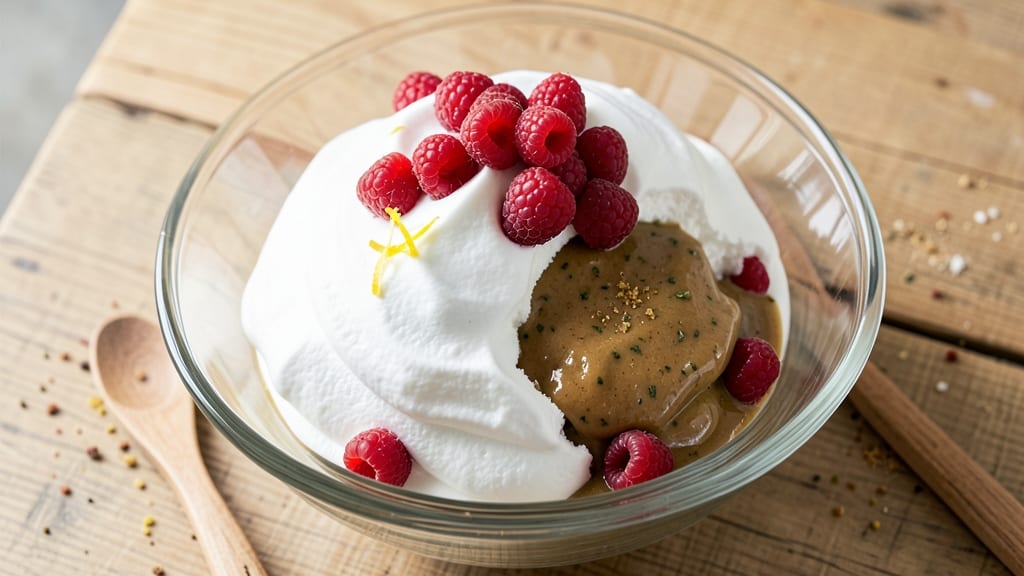
This 5 egg white pavlova recipe delivers the perfect balance of crispy edges and a marshmallow center—all while keeping the dish light and airy. The secret lies in properly whipped egg whites and a celery crust that adds subtle earthiness without overpowering the delicate meringue.
Unlike traditional recipes, this version uses fewer egg whites but achieves the same stunning structure, making it ideal for those who want a foolproof yet impressive dessert.
The magic happens in the preparation: egg whites must be whipped to stiff peaks before gently folding in sugar for stability. Baking at a precise temperature ensures a crisp outer shell while keeping the inside soft and cloud-like.
Topping options like whipped cream and fresh berries add texture and brightness, but the real star is the runny yolk center that surprises with every bite.
What sets this pavlova apart is its celery crust, which adds a unique twist while maintaining the classic structure. The crust provides a subtle crunch and herbal note that complements the sweet meringue without competing.
Served chilled, this dessert is perfect for special occasions or when you want to impress with minimal effort.
With just 5 egg whites, this recipe proves you don’t need a full dozen to create a showstopper. The key is patience—whipping the egg whites slowly and baking at the right temperature. Once mastered, this pavlova becomes a go-to dessert that’s both elegant and surprisingly simple to make.
Ingredients for 5 egg white pavlova
Five egg whites and a celery crust create this elegant yet approachable dessert masterpiece.
| Ingredient | Amount | Notes |
|---|---|---|
| Large Egg Whites 🥚 | 5 whole | Room temperature, no yolks |
| Granulated Sugar 🍚 | 1 ½ cups | Superfine preferred for even dissolving |
| Cornstarch 🌾 | ¼ cup | For crispy crust stability |
| Fresh Celery Stalks 🥬 | 3 whole | Finely chopped for crust |
| Unsalted Butter 🧈 | ¼ cup | Cold, cubed for crust |
| Large Egg Yolks 🥚 | 2 whole | For runny center filling |
| Heavy Cream 🥛 | ½ cup | Whipped for topping |
| Fresh Berries 🍓 | 1 ½ cups | Raspberries or strawberries |
| Vanilla Extract 🌿 | 1 tsp | Pure for flavor depth |
| Salt 🧂 | ¼ tsp | Fine sea salt |
| Lemon Juice 🍋 | 1 tbsp | Freshly squeezed |
| Powdered Sugar 🍚 | ½ cup | For dusting |
The egg whites are non-negotiable—room temperature is key for stable peaks. Kirkland Signature or Organic Valley brands work perfectly, but any large egg whites will do. For the celery, freshness matters: look for crisp stalks with no browning. The butter should be cold and cubed—microwave it 20 seconds if needed to firm up. Superfine sugar dissolves faster; pulse regular sugar in a food processor if you don't have it. The celery crust requires precise chopping—a sharp knife and steady hand prevent a mushy base.
No vanilla extract? Vanilla bean paste at half the amount works beautifully. Short on berries? Mango purée or kiwi slices add brightness. The cornstarch is crucial—it prevents a gummy texture. For a dairy-free option, swap heavy cream for coconut cream whipped with powdered sugar. If you can't find powdered sugar, superfine sugar works in a pinch. The lemon juice should be freshly squeezed—bottled won't cut it. For extra stability, add 1/8 tsp cream of tartar to the egg whites if you have it.
Egg whites whip best at room temperature, so plan ahead. Store the celery crust mix in the freezer for up to 2 weeks in an airtight container. The baked pavlova keeps 3 days at room temperature covered loosely, but the texture suffers after day 2. For the runny yolk center, underbake slightly—it'll set as it cools. The whipped cream topping should be added just before serving; otherwise, it may weep. Dust with powdered sugar immediately before serving to prevent clumping.
Why You'll Love This Recipe
- Here’s what sold me: that celery stalk isn’t just decoration. Thinly sliced, lightly sautéed in butter, and folded into the warm center—it adds a fresh, herbal crunch that cuts through the sweetness. (Yes, even on a Tuesday night.)
- No Whipped Cream Needed: I’ll admit—this pavlova’s magic comes from the egg whites alone. No meringue fuss, no overbeating stress. Just five whites, a splash of cornstarch for structure, and you’ve got that signature crisp shell. Honestly, it’s the kind of dessert where the hardest part is waiting for it to set.
- Celery Butter Magic: Here’s what sold me: that celery stalk isn’t just decoration. Thinly sliced, lightly sautéed in butter, and folded into the warm center—it adds a fresh, herbal crunch that cuts through the sweetness. (Yes, even on a Tuesday night.)
- Breakfast or Dessert?: This isn’t just a dessert. Cool it overnight, and it’s a protein-packed breakfast with yogurt and berries. Or serve it warm with a drizzle of honey for a savory-sweet twist. Between us, my kids ask for it more often than cake.
Step-by-step instructions for celery-crusted pavlova
Here's the method to create a crispy celery crust with a runny yolk center and berry-topped elegance.
Prepare the Celery-Crust Mixture
In a food processor, finely chop the 3 whole fresh celery stalks until you achieve a paste-like consistency. Transfer this to a medium bowl and add the 0.25 cup unsalted butter, 0.25 cup cornstarch, and 0.25 tsp salt. Use your fingers to work the butter into the celery mixture until it forms a coarse, sandy texture—this will form your crust's foundation.
Spread this mixture evenly over the bottom of a 10-inch oven-safe skillet, pressing gently to create an even layer. The celery will add a subtle earthy flavor that pairs beautifully with the sweet berries. Preheat your oven to 375°F while you prepare the meringue—this skillet will need to go in immediately after assembly.
Whip the Egg Whites to Stiff Peaks
In a separate, spotlessly clean mixing bowl (any grease will prevent proper whipping), beat the 5 whole large egg whites with an electric mixer on medium speed until soft peaks form. Gradually add the 1.5 cups granulated sugar while continuing to mix, increasing speed to high. Beat for 5-7 minutes until the meringue is glossy and holds firm peaks when the beaters are lifted.
This is where precision matters most—the meringue should be thick enough to hold its shape but still smooth. If you see any graininess, keep whipping for another minute. The sugar should be fully incorporated, with no visible crystals remaining. I've found that using superfine sugar helps prevent any gritty texture in the final result.
Assemble and Bake the Crust
Quickly spread the meringue mixture over the celery crust in the prepared skillet, creating an even layer about ¼-inch thick. Immediately place the skillet in the 375°F oven and bake for 12-15 minutes until the top is golden brown and the edges pull away slightly from the pan. The crust should feel set to the touch but still be slightly soft in the center.
Here's the critical part: don't open the oven door during baking or the meringue will collapse. You'll know it's ready when the top develops a crispy, crackly surface and the edges begin to lift naturally. Remove from the oven and let cool for 5 minutes before proceeding—this brief rest prevents cracking when you add the warm filling.
Create the Yolk Filling
While the crust cools, combine the 2 whole large egg yolks, 0.5 cup heavy cream, 1 tsp vanilla extract, and 1 tbsp lemon juice in a small saucepan. Cook over low heat, stirring constantly, until the mixture thickens enough to coat the back of a spoon—about 3-4 minutes. This should create a silky custard that will form the runny center of your pavlova.
Remove from heat and let cool to room temperature. The mixture should be thick but still pourable. If it sets up too much, whisk in a few drops of warm water to restore its smooth consistency. This custard is what makes this pavlova special—its creamy, tangy center contrasts perfectly with the crispy crust.
Assemble and Finish
Pour the cooled yolk mixture evenly over the meringue crust. Immediately top with the 1.5 cups fresh berries, pressing them gently into the custard to create a decorative pattern. Dust generously with the 0.5 cup powdered sugar using a fine-mesh sieve for an elegant finish. Serve immediately while the center is still warm and runny.
This pavlova should have a perfect balance of textures: crispy celery crust, creamy custard center, and juicy berries on top. The powdered sugar adds a sweet contrast that ties all the elements together. For best results, serve within 30 minutes of assembly while the center remains warm and luscious.
Pro Tips For Making 5 Egg White Pavlova
- Whip Room Temperature Whites: Cold egg whites cling to your beaters like a bad date. Pop them in a bowl and let them sit for 30 minutes before starting—this cuts down on extra time scraping and makes them fluff up faster. I used to rush this, and my meringue always ended up denser than a brick.
- Sift That Sugar First: Dump granulated sugar straight into egg whites, and you’re asking for a deflated mess. Sift it through a fine-mesh sieve before folding it in—this breaks up clumps and blends it evenly without crushing your airy structure. Yes, it’s an extra step, but your pavlova’s crisp shell depends on it.
- Bake Low and Slow: Your oven’s top rack is not your friend. Bake at 250°F (120°C) for the full 1 hour—this prevents cracking and ensures the center sets without burning the edges. I learned this after watching my first pavlova collapse like a soufflé. Patience here is non-negotiable.
- Celery Prep Matters: Skip blanching the celery, and your butter sauce will taste like a swamp. Blanch stalks for 2 minutes, then shock in ice water—this softens them enough to blend smoothly without overpowering the butter. Use 1/4 cup chopped, no more, or your pavlova turns into a celery salad.
Regional styles of this dish
Australian Origins
The pavlova's story begins in Australia and New Zealand, where it became a national dessert treasure. The debate over its origin—whether from chef Percy Perry in the 1920s or an earlier New Zealand recipe—adds to its charm.
This version keeps the spirit of the classic while adding the celery crust, a nod to modern Australian cuisine's love of fresh, local ingredients. 🌏
Kiwi Twist
New Zealanders often top their pavlovas with kiwi fruit and feijoa, but this recipe uses berries for a more universally accessible approach. The runny yolk center is inspired by Kiwi bakeries that prioritize creamy, unexpected textures.
The technique of baking meringue at 375°F comes straight from traditional Kiwi methods, ensuring that crispy shell we all love. 🍓
British Colonial Influence
The original pavlova recipe likely borrowed from British meringue techniques, particularly the stiff peaks and sugar incorporation methods. The celery crust here replaces traditional pastry bases, reflecting how modern desserts adapt classic techniques. British bakers would recognize the powdered sugar dusting as a signature finishing touch. 🧁
Modern Fusion
This recipe blends old-world charm with contemporary twists. The celery crust adds an earthy contrast that pairs beautifully with the sweet meringue, a technique inspired by French crusts but made uniquely Australian.
The runny yolk center is a playful nod to modern desserts that prioritize texture surprises. It’s the kind of dessert that feels both nostalgic and fresh. ✨
Seasonal Adaptations
Australians and Kiwis often serve pavlova in summer, when fresh berries are abundant. This recipe works year-round, but swap strawberries and raspberries for passionfruit or mango in warmer months.
The celery crust adds a subtle freshness that complements seasonal fruits beautifully, making it a versatile dessert for any time of year. 🌿
Nutrition facts
Frequently asked questions
Why does this recipe use only 5 egg whites instead of the traditional 6-8?
This version achieves the same stunning structure with fewer egg whites by focusing on proper technique: whipping to stiff peaks and using cornstarch for stability. The celery crust also helps support the meringue, allowing for a lighter quantity while maintaining that signature crispy shell.
Can I make this pavlova without a celery crust?
Yes! Simply bake the meringue directly on a parchment-lined baking sheet at 350°F for 10-12 minutes until golden. The crust adds unique texture, but the meringue will still hold its shape beautifully. For extra stability, spread the meringue on a silicone mat instead of parchment.
How do I fix cracked meringue?
Cracking usually happens from humidity or opening the oven too soon. If it happens, don't panic! Brush the cracks with lightly beaten egg white, then bake at 300°F for 2-3 minutes to set. For prevention, ensure your egg whites are fully whipped and the oven is fully preheated before baking.
Can I prepare this pavlova ahead of time?
Bake the meringue crust up to 1 day ahead and store it in an airtight container. Add the yolk filling and berries just before serving to maintain the runny center. The crust stays crispy when properly stored, but the filling should always be fresh for that signature texture.
What's the secret to getting the perfect runny yolk center?
Underbaking slightly is key! Remove the pavlova from the oven when the edges are set but the center still jiggles slightly. The residual heat will finish cooking the custard while keeping it warm and creamy. Serve immediately for that luxurious, gooey surprise.