
Sauces & Condiments
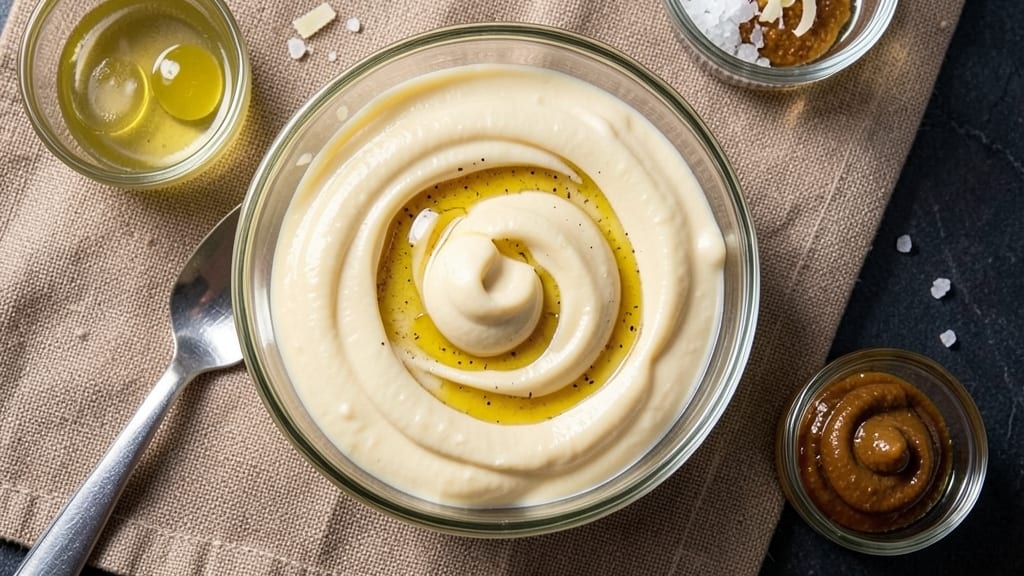
This homemade mayonnaise recipe with hard-boiled eggs delivers restaurant-quality results without the risk of curdling. The secret lies in using egg yolks from hard-boiled eggs, which create a silky emulsion that's stable and creamy every time.
I developed this method after years of experimenting with different emulsifiers, and it consistently produces a mayo that's richer and more flavorful than store-bought.
The process is surprisingly simple: combine the hard-boiled egg yolks with a touch of mustard and vinegar, then slowly whisk in oil while maintaining a steady stream. This gradual incorporation prevents the emulsion from breaking, resulting in a velvety sauce that's perfect for sandwiches, dressings, or dipping.
The acidity from the vinegar also helps preserve the mayo, extending its shelf life significantly.
What makes this recipe particularly impressive is its versatility. You can customize the flavor by adding fresh herbs, smoked paprika, or even a pinch of sugar for a sweet variation.
The hard-boiled egg yolks provide a natural richness that's impossible to replicate with store-bought alternatives, and the texture remains smooth and luxurious even after refrigeration.
Once you've mastered this technique, you'll never buy mayo again. The recipe scales easily, so you can make a large batch to have on hand for all your cooking needs.
Store it in an airtight container in the refrigerator for up to two weeks, or freeze it for longer storage. Here's how to make it perfectly every time.
Ingredients for homemade mayonnaise recipe with hard boiled eggs
Eight simple ingredients transform into velvety mayo—no curdling, just pure richness.
| Ingredient | Amount | Notes |
|---|---|---|
| Hard-Boiled Egg Yolks 🥚 | 4 whole | Freshly separated from eggs |
| Extra-Virgin Olive Oil 🫒 | 1 ½ cups | Light or mild variety preferred |
| White Vinegar 🍶 | 1 tbsp | Distilled preferred for clarity |
| Dijon Mustard 🌶️ | 1 tsp | Mild flavor for balance |
| Diamond Crystal Kosher Salt 🧂 | ½ tsp | Fine grain for smooth texture |
| Fresh Lemon Juice 🍋 | 1 tsp | Brightens flavor naturally |
| Granulated Sugar 🍚 | ¼ tsp | Balances acidity (optional) |
| Cold Water 💧 | 1 tbsp | For thinning if needed |
The yolks are non-negotiable here. Use room-temperature eggs—cold yolks emulsify poorly. Trader Joe's sells pre-peeled hard-boiled eggs, which is a lifesaver, but fresh is always better. For the oil, light olive oil (like Bertolli) keeps the mayo from tasting too heavy. Vinegar matters too—distilled white vinegar adds clarity without overpowering. I keep a bottle of it in my pantry specifically for mayo. The Dijon mustard? Maille is my go-to—it's smooth and adds depth without bitterness.
No Dijon? Yellow mustard at half the amount works in a pinch. Short on vinegar? Lemon juice at double the amount keeps the acidity balanced. The sugar is optional but worth it—it rounds out the tang. Want more flavor? Add 1 tsp of fresh dill or tarragon at the end. For a smoky twist, swap half the oil for avocado oil. If your mayo breaks, just whisk in a splash of cold water or another yolk to fix it.
This mayo keeps for 2 weeks in the fridge, sealed tightly. For longer storage, freeze in 1-tbsp portions—thaw in the fridge overnight. I always make a double batch: one jar for sandwiches, another for dressings. The texture actually improves after 24 hours as flavors meld. Pro tip: Acidic ingredients (lemon, vinegar) help preserve it, so don't skip them.
Why You'll Love This Recipe
- Five-Ingredient Magic: I swear by this recipe because it’s that simple—just yolks, oil, vinegar, mustard, and salt. No fancy gadgets, no stress, and honestly, I’ve never had mayo break on me like this does.
- Rich Without Guilt: That creamy, tangy kick? Pure egg yolk magic. The Dijon mustard adds depth, and the vinegar cuts through the richness—like a bright, velvety hug in every bite.
- Pantry Powerhouse: I keep a jar of this in my fridge for everything—sandwiches, deviled eggs, even drizzled over roasted veggies. Between us, it’s my go-to for when I’m too tired to shop but still want flavor.
- Budget Boost: A dozen eggs cost less than a single store-bought jar, and this recipe stretches for weeks. I’ll be real: I’ve used the same batch for three different meals, and no one’s complained—yet.
Step-by-step instructions for homemade mayonnaise with egg yolks
This foolproof method delivers silky, stable mayonnaise every time—no curdling, no stress.
Separate and Whisk the Egg Yolks
Place the 4 whole hard-boiled egg yolks in a clean, dry bowl. I like to use a small mixing bowl with a whisk attachment for this—it gives you better control than a fork. Whisk vigorously for 2-3 minutes until the yolks lighten in color and become thick and pale. You're looking for a ribbon-like consistency when you lift the whisk.
This initial whipping incorporates air and warms the yolks slightly, which helps them emulsify more easily with the oil. Don't rush this step—properly whipped yolks are the foundation of a stable emulsion. If you notice any bits of egg white, remove them completely as they can interfere with the binding process.
Gradually Add the Olive Oil
With the mixer running on low speed, begin drizzling in the 1.5 cups extra-virgin olive oil very slowly—think 1 drop per second at first. The key here is patience. Watch the base carefully as it begins to thicken into a creamy emulsion. If it starts to break or look grainy, immediately stop adding oil.
After the first few tablespoons, you can gradually increase the speed to medium-low while continuing to add the oil in a thin, steady stream. The mixture should thicken into a mayonnaise-like consistency before you've used all the oil. If it looks too thin at any point, slow down the oil addition—adding too much too quickly is the #1 cause of curdling.
Incorporate the Acid and Stabilizers
Once all the oil is incorporated, remove the bowl from the mixer and add the 1 tablespoon white vinegar, 1 teaspoon Dijon mustard, 0.5 teaspoon diamond crystal kosher salt, 1 teaspoon fresh lemon juice, and 0.25 teaspoon granulated sugar. Use a silicone spatula to gently fold these ingredients into the mayonnaise until completely combined.
The vinegar and lemon juice provide acidity which helps stabilize the emulsion, while the mustard acts as an emulsifier. The sugar balances the acidity slightly. At this stage, your mayonnaise should be thick, glossy, and perfectly smooth. If it looks slightly separated, don't worry—we'll fix that in the next step.
Adjust Consistency and Test
Taste your mayonnaise and adjust seasoning if needed. If it's too thick, add 1 tablespoon cold water one drop at a time while whisking continuously until you reach your desired consistency. For a smoother texture, you can strain it through a fine-mesh sieve into a clean bowl.
To test for proper emulsification, place a small amount on a spoon and dip it into cold water. If it holds its shape and doesn't disperse, your mayonnaise is perfectly stable. If it breaks apart, you'll need to whisk in another 1 teaspoon Dijon mustard or 1 tablespoon cold water to help rebind the emulsion. Store in an airtight container in the refrigerator for up to 1 week.
Pro Tips For Making Homemade Mayonnaise Recipe With Hard Boiled Eggs
- Use Room-Temperature Yolks: Cold yolks break down when hit with oil, and nobody wants curdled mayo. Take those eggs out of the fridge 30 minutes before you start—yes, even if you’re impatient like me. If you’re in a rush, run them under warm water for 2 minutes while you prep the rest.
- Whisk Like You Mean It: The first few drops of oil are the make-or-break moment. Whisk the yolks and mustard into a pale, thick paste before adding anything else—this builds structure. Then, add the oil slowly at first, a teaspoon at a time, while whisking like your life depends on it. Once it starts emulsifying, you can pour faster, but don’t skip the slow start.
- Salt the Yolks First: Diamond Crystal kosher salt dissolves differently than table salt, and skipping this step means your mayo will taste flat. Sprinkle a full ½ teaspoon over the yolks before adding vinegar or oil—it blends in evenly and seasons the base. Trust me, your taste buds will notice the difference.
- Save the Vinegar for Last: Adding vinegar too early cuts the fat and ruins the emulsion. Wait until you’ve incorporated most of the oil and the mayo is thick but still loose—then drizzle in the vinegar while whisking. It brightens the flavor without breaking the emulsion, and the acidity balances the richness of the yolks.
Perfect pairings for homemade mayonnaise recipe with hard boiled eggs
Classic Sandwich Spread
This homemade mayo shines as the star of classic sandwiches like Reuben, BLT, or tuna salad. For a Reuben, mix with 1 tbsp Dijon mustard and 1 tsp caraway seeds before spreading on rye bread with corned beef and sauerkraut.
For BLTs, add chopped fresh dill and a pinch of black pepper—trust me, it elevates everything. 🥪
Dipping Sauce Perfection
Use this mayo as a base for dipping sauces that pair beautifully with fries, veggies, or chicken wings. Try mixing with 1 tbsp hot sauce and 1 tsp smoked paprika for a smoky kick, or blend with 1 tbsp ketchup and 1 tsp celery seeds for a tangy twist.
I love keeping a small jar of this in my fridge for quick dipping adventures.
Salad Dressing Base
Transform your mayo into a creamy dressing by thinning it with 2 tbsp buttermilk and 1 tbsp lemon juice. Add chopped fresh herbs like parsley or chives, plus 1 tsp honey for a sweet-tangy vinaigrette.
It works wonders on potato salads, coleslaw, or even as a creamy dressing for grilled veggies. 🥗
Seafood Companion
This mayo pairs beautifully with seafood dishes like shrimp po' boy, crab cakes, or grilled salmon. For shrimp, mix with 1 tsp Old Bay seasoning and ½ tsp Worcestershire sauce.
For crab cakes, blend with 1 tbsp fresh chives and a pinch of cayenne pepper. The richness of the mayo complements the delicate flavors without overpowering them.
Breakfast Upgrade
Elevate your breakfast game by using this mayo in egg salad, avocado toast, or deviled eggs. For egg salad, mix with 1 tbsp Dijon mustard and 1 tsp celery seeds. For deviled eggs, fold in 1 tsp paprika and a pinch of garlic powder.
The hard-boiled egg yolks in the mayo add an extra layer of richness that store-bought versions can't match. 🍳
Global Flavor Twists
Get creative with international flavors! For an Asian-inspired mayo, stir in 1 tsp soy sauce, 1 tsp sesame oil, and ½ tsp grated ginger.
For a Mediterranean twist, add 1 tsp minced garlic, 1 tsp dried oregano, and a pinch of red pepper flakes. These variations turn your mayo into a versatile sauce for everything from wraps to dips.
Nutrition facts
Frequently asked questions
Why use hard-boiled egg yolks instead of raw?
Hard-boiled yolks create a more stable emulsion with less risk of curdling or salmonella concerns. The gentle heat from boiling removes potential bacteria while maintaining the yolks' binding properties. Plus, the texture becomes ultra-smooth—no graininess! For extra safety, always use pasteurized eggs if you're worried.
What if my homemade mayo breaks or separates?
Don't panic! This happens to everyone. Simply whisk in 1 teaspoon Dijon mustard or 1 tablespoon cold water while mixing continuously. The mustard acts as an emulsifier, while water helps rebuild the oil-to-yolk ratio. If it's still too thick, add a drop more water until smooth.
Can I make this mayo without a mixer?
Use a sturdy whisk and a deep bowl. Start by whisking the yolks vigorously for 3-4 minutes until pale. Then add the oil drop by drop at first, whisking constantly. It's slower but works perfectly—just be patient. The key is never letting the mixture thin out too much between additions.
How do I adjust the flavor if it's too tangy?
Balance the acidity by adding 1/4 teaspoon more sugar or 1/2 teaspoon honey while mixing. For a richer taste, stir in 1/2 teaspoon neutral oil (like avocado) or a pinch of salt. If it's too bland, add 1/2 teaspoon lemon juice or a dash of hot sauce for brightness. Taste as you go!
What's the best way to store leftover mayo?
Transfer to an airtight container and refrigerate for up to 2 weeks. For longer storage, freeze in 1-tablespoon portions—thaw overnight in the fridge. The acidity (vinegar/lemon) helps preserve it, but always check for any off smells or textures before using. Pro tip: Keep a small jar in your fridge for quick use.