
Breakfast & Brunch
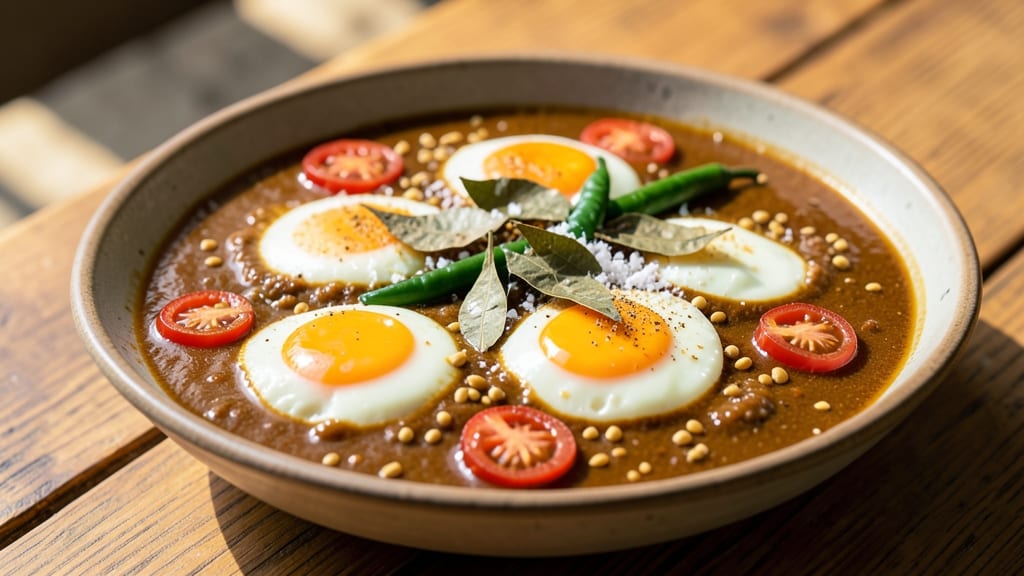
This South Indian egg masala recipe transforms simple eggs into a fragrant, spiced tomato gravy that's comfort food at its finest. The secret lies in tempering whole spices with mustard seeds and curry leaves—a technique that infuses every bite with aromatic depth.
I developed this recipe after years of perfecting the balance between soft eggs and rich, tangy gravy, ensuring each spoonful delivers both texture and flavor.
What makes this dish special is the layered cooking process: first, the spices bloom in hot oil to release their full potential, then the tomatoes simmer into a velvety base before the eggs are gently cooked in.
The result is tender eggs suspended in a gravy that's perfectly balanced—slightly sweet from tomatoes, tangy from tamarind, and aromatic from the spice tempering.
By the time you serve it, you'll have a dish that's creamy yet light, spicy yet comforting, with eggs that stay soft and absorb all the flavors. The aroma alone will have everyone at the table asking for seconds.
This is the kind of recipe that turns a simple breakfast into a memorable meal. Perfect for weekend brunches or weeknight dinners, this egg masala pairs beautifully with steamed rice or fluffy appalam. The instructions are straightforward, but the technique ensures professional-quality results every time. Let's get started!
Ingredients for south indian egg masala
Six eggs and fourteen aromatic ingredients create a fragrant tomato gravy that transforms breakfast into a memorable meal.
| Ingredient | Amount | Notes |
|---|---|---|
| Large Eggs 🥚 | 6 whole | Freshly laid preferred |
| Medium Ripe Tomatoes 🍅 | 3 whole | Chopped, skin removed |
| Mustard Seeds 🌿 | 1 tbsp | Whole, for tempering |
| Dried Curry Leaves 🌿 | 1 tbsp | Or 15 fresh leaves |
| Green Chilies 🌶️ | 3 whole | Slit lengthwise, seeds removed |
| Asafoetida Powder 🌶️ | ¼ tsp | Essential for authentic flavor |
| Ginger-Garlic Paste 🧄 | 1 tbsp | Freshly made preferred |
| Coconut Oil 🫒 | ½ cup | For authentic taste |
| Tamarind Paste 🍋 | 1 tbsp | Adjust for tanginess |
| Turmeric Powder 🌿 | ¼ tsp | Freshly ground preferred |
| Coriander Powder 🌿 | ½ tsp | Freshly ground preferred |
| Salt 🧂 | 1 tsp | Adjust to taste |
| Fresh Cilantro 🌿 | ¼ cup | Chopped, for garnish |
| Water 💧 | ½ cup | For adjusting consistency |
The mustard seeds and curry leaves are non-negotiable for authentic flavor. Whole mustard seeds from Penzeys or bulk bins at Indian grocery stores give the best aroma, but any brand works if they're fresh. For curry leaves, dried is fine but fresh is ideal—look for vibrant green leaves at Indian markets or specialty stores. The tomatoes should be ripe but firm; Roma tomatoes work best as they hold shape during cooking. If using dried tamarind, soak it in warm water for 15 minutes to soften before making the paste—this makes all the difference in balancing the tang.
No mustard seeds? Cumin seeds at half the amount work in a pinch, though the flavor won't be identical. Fresh curry leaves unavailable? Dried at one-third the quantity is acceptable, but toast them lightly in a dry pan first to release their aroma. The green chilies can be swapped for red chilies if you prefer milder heat, but remove all seeds to keep it mild. For the ginger-garlic paste, homemade is best—just blend peeled ginger and garlic with a splash of water. Pre-made pastes often contain preservatives that alter the flavor. The tamarind paste can be replaced with lemon juice at half the amount, though it won't be quite as authentic.
Store the spice tempering base (oil with mustard seeds and curry leaves) in a clean, dry jar for up to 3 months—it's perfect for quick meals. The cooked gravy keeps well in the fridge for 4-5 days, though the eggs will soften further. For best results, reheat gently on low heat, adding a splash of water if it thickens too much. To make ahead, prepare the gravy without eggs, then cook the eggs fresh when ready to serve—this keeps them perfectly tender. Garnish with fresh cilantro just before serving to preserve its vibrant color and fresh aroma.
Why You'll Love This Recipe
- No-Fuss Technique: I swear by the way mustard seeds pop in hot oil—that sizzle alone makes it worth it. No blenders, no fancy gadgets, just a pan and a spatula. Honestly, the eggs cook while you chop tomatoes, and suddenly you’ve got dinner.
- Umami Bomb: The tomatoes and curry leaves simmer into a sauce that’s ridiculously flavorful—sweet, tangy, with just enough heat from the green chilies. The eggs soak up that masala like a sponge, turning into something dangerously good that’ll have you licking the plate.
- Lunchbox Hero: Between us, this is my go-to for packed lunches. The eggs stay firm, the masala clings perfectly, and it reheats like a dream. (Yes, even on a Tuesday night when you’re scrambling to leave by 8 AM.)
- Pantry Magic: Mustard seeds, tomatoes, and eggs? That’s it. No specialty items, no last-minute grocery runs. I’ve made this with eggs from the fridge and tomatoes from the counter—it’s the kind of recipe that turns pantry staples into something special without breaking the bank.
Step-by-step instructions for South Indian egg masala
Here's the authentic method for silky eggs in a fragrant tomato gravy.
🍳 Step 1: Prepare the Eggs for Cooking
Crack the 6 whole large eggs into a bowl and add 1 teaspoon salt. Whisk gently but thoroughly until the yolks and whites are just combined—you want the eggs to remain slightly runny in the center when cooked. The slight creaminess from the yolks will enrich the gravy later.
Heat ½ cup coconut oil in a heavy-bottomed pan over medium-low heat. When the oil is hot enough to shimmer (but not smoking), add the eggs in a single layer. Cover the pan and cook for 3-4 minutes until the edges set but the centers remain soft and slightly runny. This gentle cooking ensures the eggs stay tender rather than rubbery. Remove the eggs and set aside on a plate.
🍳 Step 2: Temper the Spices for Depth of Flavor
In the same pan, reduce the heat to low and add 1 tablespoon mustard seeds. Let them splutter and pop for 30 seconds—this is your signal they're ready. Add 1 tablespoon dried curry leaves and 3 slit green chilies, cooking for another 30 seconds until the curry leaves darken slightly and the chilies soften.
Now comes the magic: add ½ teaspoon asafoetida powder and 1 tablespoon ginger-garlic paste. Stir immediately to prevent the asafoetida from burning—it should dissolve completely and release its umami punch. This aromatic base forms the foundation of the dish's complex flavor profile.
🍳 Step 3: Build the Tomato Gravy Base
Add the 3 chopped medium ripe tomatoes to the pan and cook for 5-6 minutes until they soften and release their juices. Stir in 1 tablespoon tamarind paste, ¼ teaspoon turmeric powder, and ½ teaspoon coriander powder, cooking for another 3 minutes until the mixture becomes a thick, glossy paste.
Pour in ½ cup water and simmer for 5 minutes until the gravy thickens slightly. The tamarind adds the perfect tangy balance, while the turmeric gives that signature golden hue. Taste and adjust the salt if needed—this is where you'll notice if the eggs needed more seasoning earlier.
🥘 Step 4: Combine Eggs and Gravy
Gently fold the cooked eggs into the tomato gravy using a spatula. The eggs should be mostly submerged but still visible—this creates the classic South Indian presentation where each bite includes both egg and gravy. Simmer together for 3-4 minutes on low heat, stirring occasionally, until the gravy coats the eggs evenly.
Here's the key: don't overcook. The eggs should be warm through but still tender. If the gravy thickens too much, add 1-2 tablespoons water to maintain the perfect consistency—it should be thick enough to coat a spoon but still flow smoothly.
🍽️ Step 5: Finish and Garnish
Remove the pan from heat and stir in ¼ cup chopped fresh cilantro. The cilantro brightens the dish with its freshness and cuts through the richness of the coconut oil. Let the dish sit for 2 minutes off the heat to allow the flavors to meld completely.
Serve the egg masala hot, garnished with additional cilantro if desired. The eggs should be soft yet distinct in each bite, floating in a vibrant, spiced tomato gravy that's neither too sweet nor too sour. This balance is what makes South Indian egg masala so universally loved.
Pro Tips For Making South Indian Egg Masala
- CRACK EGGS INTO HOT OIL: I learned this the hard way—when the oil is smoking hot (not just warm), crack the eggs directly in. The high heat instantly seals the whites, preventing them from spreading into a messy curdle. If you’re nervous about splatter, do it one egg at a time and cover the pan with a lid for 10 seconds before stirring.
- USE GREEN TOMATOES FOR TANG: Ripe tomatoes add sweetness, but green or semi-ripe ones bring the sharp, bright acidity that cuts through the richness of the eggs. Toss in a handful of chopped green tomatoes with your ripe ones—they’ll soften quickly and keep the masala from tasting flat.
- DON’T OVERSTIR THE MUSTARD: Mustard seeds burn faster than you think. Once they pop, immediately add curry leaves and green chilies—then stop stirring. Let them sizzle for 10 seconds before introducing onions or tomatoes. Overworking them turns the tempering into a bitter mess.
- SALT THE EGGS BEFORE COOKING: Season the eggs with a pinch of salt right after cracking (if using the hot-oil method) or before adding them to the masala. This ensures even distribution—no salty centers or bland edges. Trust me, your taste buds will notice the difference.
Storing and reheating this south indian egg masala
Fridge Storage Tips
Store your egg masala in an airtight container with the lid sealed tightly to prevent the gravy from absorbing refrigerator odors. The dish keeps well for 4-5 days when refrigerated at 40°F or below.
The eggs will soften further but remain tender—just reheat gently to restore their warmth. I always use glass containers because they maintain the dish's integrity better than plastic. 💫
Freezer-Friendly Method
For longer storage, freeze the gravy without the eggs in a quart-sized freezer bag, leaving 1-inch headspace for expansion. The gravy stays fresh for up to 3 months.
When ready to serve, reheat the gravy on the stovetop, then cook fresh eggs separately and combine just before eating. This preserves the perfect texture of the eggs. 🧊
Reheating on Stovetop
For best results, reheat on low heat in a heavy-bottomed pan. Add 1-2 tablespoons water if the gravy thickens too much during reheating. Stir constantly to prevent sticking, and bring to a gentle simmer for 3-4 minutes.
The eggs should warm through without becoming rubbery. A splash of coconut milk can restore richness if needed. ✨
Microwave Shortcut
If you're short on time, transfer the egg masala to a microwave-safe bowl and heat on medium power for 1-2 minutes, stirring halfway. Cover loosely with a damp paper towel to retain moisture.
The microwave method is faster but can make the gravy slightly thinner—adjust with a pinch of cornstarch slurry if needed. 🔥
Make-Ahead Gravy Base
Prepare the gravy base without eggs up to 2 days ahead and store it in the fridge. When ready to serve, cook fresh eggs and combine them with the reheated gravy.
This method ensures the eggs stay perfectly soft and absorb the flavors fully. I often do this for busy mornings—it saves time without sacrificing quality. 💡
Reviving Day-Old Dish
If your egg masala has thickened overnight, stir in 1-2 tablespoons warm water or coconut milk to restore the original consistency. For extra flavor, add a pinch of asafoetida powder or a splash of lemon juice to brighten the taste. The dish reheats beautifully, making it perfect for leftovers. 🌟
Nutrition facts
Frequently asked questions
Why do the eggs need to be slightly undercooked in this recipe?
This technique ensures the eggs stay perfectly soft and absorb all the spiced tomato gravy flavors. When cooked just until the edges set (3-4 minutes), the centers remain runny, creating a silky texture that contrasts beautifully with the aromatic gravy. Overcooking turns eggs rubbery, which ruins the dish's signature comfort.
Can I make this with boiled eggs instead of pan-fried?
Yes, but the texture will differ slightly. Use 6 hard-boiled eggs (peeled and halved) and simmer them in the gravy for 2-3 minutes to warm through. The eggs won't absorb flavors as well, but the dish still works—great for a quicker version. For authentic results, stick with pan-fried eggs though.
How can I adjust the spice level for kids?
Reduce the green chilies to 1-2 (or remove seeds completely) and omit half the mustard seeds. For extra mildness, add ½ teaspoon sugar to balance any remaining heat. Always taste the gravy before adding eggs—this ensures a gentle flavor for little ones.
What's the secret to preventing the gravy from splitting?
Simmer the tomatoes until they form a smooth paste (5-6 minutes) before adding water. Too much liquid too soon causes separation. If it happens, whisk vigorously and add 1 teaspoon cornstarch mixed with water to thicken. The tamarind paste also helps stabilize the gravy's consistency.
Can I substitute coconut oil with another oil?
For authentic flavor, use coconut oil, but you can swap for ghee or vegetable oil in a pinch. Avoid strong-flavored oils like sesame—they'll overpower the delicate spice balance. If using ghee, reduce the amount to ¼ cup since it's more concentrated.