
Breakfast & Brunch
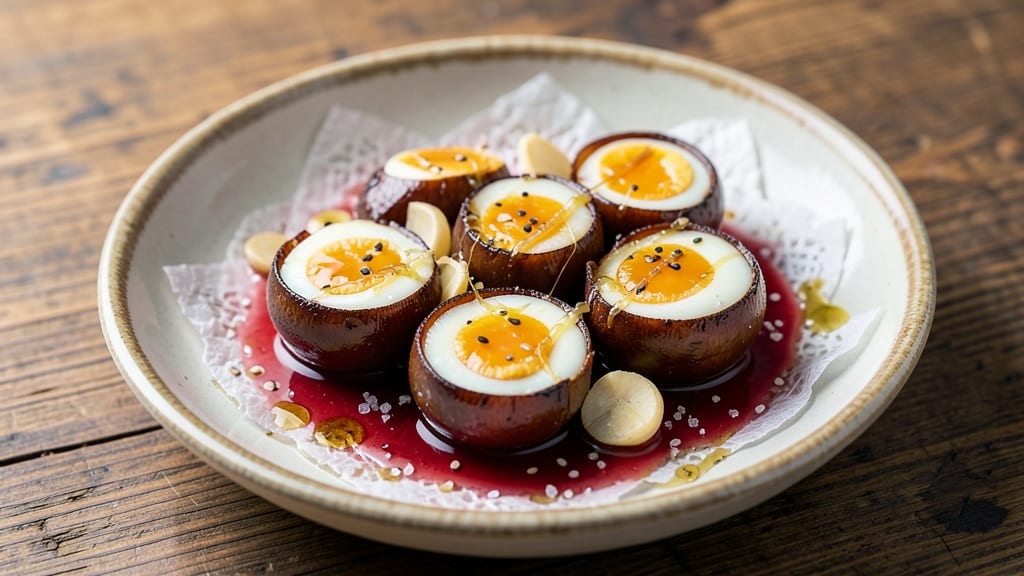
This soy-soaked eggs recipe transforms ordinary eggs into silken, umami-rich bites with a gelatinous exterior and tender interior—perfect for elevating any meal. 💛 The secret lies in a precise soaking process using soy sauce, rice vinegar, and simple spices, creating a dish deeply rooted in Chinese culinary tradition.
What makes this recipe special is how it balances simplicity with restaurant-quality results; no advanced techniques, just patience and the right ingredients.
The process begins with a cold brine bath that gently infuses the eggs with savory depth over 24 hours, resulting in a texture that’s both firm and delicate.
This method isn’t just about flavor—it’s about transforming a basic ingredient into something luxurious, whether served as an appetizer, a salad topping, or a light main. The soy-soaked eggs absorb the marinade perfectly, delivering a harmonious blend of saltiness and umami in every bite.
What you’ll achieve is a dish that’s equally impressive for gatherings or solo meals—crisp when sliced, tender when bitten, and packed with flavor that lingers. The soy sauce’s richness pairs beautifully with rice, fresh greens, or even a simple vinegar dip, making it versatile enough for any occasion.
Ready in just one day (plus soaking time), this recipe proves that patience in the kitchen yields extraordinary results.
For those short on time, a quick 4-hour soak still delivers remarkable flavor, though the full 24-hour method yields the most authentic texture. Whether you’re exploring Asian-inspired cuisine or simply seeking a unique breakfast or appetizer, these soy-soaked eggs will become a standout in your repertoire. Let’s get started!
Ingredients for soy soaked eggs
Eight essential ingredients transform ordinary eggs into luxurious, umami-rich bites with a delicate exterior.
| Ingredient | Amount | Notes |
|---|---|---|
| Large Eggs 🥚 | 8 whole | Room temperature for even soaking |
| Kosher Soy Sauce 🍶 | ½ cup | High-quality, reduced if preferred |
| Rice Vinegar 🍶 | ¼ cup | White or seasoned variety |
| Granulated Sugar 🍚 | 2 tbsp | Balances soy sauce sweetness |
| Sesame Oil 🫒 | 1 tbsp | Toasted for aromatic depth |
| Garlic Cloves 🧄 | 4 cloves | Minced for subtle garlic flavor |
| Ginger Root 🌿 | 1 tbsp | Freshly grated, aromatic |
| White Peppercorns 🌶️ | ½ tsp | Freshly cracked for texture |
| Ice Cubes ❄️ | 2 cups | For cold brine bath |
| Vegetable Oil 🫒 | ½ cup | For frying, neutral flavor |
| Diamond Crystal Kosher Salt 🧂 | 1 tbsp | For brine balance |
The quality of soy sauce and vinegar makes or breaks this dish. Kikkoman or Pearl River Bridge soy sauce are excellent choices for that authentic umami depth, while Mushroom or Seasoned rice vinegar adds complexity. Fresh ginger and garlic should be vibrant—no dried substitutes here. For sesame oil, La Choy or Kadoya brands provide that nutty aroma without overpowering. The ice cubes are critical: they maintain a consistently cold brine bath, which is essential for even soaking and that signature silken texture. If you're short on time, reduce the soak to 4 hours, though the full 24-hour method yields the most authentic results.
No soy sauce? Coconut aminos in a pinch, though the flavor will differ slightly. Substitute apple cider vinegar for rice vinegar if needed, but the dish will be less tangy. Fresh ginger and garlic can be swapped for powdered versions at half the amount, though texture and aroma will suffer. For a quicker method, marinate eggs in the soy-vinegar mixture for just 2 hours before cooking—flavor will still develop, though not as deeply. The vegetable oil can be swapped for avocado or canola oil, but avoid olive oil, which has a strong flavor that may compete with the soy marinade.
Store the soy-soaked marinade in an airtight container in the refrigerator for up to 1 week, though it's best used fresh. The cooked eggs keep for 3-4 days refrigerated, though they're best enjoyed within 2 days for optimal texture. For longer storage, freeze the cooked eggs in a single layer before transferring to a sealed container for up to 1 month. Reheat gently in a steamer or skillet to restore their delicate texture. These eggs reheat beautifully, making them perfect for meal prep—simply slice and serve over rice or greens for a restaurant-quality appetizer.
Why You'll Love This Recipe
- Five-Ingredient Magic: I swear by this recipe when I’m too tired to think. Just crack eggs into a bowl, mix in soy sauce, vinegar, sugar, and a drizzle of sesame oil—no peeling, no chopping, no fuss. The hardest part is waiting for them to soak.
- Umami Bomb: That first bite? Salty, sweet, and tangy all at once. The soy sauce gives it depth, the vinegar cuts through the richness, and the sugar just makes it sing—like a little flavor explosion in your mouth.
- Office Lunch Hero: Between us, these eggs are my secret weapon for packed lunches. They stay fresh for days in the fridge, travel well, and taste even better cold than they do hot. (Yes, even on a Tuesday night.)
- Budget Breakthrough: Eggs and pantry staples? This recipe costs me pennies per serving. No specialty ingredients, no waste—just pure, satisfying flavor that doesn’t drain my wallet. My wallet thanks me every time.
Step-by-step instructions for soy-soaked eggs
Master this technique for restaurant-quality eggs with velvety texture and deep umami flavor.
👨🍳 Step 1: Prepare the Flavorful Marinade
In a medium bowl, combine the 0.5 cup kosher soy sauce, 0.25 cup rice vinegar, and 2 tablespoons granulated sugar. Whisk until the sugar dissolves completely, creating a smooth marinade base. This balance of salty, tangy, and sweet flavors is essential for developing the eggs' complex profile.
Add the 1 tablespoon toasted sesame oil, minced 4 garlic cloves, and grated 1 tablespoon ginger root to the mixture. Stir well to incorporate all aromatics. Finally, crack the 0.5 teaspoon white peppercorns using a mortar and pestle or small spice grinder, then add to the marinade. The cracked peppercorns will add subtle texture and warmth to each bite.
🥘 Step 2: Create the Soaking Solution
In a separate large bowl, combine the prepared marinade with 2 cups ice cubes and 1 tablespoon diamond crystal kosher salt. Stir gently to dissolve the salt completely. The ice creates a cold brine bath that helps set the eggs' proteins during soaking, while the salt enhances flavor penetration. The solution should be cold but not icy—if it's too cold, the eggs may become rubbery.
Let the marinade cool completely to 45-50°F before proceeding. This temperature range ensures even flavor absorption without shocking the eggs. I like to place the bowl in the refrigerator for 10 minutes if it's still warm from mixing. The cold solution also helps prevent the eggs from cooking prematurely during soaking.
🍳 Step 3: Soak the Eggs for Perfect Texture
Gently place the 8 whole large eggs into the prepared marinade, ensuring they're fully submerged. Use a small plate to weigh them down if needed. Let them soak at room temperature for 12-16 hours, turning them once halfway through for even flavor distribution. This extended soak time allows the marinade to penetrate deeply, creating that signature silken texture.
I know it's tempting to rush this step, but patience is key. The eggs should absorb the marinade completely, with no white visible through the shell. If you're short on time, you can soak them for 8 hours minimum, but the flavor will be less intense. The eggs should be completely cold when you remove them from the marinade—this ensures they'll cook evenly when fried.
🔥 Step 4: Fry to Golden Perfection
Heat 0.5 cup vegetable oil in a heavy-bottomed skillet over medium heat until it reaches 325°F. The oil should be hot enough to create gentle bubbles around the eggs but not so hot that it smokes excessively. Maintain this temperature throughout cooking—too high and the eggs will cook unevenly; too low and they'll absorb too much oil.
Using a slotted spoon, carefully transfer one egg at a time to the hot oil. Fry for 4-5 minutes per side, turning gently with the spoon, until the whites are set and the yolks are just beginning to firm up. You'll know they're ready when the eggs have a golden, slightly crispy exterior but remain tender inside. Remove the eggs and drain on a wire rack over paper towels to remove excess oil.
⏰ Step 5: Rest and Serve Immediately
Let the fried eggs rest for 2-3 minutes before serving. This brief resting period allows the internal heat to distribute evenly, preventing the yolks from overcooking when you cut into them. The eggs should be warm throughout with a silken, custard-like texture and a glossy sheen from the marinade.
Serve immediately with the reserved marinade drizzled over the top or alongside steamed rice and pickled vegetables. The contrast of textures—creamy eggs, crispy exterior, and crunchy vegetables—makes this dish truly special. Each bite should deliver a perfect balance of umami, sweetness, and aromatic depth that makes these eggs unforgettable.
Pro Tips For Making Soy Soaked Eggs
- Use Cold Eggs: I learned this the hard way—room-temperature eggs release yolk unevenly when marinated. Grab eggs straight from the fridge, crack them into a bowl first, then gently stir the mixture before pouring into the marinade. This keeps the whites intact and lets the soy sauce penetrate evenly.
- Balance the Soy Sauce: Too much salt? Too little tang? Start with ¼ cup soy sauce per 4 eggs, then taste the marinade before adding eggs. A splash of rice vinegar (1-2 teaspoons) brightens the flavor, but if your soy sauce is already salty, cut it back. Trust your palate—this isn’t a science experiment.
- Soak Long Enough: Skip the rush: 30 minutes in the fridge is the minimum, but 1–2 hours deepens the flavor. I used to pull them out at 20 minutes, thinking they’d be "done," only to get a weak, watery taste. Let them soak while you prep the rest of your meal—your patience will pay off.
- Drain and Rest: After soaking, drain the eggs thoroughly—tap the bowl on the counter to shake off excess marinade. Then, let them sit uncovered for 5 minutes. This prevents a soggy texture when you fry or bake them later. (Yes, even if you’re impatient like me.)
Perfect pairings for soy soaked eggs
Rice Pairings
Steamed jasmine rice is my go-to pairing—its delicate floral notes complement the soy-soaked eggs' umami depth beautifully. For extra flair, drizzle the rice with a touch of toasted sesame oil and sprinkle with crispy fried shallots before serving.
The contrast of warm, fragrant rice with the silken eggs creates a harmonious bite. 💛
Pickled Vegetables
Quick-pickled cucumbers or radishes add a refreshing crunch that cuts through the richness of the eggs. Toss 1 cup thinly sliced cucumbers with 2 tbsp rice vinegar, 1 tsp sugar, and ½ tsp red pepper flakes for a tangy, spicy contrast.
Serve alongside the eggs for a balance of textures and flavors.
Fresh Greens
A simple sesame-ginger dressing> elevates a bed of baby spinach or bok choy to perfection. Whisk 1 tbsp toasted sesame oil, 1 tbsp rice vinegar, 1 tsp honey, and ½ tsp grated ginger for a bright, aromatic dressing.
The greens provide a crisp base that lets the eggs shine.
Dipping Sauces
For dipping, blend 2 tbsp soy sauce, 1 tbsp rice vinegar, 1 tsp honey, and 1 tsp grated ginger for a glossy, balanced sauce.
Alternatively, mix 1 tbsp chili crisp with 1 tsp soy sauce> for a spicy kick. Both options enhance the eggs' umami without overpowering their delicate texture.
Asian-Inspired Sides
Add steamed edamame> or quick-pickled carrots> for extra color and crunch. The edamame’s mild sweetness pairs well with the soy-soaked eggs, while the carrots add a bright, crisp element. Both sides keep the meal light and balanced, making it perfect for a lunch or light dinner.
Beverage Pairings
A japanese green tea like Sencha or a crisp Chinese jasmine tea complements the dish’s umami flavors beautifully. For something lighter, a sparkling yuzu soda**> adds a refreshing citrus note that cuts through the richness. Avoid heavy wines or dark beers—they can overpower the delicate balance of the eggs.
Nutrition facts
Frequently asked questions
Why do the eggs need to soak for so long?
The extended 12-24 hour soak is key to developing that signature silken texture and deep umami flavor. The cold marinade gently breaks down the egg whites while infusing them with soy's savory depth and the aromatic spices. This slow process creates the perfect balance between firm exterior and tender interior that makes these eggs so special.
Can I use brown eggs instead of white?
Brown eggs work perfectly—they'll develop the same silken texture and rich flavor. The color difference won't affect the final result, though brown eggs might have slightly firmer whites. Just ensure they're fully submerged during soaking for even flavor absorption.
What's the quickest way to make these eggs?
For a 4-hour version, use the same marinade but soak the eggs for just 4 hours (turning them every hour). While the flavor won't be as deep, you'll still get that signature texture. The key is maintaining the cold brine bath—this ensures the eggs stay tender even with reduced soaking time.
Can I make these eggs ahead of time?
Yes! The cooked eggs keep well for 3-4 days refrigerated, though they're best enjoyed within 2 days for optimal texture. For longer storage, freeze them in a single layer before transferring to a sealed container for up to 1 month. Reheat gently in a steamer or skillet to restore their delicate texture.
What if my eggs turn out rubbery?
Rubbery eggs usually happen from either too-hot frying oil or insufficient soaking time. Keep your oil at 325°F and ensure eggs are fully submerged during the minimum 8-hour soak. Also, make sure your marinade is properly chilled before soaking—this helps maintain the ideal texture.