
Breakfast & Brunch
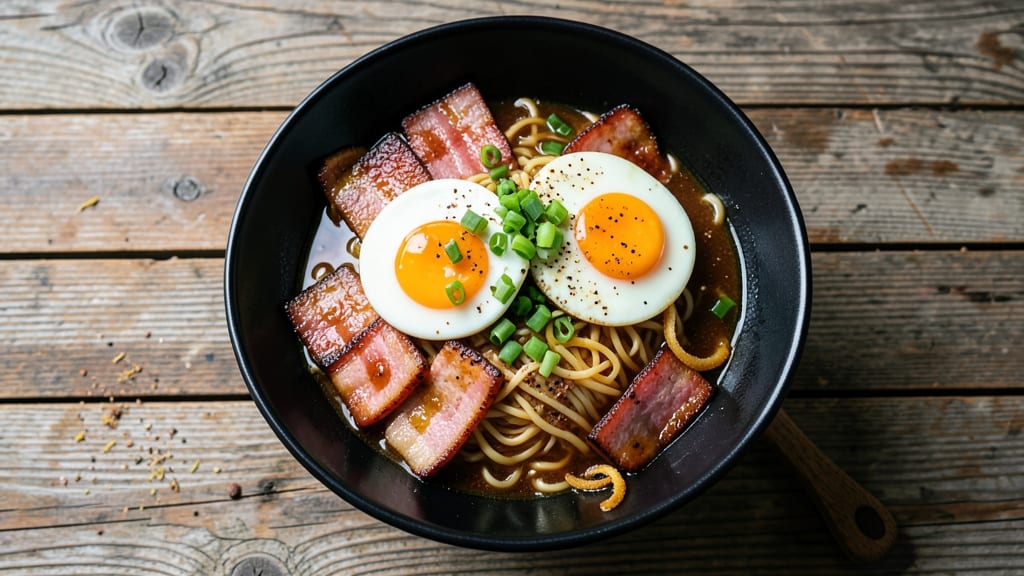
This Spam ramen noodles and egg recipe transforms a simple breakfast into a savory umami masterpiece—where salty, smoky Spam meets tender ramen and a perfectly cooked egg. The fusion of Japanese comfort and Western flavors creates a dish that’s rich, satisfying, and impossible to resist.
I developed this after craving something hearty yet quick, and it’s become a staple for lazy mornings or late-night cravings.
The secret lies in balancing textures and flavors: crispy Spam slices, soft-boiled eggs with runny yolks, and chewy ramen noodles bathed in a light broth. Simmering Spam in soy sauce and dashi creates a deep, savory base, while the egg adds a luxurious finish.
This isn’t just ramen—it’s a bold, comforting bowl that feels like a hug in food form.
What makes this recipe stand out is its versatility. Swap in miso for extra depth, stir in a spoon of butter for richness, or top with chili oil for heat.
The dish comes together in under 20 minutes, making it perfect for busy mornings or when you’re hungry and need something fast yet impressive.
Serve it with a sprinkle of green onions and sesame seeds for freshness, or drizzle with a dash of spicy mayo for an extra kick. The contrast of textures—crunchy noodles, creamy egg, and crispy Spam—makes every bite unforgettable. Let’s make this ultimate comfort dish!
Ingredients for spam ramen noodles and egg
Six slices of Spam, four perfect eggs, and chewy ramen noodles—this umami-packed bowl delivers comfort in every bite.
| Ingredient | Amount | Notes |
|---|---|---|
| Spam Slices 🥓 | 6 oz | Cut into 1/4-inch slices |
| Dried Ramen Noodles 🍜 | 2 packages | Discard seasoning packets |
| Large Eggs 🥚 | 4 whole | Fresh, room temperature |
| Dashi Stock 💧 | 2 cups | Homemade or high-quality |
| Soy Sauce 🍶 | 2 tbsp | Japanese-style preferred |
| Sesame Oil 🫒 | 1 tbsp | Toasted for aroma |
| Green Onions 🧅 | 3 whole | Thinly sliced, white and green parts |
| Sesame Seeds 🌾 | 1 tbsp | Toasted lightly |
| Fresh Ginger 🧄 | 1 tbsp | Finely grated, peeled |
| Garlic Cloves 🧄 | 2 cloves | Minced, fresh |
| Vegetable Oil 🫒 | 1 tbsp | High smoke point |
| Spicy Mayo 🍣 | 2 tbsp | Optional, for serving |
| Salt 🧂 | 1 tsp | Kosher or sea salt |
| Black Pepper 🌶️ | ½ tsp | Freshly ground |
| Miso Paste 🍶 | 1 tbsp | White or red miso |
The Spam is non-negotiable here—Hormel Classic Spam (the original) delivers that signature smoky-salty flavor that’s the backbone of this dish. Look for it in the canned goods aisle at Walmart, Target, or any Asian grocery store—they often carry it in bulk. Freshness matters less for Spam, but avoid cans with dents or bulging tops. For the ramen, Nissin or Maruchan are reliable brands, though I prefer Shin Ramyun for its richer broth base if you’re willing to splurge. The eggs should be farm-fresh if possible—they hold their shape better when soft-boiled, and the yolks stay vibrant. Dashi stock is the secret weapon: Hondashi or Marukome are my go-tos, but you can also make your own with kombu and bonito flakes if you’re feeling ambitious.
No dashi? Substitute with 1 cup of chicken or vegetable broth plus 1 tsp soy sauce—it won’t be identical, but it’ll work in a pinch. Spam too salty? Rinse the slices briefly under cold water before cooking to mellow the flavor. Swapping in tofu or mushrooms for the Spam gives this a vegetarian twist, though it’ll lose that signature umami punch. For the eggs, under-cooked is key—runny yolks are non-negotiable. If you’re short on time, microwave the eggs for 40 seconds in a bowl of water (yes, it works). The miso paste adds depth, but if you’re avoiding sodium, reduce to 1/2 tbsp or omit entirely. Green onions are optional but add freshness—substitute with chives or scallions if that’s what you have.
Spam keeps indefinitely in the pantry, but once opened, transfer to the fridge and use within 3 days. Ramen noodles? Store in an airtight container for up to 2 weeks—they stale faster than you’d think. Eggs should be used within 1 week of purchase, and the dashi stock lasts 5 days refrigerated or 3 months frozen. For meal prep, cook the Spam and noodles ahead, then assemble with fresh eggs and toppings right before serving. The dish reheats beautifully—just add a splash of water to the noodles and microwave for 1 minute. Leftovers? Keep for 2 days max—the texture changes after that.
Why You'll Love This Recipe
- No Chopping Nightmares: I just slice the Spam thin and let the pan do the work—no knife skills required. The ramen breaks apart in seconds, and the eggs? One flip, done. Honestly, this is the kind of meal that lets me zone out while it cooks.
- Umami Bomb Combo: That crispy Spam edge? The salty-savory dashi? The runny egg yolk cutting through it all? It’s the kind of flavor that makes you pause mid-bite. Between us, the soy sauce tie-in at the end is where the magic happens.
- Lunchbox Hero: Pack it cold for work or school—no reheating needed. The noodles stay al dente, the egg holds its shape, and the Spam stays satisfying. I’ll be real: my kids actually ask for this in their bento boxes.
- Pantry Staple Power: Five ingredients, zero guilt. Dried ramen and Spam last forever, eggs are cheap, and dashi stock? You can make it from scratch or grab a packet. Leftovers? Toss them in a thermos or freeze them—this meal works however you need it to.
Step-by-step instructions for Spam ramen noodles and egg
Transform simple ingredients into a rich, umami-packed dish with this elevated ramen twist.
Prepare the Spam and Aromatics
Cut the 6 oz Spam Slices into ¼-inch thick slices using a sharp knife. Heat 1 tablespoon vegetable oil in a large pot over medium-high heat until shimmering. Add the Spam slices and cook for 3-4 minutes per side until they develop a golden-brown crust and release easily from the pan.
While the Spam cooks, finely grate the 1 tablespoon fresh ginger and mince the 2 cloves garlic cloves. Remove the Spam from the pot and set aside, leaving the rendered fat in the pot. Add the ginger and garlic to the same pot and sauté for 30 seconds until fragrant—this builds the aromatic foundation for your broth. The fat from the Spam will help create a rich, savory base without needing additional oil.
Build the Umami Broth
Pour in the 2 cups Dashi Stock and bring to a gentle simmer over medium heat. Stir in the 2 tablespoons soy sauce, 1 tablespoon miso paste, 1 teaspoon salt, and ½ teaspoon black pepper. Let the mixture simmer for 5 minutes to allow the flavors to meld and the miso to dissolve completely—this step is crucial for developing that deep, savory depth characteristic of Japanese broths.
Add the 2 packages dried ramen noodles (discard their seasoning packets) and cook according to package instructions until al dente—typically 3-4 minutes. The noodles should have a slight bite to them, as they'll finish cooking in the hot broth. Drain any excess water if needed, but leave about ½ cup of broth in the pot to maintain moisture and flavor.
Cook the Eggs and Assemble
In a separate small pot, bring 1 cup water to a gentle simmer. Crack the 4 whole large eggs into a bowl and carefully lower them into the simmering water using a slotted spoon. Cook for 6 minutes for runny yolks or 7 minutes for firmer yolks. Transfer the eggs to an ice bath for 1 minute to stop cooking and make peeling easier.
Peel the eggs and place them on top of the cooked noodles. Drizzle with 1 tablespoon sesame oil and sprinkle evenly with the 3 whole green onions (thinly sliced) and 1 tablespoon sesame seeds. The sesame oil adds a nutty aroma, while the green onions and seeds provide a fresh, textural contrast to the rich broth and Spam.
Finish and Serve
Return the pot to low heat and let it sit for 1-2 minutes to allow the eggs to gently warm through in the broth. This step ensures the eggs reach a safe temperature without overcooking. Divide the ramen among 4 bowls, making sure each serving has an egg, a generous portion of noodles, and ample broth.
For serving, drizzle each bowl with 2 tablespoons spicy mayo (if using) and garnish with an additional sprinkle of sesame seeds and green onions. The spicy mayo adds a vibrant kick that cuts through the richness of the Spam and eggs, balancing the dish perfectly. Serve immediately while the broth is hot and the eggs are still warm.
Pro Tips For Making Spam Ramen Noodles And Egg
- CUT SPAM THINLY BEFORE COOKING: I learned this the hard way—thick Spam slices take forever to crisp and stay rubbery. Use a sharp knife to slice them into ⅛-inch strips (or ask your butcher to do it). They’ll cook in seconds and soak up flavor instead of sitting like a chewy brick in your broth.
- FRY EGGS IN RESIDUAL SPAM OIL: After cooking the Spam, leave that golden oil in the pan—it’s liquid flavor. Crack the eggs into the same pan (medium-low heat) and let them sit for 30 seconds before flipping. The Spam’s fat keeps them rich without burning, and the egg whites get that perfect creamy set.
- SALTED EDGE ON NOODLES: Skip the ramen seasoning packet—it’s just salt and MSG. Instead, toss cooked noodles with 1 teaspoon of soy sauce while they’re still hot and stir for 30 seconds. The heat helps the soy cling, giving them a deeper umami punch without overpowering the broth.
- DASHI STOCK SHOULD SIMMER: I used to just dump boiling water in a bowl and call it a day. Now I heat dashi stock (or sub chicken stock + ½ teaspoon kombu) to a gentle simmer for 2 minutes first—it cuts the raw taste and makes the noodles absorb flavor better. (Yes, even if you’re impatient like me.)
Dietary considerations for this dish
Gluten-Free Swaps
Skip traditional ramen noodles and use gluten-free ramen noodles like Nongshim Shin Ramyun GF or Lotus Foods brown rice noodles. These hold up well in broth and mimic the chewy texture.
For extra flavor, add 1 tbsp gluten-free tamari (instead of soy sauce) to the broth to keep that umami depth. 🥗
If you're avoiding gluten entirely, replace the miso paste with coconut aminos—it has a similar savory profile without the wheat. Just reduce the amount to ½ tbsp since it’s saltier. For the Spam, opt for gluten-free canned ham—brands like Applegate offer safe options without cross-contamination risks.
Low-Sodium Adjustments
The Spam is naturally high in sodium, but you can balance it by reducing the soy sauce to 1 tbsp and omitting the added salt entirely. Use low-sodium dashi stock (like Hondashi Low Sodium) and skip the miso paste—its salt content adds up quickly.
Fresh ginger and garlic still deliver flavor without extra sodium. 💡
For the broth, add ½ tsp fish sauce (instead of soy sauce) for umami without as much salt. If you’re watching sodium closely, serve with a side of steamed bok choy or cucumber slices—their crispness cuts through the richness while adding volume without extra salt.
Vegetarian Options
Replace Spam with extra-firm tofu—press and pan-fry it in sesame oil until crispy. For a meatier texture, use shiitake mushrooms (sliced and sautéed) or tempeh (marinated in soy sauce and sesame oil). Both absorb the broth’s flavors beautifully. 🍄
Boost protein further with edamame—add ½ cup shelled edamame to the broth during the last 2 minutes of cooking. They’ll soften just enough to blend into the dish without overpowering. Garnish with toasted nori strips for a classic ramen touch.
Egg Allergy Workarounds
Skip the soft-boiled eggs and top your ramen with crispy fried shallots (sauté 3 shallots in oil until golden) or toasted sesame seeds. For a creamy element, stir 2 tbsp silken tofu into the broth or drizzle with avocado slices. Both add richness without eggs. 🥑
If you’re avoiding eggs but still want protein, add ½ cup cooked chickpeas to the broth—they soak up flavors and add a satisfying bite. For extra umami, sprinkle with nutritional yeast (about 1 tbsp), which has a cheesy, egg-like depth.
Nutrition facts
Frequently asked questions
Can I use regular ramen seasoning packets?
No—discard those packets! They’re too salty and can overpower the delicate balance of flavors in this dish. The broth is already seasoned with soy sauce, miso, and dashi for the perfect umami depth. If you’re craving that seasoning flavor, add ½ teaspoon of the packet’s contents (just the seasoning, not the oil) to each bowl at the end.
How do I make the eggs perfectly runny?
For creamy, runny yolks, cook the eggs in simmering water for exactly 6 minutes—no more, no less. Use a timer and avoid boiling. Transfer them to an ice bath for 1 minute to stop cooking, then peel gently. Pro tip: Crack eggs into a bowl first to check for cracks before lowering them into the water.
What if I don’t have dashi stock?
No problem! Mix 1 cup chicken or vegetable broth with 1 teaspoon soy sauce and ½ teaspoon sugar (to mimic dashi’s slight sweetness). For extra depth, add ½ teaspoon fish sauce—it’ll give you that signature umami kick without dashi. The flavor won’t be identical, but it’ll still taste amazing.
Can I make this dish ahead of time?
Cook the Spam and noodles in advance, but hold off on adding the eggs until serving. Store components separately in airtight containers for up to 2 days. Reheat the noodles and broth in a pot, then add the eggs (cooked fresh) on top. The eggs should only warm through—never reheat cooked eggs. For best texture, assemble and serve immediately.
Why does my Spam turn rubbery?
Overcooking is the usual culprit! Keep the heat at medium-high and cook for only 3-4 minutes per side. If your Spam is pre-cooked, it needs minimal reheating—just warm it in the pan until golden. For extra tenderness, slice it thinner (¼-inch) and avoid crowded pans (cook in batches if needed).