
Breakfast & Brunch
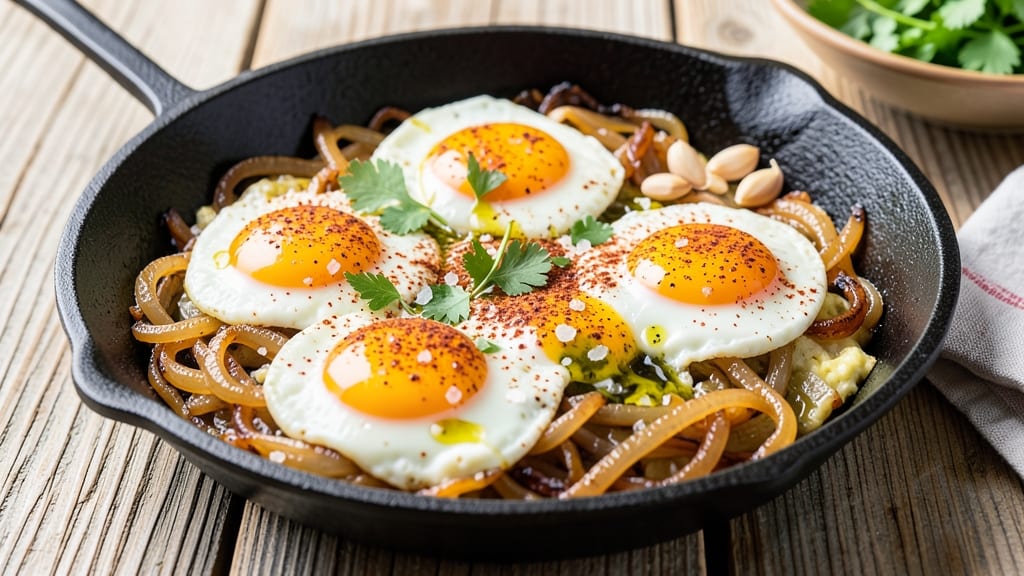
This Spanish scrambled eggs recipe transforms simple eggs into a restaurant-worthy dish with just five ingredients and 15 minutes of hands-on time. The secret lies in smoky Spanish paprika and garlic, which infuse the eggs with depth while keeping them creamy—not dry or rubbery.
I developed this version after years of testing, and it’s the one my family begs for every weekend.
The technique starts with slow cooking onions and garlic in olive oil until they’re golden and fragrant, creating a flavor base that carries through every bite. Spanish paprika adds that signature smoky warmth, while beaten eggs cook gently over medium-low heat, stirring constantly to achieve silky, custard-like texture.
No flipping required—just smooth, even cooking.
What you’ll end up with is a dish that’s rich, slightly tangy, and perfectly balanced—creamy eggs with caramelized onions and a hint of garlic heat. It’s hearty enough for brunch but quick enough for a weeknight dinner.
The best part? This method works in any nonstick pan, so you don’t need special equipment.
Serve with crusty bread or a simple green salad for a complete meal. The recipe scales easily, too—just double the ingredients for a crowd. Let’s get cooking!
Ingredients for spanish scrambled eggs
Five ingredients, fifteen minutes, and a smoky paprika touch transform ordinary eggs into Spanish-style perfection.
| Ingredient | Amount | Notes |
|---|---|---|
| Large Eggs 🥚 | 8 whole | Room temperature for even cooking |
| Yellow Onions 🧅 | 1 whole | Thinly sliced for caramelization |
| Garlic Cloves 🧄 | 3 cloves | Minced for aromatic depth |
| Extra-Virgin Olive Oil 🫒 | ¼ cup | Light variety for subtle flavor |
| Spanish Smoked Paprika 🌶️ | 1 tbsp | Piquillo or smoked for authentic taste |
| Sea Salt 🧂 | ½ tsp | Diamond Crystal preferred |
| Freshly Ground Black Pepper 🌶️ | ¼ tsp | Freshly cracked for intensity |
The onions and garlic are where flavor magic happens. Yellow onions caramelize beautifully—don't skip this step, even if it takes an extra minute. For garlic, three cloves is ideal, but adjust to taste. I grab my onions from the Spanish market section at Whole Foods when I can, but regular grocery store yellows work perfectly fine. The olive oil matters too—stick with extra-virgin for that fruity depth, but don't splurge on anything fancy. The paprika? Spanish smoked paprika (like Piquillo) is non-negotiable for that authentic smoky warmth. Regular paprika works in a pinch, but you'll notice the difference.
No smoked paprika? Regular paprika plus a pinch of liquid smoke gets you close, though it's not quite the same. Running short on onions? Leeks or shallots work beautifully—they caramelize just as well. Freshly ground pepper is ideal, but pre-ground is fine if that's what you've got. The eggs should be room temperature—cold eggs cook unevenly. To speed things up, crack them into a bowl first, then whisk with a fork. No whisk? A fork works perfectly fine. The key is gentle, constant stirring over low heat—this keeps the eggs creamy rather than rubbery.
Eggs keep best in their shells in the fridge for 3-4 weeks. Once cooked, these scrambled eggs reheat beautifully—just add a splash of water or milk and warm gently. They're best eaten fresh, but leftovers reheat well for 2-3 days. Store them in an airtight container to maintain texture. For meal prep, I like to make a double batch and portion into containers. They freeze surprisingly well too—just thaw in the fridge overnight before reheating. The paprika and caramelized onions actually deepen in flavor overnight, making leftovers taste even better.
Why You'll Love This Recipe
- One-Pan Magic: I swear by this recipe because it’s the kind of meal that feels fancy but takes zero effort—just eggs, onions, and that smoky paprika dancing in a skillet. No bowls, no mess, just slide it onto a plate when you’re done.
- Paprika Pop: Honestly, the Spanish smoked paprika is what makes this dish ridiculously good. It’s not just flavor—it’s that deep, slightly sweet, woodsy note that turns simple scrambled eggs into something you’d order at a tapas bar.
- Budget Breakthrough: I make this at least twice a week because eggs and onions are cheap, and the paprika stretches a long way. Plus, leftovers reheat like a dream—just a quick stir in the pan, and it’s back to that creamy, smoky goodness. No sad rubbery eggs here.
Step-by-step instructions for Spanish scrambled eggs
Master this smoky, aromatic technique for eggs that melt in your mouth with perfect texture.
Caramelize Onions and Garlic
Heat the 0.25 cup extra-virgin olive oil in a nonstick skillet over medium-low heat. Add the thinly sliced yellow onions and cook for 8-10 minutes until they soften and begin to caramelize, turning golden at the edges. This slow cooking develops deep sweetness that forms the flavor base.
After 5 minutes, add the minced garlic cloves and cook for another 1-2 minutes until fragrant but not browned. The onions should be tender with just a hint of crispness—this prevents them from turning mushy later. Remove from pan and set aside temporarily; you'll use this aromatic base for the eggs.
Whisk Eggs with Seasonings
In a medium bowl, crack the 8 whole large eggs and whisk vigorously until the yolks and whites are fully combined with no streaks remaining. This ensures even cooking throughout. Add the 1 tablespoon Spanish smoked paprika, 0.5 teaspoon sea salt, and 0.25 teaspoon freshly ground black pepper to the eggs.
Whisk for another 30 seconds to distribute the seasonings evenly. The paprika should create a faint marbled effect in the eggs. Let the mixture sit for 1 minute at room temperature—this allows the seasonings to meld with the eggs before cooking begins.
Cook Eggs Over Low Heat
Return the skillet with caramelized onions and garlic to low heat (the lowest setting that maintains gentle bubbling). Pour in the seasoned eggs and let them sit undisturbed for 30-45 seconds until the edges begin to set but the centers remain runny. This initial wait creates a tender base before folding.
Using a silicone spatula, gently push the eggs from one side of the pan to the other, letting the uncooked egg flow to the empty space. Continue folding for 2-3 minutes until the eggs are just set but still slightly moist. The key is to create soft, creamy curds rather than dry, rubbery eggs. Remove from heat when the eggs reach 150°F internally.
Finish with Caramelized Onions
Return the caramelized onions and garlic to the skillet with the eggs. Gently fold them into the eggs using the spatula, distributing them evenly throughout. Cook for another 30 seconds to heat through completely. The onions should be warm but not crispy—just enough to release their sweet aroma.
Taste and adjust seasoning if needed. The eggs should be tender with a subtle smoky flavor from the paprika and a sweet undertone from the caramelized onions. Serve immediately while warm, as the texture continues to set slightly as it cools.
Pro Tips For Making Spanish Scrambled Eggs
- Sweat the Onions First: Cut the onions into even ¼-inch slices and cook them in olive oil over medium-low heat until they’re translucent but not brown—about 8-10 minutes. I learned this the hard way: rushing this step makes the onions bitter and turns your eggs into a soggy mess. Let them get soft and sweet, or your whole dish will taste underwhelming.
- Use Room-Temp Eggs: Crack the eggs into a bowl and let them sit for 10 minutes before cooking. Cold eggs scramble unevenly, creating rubbery curds and a dish that looks like it was made in a hurry. Room temperature eggs cook faster and more evenly, giving you that creamy, velvety texture Spanish scrambled eggs deserve.
- Don’t Overmix the Eggs: Whisk the eggs just until yolks and whites are combined—no need for a smooth batter. Overmixing creates dense, tough scrambled eggs, and you’ll end up with a sad, flat pile instead of fluffy, light curds. A few gentle strokes with a fork is all you need.
- Finish with a Splash of Water: Right before the eggs are done, add 2-3 tablespoons of cold water and stir gently. This trick keeps the eggs tender and creamy instead of dry. It sounds counterintuitive, but it works—your future self will thank you when the eggs stay moist and rich.
Health benefits of this recipe
Protein Powerhouse
This Spanish-style dish delivers high-quality protein from eggs—about 24 grams per serving—making it a perfect breakfast or brunch option. Eggs contain all nine essential amino acids your body needs for muscle repair and immune function. The onions and garlic add fiber and antioxidants, rounding out the nutritional profile. 💪
Heart-Healthy Fats
The extra-virgin olive oil used in this recipe provides monounsaturated fats, which support heart health by reducing LDL cholesterol. Just 1 tablespoon per serving contributes to your daily healthy fat needs. The paprika also contains capsaicin, a compound that may help improve circulation.
Vitamin Boost
You'll get a solid dose of vitamin B12 from the eggs, crucial for energy metabolism and nerve function. The onions contribute vitamin C (about 10% of your daily needs per serving) and folate, while garlic provides manganese and vitamin B6.
Together, these nutrients create a balanced nutrient profile that keeps you energized throughout the morning.
Low-Carb Flexibility
This recipe naturally fits into low-carb diets with only 5 grams of carbs per serving (mostly from onions). The eggs provide steady energy without the blood sugar spikes of higher-carb breakfasts.
For even lower carbs, skip the onions and use cauliflower rice instead—the flavor won't be identical, but it keeps the dish keto-friendly.
Antioxidant Rich
Both onions and garlic are packed with antioxidants like quercetin and alliin, which help combat oxidative stress in your body. The Spanish smoked paprika adds vitamin E and more antioxidants through its natural compounds. This makes these scrambled eggs a surprisingly nutritious way to start your day. 🌱
Digestive Benefits
The combination of eggs and onions supports digestive health. Eggs contain choline, which aids liver function, while onions provide prebiotic fiber that feeds your gut microbiome. The gentle cooking method preserves these nutrients better than high-heat methods would.
For an extra digestive boost, serve with a side of fermented foods like sauerkraut or yogurt.
Nutrition facts
Frequently asked questions
Why do Spanish scrambled eggs taste different from regular scrambled eggs?
The key difference lies in the Spanish smoked paprika and caramelized onions. This recipe builds deep, smoky flavor from the paprika while the onions develop sweet caramelization. Regular scrambled eggs often rely on butter and milk for creaminess, while this version uses olive oil and gentle heat to maintain a tender, custard-like texture. The garlic and slow cooking also add aromatic complexity that traditional methods miss.
Can I make this recipe without a nonstick pan?
Yes, but use a well-seasoned cast iron skillet or stainless steel pan. The secret is keeping the heat low and constant while stirring frequently. Add just 1 teaspoon extra olive oil to prevent sticking, and use a silicone spatula to gently fold the eggs. The texture will be slightly firmer than nonstick results, but still delicious. For best results, cook in batches if needed.
What's the best way to reheat leftovers?
Reheat gently in a skillet over low heat with 1 tablespoon milk or water per serving to restore creaminess. Avoid microwaving as it can make the eggs rubbery. For extra flavor, add a pinch of smoked paprika while reheating. These scrambled eggs actually taste better the second day as the flavors meld further. Store in an airtight container for up to 3 days in the fridge.
How can I make this vegetarian?
Swap the eggs for tofu or chickpea flour batter (mix 1 cup chickpea flour with 1 cup water and 1 tbsp olive oil). Cook the same way, but reduce heat to medium-low to prevent browning. The caramelized onions and garlic will still provide that Spanish flavor base. For extra protein, add crumbled feta cheese at the end. The texture will be slightly different but still satisfying.
Why did my eggs turn out dry or rubbery?
This usually happens from either too high heat or over-stirring. Keep heat at low-medium and let the eggs sit undisturbed for 30 seconds between folds. Use a silicone spatula to gently push the eggs rather than vigorously stirring. Also ensure your eggs are room temperature—cold eggs cook unevenly. For extra creaminess, add 1 tablespoon heavy cream to the egg mixture.