
Snacks
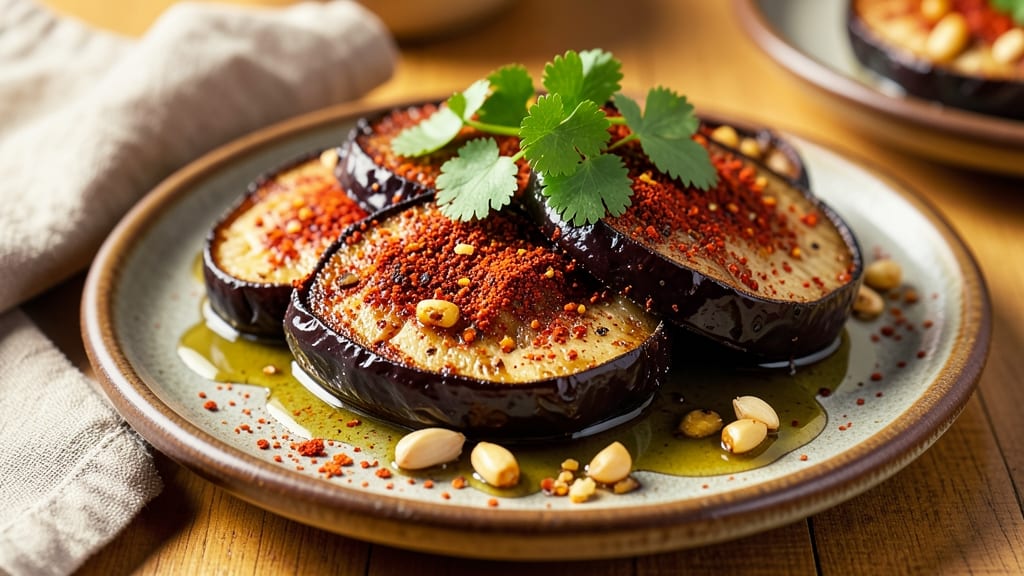
This spicy roasted eggplant recipe delivers smoky, charred edges and a perfect balance of heat that transforms a simple vegetable into a showstopping dish.
The key lies in high-heat roasting and a bold spice blend—cumin, chili flakes, and garlic—that caramelizes into the eggplant, creating layers of flavor in every crispy bite. I developed this technique after discovering how roasting at 475°F unlocks eggplant’s natural sweetness while building depth through smoky char.
The process is straightforward but yields restaurant-quality results: thick slices roast until tender with blistered edges, absorbing the spice rub while maintaining a creamy interior. A drizzle of lemon at the end brightens the heat, while optional yogurt sauce adds cooling contrast.
This dish works as a standalone snack, a hearty salad topping, or a side that elevates grain bowls.
What makes this recipe stand out is the textural contrast—crispy exterior, tender interior, and a subtle crunch from toasted spices. The smoky heat lingers just long enough to satisfy cravings without overwhelming, making it versatile for spice lovers and newcomers alike.
Perfect for meal prep or last-minute appetizers, it’s a dish that proves vegetables can be both nutritious and irresistibly bold.
For best results, use Japanese eggplant (its thicker skin holds up better to high heat), and don’t skip the oil—it’s what creates those coveted charred edges. Pair with warm pita, fluffy rice, or a simple arugula salad to round out the meal. Let’s get roasting!
Ingredients for spicy roasted eggplant
Thick eggplant slices, bold spices, and high-heat roasting create restaurant-quality flavor with minimal effort.
| Ingredient | Amount | Notes |
|---|---|---|
| Japanese Eggplant 🍆 | 1 ½ lb | Thick-skinned, sliced 1/2-inch thick |
| Extra-Virgin Olive Oil 🫒 | ¼ cup | High smoke point for roasting |
| Ground Cumin 🌿 | 1 ½ tbsp | Toasted for deeper aroma |
| Smoked Paprika 🌶️ | 1 ½ tbsp | For authentic smoky flavor |
| Garlic Cloves 🧄 | 4 cloves | Minced, fresh preferred |
| Red Chili Flakes 🔥 | 1 tbsp | Adjust for heat preference |
| Salt 🧂 | 1 ½ tsp | Diamond Crystal preferred |
| Fresh Lemon Juice 🍋 | 2 tbsp | Brightens the smoky heat |
| Plain Vegan Yogurt 🥛 | ½ cup | For cooling sauce (optional) |
| Fresh Cilantro 🌿 | ¼ cup | Chopped, for garnish |
| Black Pepper 🌶️ | ½ tsp | Freshly cracked |
Japanese eggplant is non-negotiable here—its thick skin and creamy interior handle high heat perfectly. Whole Foods or Asian markets carry it fresh; if unavailable, regular eggplant works but watch for wateriness. The charred edges are what make this dish sing, so don't skimp on the olive oil. I always toast my cumin and smoked paprika in a dry pan for 30 seconds before mixing—trust me on the extra minute—it deepens the smoky flavor that caramelizes into the eggplant. For the garlic, fresh is essential—jarred loses its punch.
No smoked paprika? Substitute with 1 tbsp regular paprika plus 1/2 tsp liquid smoke—it's a game-changer. Running low on vegan yogurt? Cashew cream (blend 1 cup soaked cashews + 1/2 cup water) works beautifully for the cooling sauce. The chili flakes can be swapped for cayenne (use half the amount), but fresh red chili powder gives the best texture. For extra crunch, toss in toasted pine nuts or pepitas at the end. And if you're worried about the eggplant being too watery, pat slices dry with paper towels before roasting—this is non-negotiable for crispy edges.
Roasted eggplant keeps 3-4 days in the fridge, but the flavor actually improves overnight as the spices meld. Portion into airtight containers for easy meal prep—it reheats beautifully. For the yogurt sauce, make it fresh (takes 2 minutes) or store separately for up to 5 days. The charred edges soften when reheated, so I always serve this fresh from the oven. Freezes well for 2 months if you want to prep ahead, but the texture changes slightly—best enjoyed fresh.
Why You'll Love This Recipe
- One-Pan Magic: I swear by this for nights when I’m too tired to scrub pots—just slice, toss, and roast. The eggplant caramelizes right on the sheet pan while the spices work their magic, and honestly? That’s all you need.
- Smoky Garlic Kiss: Between us, smoked paprika and fresh garlic cloves transform this into something ridiculously good. The charred edges meet tender flesh, and the cumin? It’s like a warm hug for your taste buds—no fancy technique required.
- Meal Prep MVP: I make a double batch on Sundays because it reheats like a dream. Cold or warm, it’s perfect for lunches, wraps, or even tossed into grain bowls—my kids grab it straight from the fridge, no complaints.
- Budget-Friendly Flex: Japanese eggplant might sound fancy, but it’s cheaper than you think, and a little goes a long way. Plus, the spices cost pennies and stretch across multiple meals—this is my go-to when I’m pinching pennies but still want flavor.
Step-by-step instructions for spicy roasted eggplant
This method delivers perfectly charred eggplant with deep smoky flavor and crisp edges every time.
Prepare the Japanese Eggplant
Begin by slicing the 1.5 lb Japanese eggplant into ½-inch thick rounds. The thick skin of Japanese eggplant holds up beautifully to high heat, so there's no need to peel it. Pat each slice dry with paper towels—this step is crucial for achieving crisp edges. Any moisture left on the eggplant will steam instead of char when roasted.
Arrange the slices on a baking sheet in a single layer, leaving about ½ inch between each piece. This spacing ensures even browning and prevents them from steaming in their own juices. Let them sit at room temperature for 15 minutes before roasting to remove any residual moisture from the surface.
Create the Spice Rub
In a small bowl, combine the 1.5 tbsp ground cumin, 1.5 tbsp smoked paprika, 1 tbsp red chili flakes, and 1.5 tsp salt. The cumin and smoked paprika work together to create that deep, earthy warmth, while the chili flakes add the signature heat. I like to toast the spices lightly in a dry skillet over medium heat for 30 seconds to enhance their aroma before mixing.
Once the spices are ready, rub them evenly over both sides of each eggplant slice. Press gently so the spices adhere well—this ensures maximum flavor infusion during roasting. The eggplant will absorb the spices beautifully, creating a flavorful crust that contrasts perfectly with its tender interior.
Roast Until Charred and Tender
Preheat your oven to 425°F and position a rack in the middle position. Heat the 0.25 cup extra-virgin olive oil in a large oven-safe skillet over medium-high heat until shimmering. Add the spiced eggplant slices and cook for 2-3 minutes per side, until golden brown spots begin to form. This initial sear on the stovetop creates a deeper flavor and helps prevent the eggplant from falling apart in the oven.
Transfer the skillet to the preheated oven and roast for 15-20 minutes, flipping once halfway through, until the eggplant is deeply charred with crisp edges and tender when pierced with a fork. The eggplant should have a beautiful contrast of blackened edges and slightly blistered surfaces. If you prefer extra crispiness, broil for 1-2 minutes at the end, watching closely to avoid burning.
Finish with Garlic and Lemon
While the eggplant roasts, mince the 4 cloves garlic and mix them with the 2 tbsp fresh lemon juice in a small bowl. The lemon juice brightens the smoky, spicy flavors and adds a refreshing tang. Once the eggplant is done, remove it from the oven and drizzle the garlic-lemon mixture evenly over the top. Let it sit for 5 minutes to absorb the flavors.
For an optional cooling element, stir the 0.5 cup plain vegan yogurt into the garlic-lemon mixture and drizzle it over the eggplant. The yogurt creates a creamy contrast to the spicy, charred eggplant. Garnish with 0.25 cup chopped fresh cilantro and a sprinkle of 0.5 tsp freshly cracked black pepper before serving. The cilantro adds a fresh, herbal note that balances the dish beautifully.
Serve Immediately
Serve the spicy roasted eggplant immediately while it's still warm and crisp. The contrast of textures—crisp edges, tender flesh, and creamy yogurt—makes this dish truly special. Pair it with warm pita bread, a simple green salad, or over a bed of couscous for a complete meal. The flavors only get better as the eggplant sits, but the crisp edges will soften over time, so enjoy it while it's at its peak.
This dish is perfect for serving as a main course or as a flavorful side. The smoky, spicy notes make it a standout, whether you're cooking for a weeknight dinner or a special gathering. The key is in the roasting—don't rush it, and let the eggplant develop that beautiful char. Trust the process, and you'll have a dish that's sure to impress.
Pro Tips For Making Spicy Roasted Eggplant
- SLICE THIN AND EVEN: Japanese eggplant has thick skin—cut it into ½-inch slices, not random chunks. Uneven pieces mean some burn while others stay raw, and you’ll end up with a sad, inconsistent texture. A sharp knife and steady hand make this step faster than you’d think.
- SALT BEFORE ROASTING: Toss the sliced eggplant with 1 teaspoon of kosher salt and let it sit for 10 minutes. This draws out excess moisture so the oil clings better and the skin crisps up properly. I used to skip this, and the results were always greasy and limp.
- USE A MIXED-SPICE RUB: Combine 1 teaspoon ground cumin, ½ teaspoon smoked paprika, and a pinch of cayenne (if you want heat) with 1 tablespoon olive oil before tossing. The spices stick to the eggplant better when mixed with oil first—no clumping, no wasted flavor.
- ROAST IN BATCHES: Crowd the pan, and the eggplant steams instead of roasts. Work in single layers, even if it means two trips to the oven. A hot, dry pan at 425°F (220°C) gives you that smoky, caramelized edge in 15 minutes—no waiting for a packed tray to heat up.
Flavor customization for these flavors
Heat Level Control
Adjust the spice intensity by tweaking the red chili flakes. For mild heat, reduce to ½ tbsp and add ¼ tsp cayenne powder for depth without overwhelming spice. If you love fiery flavors, increase to 1.5 tbsp chili flakes + ½ tsp crushed red pepper flakes.
I often test the heat by tasting the spice rub before applying—this helps gauge the final dish’s intensity. 🌶️
Smoky Depth Boosters
For extra smokiness, swap ½ tbsp smoked paprika for 1 tsp liquid smoke (like Colman's) and reduce the paprika to 1 tbsp. This adds a campfire-like depth that pairs perfectly with the charred eggplant.
Another trick? Toast 1 tbsp coriander seeds in a dry pan for 1 minute until fragrant, then grind them into the spice rub for a citrusy, earthy note. 🔥
Sweet-Spicy Balance
Brighten the heat with 1 tbsp honey or maple syrup mixed into the garlic-lemon finish. The sweetness cuts through the smokiness while enhancing the caramelized edges. For a tangy twist, add 1 tsp apple cider vinegar to the yogurt sauce—it adds a sharp contrast that makes the dish sing.
I’ve found this works especially well with vegan coconut yogurt for a tropical vibe. 💫
Herb Variations
Swap out cilantro for fresh mint or dill for a Middle Eastern-inspired twist. For Mediterranean flavors, add 1 tbsp chopped oregano to the spice rub and garnish with toasted pine nuts.
If you’re feeling adventurous, try Thai basil in the yogurt sauce—its anise notes complement the smoky heat beautifully. Fresh herbs should always be added at the end to preserve their brightness. 🌿
Global Spice Blends
Transform this dish into a Moroccan tagine-inspired version by adding 1 tsp ground coriander + ½ tsp cinnamon to the spice rub. For a Mexican street food vibe, mix in 1 tsp ground cumin + ½ tsp Mexican oregano and serve with lime wedges instead of lemon.
Each blend changes the flavor profile dramatically while keeping the roasting technique intact. 🗺️
Texture Contrasts
Add crunch with toasted breadcrumbs or crushed pita chips tossed into the spice rub before roasting. For a creamy contrast, fold ¼ cup hummus into the yogurt sauce. If you love nuts, sprinkle toasted walnuts or pecans over the finished dish—their earthy bite balances the spicy-sweet flavors perfectly.
Texture is key to keeping this dish exciting! 💡
Nutrition facts
Frequently asked questions
Why does Japanese eggplant work better than regular eggplant?
Japanese eggplant has thicker skin and fewer seeds, which means it holds up better to high heat without becoming watery or falling apart. The skin also develops those coveted charred edges perfectly, while the flesh stays creamy. Regular eggplant tends to be more watery and can turn mushy when roasted.
Can I make this recipe without an oven-safe skillet?
Yes! If you don't have an oven-safe skillet, roast the eggplant directly on a baking sheet. First, sear the slices in a regular skillet with 2 tbsp oil until golden, then transfer them to the baking sheet for roasting. Just be careful not to overcrowd the pan to ensure even charring.
How can I reduce the spice level if it's too hot?
Start by reducing the red chili flakes to ½ tbsp and add 1 tsp honey or maple syrup to the garlic-lemon finish to balance the heat. For extra cooling, increase the yogurt sauce to ¾ cup and add 1 tsp apple cider vinegar—it creates a tangy contrast that mellows the spice beautifully.
Can I prep this ahead of time for meal prep?
Roast the eggplant completely, then store it in airtight containers for up to 4 days in the fridge. The flavors actually deepen overnight as the spices meld. Reheat gently in a skillet or oven until warmed through—just avoid microwaving to preserve the crisp edges. For the yogurt sauce, make it fresh before serving or store separately for up to 5 days.
What's the best way to serve this dish?
This spicy roasted eggplant shines as a main course over grains (like couscous or quinoa), a heartier salad topping, or a bold appetizer with warm pita. For extra satisfaction, pair it with hummus or tahini sauce to balance the heat. It also works beautifully in grain bowls with avocado, cherry tomatoes, and a sprinkle of feta (or vegan feta) for a complete meal.