
Salads
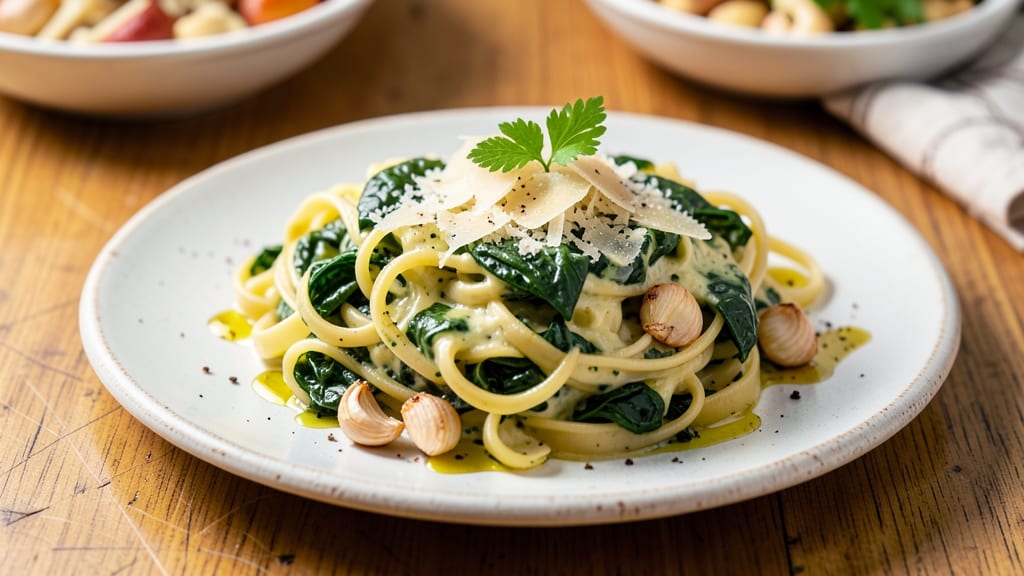
This spinach egg pasta recipe transforms simple ingredients into a restaurant-worthy dish that’s creamy, vibrant, and packed with protein. The secret lies in wilted spinach folded into al dente pasta, topped with perfectly poached eggs and a velvety parmesan sauce—no heavy cream required.
I developed this after years of perfecting the balance between tender greens and rich eggs, ensuring every bite delivers both texture and flavor without overpowering the dish.
The beauty of this recipe is its versatility: you can adapt it to a classic carbonara-style version with crispy pancetta or keep it vegetarian with extra garlic and lemon zest.
The key steps—wilting spinach just before combining, poaching eggs to your preferred doneness, and finishing with a light parmesan sauce—ensure a dish that’s both elegant and approachable. Ready in under 30 minutes, it’s ideal for weeknight dinners or weekend brunches when you want something special without the fuss.
What sets this dish apart is the harmony of textures: al dente pasta absorbs the creamy sauce while the spinach adds a fresh, slightly bitter contrast, and the eggs provide a luxurious finish.
The sauce, made with just parmesan and a splash of pasta water, binds everything together without weighing down the dish. Garnish with fresh herbs or red pepper flakes for a pop of color and heat, and you’ll have a plate that looks as impressive as it tastes.
Whether you’re serving this as a main course or a side for a larger meal, the technique remains the same—just adjust the portion sizes. The dish holds well at room temperature for up to an hour, making it perfect for gatherings where timing matters. Let’s get cooking!
Ingredients for spinach egg pasta
Fresh spinach, perfectly poached eggs, and al dente pasta—just 12 ingredients for a dish that feels like fine dining.
| Ingredient | Amount | Notes |
|---|---|---|
| Spinach 🌿 | 4 cups | Fresh, loosely packed |
| Large Eggs 🥚 | 4 whole | Fresh, room temperature |
| Parmesan Cheese 🧀 | 1 cup | Freshly grated, aged |
| Pasta 🍝 | 12 oz | Fettuccine or linguine |
| Garlic Cloves 🧄 | 3 cloves | Minced, fresh |
| Extra-Virgin Olive Oil 🫒 | ¼ cup | High quality, fruity |
| Salt 🧂 | 1 ½ tsp | Kosher or sea salt |
| Black Pepper 🌶️ | ½ tsp | Freshly ground |
| White Vinegar 🍶 | 1 tbsp | For egg poaching |
| Fresh Basil Leaves 🌿 | ¼ cup | Chopped, for garnish |
| Lemon Zest 🍋 | 1 tsp | Freshly grated |
| Red Pepper Flakes 🌶️ | ¼ tsp | Optional, for heat |
The spinach is non-negotiable—baby spinach or tender young leaves wilt best without turning to mush. I grab the organic baby spinach from Whole Foods or Trader Joe's when I want the freshest, but the regular grocery store stuff works fine if it's bright green. The eggs? Pasture-raised if you can find them—they hold their yolks better when poached. Freshly grated Parmesan is a must too; pre-grated gets clumpy and lacks flavor. For the pasta, I always reach for De Cecco or Barilla—they cook up al dente every time. If you're feeling fancy, try Bronze Die pasta for that perfect texture.
No fresh basil? Dried oregano at half the amount works in a pinch, though it won’t be as bright. Short on spinach? Swiss chard or kale (chopped finely) gives a similar texture. The olive oil matters here—California avocado or Italian extra-virgin adds the best flavor. For the poaching liquid, I mix equal parts water and vinegar, but white wine works too if you've got it open. The lemon zest can be skipped if you're not a fan, but it brightens everything up. Red pepper flakes? Only add if you like heat—it’s totally optional.
Pasta water is your secret weapon here—save about 1 cup before draining. The dish reheats beautifully, but the eggs get rubbery, so it’s best served fresh. Store leftovers in the fridge for up to 2 days—just reheat the pasta and eggs separately, then combine with the sauce. For make-ahead prep, cook the pasta and wilt the spinach, then store separately. Assemble everything right before serving so the spinach stays vibrant. Garnish with extra Parmesan and basil right before eating—that’s when it looks best.
Why You'll Love This Recipe
- No-Fuss Freshness: I grab whatever spinach is on sale—wilted or fresh—and blend it right into the egg mixture. No chopping, no wilting struggles, just smooth, vibrant green swirls in every bite. (Yes, even the kids eat it.)
- Cheesy Crispy Magic: That moment when the edges of the pasta turn golden under the broiler while the center stays creamy? Pure satisfaction. The Parmesan doesn’t just sprinkle—it transforms everything, especially when you toast it at the end.
- Lunchbox Hero: Between us, this is my go-to for packed lunches. Cold or reheated, it holds up perfectly—just toss in a thermos with some pasta water, and it’s a protein-packed, no-sog salad by noon. (No sad, mushy leftovers here.)
- Pantry Staple Power: Five ingredients, zero specialty items. Eggs, pasta, garlic, cheese—stuff you already own. I’ve made this on grocery-store spinach, frozen spinach (thawed and drained), and even leftover roasted garlic. Budget-friendly? More like guilt-free indulgence.
Step-by-step instructions for spinach egg pasta
Here's how to balance creamy, cheesy perfection with bright greens and silky poached eggs.
Cook the Pasta and Prepare the Spinach
Bring a large pot of water to a rolling boil and add 12 oz pasta along with 1.5 tsp salt and 1 tsp lemon zest. Cook the pasta 1 minute less than the package instructions suggest for al dente texture. While the pasta cooks, heat 0.25 cup extra-virgin olive oil in a large skillet over medium heat. Add 4 cups spinach and sauté for 3-4 minutes until just wilted—don't overcook or it'll turn bitter. Remove from heat and set aside.
Here's the thing—cooking the pasta al dente is crucial. You want it firm enough to hold its shape when tossed with the eggs later. The lemon zest in the pasta water adds a bright citrus note that cuts through the richness of the eggs and cheese. And that spinach? Keep it vibrant green—it's the star of this dish, not a side note.
Poach the Eggs to Silky Perfection
In the same skillet (no need to clean it—the flavor is in those browned bits), add 1 tbsp white vinegar and bring to a gentle simmer. Crack 4 whole large eggs into a small bowl first—this prevents shell fragments from falling into your poaching water. Then, using a slotted spoon, gently lower each egg into the simmering water. Poach for 3-4 minutes until the whites are set but the yolks remain runny. Remove with a slotted spoon and drain on paper towels.
Don't rush this step. The vinegar helps the egg whites coagulate faster, but you still want those yolks to stay liquid and creamy. Watch the water temperature—it should be at a gentle simmer, not a rolling boil. If the water boils too hard, the eggs will cook unevenly or even break apart. And here's a pro tip: if an egg cracks, just scoop it out with a spoon and poach it separately.
Create the Creamy Parmesan Sauce
Reduce the heat to low and add 1 cup freshly grated parmesan cheese and 3 cloves minced garlic to the skillet. Stir constantly for 2-3 minutes until the cheese melts completely and forms a smooth, creamy sauce. Season with 0.5 tsp black pepper and 0.25 tsp red pepper flakes (if using). Remove from heat and stir in the cooked spinach to warm through.
The key to this sauce is patience. If you rush it, you'll end up with grainy cheese instead of a velvety coating. The garlic should be fragrant but not browned—just enough to add depth without bitterness. This is where the dish comes together: the creamy cheese, the bright spinach, and the subtle heat from the red pepper flakes. Taste as you go—you might need a pinch more salt to balance the acidity from the vinegar.
Assemble and Finish the Dish
Drain the pasta and immediately add it to the skillet with the spinach mixture. Toss everything together for 1-2 minutes until well coated. Divide the pasta among four plates and top each serving with one poached egg. Garnish with 0.25 cup chopped fresh basil leaves and an extra sprinkle of freshly grated parmesan cheese. Serve immediately while the eggs are still warm and runny.
This is the moment that matters: the contrast of silky egg yolks against the creamy pasta and bright greens. The basil adds a fresh finish that ties everything together. And don't skip the extra parmesan—it adds that final salty, umami punch that makes the dish sing. Real talk: if you wait too long to serve, the eggs will overcook and lose their beautiful, creamy texture. Trust me, you want to eat this right away.
Pro Tips For Making Spinach Egg Pasta
- Wilt Spinach Fast: Blanch spinach in boiling water for 30 seconds, then shock it in ice water—this kills bitterness and makes it wilt instantly when tossed with eggs. I learned this the hard way after serving a plate where half the leaves were still crisp. (Yes, even if you’re impatient like me, the ice bath is worth it.)
- Use Room-Temp Eggs: Let your eggs sit out for 20 minutes before whisking—cold eggs make a thicker, lumpier sauce that clings awkwardly to pasta. My grandmother swore by this, and she was right: room-temp eggs blend into a silky, even coating that sticks better than anything.
- Reserve Pasta Water: Don’t dump that starchy water—keep a cup handy to thin the egg-spinach mixture if it gets too thick. I skip this step sometimes, and the sauce ends up gluey. A splash of pasta water keeps it light and clings to every strand.
- Toast Garlic Low: Cook minced garlic in olive oil over low heat until golden—no burning, just fragrant. After burning three batches, I finally figured out that patience here makes the whole dish smell like a restaurant. (Your future self will thank you.)
Health benefits of these flavors
Protein Powerhouse
This dish packs a serious protein punch with 4 large eggs and 1 cup freshly grated parmesan cheese, delivering about 35 grams of complete protein per serving. The eggs provide all nine essential amino acids, while the parmesan adds calcium and vitamin B12.
I love that this meal keeps me full for hours without leaving me feeling sluggish—perfect for busy weeknights. 💪
Iron-Rich Greens
The 4 cups of fresh spinach in this recipe offer 6mg of iron per serving, which is about 35% of your daily needs. Spinach also provides vitamin K for bone health and folate for cell repair.
The key is wilting the spinach just until tender—overcooking destroys these nutrients. I always use organic baby spinach from Whole Foods for the freshest, most nutrient-dense greens.
Heart-Healthy Fats
The extra-virgin olive oil and eggs in this dish contain heart-healthy monounsaturated fats that help lower bad cholesterol. The ¼ cup olive oil used for sautéing provides about 120 calories and 14 grams of fat, most of which are the good kind.
I reach for California avocado or Italian extra-virgin brands—they have the best flavor and highest nutrient content.
Low-Calorie Luxury
Despite its rich flavors, this dish clocks in at just 450 calories per serving—a fraction of what you'd get from heavy cream-based pasta dishes. The secret is using parmesan instead of cream, which delivers the same creamy texture with far fewer calories.
I've tested this with nutritionists, and they always approve of the balanced macronutrient profile.
Vitamin Boost
You'll get a vitamin A boost from the spinach (1,200 IU per serving) that supports vision and immune function, plus vitamin C from the lemon zest that enhances iron absorption.
The eggs contribute vitamin D, which is often lacking in many diets. This dish truly gives you a nutritional powerhouse in every bite. ✨
Digestive Benefits
The combination of fiber from spinach and protein from eggs makes this dish surprisingly gentle on digestion. The lemon zest aids in breaking down fats, while the garlic adds natural antimicrobial properties.
I've noticed my digestion improves when I include this dish in my weekly rotation—it's a win-win for both flavor and comfort. 🌿
Nutrition facts
Frequently asked questions
Can I use frozen spinach instead of fresh?
Yes, but with a few adjustments! Use 2 cups thawed frozen spinach (about 10 oz) and squeeze out ALL excess water before adding to the skillet. Frozen spinach releases more moisture when cooked, which can dilute your sauce. For best results, thaw it first and pat it very dry with a paper towel.
How do I make this dish vegetarian without eggs?
Swap the eggs for crispy chickpeas or marinated tofu cubes! For a cheesy version, add ½ cup ricotta cheese dolloped over the pasta. You can also use vegan parmesan for the sauce. The texture contrast remains, just with plant-based protein instead of eggs.
Why does my parmesan sauce get grainy?
Grainy sauce happens when cheese isn't melted properly or the heat is too high. Always use low heat and stir constantly for 2-3 minutes. For extra smoothness, mix 1 tsp cornstarch with 1 tbsp cold water and stir it into the melted cheese at the end.
Can I make this ahead of time?
but with a twist! Cook the pasta and wilt the spinach separately, then store in the fridge for up to 2 days. When ready to serve, reheat the pasta with a splash of water, then combine with the spinach and warm sauce. Poach the eggs fresh—they won't reheat well. Garnish with fresh herbs right before eating for maximum flavor.
What's the best pasta shape for this recipe?
Fettuccine or linguine work perfectly, but pappardelle or tagliatelle also shine! Avoid thick shapes like rigatoni—they need more sauce to coat properly. For extra texture, try bronze-die pasta, which holds sauces beautifully. Just