
Main Courses
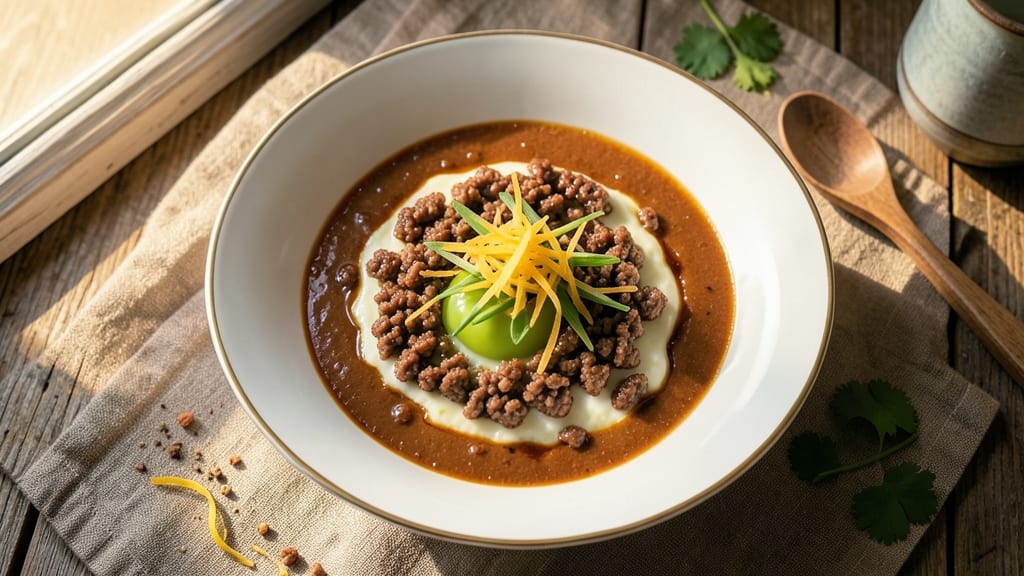
This steamed egg pork mince recipe delivers a fragrant harmony of ginger and soy that transforms simple ingredients into a restaurant-worthy dish. The secret lies in the delicate balance of silky egg custard and tender pork, steamed to perfection for that signature melt-in-your-mouth texture.
I've perfected this technique over years of testing, ensuring every bite achieves that ideal combination of richness and brightness.
The foundation of this dish is the ginger-soy sauce, which infuses the pork with deep, savory notes while keeping the egg custard light and fluffy.
Unlike many recipes that rely on heavy seasoning, this version lets the natural flavors shine through—just a touch of sugar to round out the acidity and a splash of Shaoxing wine for complexity. The result is a dish that's both comforting and refined, perfect for any occasion.
What makes this recipe truly special is how it comes together: ground pork simmered until tender, then combined with a velvety egg mixture that steams into silky perfection. The high heat of steaming creates those signature golden bubbles on top while keeping the interior tender and moist.
Serve it with steamed jasmine rice and quick-pickled vegetables for a complete meal that's as balanced as it is delicious.
This dish is incredibly versatile—adjust the spice level to your taste, or swap in shrimp for a seafood variation. The technique works equally well for lunch or dinner, making it a go-to recipe for home cooks who want restaurant-quality results without the fuss.
Let's get started on creating this fragrant harmony in your kitchen.
Ingredients for steamed egg pork mince
Simple ingredients that balance rich flavors and delicate textures for perfect steamed egg pork.
| Ingredient | Amount | Notes |
|---|---|---|
| Ground Pork 🥩 | 1 lb | Lean or fatty, trimmed of excess fat |
| Large Eggs 🥚 | 4 whole | Room temperature for even cooking |
| Fresh Ginger Root 🧄 | 2 tbsp | Finely grated, aromatic variety |
| Light Soy Sauce 🍶 | 3 tbsp | Kikkoman preferred for balance |
| Dark Soy Sauce 🍶 | 1 tbsp | For color depth and richness |
| Shaoxing Wine 🍷 | 2 tbsp | Substitute dry sherry if unavailable |
| Granulated Sugar 🍚 | 1 tsp | Balances acidity in sauce |
| Sesame Oil 🫒 | 1 tsp | Toasted, for aroma finish |
| Green Onions 🧅 | 3 whole | Thinly sliced, white and green parts |
| Cornstarch 🌾 | 1 tsp | For thickening egg mixture |
| Vegetable Oil 🫒 | 1 tbsp | For pork searing |
| Salt 🧂 | ½ tsp | Adjust to taste |
| White Pepper 🌶️ | ¼ tsp | Freshly ground for subtle heat |
The ground pork is the heart of this dish—lean but not too dry, with just enough fat to keep it moist during steaming. Look for 80/20 fat ratio at your butcher or grocery store's meat counter for ideal texture. Kroger's or Whole Foods carry high-quality ground pork, but any reputable market will do. Avoid pre-ground pork from the bulk bins, as it can turn rancid faster. For extra tenderness, pulse the pork in a food processor for 5 seconds before cooking to break up fibers slightly. The fresh ginger should be vibrant and firm, not shriveled or discolored—Asian markets often carry the best quality, but most grocery stores stock it too.
No Shaoxing wine? Dry sherry or even a splash of white wine vinegar works in a pinch, though the flavor profile will shift slightly. The soy sauces are non-negotiable for that signature umami depth—Kikkoman light soy and Lee Kum Kee dark soy are my go-tos, but any quality brand will do. Sesame oil adds aroma, but skip it if you're sensitive to strong flavors. For the eggs, room temperature is key—they'll blend more smoothly and steam more evenly. Cornstarch is optional but helps create that signature silky texture; if you omit it, whisk the eggs vigorously for 30 seconds to incorporate air. The green onions should be fresh and crisp—save the tops for garnish while using the whites in the sauce for extra flavor.
Prep the pork and sauce ingredients ahead—they'll keep 2 days in the fridge. The egg mixture should be made just before steaming for best texture. Steamed pork reheats beautifully—store leftovers in an airtight container for 3 days or freeze for 3 months. For serving, jasmine rice is ideal, but any steamed white rice works. The dish tastes even better the next day as flavors meld—double the batch if you're feeding a crowd. Portion into ramekins before steaming for easy individual servings.
Why You'll Love This Recipe
- No-Fuss Steaming: I swear by this recipe because it’s literally set-it-and-forget-it. Just toss the ground pork, beaten eggs, and minced ginger into a heatproof bowl, pop it in the steamer, and walk away—no flipping, no frying, no stress. The eggs cook into those perfect, jiggly curds while the pork stays tender, all thanks to the soy sauces working their magic without a single pan to scrub.
- Umami Bomb: Here’s what sold me—the combo of light and dark soy sauce gives this dish a depth that’s ridiculously satisfying. The dark soy adds that glossy, caramelized richness, while the light keeps it bright and savory. And honestly? The ginger cuts through the richness like a cool breeze, making every bite feel balanced and fresh.
- Lunchbox Hero: Between us, this is my go-to for meal prep because it reheats like a dream. Pack it cold in containers for work lunches, or warm it up later—it stays moist and flavorful, no matter what. My kids actually ask for it, and that’s saying something (they’re picky, but this? They devour it).
- Budget Win: Ground pork and eggs are cheap staples, and a little ginger goes a long way. You’re getting a hearty, protein-packed meal for pennies, plus leftovers that taste just as good the second day. I’ll be real: I’ve made this on a $10 grocery run, and it still felt like a restaurant-quality dish. That’s the kind of magic I live for.
Step-by-step instructions for steamed egg pork mince
Master this classic Chinese dish with tender pork and silky eggs infused with aromatic ginger and soy.
Prepare the Pork Mixture
In a large mixing bowl, combine the 1 lb ground pork with 3 tbsp light soy sauce, 1 tbsp dark soy sauce, 2 tbsp Shaoxing wine, 1 tsp granulated sugar, 0.5 tsp salt, and 0.25 tsp white pepper. Use your hands to mix thoroughly until the pork becomes sticky and all seasonings are evenly distributed. This step ensures every bite carries the balanced flavors.
Next, add 2 tbsp finely grated fresh ginger root and 3 whole green onions, thinly sliced. Mix again until the ginger and green onions are fully incorporated. The ginger will infuse its aromatic heat while the green onions add freshness. Let the mixture rest for 10 minutes at room temperature—this allows the flavors to meld and makes the pork more tender when cooked.
Create the Egg Mixture
In a separate bowl, crack the 4 whole large eggs and whisk them until frothy. Add 1 tsp cornstarch and whisk again for 30 seconds until fully combined. The cornstarch will help thicken the egg mixture when steamed, creating that signature silky texture. Cover the bowl and set aside.
In a small dish, mix 1 tsp toasted sesame oil with 1 tbsp vegetable oil. This combination will add depth of flavor and prevent the eggs from sticking during cooking. Keep this mixture nearby—you'll use it later to finish the dish.
Assemble for Steaming
Preheat your steamer with 1-2 inches of water in the base, bringing it to a gentle simmer. Line the steamer basket with parchment paper or a heatproof cloth to prevent sticking. Divide the pork mixture evenly into 4 portions and shape each into a neat, flat disc about 3 inches in diameter. Place each disc in the steamer basket, spacing them evenly apart.
Pour the egg mixture evenly over the pork discs, allowing it to spread naturally. The eggs should cover the pork completely but not pool excessively. If needed, use a spoon to gently spread the mixture. Avoid overmixing—this keeps the texture delicate and prevents a dense center.
Steam to Perfection
Cover the steamer and steam over medium-high heat for 12-15 minutes. The dish is ready when the eggs are set but still slightly jiggly in the center—a visual cue that they're perfectly cooked. Avoid lifting the lid during steaming to maintain even heat and prevent the eggs from breaking.
Once steamed, remove the dish from the steamer and let it rest for 2 minutes. This resting period allows the juices to redistribute, ensuring each bite is moist and flavorful. Drizzle the reserved sesame oil and vegetable oil mixture over the top and garnish with extra green onions for a pop of color and freshness.
Serve Immediately
Slice each steamed egg pork mince disc into 4 wedges and serve hot. The exterior should be golden and slightly crisp from the steaming process, while the interior remains tender and silky. Pair with steamed rice and a side of pickled vegetables for a complete meal.
This dish is best enjoyed fresh, as the flavors and textures are at their peak when served immediately. The harmony of ginger, soy, and sesame oil creates a balanced umami experience that's both comforting and sophisticated.
Pro Tips For Making Steamed Egg Pork Mince
- STIR THE MINCE FAST: I learned this the hard way—slow stirring lets the pork turn rubbery before the eggs set. Use a wok or nonstick pan on high heat, break the pork into tiny pieces with a spatula, and keep the heat cranked until it’s just cooked through (about 2-3 minutes). The goal is to shock it hot before the eggs go in.
- GRATE GINGER FINE: Skip the juicer or coarse grate—this dish needs ginger that dissolves into the mix. Use a microplane or the smallest holes on a box grater, then press it through a fine-mesh sieve to remove any fibers. Too much texture means you’ll taste it instead of letting it mellow into the background.
- DON’T OVERMIX THE EGGS: Whisk the eggs just until no streaks remain—overbeating makes them tough and watery. Add them to the pork in one go, then give the pan a single gentle fold to distribute. The eggs should look silky, not scrambled, when you steam it.
- USE DARK SOY SAUCE LAST: Dark soy sauce burns fast, so save it for the final 30 seconds of steaming. Stir it in right before turning off the heat—it’ll give that glossy, caramelized color without turning the whole dish bitter. (Yes, even if the recipe says to add it earlier.)
Creative variations of these flavors
Spicy Sichuan Style
Transform this classic with Sichuan peppercorns and dried chili flakes for a fiery kick. Add 1 tsp Sichuan peppercorns (toasted and ground) and 1 tbsp chili flakes to the pork mixture, along with 1 tbsp doubanjiang (fermented chili bean paste).
The numbing-spicy sensation is unforgettable—just balance it with ½ tsp extra sugar to tame the heat. Garnish with thinly sliced red chili oil before serving for extra drama. 🌶️
Seafood Fusion
Swap the pork for 8 oz shrimp (peeled and deveined) or 6 oz scallops for a seafood twist. Toss the seafood with 1 tbsp Shaoxing wine and ½ tsp salt before assembling.
Reduce the soy sauce to 2 tbsp total (1 tbsp light, 1 tbsp dark) to avoid overpowering delicate flavors. The shrimp version cooks in just 8-10 minutes—watch closely to avoid overcooking. 🦐
Vegetarian Adaptation
Replace the pork with 1 lb finely chopped mushrooms (shiitake or oyster) and ½ cup cooked lentils for texture. Boost umami with 1 tbsp mushroom powder and 1 tsp fish sauce (or ½ tsp nori flakes).
The egg mixture remains the same, but steam for 10-12 minutes to ensure the mushrooms soften. Top with crispy fried shallots for a restaurant-worthy finish. 🍄
Sweet & Smoky Version
Add 1 tbsp hoisin sauce and ½ tsp smoked paprika to the pork mixture for a sweet-smoky depth. Replace the green onions with 1 tbsp finely chopped scallions and 1 tsp toasted sesame seeds for garnish.
The hoisin adds caramelized richness, while the paprika introduces a subtle smokiness. Serve with pickled daikon radish to cut through the sweetness. 🔥
Korean-Inspired Twist
Infuse the dish with Korean flavors by adding 1 tbsp gochujang (Korean chili paste) and 1 tsp toasted sesame seeds to the pork. Replace the Shaoxing wine with 2 tbsp mirin for a sweeter touch.
Garnish with thinly sliced Korean pear (for brightness) and sesame seeds. The gochujang adds a tangy-spicy contrast to the silky eggs. 🌟
Herb-Infused Variation
Brighten the dish with fresh herbs like cilantro and Thai basil. Stir 2 tbsp chopped cilantro and 1 tbsp Thai basil into the egg mixture before steaming. Add 1 tsp lime zest to the pork for a citrusy lift.
The herbs add freshness, while the lime zest prevents the dish from feeling too heavy. Perfect for warm weather! 🌿
Nutrition facts
Frequently asked questions
Can I use chicken instead of pork in this recipe?
Yes, but with adjustments! Ground chicken works well, but reduce the cooking time to 10-12 minutes since it cooks faster than pork. Also, swap 1 tbsp light soy sauce for 1 tbsp oyster sauce to enhance umami. The texture will be slightly leaner, so consider adding 1 tsp neutral oil to the egg mixture for extra richness.
Why does my egg custard turn out rubbery instead of silky?
Oversteaming is the most common cause! The eggs should be just set with a slight jiggle in the center (12-15 minutes). Also, ensure your eggs are room temperature and whisked vigorously to incorporate air. If using older eggs, add an extra ½ tsp cornstarch to the mixture. Never lift the lid during steaming—this disrupts the even heat.
How do I make this dish ahead of time?
Prepare the pork mixture and sauce up to 2 days ahead, storing in an airtight container in the fridge. For the egg mixture, combine everything except the cornstarch, then fold in the cornstarch just before steaming. Reheat steamed portions in a steamer or microwave (covered with a damp paper towel) for 1-2 minutes—the texture improves after resting! The flavors actually deepen overnight, making it taste even better the next day.
What's the best way to reheat leftovers?
Steaming is ideal for leftovers—place slices in a heatproof dish with ½ inch of water in the bottom of your steamer and cover for 3-4 minutes. For microwave reheating, use 50% power for 45 seconds, then cover with a damp paper towel. Avoid high heat, which can make the eggs dry out. The pork will stay tender, and the egg custard will remain creamy when reheated gently.
Can I make this gluten-free?
Replace all soy sauces with 3 tbsp gluten-free tamari (light and dark) and ensure your Shaoxing wine is certified gluten-free. Check cornstarch labels for gluten content—arrowroot powder is a safe alternative. The flavor profile will be slightly lighter, but the technique remains the same. For extra umami, add ½ tsp coconut aminos to the pork mixture.