
Main Courses
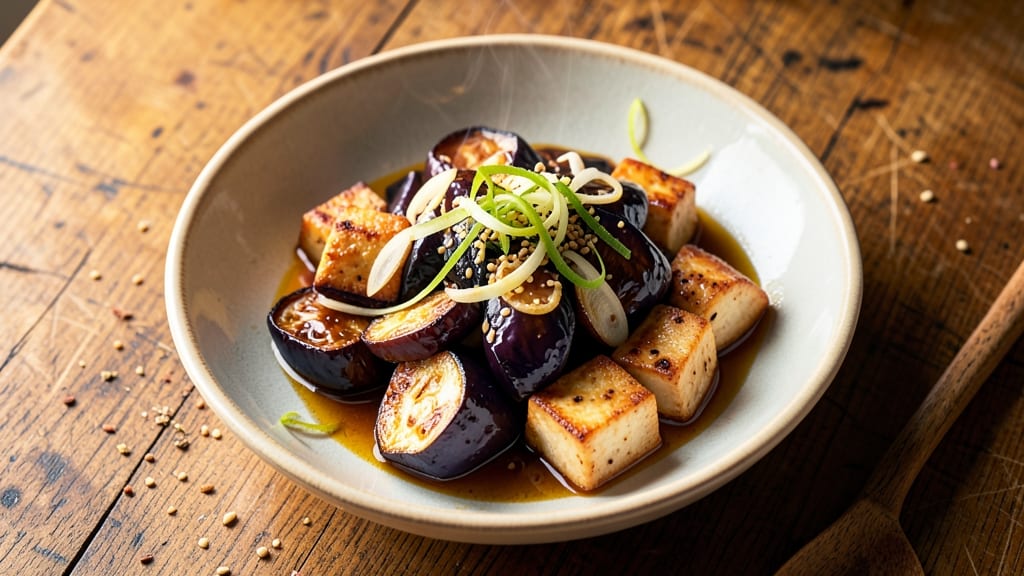
This stir-fried eggplant and tofu recipe delivers the perfect balance of crispy, savory textures and silky umami flavors in every bite. The high-heat wok method transforms firm tofu into golden, crunchy bites while caramelizing the eggplant into tender, glossy slices.
I developed this dish after years of experimenting with plant-based stir-fries, and the secret lies in the right seasoning blend and precise cooking technique.
The foundation of this recipe is a simple yet powerful sauce—garlic, ginger, and soy-based broth create deep umami richness that complements the natural sweetness of the eggplant and the nutty flavor of the tofu.
What makes this dish truly special is how the textures work together: the crispy tofu provides satisfying crunch, while the tender eggplant adds a melt-in-your-mouth contrast. The dish comes together in just 25 minutes, making it ideal for weeknight dinners or meal prep.
By the time you plate this stir-fry, you'll have a vibrant, aromatic dish with layers of flavor and contrasting textures that make it impossible to resist. The eggplant absorbs the savory sauce beautifully, while the tofu maintains its satisfying bite.
Serve it over steamed rice or noodles for a complete meal that feels both restaurant-quality and effortlessly homemade.
This recipe works equally well as a standalone dish or paired with other stir-fry favorites. The versatility of the seasoning allows you to adjust the heat level to your preference, whether you want a mild, savory profile or a spicy kick.
Let's get started on creating this balanced, flavorful plant-based meal that's sure to become a staple in your rotation.
Ingredients for stir fried eggplant and tofu
Pantry staples meet crispy textures—this stir-fry delivers restaurant-quality umami in every bite.
| Ingredient | Amount | Notes |
|---|---|---|
| Extra-Firm Tofu 🍱 | 14 oz | Pressed and cubed into 1-inch pieces |
| Japanese Eggplant 🍆 | 1 lb | Sliced into 1/4-inch thick rounds |
| Cornstarch 🌾 | 2 tbsp | For crispy tofu coating |
| Vegetable Oil 🫒 | ½ cup | High smoke point for stir-frying |
| Garlic Cloves 🧄 | 6 cloves | Minced for sauce base |
| Fresh Ginger 🌿 | 1 tbsp | Grated, aromatic foundation |
| Low-Sodium Soy Sauce 🥢 | ⅓ cup | For umami depth |
| Sesame Oil 🫒 | 1 tbsp | Toasted for nutty aroma |
| Maple Syrup 🍯 | 1 tbsp | Balances savory flavors |
| Red Pepper Flakes 🌶️ | ½ tsp | Adjust for heat preference |
| White Sesame Seeds 🌱 | 1 tbsp | For garnish and crunch |
| Fresh Cilantro 🌿 | ¼ cup | Chopped for fresh finish |
| Lime Wedges 🍋 | 2 whole | For serving |
| Jasmine Rice 🍚 | 1 ½ cups | Uncooked, for serving |
The tofu makes or breaks crispy texture. Extra-firm is non-negotiable—it holds shape through high heat. Press it for 20 minutes before cubing (wrap in a towel, place a heavy pan on top). Trader Joe's sells pre-pressed tofu, which saves time. Japanese eggplant is ideal for its tender flesh, but regular eggplant works in a pinch—just slice thinner. The cornstarch coating is crucial: toss tofu cubes thoroughly until evenly dusted. For the eggplant, salt the slices first and let them sit for 10 minutes to remove bitterness before cooking.
No sesame oil? Toasted peanut oil works similarly, though the flavor differs slightly. Substitute maple syrup with agave if preferred, but keep the same amount for balance. The red pepper flakes can be omitted entirely for a mild version, or swap in gochujang paste at half the amount for a deeper heat. Fresh ginger loses potency quickly, so buy it in small amounts or freeze the root whole. For the sauce, low-sodium soy sauce is key—regular versions can make the dish too salty. If you're prepping ahead, store sauce components separately and combine when ready to cook.
Tofu and eggplant both reheat beautifully—just toss with a little oil and heat in a skillet. The sauce keeps for 5 days in the fridge, but the tofu's crispiness suffers after reheating, so cook fresh portions if possible. For meal prep, store components separately: cooked tofu and eggplant in one container, sauce in another. Reassemble and stir-fry for 2-3 minutes before serving. The lime wedges add brightness, so add them fresh when plating. This dish freezes surprisingly well—just portion the sauce and tofu/eggplant separately for up to 3 months
Why You'll Love This Recipe
- Foolproof Crispy Tofu: Between us, the tofu here never turns soggy—cornstarch and high heat do all the work. Press it right, coat it well, and you’ll get that addictive crunch every time, no matter how busy you are.
- Garlic Kiss Magic: Two cloves of minced garlic hit the pan first, and honestly? That’s where the soul of this dish lives. The eggplant soaks it up while the tofu sears, creating this perfect balance of savory and sweet that makes you want to eat it straight from the wok.
- Lunchbox Hero: Double the batch and store it in airtight containers—it reheats beautifully for lunches all week. My kids actually ask for this (yes, even after I packed it three days in a row), and it’s way cheaper than takeout.
- Pantry Staple Power: You’re using ingredients you already own—no fancy substitutions needed. Eggplant’s mild flavor plays nice with garlic and tofu, while the oil keeps costs low. It’s the kind of meal that proves good food doesn’t need a grocery haul.
Step-by-step instructions for stir-fried eggplant and tofu
Here's how to create restaurant-quality stir-fried eggplant and tofu with perfect textures and bold flavors.
Prepare the Tofu for Maximum Crispiness
Start by pressing the 14 oz extra-firm tofu between paper towels for 15 minutes to remove excess moisture. Cut it into 1-inch cubes and transfer to a bowl. Add the 2 tbsp cornstarch and toss gently until each piece is evenly coated. This coating is crucial—it creates that satisfying crunch we're after.
Let the cornstarch-coated tofu sit for 5 minutes while you prepare the eggplant. This resting time allows the cornstarch to adhere better, ensuring crispy edges rather than a gummy exterior. I like to work in batches if needed, but keep the tofu covered to prevent it from drying out prematurely.
Cook the Tofu Until Golden Brown
Heat 0.25 cup vegetable oil in a large skillet over medium-high heat until shimmering. Add the tofu in a single layer, leaving space between each piece. Cook undisturbed for 3-4 minutes until the bottoms develop a deep golden brown crust—this is your signal to flip.
Flip the tofu and cook another 3-4 minutes until all sides are evenly browned. The tofu should be crispy on the outside but still tender inside. If you notice any pieces sticking, gently press down with a spatula to ensure even browning. Remove the tofu and set aside on a paper towel-lined plate to drain excess oil.
Stir-Fry the Eggplant for Silky Texture
In the same skillet, add the remaining 0.25 cup vegetable oil and heat over medium heat. Add the 1 lb sliced Japanese eggplant in a single layer and cook for 2-3 minutes per side until the edges begin to soften slightly but the centers remain firm. Japanese eggplant has fewer seeds than other varieties, making it ideal for stir-frying.
Reduce heat to medium-low and continue cooking for another 2-3 minutes until the eggplant is tender but still holds its shape. You want it to be silky rather than mushy—this is where the texture magic happens. Remove the eggplant and set aside with the tofu, keeping both warm.
Build the Umami-Packed Sauce
In the same skillet, reduce heat to medium and add 6 cloves minced garlic and 1 tbsp grated fresh ginger. Sauté for 30 seconds until fragrant—this is where the aromatic foundation of your dish comes together. Be careful not to burn the garlic; it should smell sweet and inviting, not bitter.
Pour in the 0.33 cup low-sodium soy sauce, 1 tbsp sesame oil, and 1 tbsp maple syrup. Add 0.5 tsp red pepper flakes for a subtle kick. Let the sauce simmer for 1-2 minutes until it thickens slightly and coats the back of a spoon. This sauce is the heart of your dish, balancing sweet, salty, and spicy notes perfectly.
Combine and Finish with Fresh Garnishes
Return the tofu and eggplant to the skillet, tossing gently to coat everything in the sauce. Cook for 1-2 minutes until everything is heated through and the flavors meld together. The eggplant should be tender, the tofu still crispy, and the sauce clinging beautifully to each piece.
Transfer the stir-fry to serving plates and garnish with 1 tbsp white sesame seeds and 0.25 cup chopped fresh cilantro. Serve immediately with 2 whole lime wedges on the side for a bright contrast. Pair with the 1.5 cups cooked jasmine rice for the perfect balance of textures and flavors in every bite.
Pro Tips For Making Stir Fried Eggplant And Tofu
- Press the Tofu Hard: Wrap the extra-firm tofu in a clean towel, place a heavy pan on top, and let it sit for 10 minutes before cutting. I learned this the hard way—skipping it leaves your tofu soggy no matter how much cornstarch you use. The pressure squeezes out moisture that would otherwise turn your stir-fry into a watery mess.
- Slice Eggplant Thinly: Use a sharp knife and cut the Japanese eggplant into ¼-inch slices—no thicker. Thick slices stay rubbery; thin slices crisp up fast and absorb flavors better. Pro move: Salt the slices immediately after cutting and let them sit for 15 minutes to draw out bitterness.
- Don’t Overcrowd the Pan: Stir-fry in batches if needed—overloading the pan steams the eggplant instead of searing it. A hot wok or skillet should sizzle when ingredients hit the oil. I used to rush this, and my eggplant ended up limp. Crowding kills texture.
- Prep Garlic Right: Smash the garlic cloves with the flat side of your knife before mincing—this releases more flavor without burning. Skip the pre-minced jar; fresh garlic makes a real difference. Add it last, just before serving, so it doesn’t turn bitter in the oil.
Common mistakes when making this recipe
Overcrowding the Pan
This is the #1 mistake I see with stir-fries—packing the pan too tightly. When you overcrowd the tofu or eggplant, the food steams instead of searing, leading to soggy textures.
I always aim to leave at least ½ inch of space between pieces. If needed, work in two batches—trust me, crispy tofu is worth the extra time. 🔥
Skipping the Press
Unpressed tofu releases water when cooking, which steams instead of crisps. Always press your tofu for at least 15 minutes before cubing. I use the Trader Joe's pre-pressed tofu when short on time—it saves effort without sacrificing texture. Never skip this step, or you'll end up with gummy tofu.
Using Wrong Heat Level
Medium heat is your friend for eggplant, but tofu needs medium-high heat to develop that golden crust. If you cook tofu too slowly, it absorbs oil instead of crisping. Watch for smoke—if it's shimmering but not smoking, you're at the perfect temperature. Too hot? The tofu burns before browning.
Undercooking Eggplant
Eggplant needs time to soften properly. If you rush it, you'll get chewy slices instead of silky perfection. Cook each side for 2-3 minutes at medium-low heat—this ensures even tenderness without losing shape. The goal is a fork-tender texture, not mushy.
Sauce Over-Simmering
Let that sauce simmer too long, and it turns gluey. The ideal time is 1-2 minutes—just enough to thicken slightly. I always taste it before adding the veggies.
If it's too thick, add 1 tsp water to loosen. The sauce should coat the back of a spoon but still flow freely.
Ignoring Rest Time
Freshly cooked tofu and eggplant need 2-3 minutes to rest after stir-frying. This lets the flavors meld and prevents soggy textures when tossing with sauce. I cover the pan loosely with a lid during this time—it keeps things warm without steaming.
Nutrition facts
Frequently asked questions
Why does my tofu turn out soggy instead of crispy?
Soggy tofu usually means one of two things: either you skipped pressing it (always press for 15 minutes minimum) or you overcrowded the pan. The cornstarch coating needs space to crisp—leave ½ inch between pieces and cook in batches if needed. Also ensure your oil is hot enough (medium-high heat) before adding the tofu.
Can I substitute regular eggplant for Japanese eggplant?
Yes, but you'll need to adjust the cooking time. Regular eggplant has more seeds and moisture, so slice it ⅛-inch thick (thinner than the ¼-inch Japanese slices) and cook it 1-2 minutes less per side. Salt the slices first and let them sit 10 minutes to remove bitterness before cooking. The texture will be slightly different but still delicious!
How do I make this recipe spicier?
For extra heat, double the red pepper flakes to 1 tsp or add ½ tsp gochugaru (Korean red pepper flakes) for a deeper, fruitier spice. You can also stir in ½ tsp sriracha or 1 tsp chili crisp at the end for a smoky kick. Always taste before serving—spice levels vary by brand!
Can I make this ahead of time?
Store the cooked tofu and eggplant separately in the fridge for up to 3 days, and keep the sauce in a separate container. When ready to eat, reheat everything in a skillet with 1 tsp oil over medium heat for 2-3 minutes. The tofu may lose some crispiness, so cook fresh portions if possible. The sauce reheats beautifully—just warm it through before tossing.
What are good sides to serve with this dish?
This stir-fry pairs perfectly with jasmine rice, steamed bok choy, or coconut rice for a complete meal. For extra flavor, try serving with pickled vegetables (like quick-pickled carrots or daikon) or a simple miso soup. The bright acidity cuts through the richness of the dish beautifully!