
Breakfast & Brunch
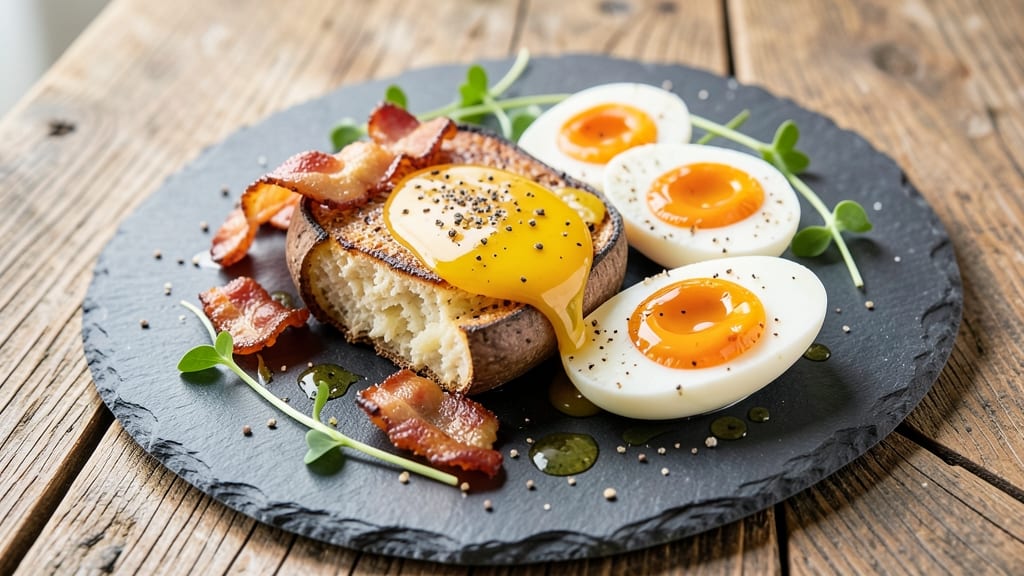
This sunrise eggs recipe delivers the perfect balance of crispy potatoes and silky runny yolks—every bite is a masterpiece of texture and flavor. The secret lies in layering thinly sliced potatoes for maximum crispiness while keeping the eggs perfectly poached with golden, unbroken yolks.
I've perfected this technique over years of weekend breakfasts, and it never fails to impress even skeptical guests.
The foundation starts with thinly sliced potatoes cooked until they develop a golden crust while staying tender inside. Meanwhile, the eggs cook gently in simmering water, creating that signature runny yolk that pools beautifully on top.
What makes this dish truly special is how the crispy potatoes absorb the egg's richness while maintaining their texture.
When assembled, you'll have a dish that's as visually stunning as it is delicious—crispy potato layers topped with perfectly poached eggs, their golden yolks intact. The contrast between the crunchy potatoes and velvety eggs creates a sensory experience that's hard to resist.
This is breakfast elevated to restaurant-quality without the fuss.
Serve immediately with optional toppings like crumbled bacon, fresh herbs, or a sprinkle of cheese for added depth. The presentation is just as important as the taste—plate with care to showcase that perfect golden crust and runny yolk. This recipe transforms a simple breakfast into something truly special.
Ingredients for sunrise eggs
Thinly sliced potatoes and perfectly poached eggs create this restaurant-quality breakfast masterpiece.
| Ingredient | Amount | Notes |
|---|---|---|
| Russet Potatoes 🥔 | 2 lb | Thinly sliced (1/8-inch), peeled |
| Large Eggs 🥚 | 4 whole | Fresh, room temperature |
| Unsalted Butter 🧈 | ½ cup | Cold, cubed for crispiness |
| Extra-Virgin Olive Oil 🫒 | ¼ cup | For crispy potato layers |
| Salt 🧂 | 1 ½ tsp | Kosher or sea salt |
| Freshly Ground Black Pepper 🌶️ | ½ tsp | For seasoning potatoes |
| White Vinegar 💧 | 1 tbsp | For egg water clarity |
| Fresh Thyme Leaves 🌿 | ¼ cup | Chopped, for garnish |
| Crumbled Bacon 🥓 | ½ cup | Optional topping |
| Shredded Cheddar Cheese 🧀 | ¼ cup | Optional topping |
| Garlic Powder 🧄 | ½ tsp | For potato seasoning |
| Onion Powder 🧅 | ½ tsp | For potato seasoning |
The potatoes are everything here. Russet potatoes are ideal—they crisp up beautifully while staying tender inside. Grab a mandoline slicer if you don't want to hand-slice (they're worth the investment), or ask your butcher to slice them thinly. For the best flavor, organic potatoes from Trader Joe's or your local farmers market make all the difference. The secret to perfect slices is consistency—aim for 1/8-inch thickness. Any thinner and they'll burn before cooking through, any thicker and they'll stay doughy. Soak the slices in cold water for 10 minutes before cooking to remove excess starch, which helps them crisp up better.
Eggs are where this dish shines. Fresh eggs are non-negotiable—they hold their shape better when poached. If you're using store-bought, check the date and crack one open to test the yolk's firmness. For the poaching water, white vinegar is key—it helps the whites set faster and keeps the yolks intact. No vinegar? A splash of lemon juice works too. The butter for the potatoes? Cold and cubed gives you that perfect golden crust. If you're short on time, olive oil works fine, but the butter adds richness. For the optional toppings, crumbled bacon adds smokiness while cheddar cheese brings a sharp contrast to the silky eggs. Skip the pre-shredded cheese though—it gets gummy when melted.
Potatoes stay crispy for about 20 minutes after baking, so keep them warm in a 200°F oven while you poach the eggs. Eggs are best served immediately, but you can hold them in warm water for up to 10 minutes if needed. Store any leftover potatoes in the fridge for 3-4 days—reheat in a skillet with a bit of butter for crispiness. The bacon and cheese toppings keep for 5 days in the fridge, but honestly, they're better fresh. This dish is all about presentation, so assemble right before serving. The contrast between the crispy potatoes and velvety eggs is what makes it special—don't let it sit too long after plating.
Why You'll Love This Recipe
- One-Pan Magic: I swear by this recipe—just slice potatoes, crack eggs, and let the oven do the work. No chopping boards, no extra pots, just golden perfection with zero cleanup.
- Crispy-Creamy Balance: That buttery olive oil crust on the potatoes? Chef’s kiss. The eggs stay tender while the spuds get that irresistible crunch—like a hug for your taste buds.
- Breakfast for Days: Honestly, I make this for brunch, dinner, or even a lazy Sunday. Leftovers reheat beautifully, and it’s the only dish that makes my kids beg for seconds (yes, even on a Tuesday night).
- Budget Breakthrough: Russets and eggs won’t break the bank, and a single pan means less waste. Between us, this is my go-to when I’m pinching pennies but still want something that feels special.
Step-by-step instructions for perfectly layered potato cakes
Transform simple ingredients into restaurant-quality potato cakes with crispy edges and silky interiors.
👨🍳 Step 1: Prepare the Potato Mixture
Peel and thinly slice the 2 lb russet potatoes to ⅛-inch thickness using a mandoline or sharp knife. I like to slice them while they're still cold to get even pieces. Transfer the slices to a large bowl and immediately sprinkle with 1 tsp salt, 0.5 tsp black pepper, 0.5 tsp garlic powder, and 0.5 tsp onion powder. Toss gently to coat, being careful not to break the delicate slices.
Add the 0.5 cup unsalted butter and 0.25 cup extra-virgin olive oil to the bowl. The butter should be cold and cubed—this helps create crispy layers later. Use your hands to gently press the butter and oil into the potato slices, working it into the edges and centers. Let the mixture sit for 10 minutes while you prepare your pan.
🔥 Step 2: Create Crispy Potato Layers
Heat a large non-stick skillet over medium heat and add the potato mixture in ¼-inch thick layers, pressing down gently with a spatula. Cook for 5-6 minutes until the bottom layer is golden brown and crispy, then flip the entire cake onto a plate. Repeat this process, creating 4 perfect potato cakes that maintain their shape.
Here's the thing—don't press too hard when flipping. The layers need to stay intact so they hold together when you return them to the pan. If it sticks, add a splash of water and carefully slide it out. The cakes should look golden and firm on the outside with soft, fluffy centers.
🍳 Step 3: Cook the Eggs to Runny Perfection
While the potato cakes cook, prepare an ice bath by filling a large bowl with water and ice. In a separate bowl, whisk the 4 whole large eggs with 1 tbsp white vinegar until the whites and yolks are fully combined. The vinegar helps the whites set more clearly, creating that classic sunrise effect.
Heat a non-stick pan over low heat and pour in the egg mixture. Let it cook undisturbed for 2-3 minutes until the edges begin to set but the center remains completely runny. This is where patience matters most—overcooking turns runny yolks into scrambled eggs. When the edges are just set, carefully slide the egg onto a plate and transfer it to the ice bath for 30 seconds to stop further cooking.
🥘 Step 4: Assemble and Garnish
Return one potato cake to the skillet over low heat to warm through for 1-2 minutes. Place the runny egg on top and garnish with 0.25 cup chopped fresh thyme leaves, 0.5 cup crumbled bacon, and 0.25 cup shredded cheddar cheese. The cheese adds a creamy contrast to the crispy potatoes, while the bacon brings smoky depth.
Serve immediately with the remaining potato cakes and eggs. The contrast of crispy, golden potato layers with the silky, runny yolk creates the perfect balance of textures. Each bite delivers that satisfying crunch followed by the creamy egg center—just like your favorite diner classic.
Pro Tips For Making Sunrise Eggs
- CUT POTATOES EVENLY: Grab a mandoline or knife and slice those Russets paper-thin—about 1/8-inch thick. I learned this the hard way: uneven slices mean some potatoes stay crunchy while others turn to mush. (Yes, even if you’re impatient like me, take the extra 10 minutes.)
- SALT THE POTATOES FIRST: Toss the sliced potatoes with salt and olive oil before cooking—let them sit 10 minutes while you prep. My grandmother swore by this, and she was right: it pulls out excess moisture so they crisp up instead of steaming.
- USE LOW AND SLOW FOR POTATOES: Start potatoes on medium-low heat, not high. After burning three batches, I finally figured out: high heat = oil splattering everywhere. Keep it steady at 325°F (160°C) until golden—about 20-25 minutes.
- COOK EGGS IN BUTTER, NOT OIL: Skip the olive oil for the eggs—melt 1 tablespoon of butter in the pan first. The fat from the butter adds richness, and it prevents the eggs from sticking like glue. (Your future self will thank you.)
Common mistakes when making great sunrise eggs
Overcooking Potatoes
Thinly sliced potatoes can go from perfect to burnt in seconds, especially if they're too close to the heat source. I've ruined countless batches by cranking the heat too high—medium heat is your best friend here.
Use a non-stick skillet (I love my All-Clad Stainless) and spread the layers evenly. If the bottom starts to brown too quickly, reduce the heat immediately. The goal is golden crusts with tender centers, not charred edges.
Skipping the Resting Time
After flipping your potato cakes, resist the urge to rush them back into the pan. Let them rest on a plate for 2-3 minutes to firm up slightly—this prevents them from falling apart when you flip them back.
I've learned this the hard way: impatiently flipping too soon leads to messy, crumbly layers. Patience here ensures clean, intact potato cakes that hold together beautifully.
Egg Timing Errors
Poaching eggs is an art, and timing is everything. Cooking them too long turns that perfect runny yolk into scrambled eggs, while undercooking leaves you with a soupy mess. Start with low heat and watch closely—2-3 minutes is your sweet spot.
The edges should just begin to set while the center remains completely liquid. Pro tip: Use a slotted spoon to gently lower the eggs into simmering water (not boiling) for cleaner results.
Uneven Potato Layers
Uneven layers lead to uneven cooking—some parts crispy, others soggy. The secret is pressing the potato mixture firmly but evenly into the pan. Use a spatula to create ¼-inch thick layers and press down gently but firmly.
I like to work in batches if needed, keeping the first cake warm in a 200°F oven while I finish the rest. This ensures all potato cakes cook uniformly and stay crispy until serving.
Forgetting the Vinegar
White vinegar isn't just an afterthought—it's what makes those perfect sunrise eggs. Without it, the egg whites won't set as cleanly, and the yolks are more likely to break. Add 1 tbsp white vinegar to the poaching water for each egg.
If you're short on time, lemon juice works in a pinch, but vinegar gives you that professional diner-quality finish. Trust me, the difference is noticeable!
Overcrowding the Pan
Trying to cook too many potato cakes at once is a recipe for disaster—they'll steam instead of crisp, and the layers won't hold together. Work in small batches (2-3 cakes max) to maintain even cooking and crispy edges.
If you're short on time, use two pans instead of one. The extra effort ensures your final dish looks and tastes like it came from a high-end brunch spot.
Nutrition facts
Frequently asked questions
Can I make sunrise eggs ahead of time?
While the potato cakes stay crispy for about 20 minutes when kept warm in a 200°F oven, the eggs are best served immediately for that perfect runny yolk. You can prep the potato cakes up to 1 day ahead—store them in an airtight container and reheat in a skillet with butter for 2-3 minutes before adding fresh eggs. The eggs themselves shouldn't be prepped ahead.
What's the best way to keep the eggs runny?
Low and slow is key! Cook the eggs over low heat for just 2-3 minutes until the edges set but the center remains completely liquid. A quick ice bath for 30 seconds after cooking stops the cooking process instantly. Never use boiling water—simmering is ideal. The vinegar in the poaching water also helps maintain that perfect yolk shape.
Can I substitute hash browns for the potato cakes?
Use 1 cup frozen hash browns (thawed and drained) instead of sliced potatoes. Press them firmly into a ¼-inch thick layer in your skillet and cook until golden and crispy. The texture will be slightly different but still delicious. Just reduce the butter to 0.25 cup since hash browns already contain some fat.
How do I make this dish vegetarian?
Skip the bacon and use vegetarian cheese or omit it entirely. For extra flavor, add sautéed mushrooms or caramelized onions to the potato cakes. You can also top with avocado slices or sautéed spinach for a fresh twist. The core potato-egg combination remains perfectly vegetarian while still being hearty and satisfying.
Why do my potato cakes fall apart when flipping?
This usually happens when you flip too soon or don't press the layers firmly enough. Let the cakes rest for 2-3 minutes after the first cook to firm up, then flip gently but confidently. Press each layer firmly into the pan with a spatula—think ¼-inch thickness and even pressure. If they still crumble, reduce the heat slightly next time to prevent overcooking.