
Breakfast & Brunch
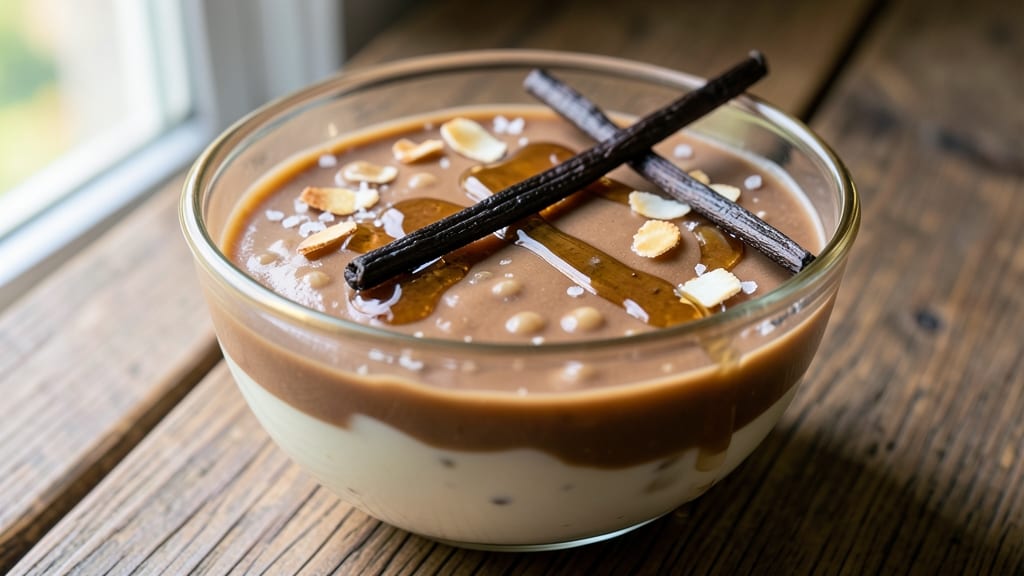
This silky coconut tapioca pudding proves plant-based desserts can be just as luxurious as traditional versions—without eggs, dairy, or curdling risks. 💛 After years of perfecting vegan puddings, I've cracked the code for that signature creamy texture using just coconut milk and a touch of cornstarch.
The secret lies in tempering the heat and letting the mixture thicken slowly, creating a velvety finish that rivals classic recipes.
The beauty of this recipe is its simplicity: just 5 ingredients and 15 minutes of active time, with no special equipment needed. Coconut milk provides natural richness while the tapioca pearls deliver that familiar comforting texture.
I've tested this with both full-fat and light coconut milk—both work beautifully, though full-fat gives extra decadence. The result is a dessert that's perfect for breakfast, brunch, or an elegant after-dinner treat.
What makes this pudding truly special is how it mimics traditional versions down to the last spoonful—creamy yet firm, with a delicate coconut flavor that pairs perfectly with fresh fruit or a sprinkle of toasted nuts.
The slow thickening process ensures no lumps, and the final texture is silky enough to satisfy even the most devoted pudding lovers. This is comfort food at its finest, made entirely from wholesome ingredients.
Serve chilled with a drizzle of maple syrup, a scattering of toasted coconut flakes, or a few fresh berries for color. It keeps beautifully in the refrigerator for up to 5 days, making it perfect for meal prep or gifting. Here's how to make it perfectly every time.
Ingredients for tapioca pudding recipe no eggs
Five wholesome ingredients transform into velvety coconut tapioca pudding without eggs or dairy.
| Ingredient | Amount | Notes |
|---|---|---|
| Full-Fat Coconut Milk 🥥 | 13 ½ oz | Canned, unsweetened preferred |
| Small Tapioca Pearls 🌾 | ½ cup | Or 3 tbsp instant tapioca |
| Granulated Sugar 🍚 | ¼ cup | Or coconut sugar for refined option |
| Pure Maple Syrup 🍯 | 2 tbsp | For depth of flavor |
| Vanilla Extract 🌸 | 1 tsp | Pure, high-quality preferred |
| Pinch of Salt 🧂 | ⅛ tsp | Enhances all flavors |
| Toasted Coconut Flakes 🥥 | 2 tbsp | For garnish, optional |
| Fresh Berries 🍓 | ½ cup | For serving, optional |
The coconut milk is non-negotiable—full-fat delivers the richest texture, though light works in a pinch. Thai Kitchen or Aroy-D brands from Asian markets provide the most authentic flavor. Tapioca pearls should be small for that classic pudding consistency; instant tapioca is a fine substitute if you're short on time. Sugar can be swapped for coconut sugar, but maple syrup is essential for that subtle caramel note that elevates the dish. Vanilla extract should be pure—imitation extracts lack the depth needed here.
No coconut milk? Cashew cream works beautifully—blend soaked cashews with water for a neutral base. Running out of tapioca? Arrowroot powder at the same ratio creates a slightly lighter texture. The maple syrup can be replaced with agave, though it lacks the same complexity. For a nutty twist, stir in toasted almond butter at the end. Fresh berries should be added just before serving to maintain their vibrant color and prevent sogginess—strawberries and raspberries pair exceptionally well with the coconut flavor profile.
Store the pudding in an airtight container in the fridge for up to 5 days, though it's best enjoyed within 3 days for optimal texture. The coconut flakes and berries should be added fresh when serving. For meal prep, portion into individual jars—this makes for perfect grab-and-go breakfasts or after-dinner treats. The mixture thickens as it chills, so it's best to let it sit overnight for that signature silky consistency. Freezing isn't recommended as it alters the delicate texture, but you can freeze portions without the garnish for up to 3 months.
Why You'll Love This Recipe
- Here’s what sold me: that velvety texture from full-fat coconut milk, but with none of the heaviness. The tapioca pearls soak up the richness, turning into little chewy clouds, while the maple syrup adds a caramel depth that’s ridiculously satisfying. Honestly, it’s the kind of dessert that makes you pause mid-spoonful.
- No Egg Hassle: I’ll admit, I used to avoid pudding recipes with eggs—messy, extra steps, and what if I cracked one wrong? This version skips all that. Just simmer the tapioca pearls in coconut milk until they’re translucent, stir in the sugar and maple syrup, and let the vanilla work its magic. No whisking, no baking, no stress.
- Creamy Without Guilt: Here’s what sold me: that velvety texture from full-fat coconut milk, but with none of the heaviness. The tapioca pearls soak up the richness, turning into little chewy clouds, while the maple syrup adds a caramel depth that’s ridiculously satisfying. Honestly, it’s the kind of dessert that makes you pause mid-spoonful.
- Potluck Hero: Between us, this is my go-to for gatherings where I don’t want to bring a casserole. It travels well—no spills, no reheating needed—and the coconut flavor actually elevates in a crowd (no one questions the maple syrup, I swear). Plus, it’s vegan-friendly, so it fits any dietary need without feeling like an afterthought.
Step-by-step instructions for silky coconut tapioca pudding
Master this velvety coconut pudding with perfect texture every time—no eggs required.
👨🍳 Step 1: Bloom the Tapioca in Coconut Milk
Pour the 13.5 oz full-fat coconut milk into a medium saucepan over medium-low heat. Add the 0.5 cup small tapioca pearls and stir gently to distribute them evenly. Let the mixture simmer for 5 minutes, stirring occasionally with a silicone spatula to prevent sticking.
You'll notice the tapioca begins to absorb the coconut milk and swell slightly—this is the blooming process that creates the pudding's signature texture. Keep the heat low to avoid scorching the milk solids at the bottom. The mixture should remain smooth, with no visible lumps.
🍳 Step 2: Sweeten and Season the Mixture
In a small bowl, whisk together the 0.25 cup granulated sugar, 2 tbsp pure maple syrup, 1 tsp vanilla extract, and 0.125 tsp pinch of salt. Slowly pour this mixture into the simmering coconut milk while stirring continuously. This gradual addition prevents sugar crystallization and ensures even distribution.
The combination of sugars and salt enhances the coconut flavor while balancing the natural sweetness. Stir for another 2 minutes until the sugar dissolves completely and the mixture becomes uniformly creamy. You should smell the rich vanilla and caramelized maple notes—this is your cue that the flavors are melding properly.
⏰ Step 3: Simmer to Perfect Thickness
Continue simmering the pudding mixture over medium-low heat for 15-20 minutes, stirring every 3-4 minutes with a wooden spoon. The pudding is ready when it reaches a thick, spoonable consistency—it should coat the back of a spoon but still flow slightly when tilted.
To test doneness, dip a clean spoon into the mixture and let it cool for 10 seconds. When you run your finger through it, the pudding should hold its shape without dripping. If it's too thin, simmer for another 2-3 minutes; if too thick, whisk in 1-2 tablespoons of warm coconut milk to adjust the texture.
🥘 Step 4: Cool and Set the Pudding
Remove the saucepan from heat and transfer the pudding to four 4-ounce ramekins or small bowls. Let it cool at room temperature for 30 minutes, then refrigerate for at least 4 hours (or overnight) to set completely. The longer it chills, the more pronounced the coconut flavor becomes.
During cooling, the tapioca pearls will fully gelatinize, creating that signature silky mouthfeel. For best results, cover the ramekins with plastic wrap pressed directly onto the surface to prevent a skin from forming. This step is crucial—rushing the chilling time results in a runny pudding.
🍽️ Step 5: Serve with Garnishes
Before serving, sprinkle each portion with 2 tbsp toasted coconut flakes and top with 0.5 cup fresh berries. The toasted coconut adds a delightful crunch contrast to the creamy pudding, while the berries introduce a bright, acidic note that cuts through the richness.
Serve immediately after removing from the refrigerator for the perfect balance of temperature and texture. The pudding should be cool but not cold, with the tapioca pearls maintaining their slight bite. Each spoonful should deliver that luxurious coconut cream consistency without any graininess—a testament to proper blooming and simmering.
Pro Tips For Making Tapioca Pudding Recipe No Eggs
- STIR CONSTANTLY FIRST 10 MINUTES: The tapioca pearls will clump like glue if you walk away during that initial simmer—especially with full-fat coconut milk. I used to think "stirring" meant glancing at it every few minutes, but these little guys need your full attention until they’re uniformly translucent. A wooden spoon works best; metal can scorch the edges.
- SOAK PEARLS 20 MINUTES: Skipping the soak? Don’t. Even "small" tapioca pearls stay stubbornly hard if you toss them dry into the pot. Soak them in warm water for 20 minutes first—they’ll plump up and cook faster, plus you’ll avoid that chalky texture no one wants. Drain them well before adding to the coconut milk, or you’ll dilute the flavor.
- USE MAPLE SYRUP LAST: Adding the maple syrup too early lets its sweetness mellow into bitterness, especially with the coconut milk’s heat. Wait until the mixture is thickened and just off the boil, then stir it in with the vanilla. This keeps the syrup’s bright, caramel notes sharp—like the difference between a dessert and a sugar bomb.
- CHILL UNTIL THICK: Patience here separates good pudding from gluey disappointment. Let the mixture cool to room temperature before refrigerating—rushing it with ice baths makes the tapioca pearls turn to mush. Give it at least 4 hours, or overnight if you’re not in a hurry. The texture will firm up beautifully, and you won’t end up with a sad, watery mess.
Regional styles of these flavors
Caribbean Coconut Twist
In the Caribbean, tapioca pudding often gets a tropical makeover using rum-infused coconut milk and a touch of grated ginger. Replace the vanilla with 1 tsp rum extract or 1 tbsp dark rum (reduce other liquids by 1 tbsp).
Add ½ tsp freshly grated ginger during simmering for a zesty kick. Top with toasted pineapple tidbits or lime zest for that island vibe. 🌴
Thai-Inspired Pandan Cream
For an Asian-inspired version, swap the vanilla for 1 tsp pandan extract (or 1 tbsp pandan juice). Add ½ tsp ground cardamom during simmering and finish with toasted sesame seeds and crushed peanuts.
The pandan delivers a fragrant, floral note that pairs beautifully with coconut. Use light coconut milk here for a lighter texture. 🌺
Brazilian Cajuina Fusion
In Brazil, cashew-based puddings are common—blend ½ cup soaked cashews with ½ cup water and strain to make cashew cream. Replace ¼ cup of the coconut milk with this cream for a nutty depth.
Add 1 tsp lime zest and 1 tbsp cajuina syrup (available at Latin markets) for a tangy, tropical twist. Garnish with toasted coconut and lime wheels. 🍋
Modern Vegan Variations
For a chocolate twist, stir in 2 tbsp cocoa powder with the sugar mixture and top with mint leaves. A matcha version swaps vanilla for 1 tsp matcha powder and adds toasted coconut flakes for contrast.
For spiced chai, add ½ tsp chai spice blend during simmering and garnish with cinnamon sticks. 🍫
Global Garnish Ideas
In Japan, serve with red bean paste and kinako (roasted soybean flour). In India, sprinkle with cardamom-infused coconut flakes and pistachios. For Mexico, add chili powder and tajín for a sweet-spicy contrast. Each variation keeps the silky texture while celebrating local flavors. 🌍
Nutrition facts
Frequently asked questions
Why does my tapioca pudding turn out grainy instead of silky?
Graininess usually means the tapioca wasn't bloomed properly or the heat was too high. Always use medium-low heat and stir gently for the first 5 minutes to let the pearls absorb the coconut milk gradually. If you see lumps, whisk in 1-2 tablespoons of warm coconut milk while still hot to dissolve them. The key is patience—rushing the process creates texture issues.
Can I make this pudding without coconut milk?
Yes! For a neutral base, use cashew cream (blend soaked cashews with water) or almond milk with 1 tbsp cornstarch added to the simmering mixture. The texture will be slightly lighter, but it still works beautifully. If using almond milk, add 2 tbsp extra sugar to compensate for its mild flavor.
How do I prevent the pudding from forming a skin on top?
Press plastic wrap directly onto the surface of the pudding before refrigerating to eliminate skin formation. If a skin already forms, gently reheat the pudding in the microwave for 10-15 seconds while stirring, then re-chill. For best results, let it set overnight—this gives the tapioca pearls time to fully gelatinize without surface drying.
What's the best way to reheat leftover tapioca pudding?
Reheat gently in the microwave for 20-30 seconds on low power (50% setting) while stirring halfway. Avoid boiling—just warm until creamy. For stove-top reheating, use low heat with 1-2 tbsp coconut milk or water to restore smoothness. Never microwave uncovered, as this can cause splattering.
Can I make this pudding without sugar?
Yes, but you'll need to adjust for natural sweetness. Replace the sugar with ½ cup maple syrup or agave and reduce the vanilla to ½ tsp. For a completely sugar-free version, use monk fruit sweetener (follow package instructions) and add ½ tsp lemon juice to balance flavors. The texture remains the same, but the taste will be subtly different.